
Patinated Bronze Urns
Patinated bronze urns bring classical form and dark surface depth into a room, offering enduring sculptural presence through bronze.
What patinated bronze urns are
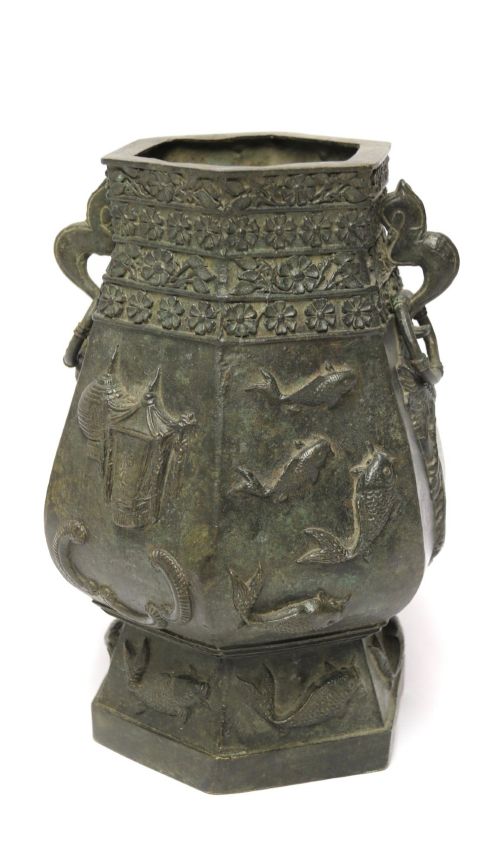
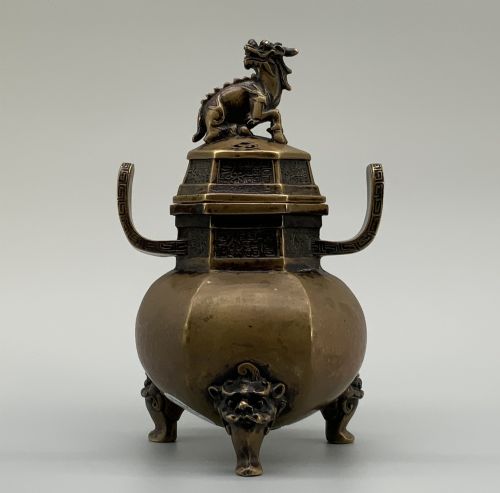
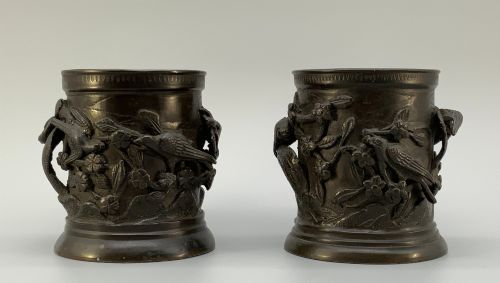
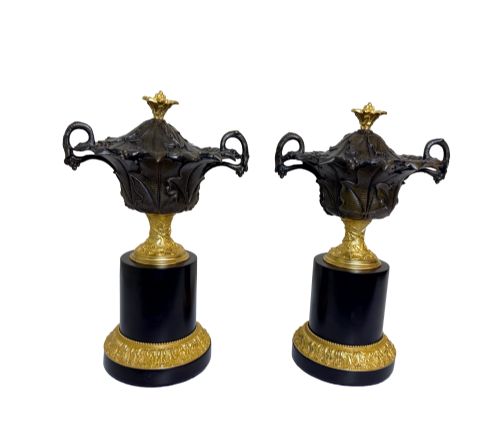
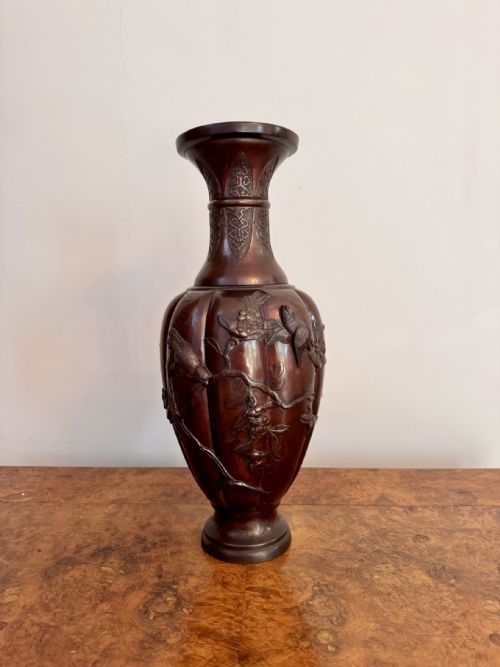
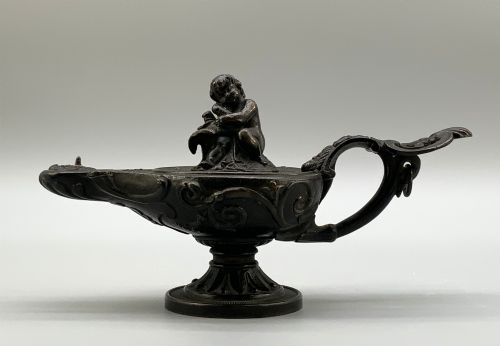
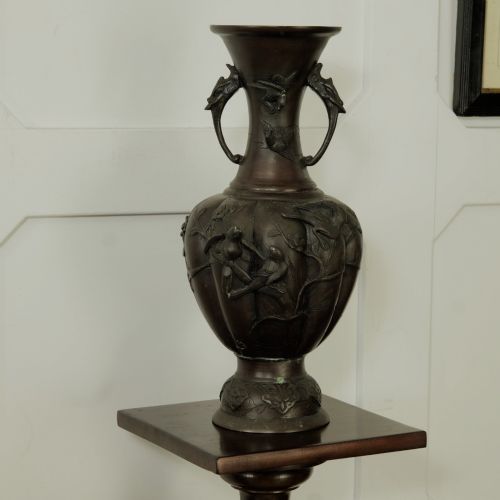
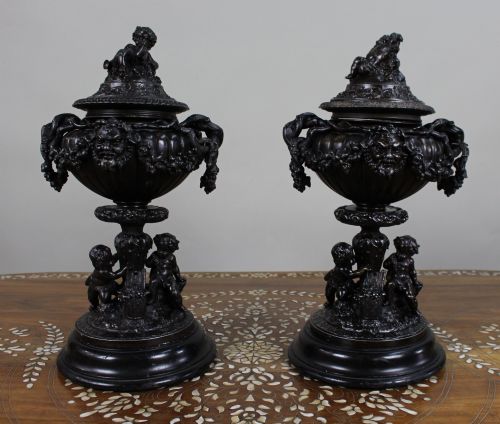
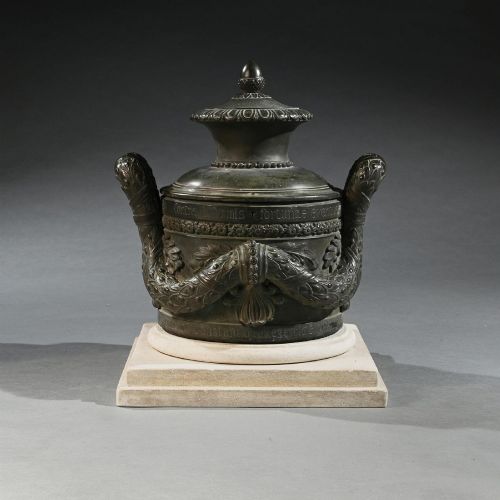
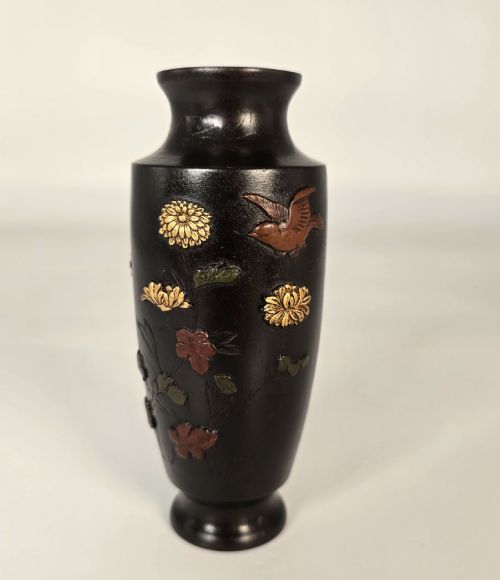
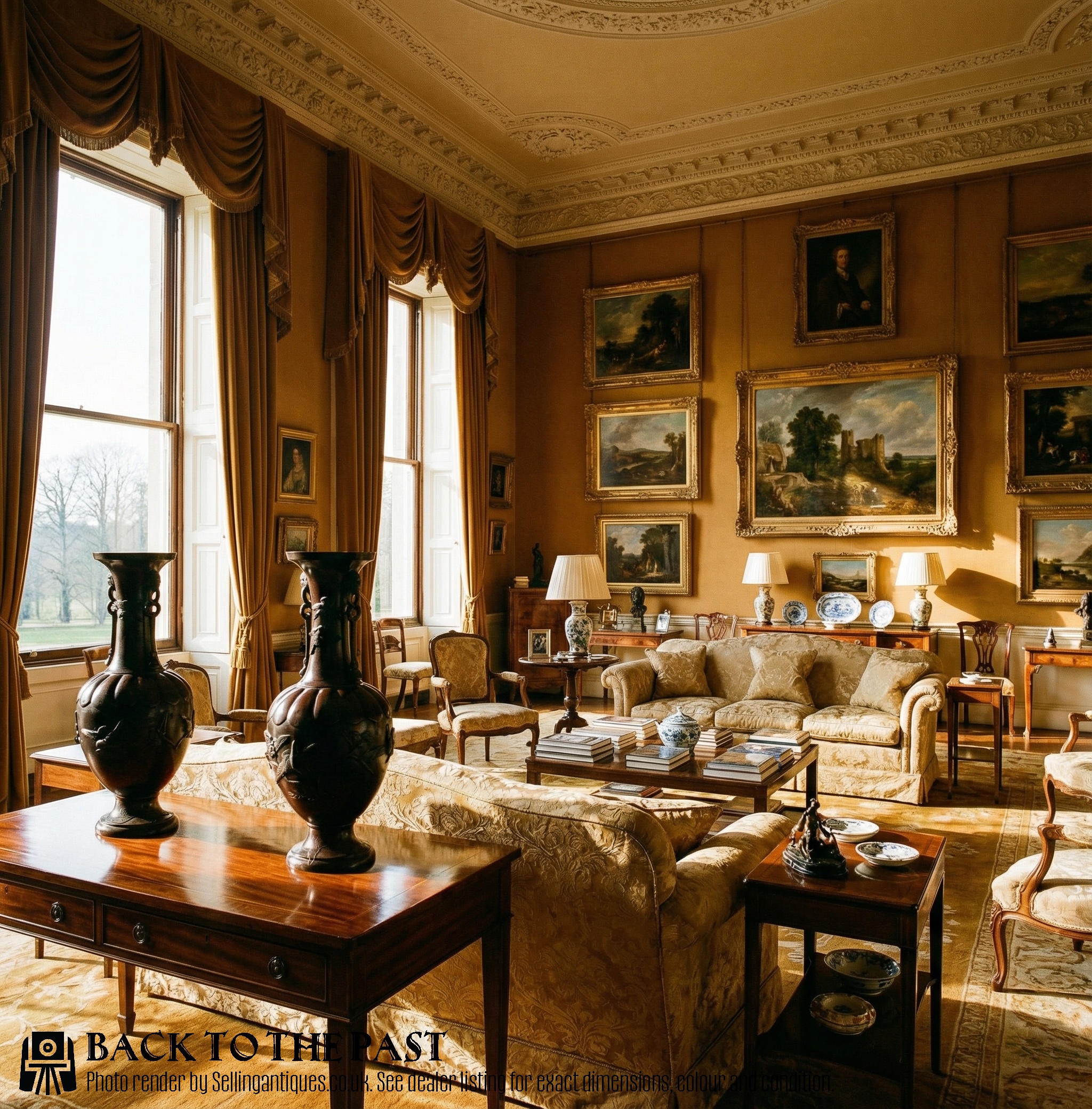
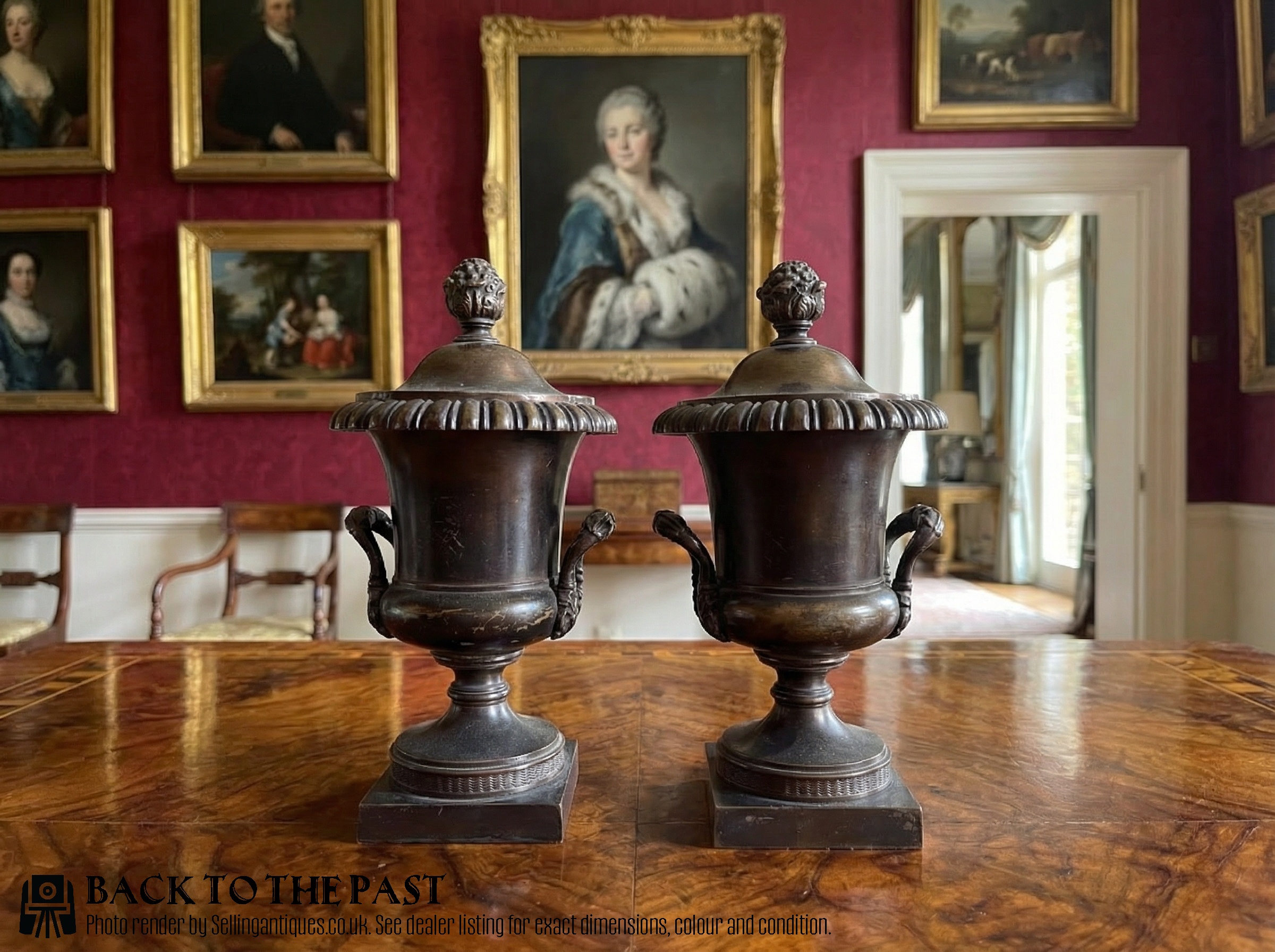
Patinated bronze urns span the nineteenth century, encompassing Regency, Charles X, Neoclassical, Art Nouveau and Japanese Meiji period examples. These pieces appear as decorative urns, vases, cassolettes, and campana-shaped vessels with covers.
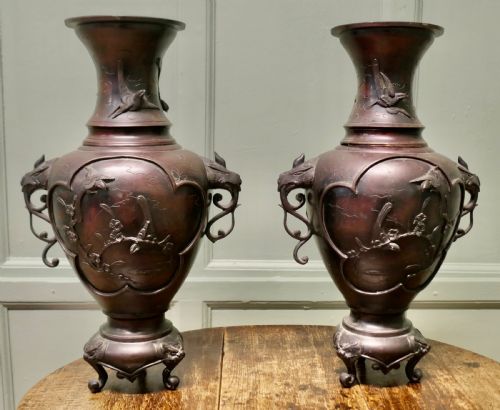
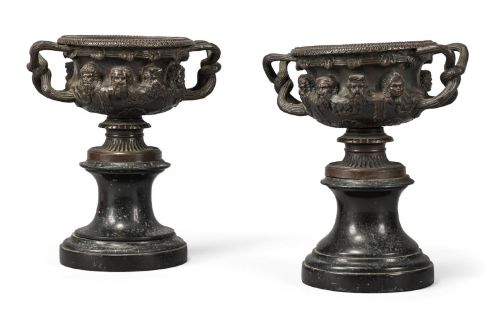
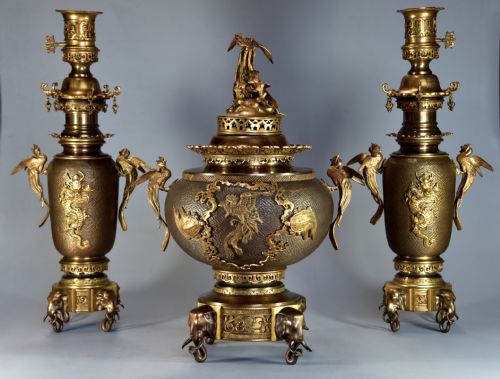
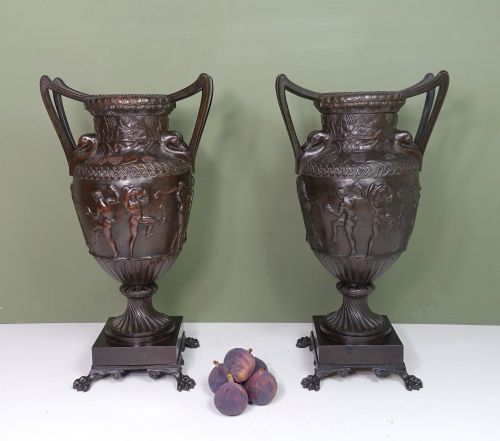
The buyer most frequently meets pairs of campana-shaped classical style vases or Japanese bronze vases from the Meiji period on this page. Formats range from grand tour style designs to heavy presentation pieces and elephant vases.
Origins stretch across European workshops in France, Italy and Britain alongside Japanese metalwork traditions from the late nineteenth century. Each version displays distinct regional interpretations of classical or organic ornamentation.
How they were made
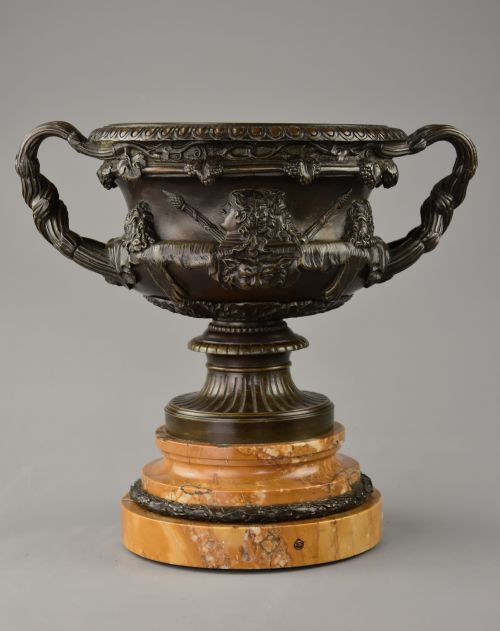
Maker's methods centre on casting metal to achieve substantial weight, occasionally incorporating marble pedestals to support the main body. Gilt bronze details sometimes accent the darker patinated bronze surfaces.
Makers applied chemical treatments to raw metal to produce the characteristic dark patinated bronze finish seen across European and Japanese output. Surfaces were cast, chased and patinated to accentuate neoclassical profiles or Art Nouveau contours.
Retail Price Guide 2026
Typical UK retail prices for patinated bronze urns, calculated from the Sellingantiques database of over a million retail prices indexed since 2003. This retail price guide relies exclusively on Sellingantiques data; no external sources or auction records are used, so the figures do not describe the wider market.
What varies in quality
Quality rests in the crispness of the cast and the depth of the patinated bronze surface, where superior examples exhibit sharp relief and controlled tonal variation. Lesser pieces lose definition in secondary ornament and show flat, uniform colour.
Proportion and architectural balance separate standard production from exceptional work, particularly in classical campana forms and cassolettes. The handling of applied handles, collars and foot rims dictates the visual authority of the piece.
The Patinated Bronze Urns Glossary
- Campana
- A bell-shaped vessel with a flaring rim and a pedestal foot, typical of classical antiquity and nineteenth-century revival styles. This profile forms the basis of many traditional urns.
- Cassolette
- A decorative vessel with a reversible lid that functions either as an urn or a perfume burner. These often feature specialised fittings or covers.
- Patination
- The surface coloration and texture achieved naturally over time or artificially through chemical application on metal. This treatment protects the bronze while giving it depth.
- Neoclassical
- A style drawing on the art and architecture of ancient Greece and Rome, prevalent during the eighteenth and nineteenth centuries. It emphasises symmetry, proportion and classical motifs.
- Meiji Period
- The era in Japanese history from 1868 to 1912 marked by extensive international trade in metalwork and decorative arts. Vases from this period demonstrate distinct casting and surface techniques.
Frequently Asked Questions
What is a campana urn?
A campana urn is a vessel shaped like an inverted bell, featuring a wide mouth, tapered body, and a fitted base. Originating in classical antiquity, nineteenth-century makers revived this silhouette for decorative interior display.
Such vessels frequently sit on square plinths or marble pedestals, serving as formal mantel or console ornaments.
How do I care for patinated bronze?
Maintenance requires only occasional dusting with a soft, dry cloth to prevent particulate build-up on the metal surface. Avoid commercial metal polishes, as abrasive cleaners will strip the original patination.
Keeping pieces away from direct moisture and extreme heat preserves the stability of the bronze and any underlying gilt highlights.
What distinguishes Regency urns?
Regency urns reflect early nineteenth-century British taste, drawing heavily on Roman and Greek archetypes. They often incorporate precise classical ornament and campana-shaped profiles.
Producers of this era prioritized restrained classical lines and balanced proportions over excessive surface decoration.
Are Japanese Meiji bronze vases heavy?
Japanese Meiji period vases often demonstrate substantial weight, with certain pairs reaching significant mass. Metalworkers utilised robust casting techniques to achieve durable, thick-walled vessels.
This heft provides stability for large floral displays or standalone architectural placement within a room.