



Campana Shaped Urns
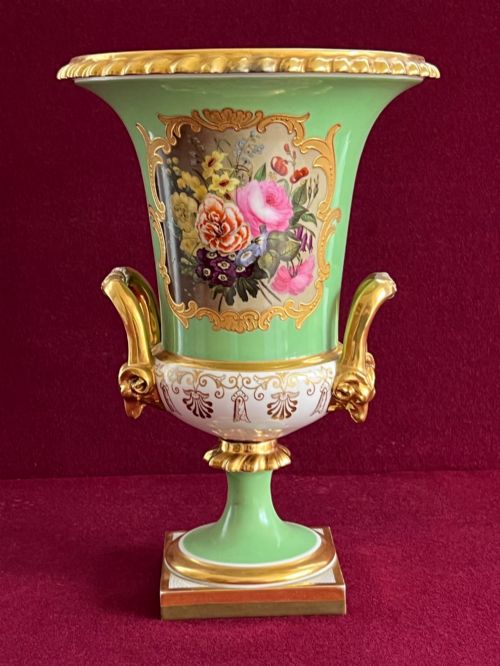
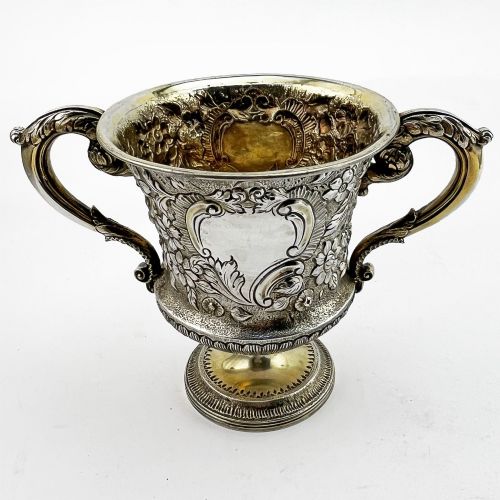
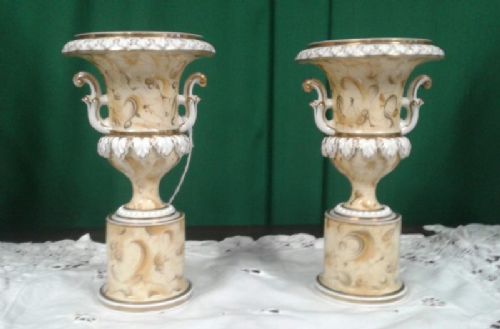
Campana shaped urns bring classical proportion and enduring symmetry to a room, whether cast in bronze, formed from porcelain or shaped in silver.
Campana Shaped Urns
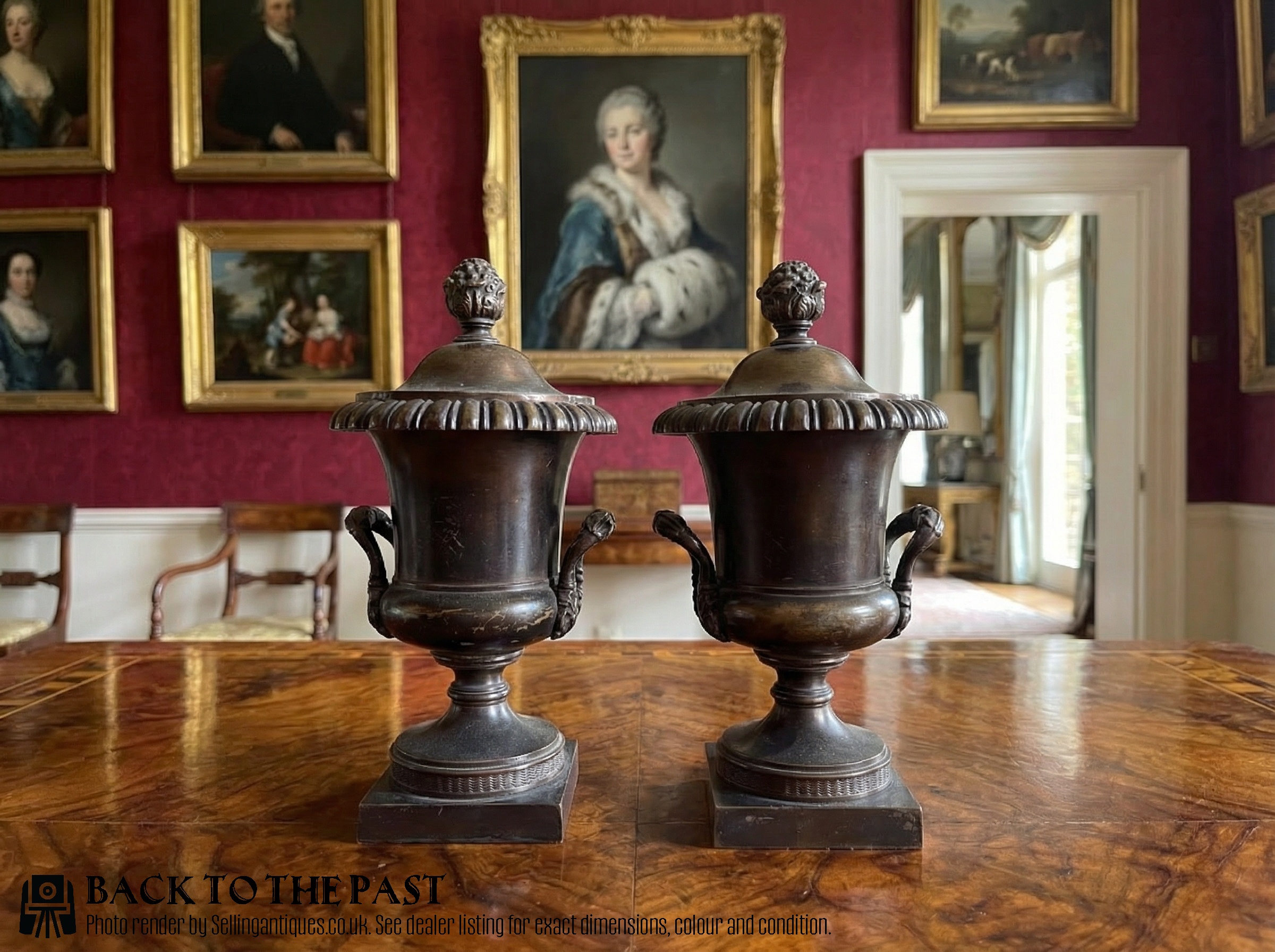
When you search for campana shaped urns, you encounter classical vessels modelled on ancient garden and table forms, distinguished by an inverted bell silhouette on a pedestal base. These pieces appear frequently as pairs of decorative vases, wine coolers, and cassolettes dating from the nineteenth century.
The selections span Regency, George III, and Victorian periods, alongside French Charles X examples. Many pieces combine patinated bronze with siena marble bases, while others utilise sterling silver, silver plate, or porcelain.
Forms range from intimate mantel ornaments to large cast bronze wine coolers and trophy cups. The overarching neoclassical aesthetic unites these diverse materials and scales under a shared classical vocabulary.
How they were made
Bronze examples rely on precise metal casting, often combining patinated surfaces with fire gilding or mounted details. Workshops frequently paired these metal bodies with turned siena marble plinths.
Silver and silver plated versions utilise hammering, spinning, and soldering techniques to achieve the characteristic bell profile and applied handles. Porcelain pieces involve moulding, glazing, and kiln firing, sometimes incorporating hand-painted decoration.
Plating methods such as Old Sheffield Plate fuse a silver sheet to a copper base, creating durable vessels designed for functional use as wine coolers.
Listings feature bronze, porcelain, and silver plate, alongside natural materials like siena marble.
What varies in quality
The refinement of the casting defines metal examples, where crisp relief work and clean finishing set finer pieces apart from coarser production. In bronze and marble pairs, the quality of the stone turning and the tightness of the joinery indicate the maker's hand.
Porcelain and ceramic versions depend upon the clarity of the glaze and the precision of any applied ornament. Silver and plated items reveal quality in the weight of the metal and the elegance of the handles.
Ridgeways
The Campana Shaped Urns Glossary
- Campana
- A vessel shape resembling an inverted bell, widely used for classical urns, vases, and wine coolers. This form originates from ancient Roman examples.
- Cassolette
- A decorative vase or urn featuring a reversible lid that transforms the piece from an enclosed vessel into a burner or holder. These often appear in pairs alongside standard urns.
- Siena Marble
- A yellow Italian marble with dark grey or purple veining, frequently utilised for the plinths and bases of nineteenth-century bronze vases. It adds a warm contrast to patinated metal.
- Old Sheffield Plate
- A composite material formed by fusing a thin layer of sterling silver to a copper core. This technique predates modern electroplating and appears on Regency wine coolers.
- Regency
- A British design period spanning the early nineteenth century, characterised by strict adherence to classical Greek and Roman forms. Pieces from this era often feature restrained ornament and balanced proportions.
Campana Shaped Urns: Frequently Asked Questions
What were campana shaped urns used for?
These vessels served diverse functions depending on their scale and material, ranging from ornamental mantelpiece displays to practical table vessels. Larger bronze and plated examples functioned as wine coolers during formal dining.
Smaller porcelain or bronze versions acted purely as decorative centrepieces or garnitures within classical interiors. Their enduring form allowed them to bridge domestic utility and formal display.
How do I date a campana urn?
Dating relies heavily on the combination of materials, construction techniques, and stylistic markers specific to periods like the Regency or Victorian era. Examining the base, patination, and any underlying metal or ceramic body provides clear chronological clues.
French Charles X pieces often pair patinated bronze with siena marble plinths, whereas eighteenth-century examples display distinct silver hallmarks or hand-wrought assembly methods.
Are bronze urns always mounted on marble?
Bronze campana urns frequently rest on siena marble or black marble plinths, particularly during the nineteenth century. This combination elevated the visual weight of the piece and provided a stable, decorative foundation.
However, many examples consist entirely of cast bronze or porcelain without stone mounts, depending on the specific design and intended placement.
How do I style campana urns at home?
Pairs of campana urns work effectively when balanced symmetrically on sideboards, mantelpieces, or pedestals. Their classical silhouette provides a strong focal point within both traditional and contemporary rooms.
Larger wine cooler versions can sit directly on the floor or on low stands, while smaller cassolettes suit tabletop placement where their detailed casting can be appreciated up close.