




Antique Bronze Cassolettes
Antique bronze cassolettes are reversible decorative vessels that transform from covered urns into candle holders, bringing classical French elegance to any mantelpiece.
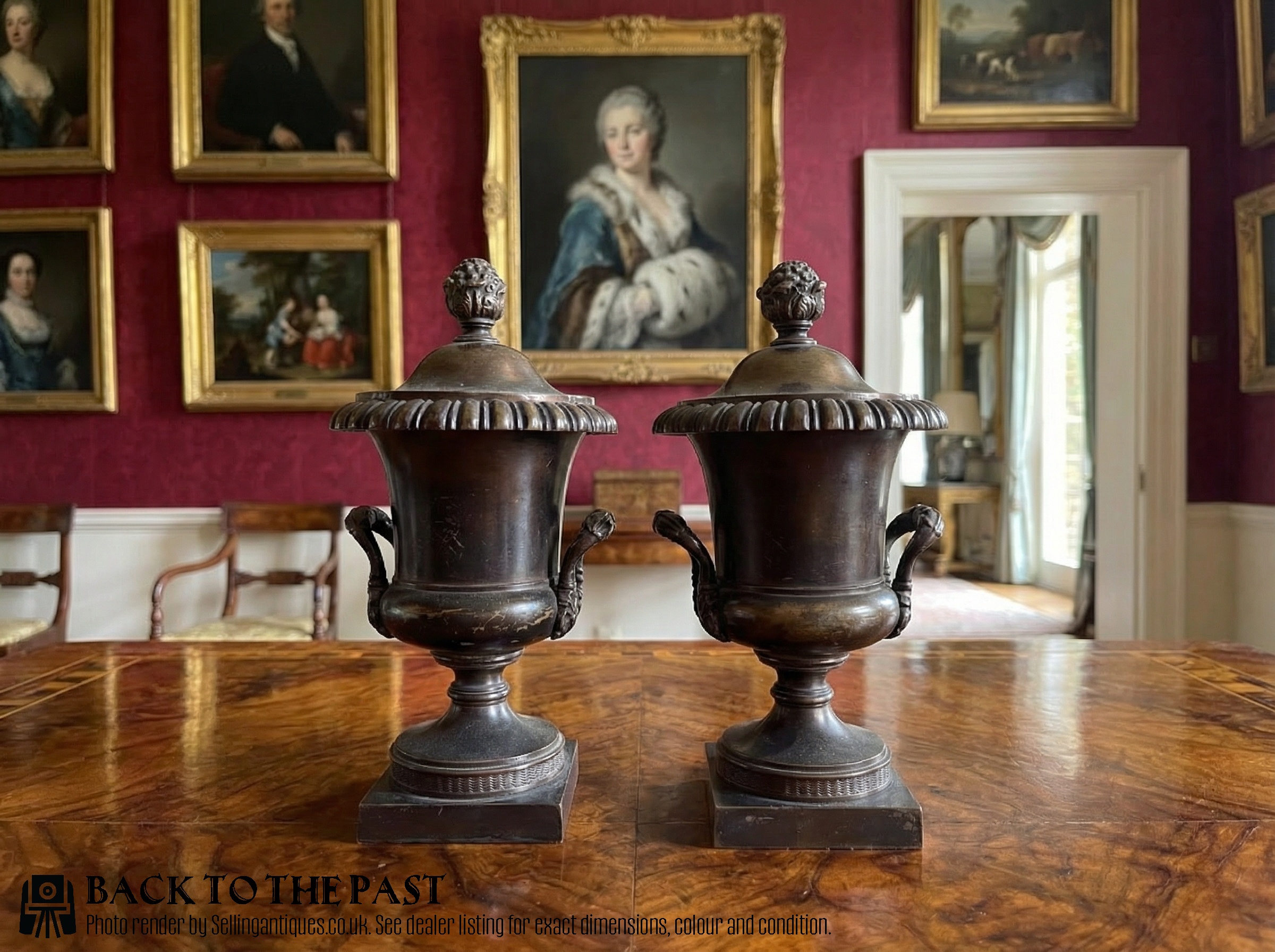
Antique Bronze Cassolettes
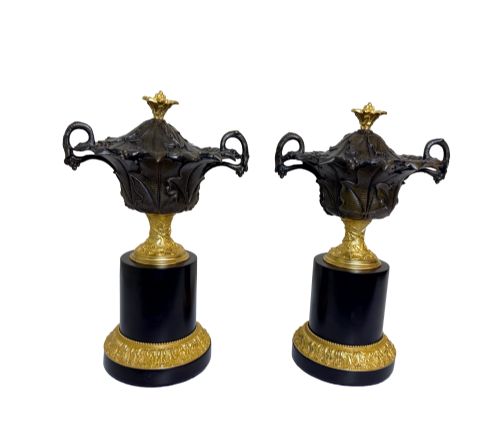
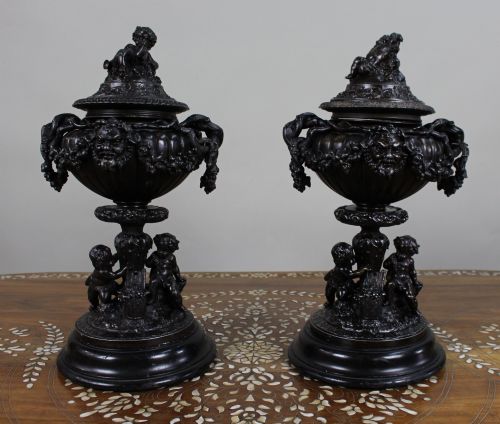
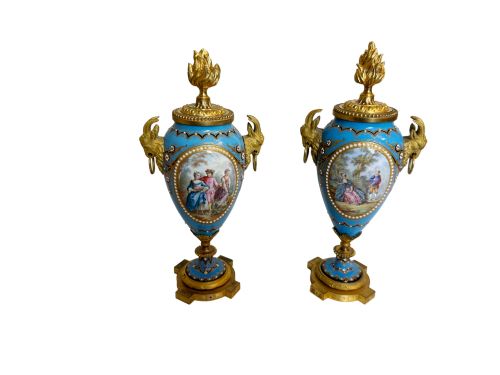
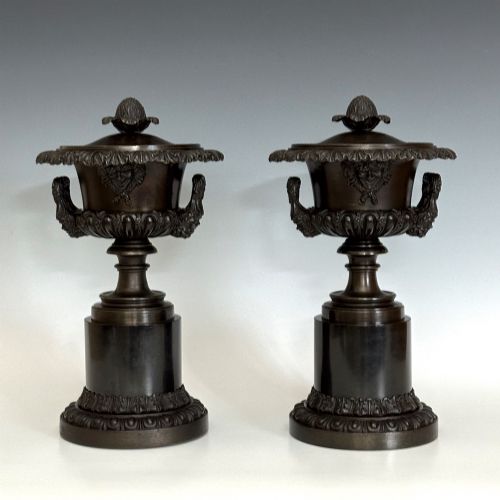
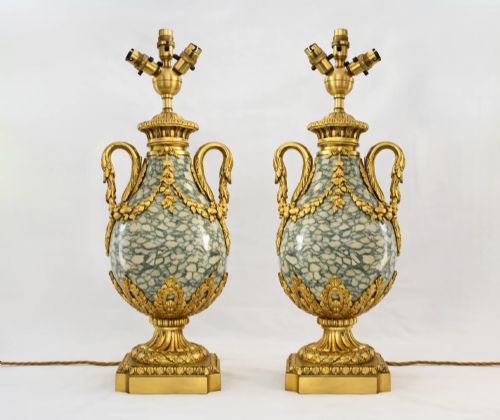
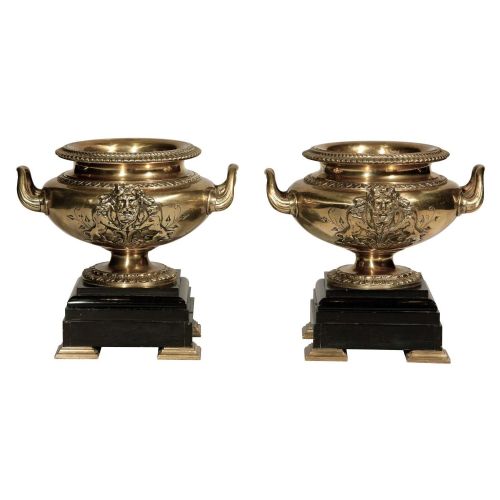
When you search for antique bronze cassolettes, you encounter ornamental lidded vessels designed to serve a dual purpose as both decorative urns and incense burners or candlesticks. The most common versions on this page are French and British pairs dating from the nineteenth century, particularly the Regency, Victorian, and Napoleon III periods, often executed in the Louis XVI or Neoclassical revival styles.
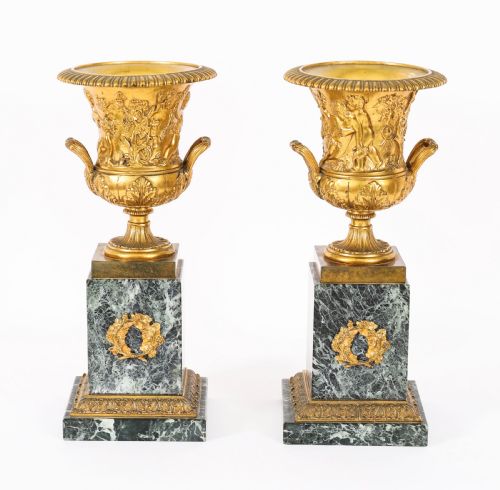
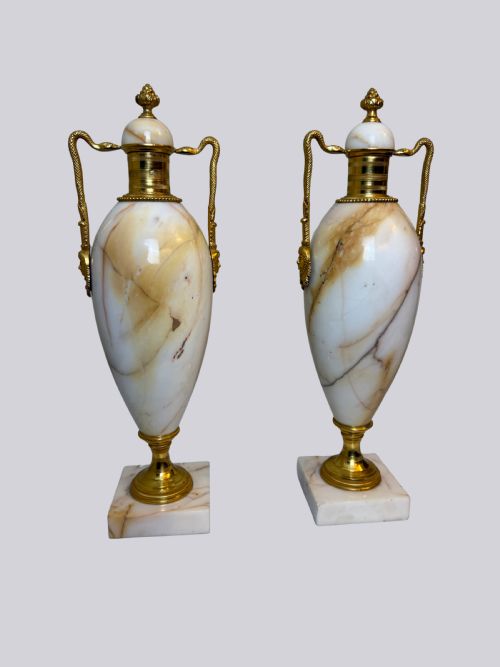
These pieces typically take a classical campana or amphora shape, frequently mounted on square or plinth-style marble pedestals. Many examples function as part of larger clock garnitures, accompanied by matching side vases or candelabra.
Originating largely from Grand Tour travels and Parisian workshops, these objects reflect a nineteenth-century fascination with classical antiquity. The reversible lid mechanism defines the form, presenting a solid urn finish on one side and a candle socket or burner aperture on the reverse.
How they were made
The construction relies on the combination of cast metal and stone, utilising patinated or gilt bronze and ormolu paired with various types of marble, onyx, or porcelain. Foundries cast the bronze components in sections before applying mercury gilding or chemical patination to achieve deep surface contrast.
The stonework involves turning natural marbles, such as green, white, rouge, or Vert Maurin varieties, on a lathe to form the body and plinths of the vases. Skilled artisans then fit the cast bronze mounts, handles, and collars tightly around the stone elements, securing them with internal threaded rods and nuts.
Antique Bronze Cassolettes Retail Price Guide 2026
Typical asking prices for bronze cassolettes among the pieces listed under this phrase on Sellingantiques today, from the lower quarter to the upper quarter. They describe what is for sale here now, not the wider market.
Listings feature nineteenth-century pieces spanning the Regency, Victorian, and Napoleon III periods in marble, bronze, and ormolu.
What varies in quality
The crispness of the metal chasing separates standard production from superior examples, as finer pieces display sharply defined acanthus leaves, masks, and beaded borders without softening from worn moulds. Hand-chiseling after casting removes any surface pitting and brings depth to the ornamentation.
The selection and turning of the marble base also dictate standard, where uniform mineral veining and tight joints indicate superior craftsmanship. Heavier, well-balanced stone plinths provide structural stability to the comparatively light bronze and ormolu mounts above.
Auguste Cain
The Antique Bronze Cassolettes Glossary
- Cassolette
- A dual-purpose decorative vessel with a reversible lid that converts an ornamental urn into a candle holder or incense burner.
- Ormolu
- Gilded bronze produced by applying a mercury and gold amalgam to the metal surface and heating it to vaporise the mercury, leaving a rich gold coating.
- Campana
- A bell-shaped classical vessel form with a flared rim, frequently utilised for antique urns and cassolettes.
- Garniture
- A set of three or more matching decorative objects, typically comprising a mantel clock flanked by paired cassolettes or vases.
- Grand Tour
- A cultural journey through Europe undertaken by nineteenth-century travellers who collected classical antiquities and souvenirs like bronze urns.
Antique Bronze Cassolettes: Frequently Asked Questions
What is a cassolette used for?
These vessels originally served to burn aromatic substances or hold candles while functioning as decorative mantel ornaments.
The reversible lid allowed owners to switch between a closed classical urn display and a practical lighting or burning configuration.
How do you use a cassolette?
You lift the central lid, invert it, and place it back onto the neck to reveal the candle socket or burner insert.
They sit effectively on mantelpieces, side tables, or as the terminating pieces of a three-piece clock garniture.
How do you date a cassolette?
Dating relies on identifying the prevailing design style, such as Regency or Louis XVI revival, alongside the manufacturing materials.
Nineteenth-century examples often feature specific marble types and sand-cast bronze techniques characteristic of Victorian and French Empire workshops.
What is the difference between an urn and a cassolette?
Standard decorative urns possess fixed, sealed lids that remain purely ornamental throughout their lifespan.
Cassolettes specifically incorporate a dual-design or reversible lid engineered to hold candles or burn incense.