



Bronze Mantle Urns
Bronze mantle urns bring neoclassical gravity and gilt refinement to a room, turning practical timepieces and surfaces into focal points of classical design.
Bronze Mantle Urns
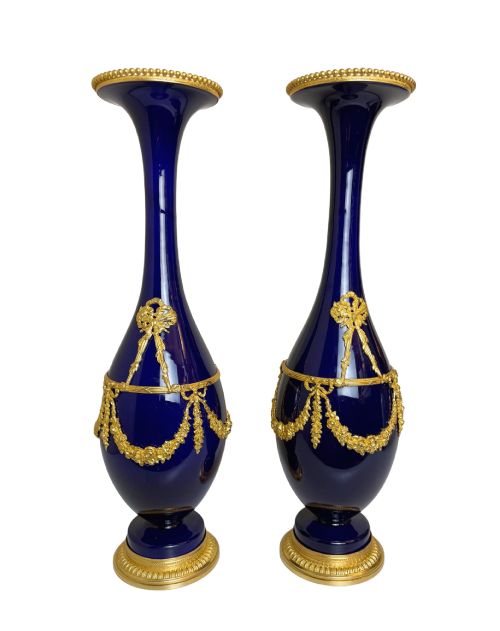
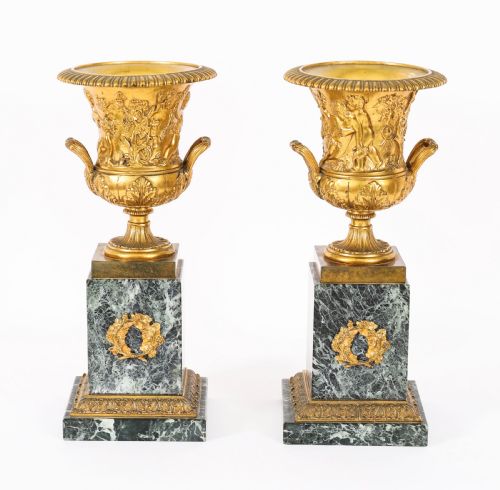
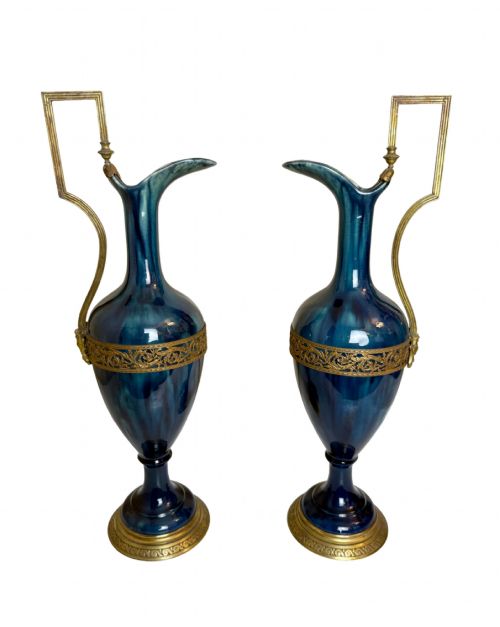
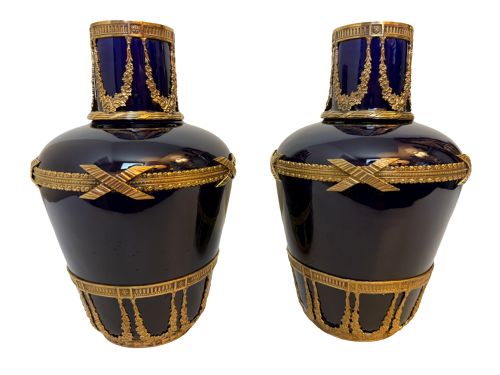
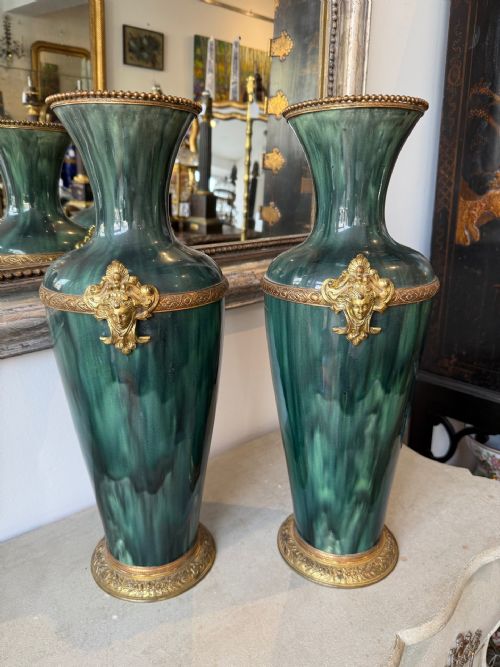
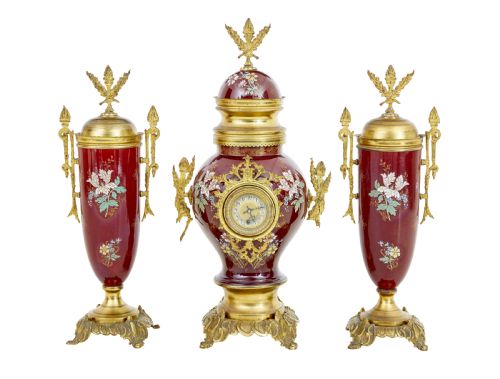
When searching for bronze mantle urns, collectors encounter a selection of nineteenth-century French decorative objects, including garniture sets, mantel clocks, and paired vases. These pieces draw heavily on neoclassical, Louis XVI, and Empire styles, often incorporating distinct classical silhouettes like the campana shape.
The objects frequently appear paired with flanking garniture items such as candlesticks or smaller vases, designed to sit symmetrically upon a mantelpiece. Materials span cast bronze and ormolu combined with porcelain, marble, slate, and glass, reflecting the ornate domestic interiors of the Victorian period.
Originating predominantly from nineteenth-century French workshops, these items utilise traditional casting and gilding methods to achieve their characteristic decorative impact. The selection ranges from strict classical revivals to more elaborate Rococo and Egyptian revival interpretations.
How they were made
Maker workshops employed bronze casting techniques to create the structural bodies of urns, clocks, and garniture mounts, frequently applying mercury gilding or ormolu finishes to impart a rich golden lustre. These metal elements were then combined with turned marble bases, slate plinths, and blown or moulded glass.
Ceramic components such as porcelain bodies and painted panels were shaped and fired separately before being fitted meticulously into cast metal mounts. Artisans secured these composite pieces using threaded rods and screws, ensuring the heavy marble and bronze elements remained stable.
Listings demonstrate that nineteenth-century French makers combined gilt bronze with porcelain, marble, and slate to construct elaborate mantel clocks and garniture sets.
What varies in quality
The refinement of the cast bronze work defines the upper tier of these pieces, where surface chasing yields crisp botanical and classical detail rather than soft contours. Superior ormolu maintains an even, deep golden hue, whereas lesser examples show dull areas or uneven plating.
Integration of materials distinguishes finer garnitures, with high-grade pieces featuring flawlessly turned marble bases and hand-painted porcelain panels free from firing flaws. The precision of the mechanical movements within associated clocks and the weight of the cast metal components further separate standard decorative objects from exceptional ones.
Achille Brocot
The Bronze Mantle Urns Glossary
- Ormolu
- Gilt bronze produced by applying a mercury and gold amalgam to a bronze base and heating it until the mercury vaporised. This technique creates a durable golden finish characteristic of French decorative arts.
- Garniture
- A set of matching decorative objects, typically comprising a central clock flanked by two matching vases, urns, or candelabra. Such sets were designed for symmetrical display on a fireplace mantel.
- Campana
- A bell-shaped vessel with an everted rim and a pedestal foot, derived from ancient Roman pottery forms. This silhouette frequently appears in nineteenth-century decorative urns and vases.
- Sevres style
- A term describing porcelain decorated in imitation of the French royal manufactory, often featuring rich blue grounds and hand-painted scenes enclosed within raised gilt borders.
- Empire period
- A design era spanning the early nineteenth century defined by heavy neoclassical motifs, military emblems, and architectural proportions influenced by ancient Roman and Greek art.
Bronze Mantle Urns: Frequently Asked Questions
What is a clock garniture?
A clock garniture is a matched set of three decorative objects designed to be displayed together on a mantelpiece. It typically consists of a central mantel clock accompanied by two flanking urns, vases, or candlesticks.
These sets created a balanced, decorative arrangement that dominated nineteenth-century domestic interiors. The matching pieces share materials, motifs, and metalwork finishes to present a unified aesthetic.
How do I identify French Empire style?
French Empire style relies on strict classical proportions, symmetrical layouts, and motifs drawn from ancient Rome and Egypt. You will notice dark patinated bronze paired with bright ormolu mounts, column structures, and military or botanical emblems.
This aesthetic projects solidity and imperial grandeur, contrasting with the lighter, curving lines of earlier Rococo designs. The forms remain architectural and disciplined throughout.
Where were these urns displayed?
These decorative objects sat predominantly on mantelpieces above fireplaces, accompanied by mirrors or paired garniture items. Their materials and reflective ormolu surfaces were chosen to catch the ambient light of nineteenth-century rooms.
They also occupied prominent positions on console tables and sideboards within formal drawing rooms. Their scale allowed them to anchor the visual weight of a large interior wall.
How do I care for ormolu surfaces?
Ormolu surfaces require gentle dusting with a soft, dry brush to prevent the accumulation of dirt within chased recesses. Moisture and harsh cleaning agents must be avoided entirely, as they damage the delicate gold layer.
Preserving the original mercury gilding depends on minimal handling and maintaining a stable indoor environment. Professional conservation is advised if deeper cleaning becomes necessary.