






Bronze Campana Urns
Bronze campana urns bring classical antiquity indoors, offering sculptural form and patinated metal shaped by nineteenth-century tastes.
Bronze Campana Urns
Bronze campana urns take their inverted bell shape from ancient pottery vessels discovered during archaeological excavations in Italy. When buyers search for bronze campana urns, they find decorative objects produced primarily during the nineteenth century as souvenirs of the Grand Tour. These pieces range from small table vases to large architectural ornaments.
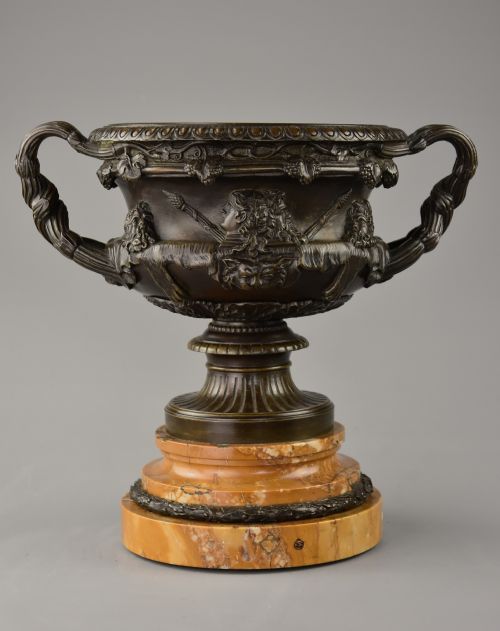
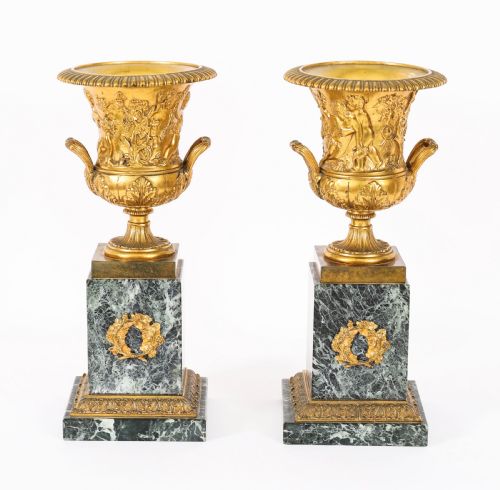
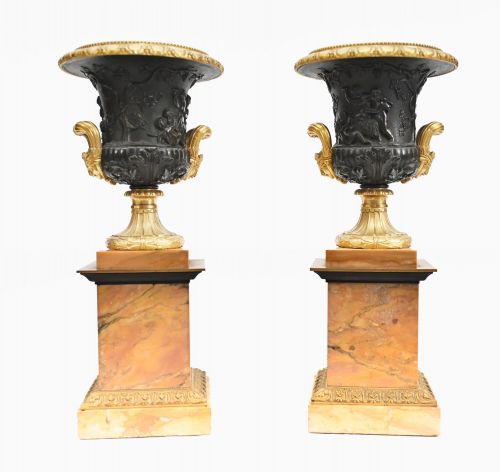
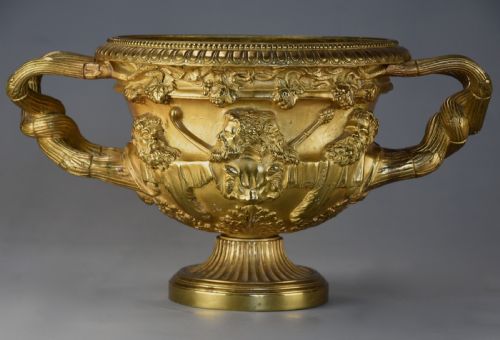
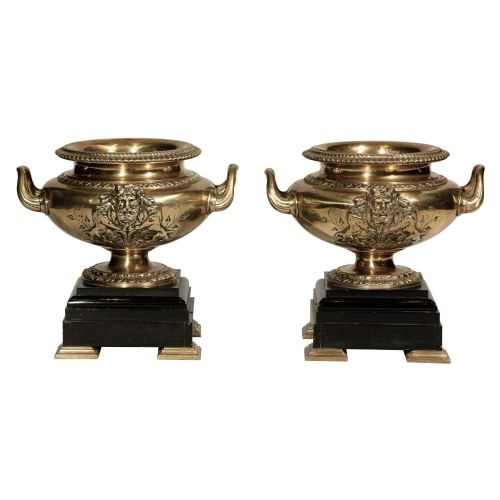
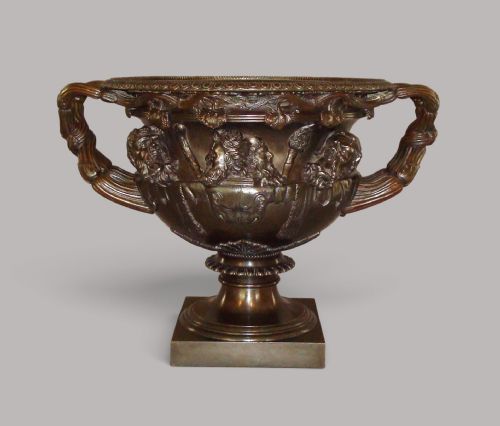
French and Italian workshops dominated production, rendering these vessels in various sizes for European and British drawing rooms. The selection includes matched pairs on marble bases alongside single monumental pieces cast after famous antiquities like the Warwick and Borghese vases. Many incorporate neoclassical motifs such as Bacchic masks, cherubs, and scrolling handles.
Most examples date from the Regency and Victorian periods, reflecting a widespread fascination with classical antiquity. The form appears both plain and ornamented with gilt bronze mounts, resting on square plinths or stepped marble pedestals. These objects functioned historically as decorative garnitures, mantel ornaments, and wine coolers.
Materials and Casting Methods
Foundries produced these vessels using traditional sand casting or lost-wax methods, resulting in substantial metal walls with distinct interior surfaces. Workers combined copper and tin alloys to create durable bronze, often applying chemical patination to achieve dark brown or green finishes. Gilt bronze and ormolu elements were applied separately to highlight handles, rims, and classical friezes.
Many specimens combine patinated metal with natural stone, mounting the bronze bodies onto turned or squared bases of siena marble, green marble, or slate. Secondary metals such as brass, spelter, and silver plating appear in alternative workshop productions from the later nineteenth century. Chasing tools refined the cast details by hand, sharpening the foliage, figures, and architectural mouldings after the metal cooled.
Bronze Campana Urns Retail Price Guide 2026
Typical asking prices for bronze campana urns among the pieces listed under this phrase on Sellingantiques today, from the lower quarter to the upper quarter. They describe what is for sale here now, not the wider market.
Cherubs and Bacchic masks frequently peer out from the handles, keeping watch over centuries of drawing room conversations.
Craftsmanship and Proportion
Quality rests primarily on the crispness of the chased detail and the weight of the metal casting. Superior examples exhibit sharp relief in figures, berried leaves, and classical masks, whereas lesser pieces show soft, blurred edges from worn production moulds. The transition from the flared lip to the stem reveals the skill of the bronzier.
The integration of the marble base and the quality of the ormolu mounts dictate the upper tier of the market. Fine pairs display balanced patination and harmonious stone markings, while standard productions rely on simpler cast metal plinths without secondary gilt highlights.
The Bronze Campana Urns Glossary
- Campana
- A vessel shaped like an inverted bell, derived from Roman pottery found at archaeological sites in Campania. This profile defines the classic urn silhouette.
- Grand Tour
- A traditional trip through France and Italy undertaken by European gentry to study classical art and architecture. Tourists purchased bronze reductions of ancient vases as tangible souvenirs.
- Ormolu
- Finely ground high-carat gold mercury-gilded to a bronze object, creating a bright golden surface. This technique provided rich contrast against dark patinated bronze.
- Patina
- The surface coloration developed naturally over time or applied chemically by a foundry. On these bronzes, it ranges from deep chocolate brown to mottled green.
- Cassolette
- A decorative vase fitted with a reversible lid that functions either as an urn or a burner for scented powders. These often feature dual-purpose drop handles.
Bronze Campana Urns: Frequently Asked Questions
Where did these urns originate?
Most surviving examples originated in French and Italian workshops during the nineteenth century, catering to collectors touring Europe. Foundries in Paris and Rome specialised in translating ancient marble archetypes into portable bronze.
These pieces were exported across the continent, frequently appearing in British country houses and urban drawing rooms as symbols of classical learning and refined taste.
How do I care for bronze?
Dust the surfaces regularly with a soft, dry brush to prevent particulate accumulation within the chased recesses of the metal. Avoid liquid cleaners and abrasive cloths, which strip historical patination and gilt bronze layers.
Keep the items away from direct sunlight and damp environments to protect both the metal alloys and the underlying marble plinths from structural deterioration.
Are these pieces functional?
Historical examples served primarily as decorative garnitures, mantel ornaments, or architectural centerpieces rather than utilitarian vessels. Some larger nineteenth-century castings functioned as wine coolers or garden planters.
Modern owners generally display them empty on tables, pedestals, or mantelpieces to showcase their sculptural form and patinated surfaces.
How are periods identified?
Dating relies on casting weight, the composition of the marble bases, and the specific chemical patination of the bronze alloy. Regency and Charles X pieces often feature crisp hand-chasing and siena marble plinths, while later Victorian items display machine tooling or alternative metal compositions.
Stylistic shifts from strict neoclassical designs to more ornate revival styles help narrow the decade of manufacture.