
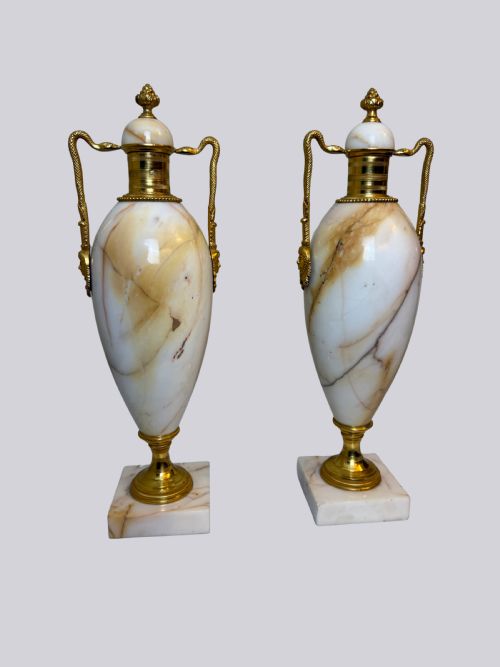

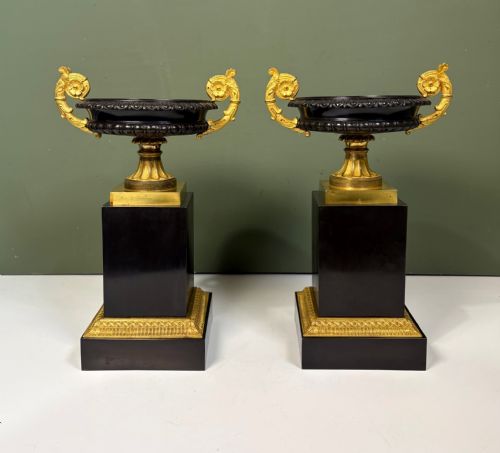

Neoclassical Mantel Urns
Neoclassical mantel urns bring formal proportion and classical dignity to a room, drawing on ancient architectural forms through nineteenth-century revival craftsmanship.
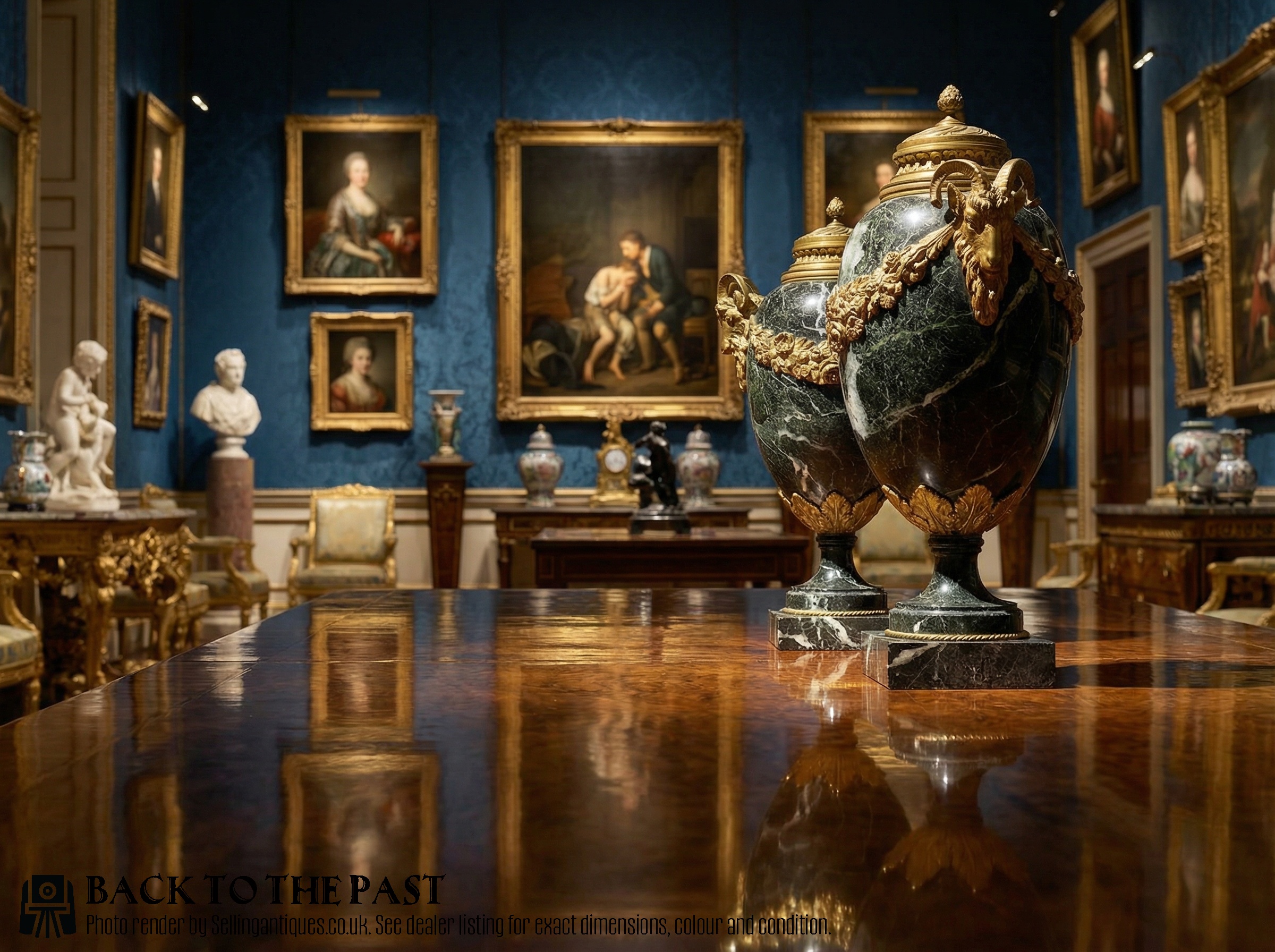
Neoclassical Mantel Urns
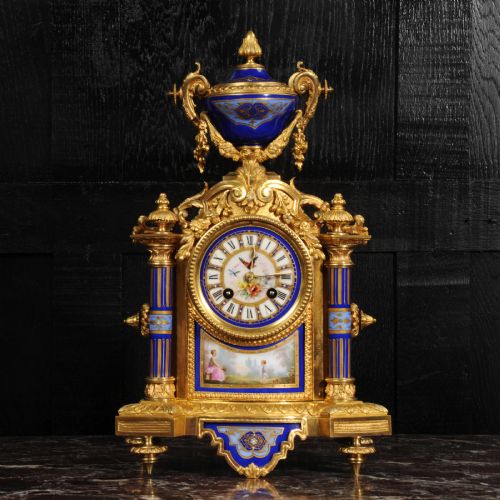
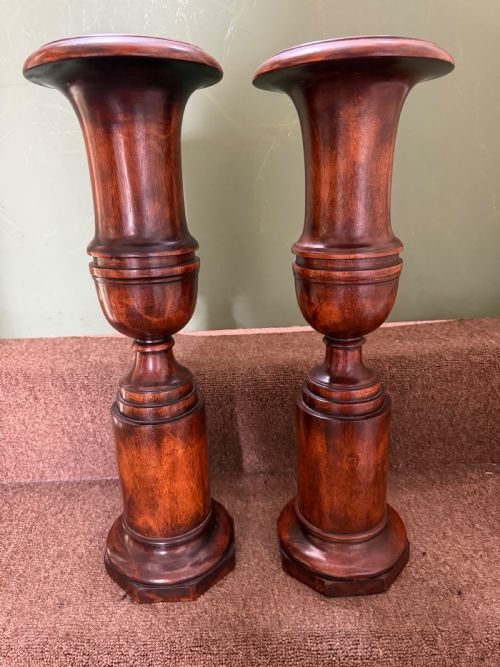
When searching for neoclassical mantel urns, buyers encounter decorative vessels and garniture pieces designed to sit upon fireplace ledges or console tables. The selection relies heavily on nineteenth-century interpretations, drawing from French Empire, Louis XVI Revival, and Regency aesthetics.
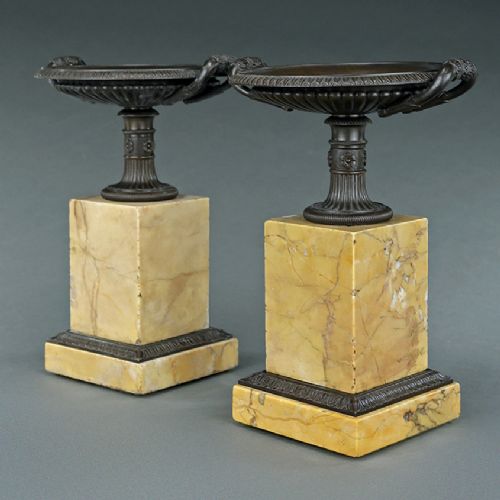
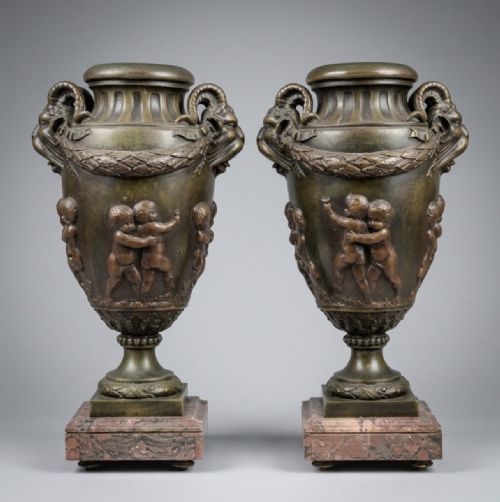
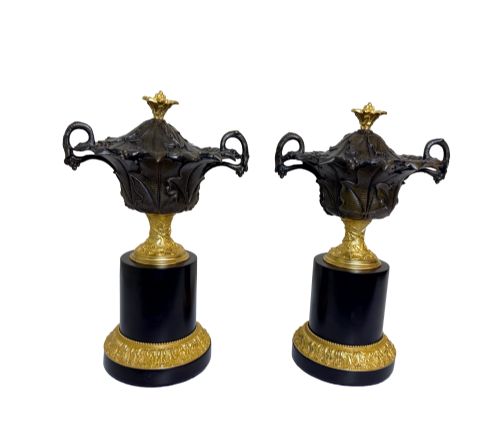
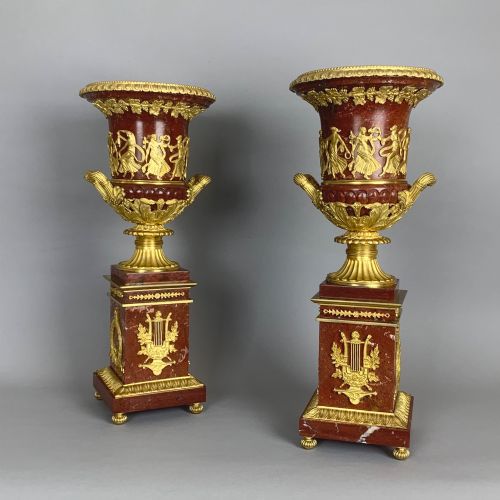
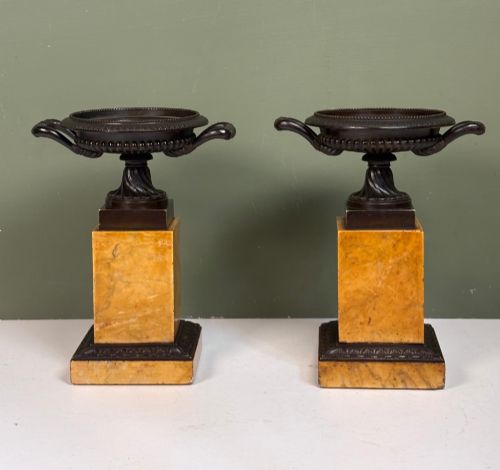
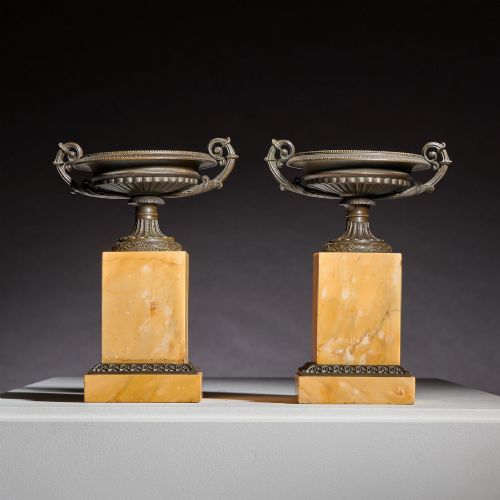
Most examples found in this inventory pair cast metals with natural stone, taking the form of campana urns, cassolettes, and tazzas mounted on stepped plinth bases. These objects reflect a sustained nineteenth-century fascination with classical antiquity, filtered through French and English decorative traditions.
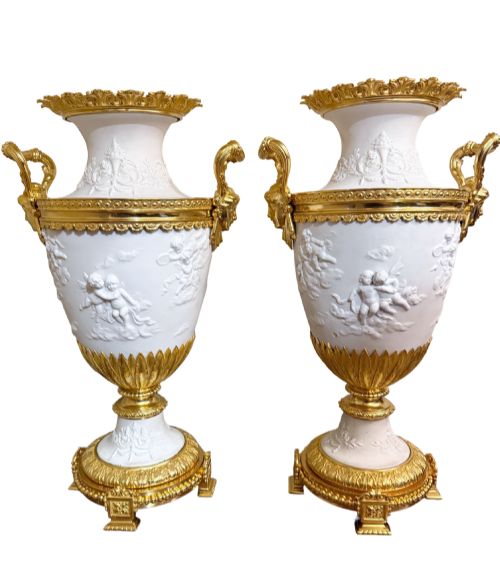
Makers and designers of the period combined architectural silhouettes with ornamental mounts, producing symmetrical pairs intended to anchor a room's decorative scheme. The forms range from severe bronze vessels to highly ornate porcelain and marble combinations.
Materials and construction
The construction of these pieces relies on the combination of heavy mined materials like marble, onyx, and granite with cast and chased metals including bronze, ormolu, and gilt brass. Artisans turned stone on lathes to create smooth body profiles, while metal components were cast separately before being applied to the stone bases.
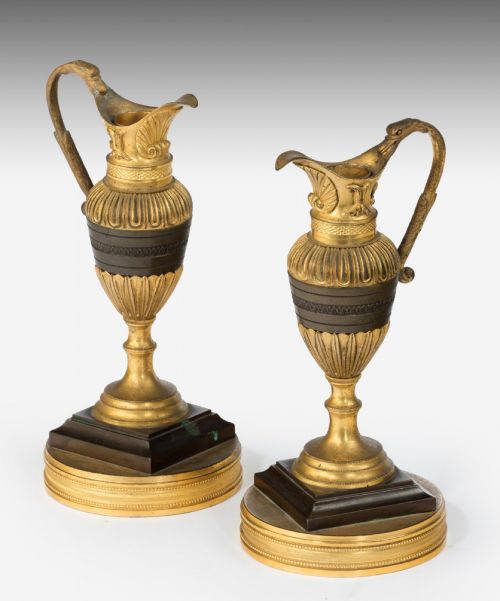
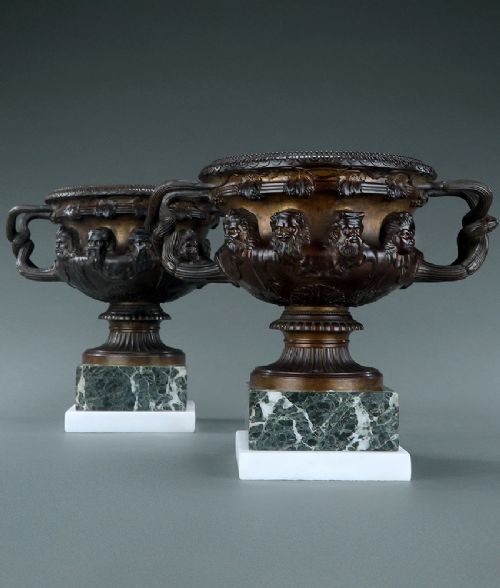
Surface decoration frequently involves fire-gilding, hand-painted porcelain scenes, and patinated bronze finishes that simulate ancient metalwork. Enamel dials, giltwood accents, and finely carved classical motifs complete the decorative vocabulary of the period.
Neoclassical Mantel Urns Retail Price Guide 2026
Typical asking prices for neoclassical mantel urns among the pieces listed under this phrase on Sellingantiques today, from the lower quarter to the upper quarter. They describe what is for sale here now, not the wider market.
Listings feature pieces spanning the nineteenth century, utilising materials such as ormolu, Siena marble, porcelain, and patinated bronze.
Assessing quality and execution
Quality in these decorative objects rests on the crispness of the metal chasing and the selection of the stone body. Finer examples display sharp detail in cast foliate mounts and well-matched marble veining, whereas simpler production relies on softer spelter castings and uniform patination.
The integration of mixed media dictates the overall success of the piece, where precision in fit between the metal mounts and the stone body separates standard workshop output from exceptional examples.
Japy Freres·Louis Goret·Selim Bright
The Neoclassical Mantel Urns Glossary
- Ormolu
- Gilt bronze produced by applying a mercury-gilding amalgam to cast bronze. This technique creates a durable, deep golden surface characteristic of fine French decorative objects.
- Cassolette
- A dual-purpose decorative vessel featuring a reversible lid that transforms an urn into a candleholder or perfume burner. These pieces often incorporate rotating sections or pierced metal galleries.
- Campana urn
- A bell-shaped vessel with a flared rim and footed base modelled after ancient Roman pottery. This classic silhouette forms the basis of many nineteenth-century garniture pieces.
- Garniture
- A set of matching decorative objects, typically comprising a central clock flanked by matching urns or candelabras. They were designed to sit harmoniously on a mantelpiece.
Neoclassical Mantel Urns: Frequently Asked Questions
Where were these urns originally displayed?
These decorative objects sat atop fireplace mantels, often flanked by matching candelabras or paired with a central clock as part of a garniture set. They served purely ornamental purposes in nineteenth-century drawing rooms and libraries.
Their elevated placement allowed the detailed ormolu mounts and coloured marble bases to catch the light from lamps and fires.
How do I identify the period of an urn?
Dating relies on examining the casting quality, the type of stone used, and the specific revival style referenced in the design. Nineteenth-century pieces frequently combine patinated bronze with white or Siena marble.
Closer inspection of assembly methods, such as threaded bolts and hand-cut screws, helps distinguish mid-nineteenth-century production from later revivals.
Are these pieces functional vessels?
Most surviving examples are strictly decorative ornaments rather than functional containers. Forms like cassolettes feature removable or reversible tops, but the delicate gilding and stone construction meant they were intended for display.
Their primary role was to project classical erudition and refined taste within a domestic interior.