


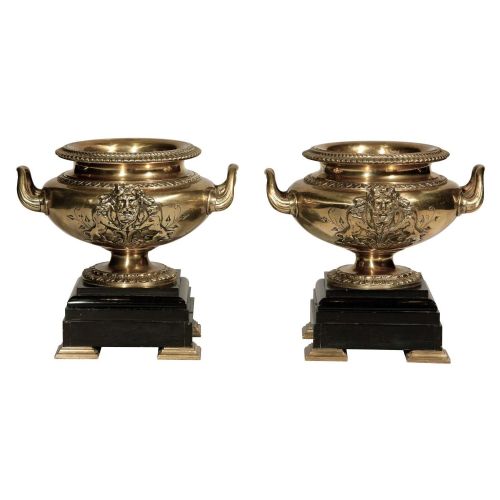


Black Marble Urns
Black marble urns bring a severe, architectural presence to a room, channelling neoclassical sobriety through dark stone and cast metal.
Black Marble Urns
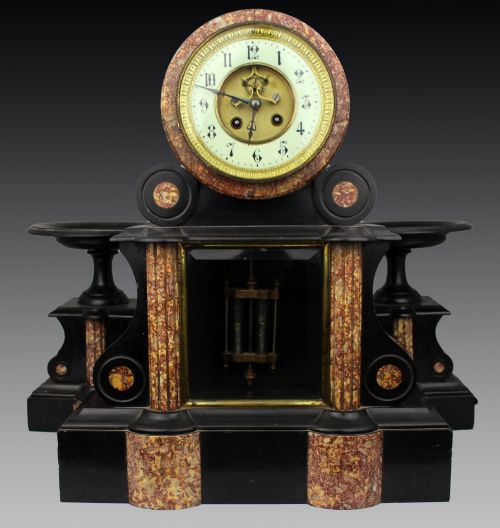
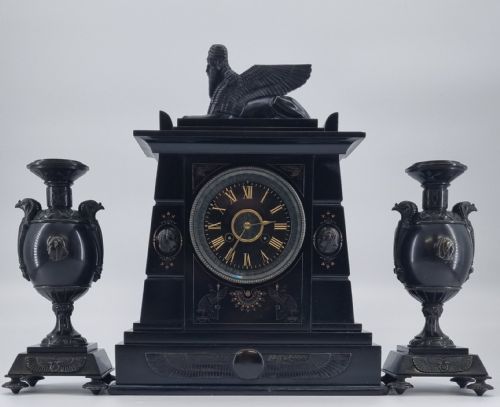
Black marble urns on this page emerge primarily from the nineteenth century, spanning Victorian, Grand Tour, and French Second Empire sensibilities. These pieces range from standalone decorative vessels to paired garniture sets flanking mantel clocks.
Makers and workshops often combined the dark stone with contrasting mounts, turning simple vessels into centrepieces for nineteenth-century interiors. The forms lean heavily on classical antiquity, referencing ancient shapes through a Victorian lens.
How they were made
Carvers shaped heavy blocks of black marble and slate, sometimes substituting or combining them with alabastro egiziano or Ashford marble. These stone bodies provide a dense, light-absorbing foundation that grounds the object.
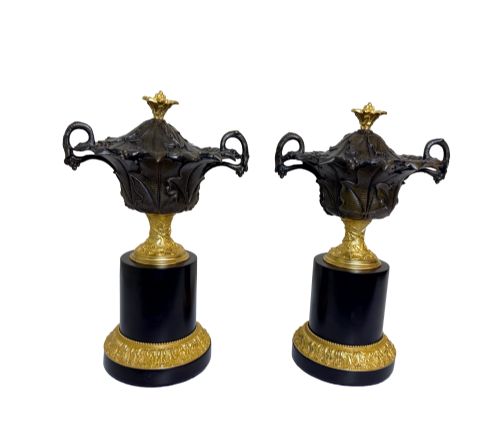
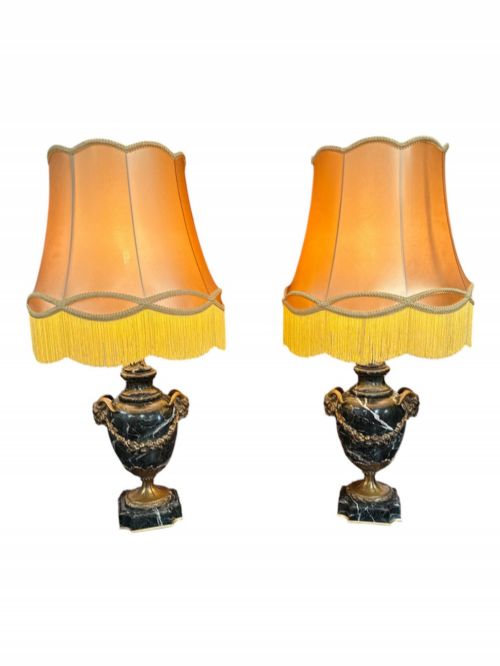
Foundries cast bronze, gilt bronze, and brass elements separately, mounting handles, friezes, and feet directly onto the stone. The contrast between polished dark stone and patinated or gilded metal defines the surface interaction.
Black Marble Urns Retail Price Guide 2026
Typical asking prices for black marble urns among the pieces listed under this phrase on Sellingantiques today, from the lower quarter to the upper quarter. They describe what is for sale here now, not the wider market.
Listings feature nineteenth-century pieces combining black marble, slate, bronze, and gilt metal.
What varies in quality
The crispness of the bronze chasing and the depth of the marble polish dictate the upper tier of these pieces. Sharp, hand-finished detailing in the metal mounts separates workshop standards from ordinary production.
Proportion and the integration of stone with metal define the visual success of an urn. Pieces where the mounts sit flush and the marble shows subtle figure or uniform depth command greater visual authority.
Japy Frères·Sacre·Selim Bright·Achille Brocot
The Black Marble Urns Glossary
- Garniture
- A set of three or more matching decorative objects designed to sit on a mantelpiece. Typically, a central clock is flanked by a pair of urns or vases.
- Grand Tour
- Souvenirs and decorative objects purchased by nineteenth-century travellers in Italy. They frequently replicate ancient classical forms in bronze and marble.
- Tazza
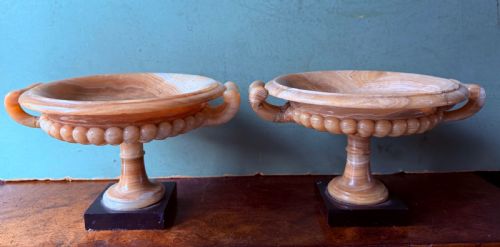
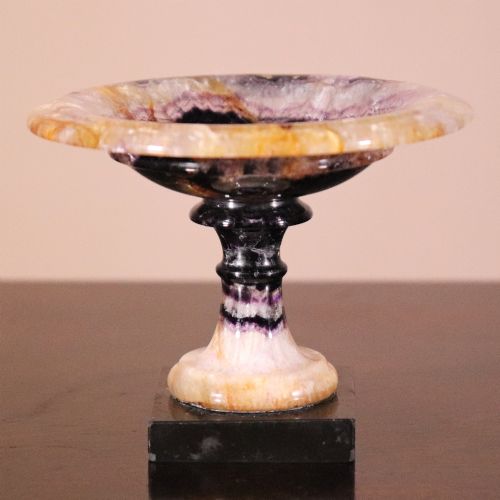
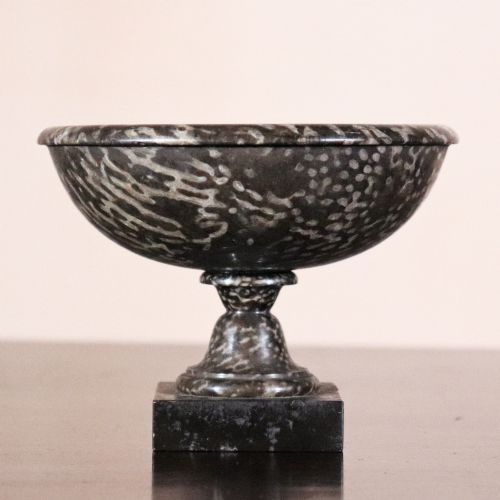
- A shallow bowl or cup raised on a stem and foot. These pieces often mimic archaeological finds on block bases.
- Ormolu
- Gilded bronze mounts applied to furniture and decorative objects. The technique involves coating bronze in a mercury-gold amalgam and heating it.
Black Marble Urns: Frequently Asked Questions
What are black marble garniture sets?
Garniture sets consist of a central clock accompanied by matching side pieces such as urns or vases. They were designed to create a balanced display across a mantelpiece or sideboard.
The heavy black marble and slate construction gave these sets a substantial, architectural weight popular in nineteenth-centur parlours.
How do I care for antique marble urns?
Dust the stone regularly with a soft, dry cloth and avoid harsh chemical cleaners that can dull the polished surface. Metal mounts require gentle dusting without abrasive polishes.
Keep the pieces away from direct heat sources and sudden temperature changes to protect the integrity of the stone and any joined mounts.
Are these urns solid marble?
Many nineteenth-century examples utilise dense black marble or black slate as the primary body material. Artisans then applied cast bronze or gilt metal mounts to the exterior.
The combination of stone and metal gives the objects their characteristic heft and structural contrast.
What is a Grand Tour urn?
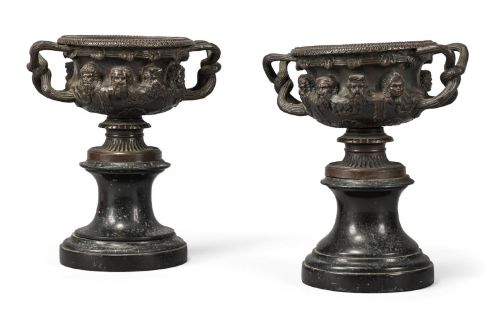
Grand Tour urns are decorative pieces inspired by classical antiquities seen by wealthy travellers in Italy during the nineteenth century. Workshops in Rome and Paris produced them in bronze and marble as souvenirs.
These pieces often replicate specific archaeological finds or architectural fragments scaled down for domestic display.