
French Bronze Urns
French bronze urns bring classical elegance and refined metalwork into interiors through nineteenth-century designs rooted in neoclassical and empire styles.
French Bronze Urns
When searching for french bronze urns, a buyer encounters decorative vessels, campana shapes, and classical grand tour pieces dating primarily from the nineteenth century.
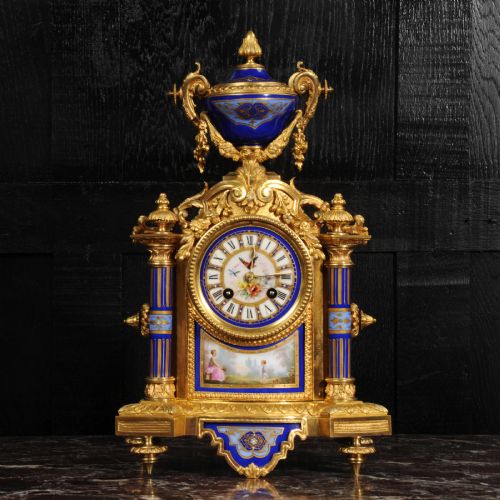
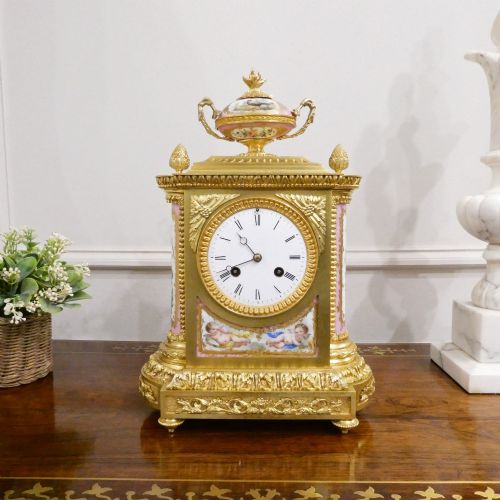
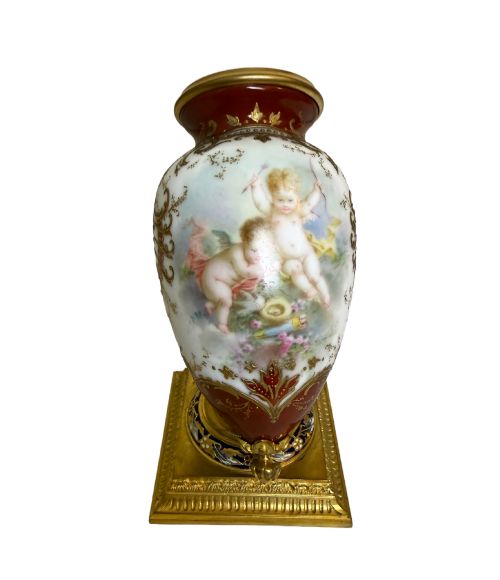
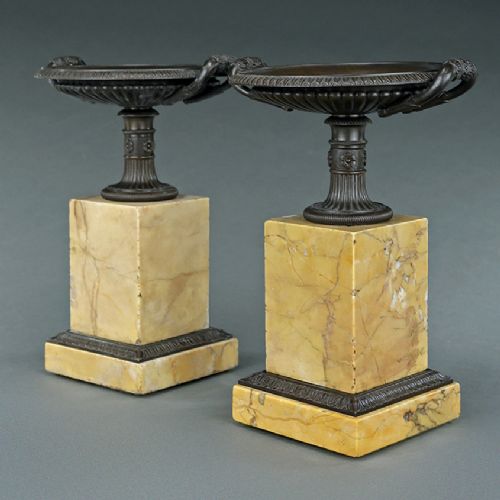
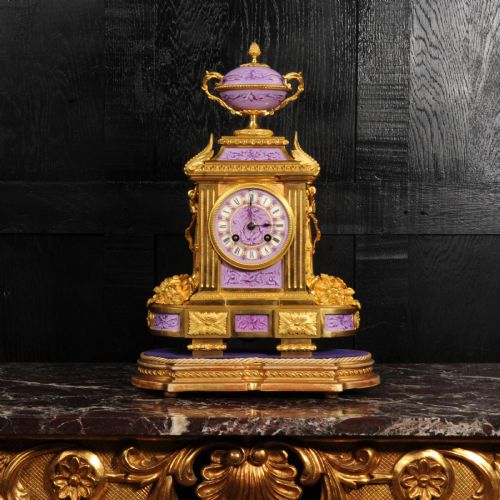
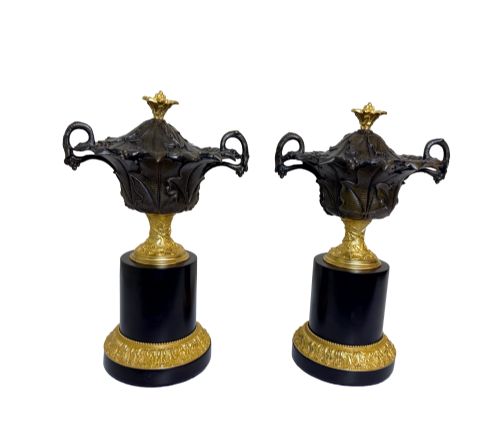
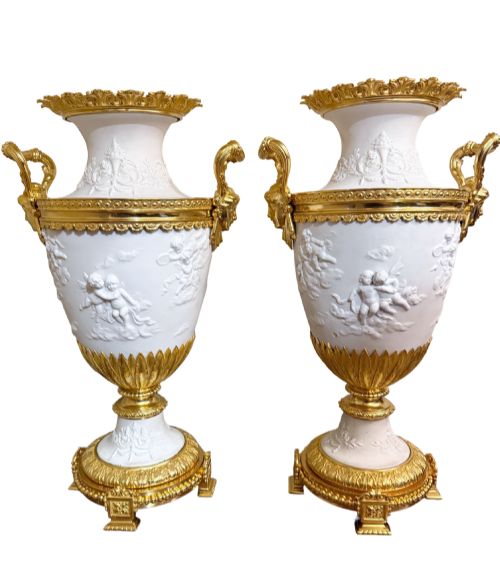
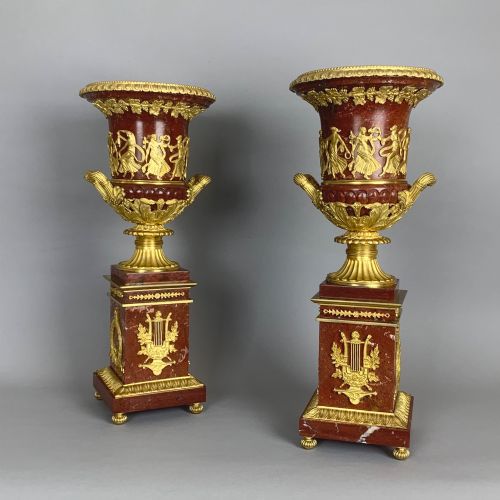
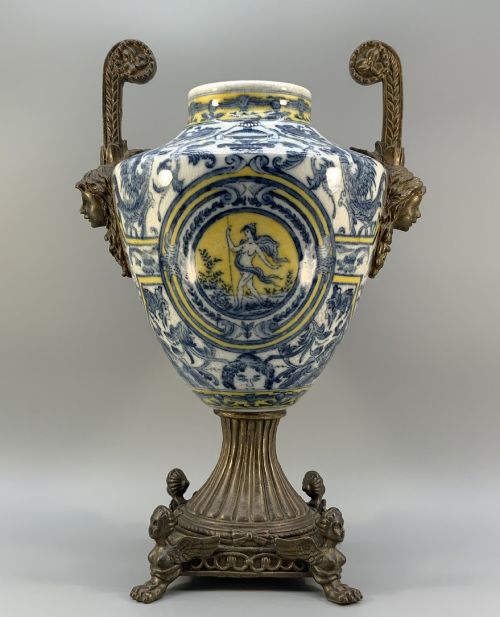
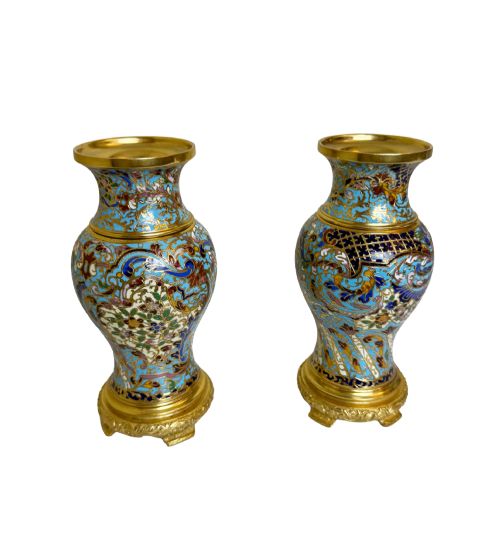
The objects frequently combine cast bronze or ormolu with contrasting materials such as siena marble bases, porcelain bodies, and champlevé enamel accents.
Most examples reflect historical revival movements, drawing inspiration from classical antiquity, Louis XVI aesthetics, and French empire designs.
How They Were Made
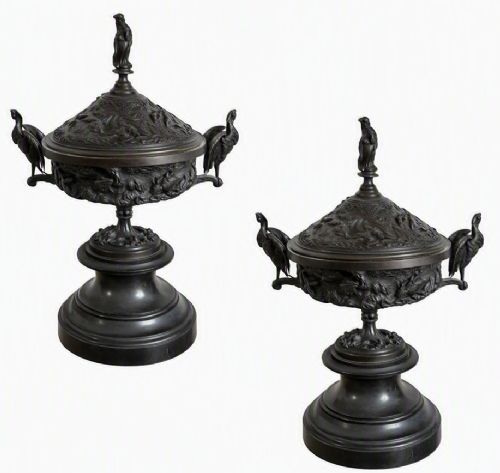
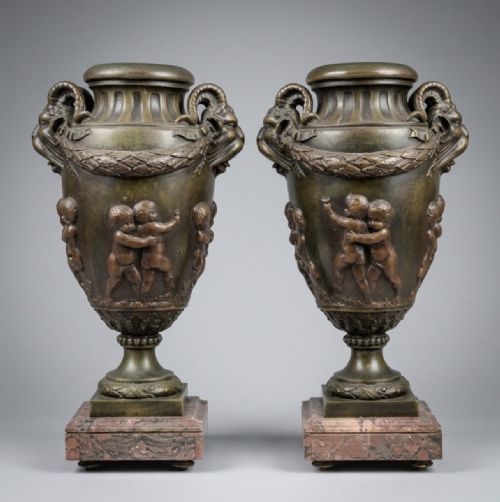
Craftsmen utilised lost-wax casting and metal chasing to create detailed bronze and ormolu mounts, incorporating decorative elements like handles, cherubs, and classical masks.
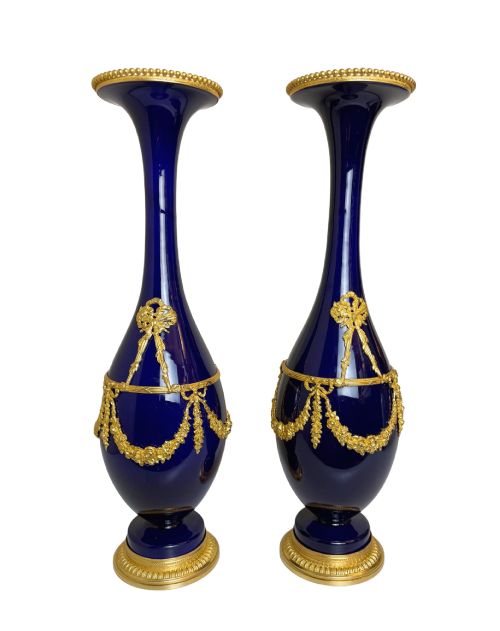
Selected vessels integrated porcelain bodies, such as blue ceramic or Sevres style panels, joined to metal mounts with precision.
Marble bases in white or siena varieties provided stable plinths for the metal urns, often secured with threaded bronze fittings.
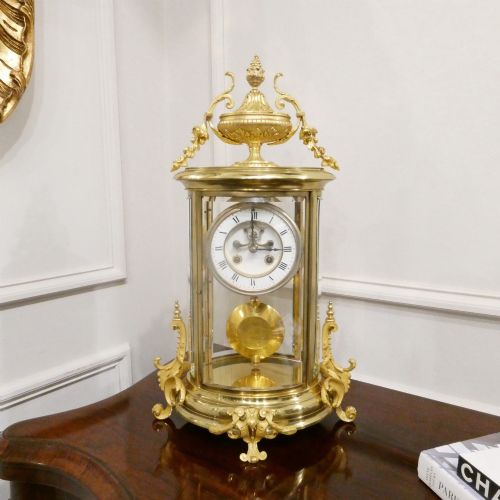
Listings feature items utilising gilt bronze, ormolu, porcelain, and siena marble across neoclassical and empire styles.
What Varies in Quality
The crispness of the bronze chasing and the depth of the gilding separate standard production pieces from finer examples.
The selection of the marble base, particularly the choice of siena marble and the weight of the stone, indicates the standard of the object.
The integration of secondary materials, such as hand-painted porcelain or champlevé enamel work, determines the overall refinement of the piece.
Achille Brocot·Samuel Marti·Casier·L. Moreau
The French Bronze Urns Glossary
- Ormolu
- Gilded bronze produced by applying a mercury-gilding amalgam to cast bronze. This technique creates a rich golden surface finish seen on many nineteenth-century decorative mounts.
- Campana
- An inverted bell-shaped vessel form derived from ancient Roman pottery. These urns typically feature flared rims and pedestal bases.
- Champlevé
- An enamelling technique where troughs are carved into the metal surface and filled with vitreous enamel powder before firing. The method produces colourful geometric or floral patterns.
- Grand Tour
- The cultural journey undertaken by nineteenth-century travellers who acquired classical bronzes and miniature architectural models as souvenirs. These objects reflect classical archaeological discoveries.
- Siena marble
- A yellow-gold Italian marble with dark veining utilised frequently for classical urn plinths and bases. Its rich colour complements patinated and gilded bronze work.
French Bronze Urns: Frequently Asked Questions
What are french bronze urns?
French bronze urns are decorative metal vessels produced largely during the nineteenth century, drawing upon classical, empire, and neoclassical design traditions for domestic display.
These pieces range from grand tour souvenirs to substantial campana-shaped jardinieres and garniture components mounted on marble plinths.
How were french bronze urns used?
Historically, these urns served as decorative mantel ornaments, garniture set centerpieces, or focal points on side tables within formal nineteenth-century interiors.
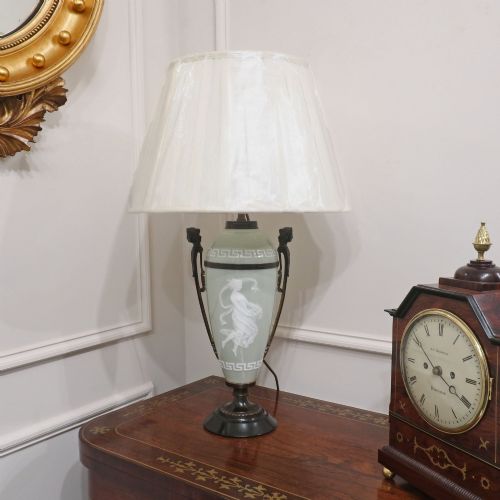
Certain examples were later adapted with electrical fittings to function as table lamps while retaining their original patinated or gilded bronze bodies.
How do I identify nineteenth-century periods?
Nineteenth-century pieces often exhibit distinct revival characteristics, such as the austere symmetry of empire designs or the ornate floral flourishes associated with rococo and louis xvi revivals.
Material combinations, including siena marble bases and hand-painted porcelain inserts, help correlate individual pieces with specific mid to late nineteenth-century manufacturing trends.
How do I clean bronze and ormolu?
Maintenance requires gentle dusting with a soft, dry brush to prevent the accumulation of debris within the chased recesses of the metalwork.
Harsh chemical polishes must be avoided to protect the original historical patina and the delicate mercury gilding found on ormolu surfaces.