
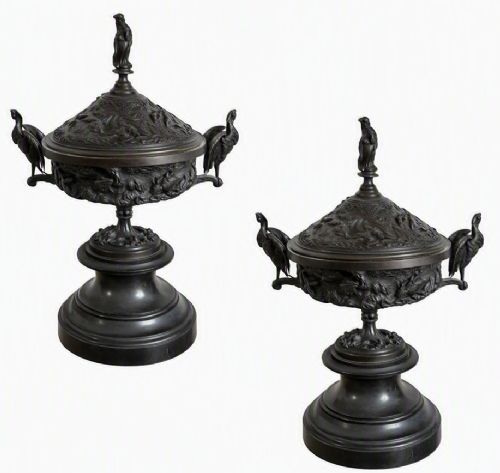
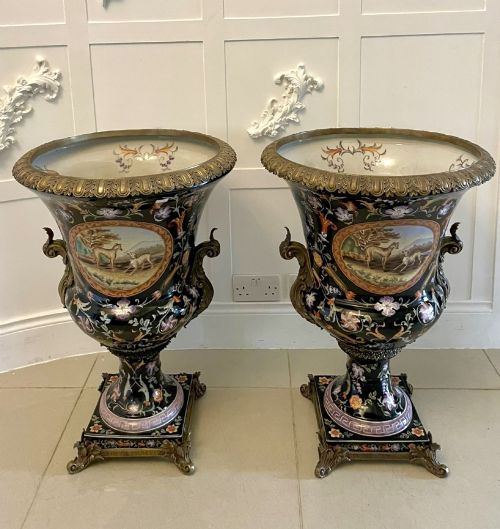
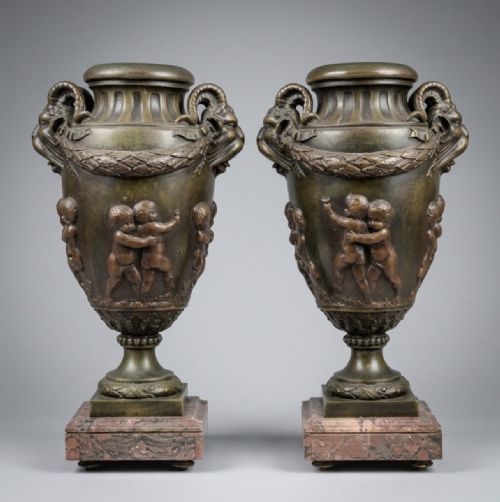
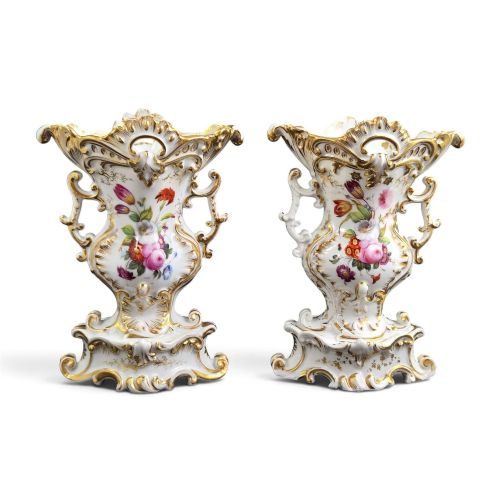

Pair French Urn Vases
These pair french urn vases bring nineteenth-century continental elegance to interior spaces through classical forms and decorative metal mounts.
Pair French Urn Vases
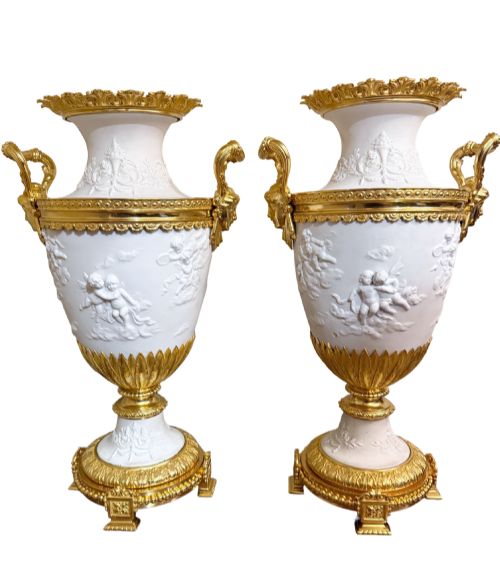
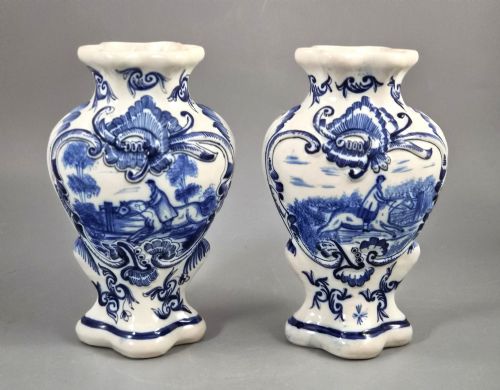
When searching for pair french urn vases, buyers encounter matching vessels designed for ornamental display across the nineteenth and early twentieth centuries. These objects take the shape of classical campana vessels, handled ewers, and lidded cassolettes originating from French workshops.
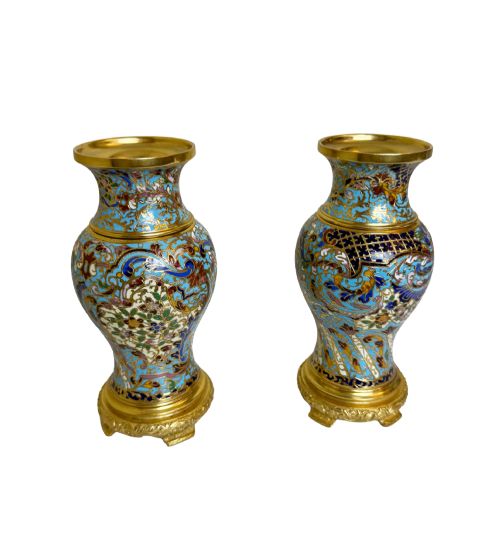
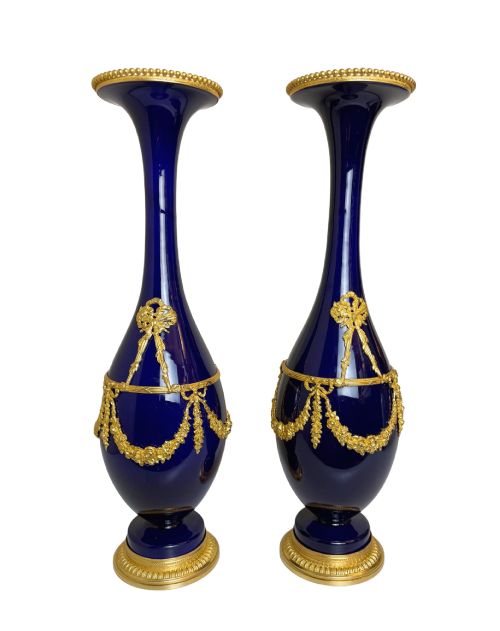
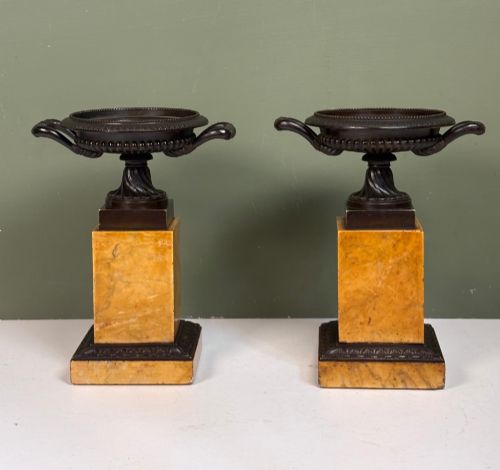
The selections on this page span styles from Neoclassical and French Empire to Rococo Revival and Art Nouveau. Most examples incorporate metal bases or mounts paired with ceramic, porcelain, glass, or stone bodies.
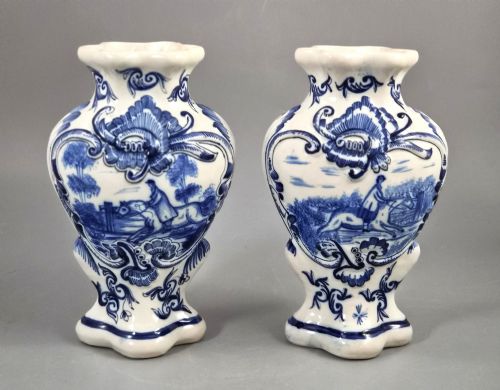
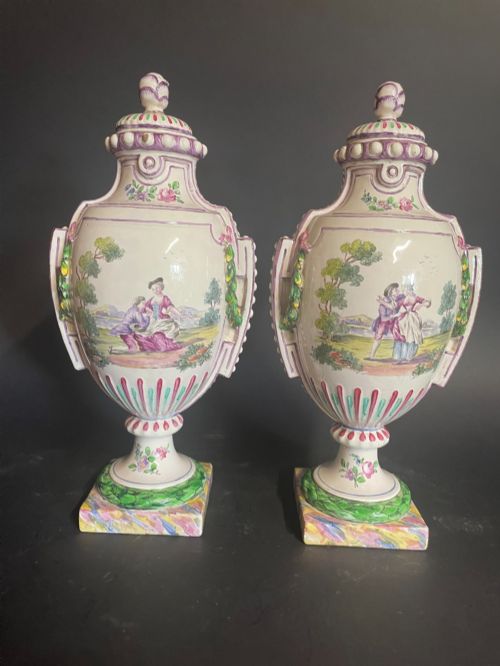
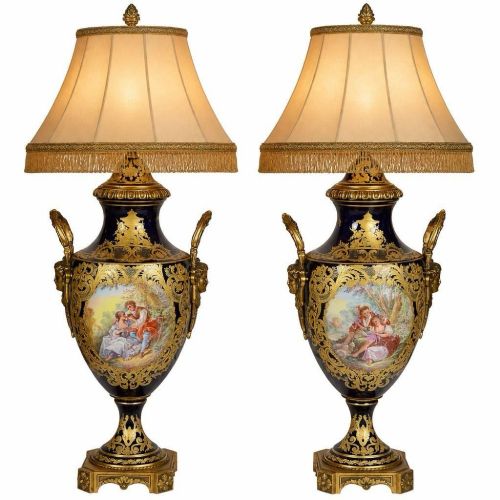
Vessels range from grand exhibition pieces bearing hand-painted scenes to smaller mantel garnitures and converted table lamps. They appear frequently in white or coloured porcelain, glazed faience, and cast bronze.
What varies in quality
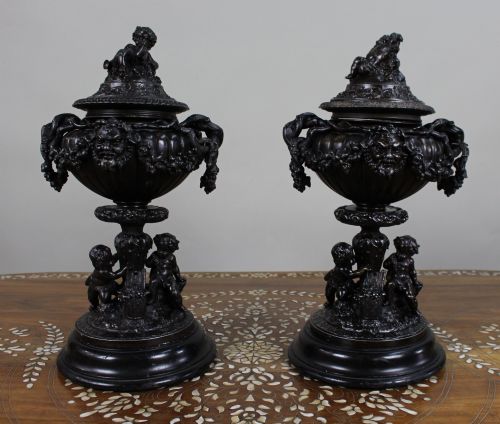
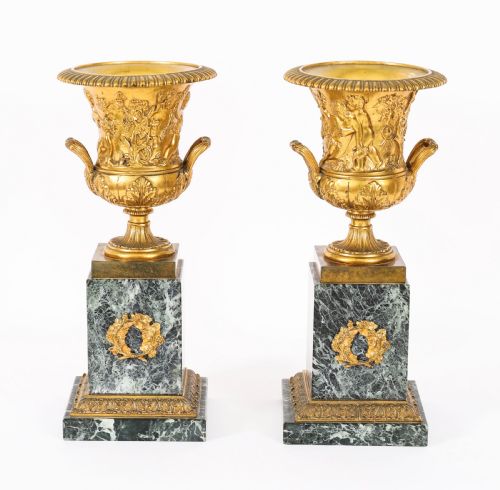
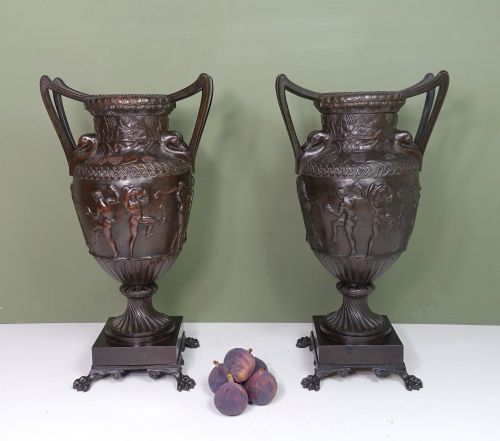
Quality differences emerge in the crispness of the metal chasing and the depth of the gilding on bronze and ormolu mounts. Finer examples display sharp relief work on figures, foliage, and masks, while simpler castings appear softer and less defined.
Ceramic and glass elements show variation through the precision of hand-painted details, enamel work, and the uniformity of coloured glazes. The choice of base material also influences the tier of the piece, with dense marbles and finely turned onyx marking higher production standards.
Bacchic masks and leaping putti frequently peer out from nineteenth-century bronze mounts, reminding viewers of endless classical revelry.
Jules Moigniez·Jacob Petit·Fourmaintraux-Courquin·Sceaux
The Pair French Urn Vases Glossary
- Ormolu
- Gilt bronze mounted onto furniture or decorative objects through a mercury amalgamation process or electroplating. This technique gives metal mounts a rich golden surface finish.
- Campana
- A vase shaped like an inverted bell with an everted rim and a footed base. Originating in antiquity, this form became popular during the nineteenth-century Grand Tour period.
- Cassolette
- A decorative vessel featuring a reversible lid that functions either as an urn or an incense burner. These pieces often incorporate marble bodies with ormolu mounts.
- Spelter
- An alloy of zinc and lead used as a cheaper alternative to bronze for cast decorative items. It is frequently bronzed or painted to simulate heavier metal.
- Faience
- Tin-glazed earthenware produced in European potteries. This ceramic technique allows for bright blue and white painted decorative schemes.
Pair French Urn Vases: Frequently Asked Questions
What is the difference between an urn and a vase?
Urns typically feature a footed base, a distinct body, and often include handles or lids designed for classical display. Vases encompass a broader range of open-topped vessels used for flowers or standalone decoration.
In nineteenth-century French decorative arts, the terms often overlap, particularly with pieces influenced by Grand Tour excavations and classical revival styles.
How do I identify the period of these urns?
Dating relies on stylistic clues, material combinations, and manufacturing techniques recorded across the nineteenth century. Neoclassical and Empire forms reflect early century austerity, while later decades favour eclectic revivals and Art Nouveau curves.
Base materials such as siena marble, white onyx, and cast spelter also help narrow down the decade of production.
Were these vessels used for flowers?
Many decorative urns served purely as mantel garnitures or architectural ornaments rather than functional containers for water and stems. Lidded cassolettes and mounted porcelain pieces were intended to enhance interior reception rooms.
Some faience and porcelain examples were manufactured for practical floral display alongside decorative impact.
How should I clean ormolu and bronze mounts?
Dusting with a soft, dry brush prevents the buildup of grime on delicate champleve and gilt surfaces. Liquid polishes and abrasive cleaners remove the historic patina and damage the underlying gilding.
Professional conservation advice is recommended for pieces showing heavy oxidation or structural instability in their mounts.