



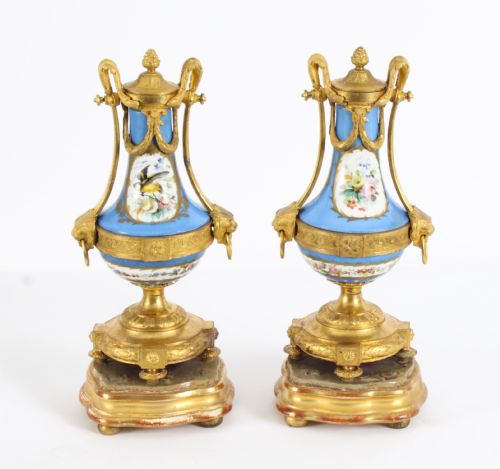


19th Century Bronze Cassolettes
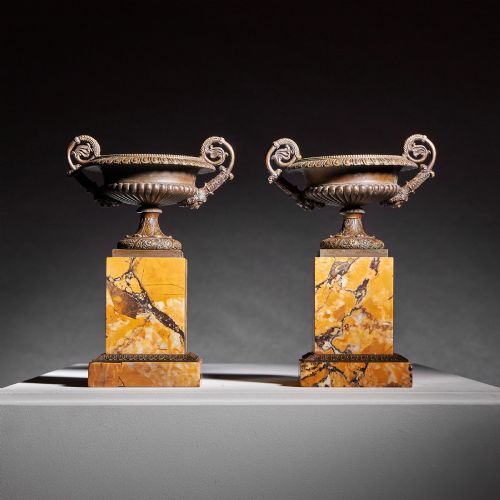
These 19th century bronze cassolettes are reversible decorative vessels that transform from lidded urns into candle holders, bringing classical elegance to any mantelpiece.
19th Century Bronze Cassolettes
When you search for 19th century bronze cassolettes, you encounter ornamental vessels designed with a dual-purpose reversible lid that reveals a socket for a candle on the reverse. The selection centres heavily on French ateliers, alongside English Regency pieces and Italian neo-classical works.
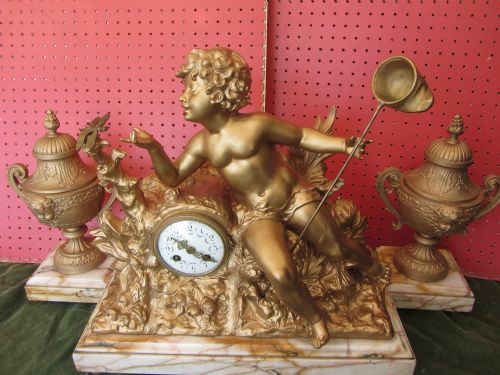
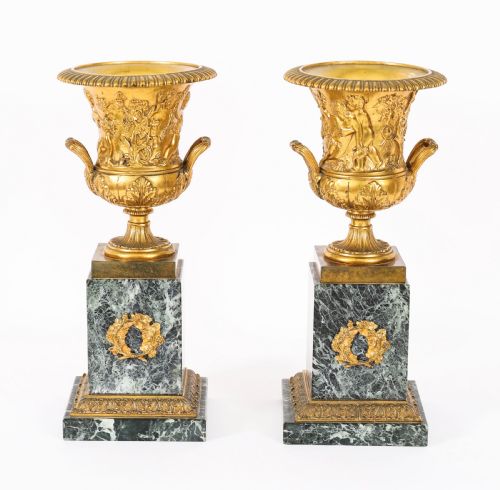
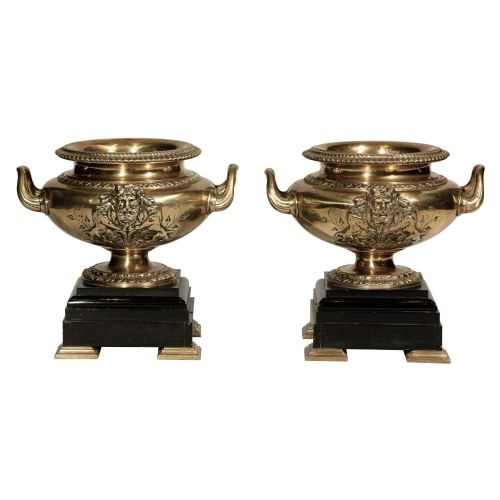
The forms span from decorative urns and vases to clock garnitures, frequently offered as matching pairs mounted on pedestals. Materials range across gilt bronze, patinated bronze, and ormolu combined with marble, onyx, quartz, and majolica porcelain.
How they were made
Maker-craftsmen cast the bronze bodies using traditional methods, applying both a rich gilt finish and darker patinated surfaces to highlight sculptural details. Many examples integrate hand-carved marble or onyx plinths and bases as solid foundations for the metalwork.
Interiors and decorative accents incorporate champleve enamel work, Sevres porcelain, or detailed mounts featuring Bacchic masks and putti. The reversible lids fit snugly into the neck of the urn, engineered to transition smoothly between a closed vessel and a candlestick.
19th Century Bronze Cassolettes Retail Price Guide 2026
Typical asking prices for 19th century bronze cassolettes among the pieces listed under this phrase on Sellingantiques today, from the lower quarter to the upper quarter. They describe what is for sale here now, not the wider market.
Listings demonstrate a strong representation of French Neoclassical, Empire, and Napoleon III styles utilising gilt bronze, ormolu, and marble.
What varies in quality
The refinement of the casting and chasing work separates standard production from exceptional pieces, visible in the sharpness of acanthus leaves, masks, and figural mounts. Superior examples maintain crisp detail without soft edges or heavy smoothing from later polishing.
The integration of materials dictates distinction, particularly the selection of unblemished marble, rich gilt ormolu, and vibrant enamel. Harmony between the bronze mounts and the stone or ceramic body determines the overall visual balance.
Auguste Cain
The 19th Century Bronze Cassolettes Glossary
- Cassolette
- A decorative vessel with a reversible lid that functions as an urn on one side and a candle holder on the other. This clever dual design defined formal mantelpiece decoration.
- Ormolu
- Finely ground high-carat gold mercury-gilded to a bronze object. It imparts a brilliant, enduring golden lustre to decorative mounts.
- Champleve
- An enamelling technique where troughs are dug into the metal surface and filled with vitreous paste before firing. This creates intricate coloured patterns across the bronze.
- Garniture
- A set of matching ornamental objects, typically three or five pieces, designed to display together on a mantelpiece or sideboard. They often include a central clock flanked by matching cassolettes or urns.
19th Century Bronze Cassolettes: Frequently Asked Questions
How do cassolettes work?
These versatile decorative objects function through a removable, reversible lid. One side displays a finished decorative top to resemble a standard urn, while flipping the lid reveals a hidden candle socket.
This ingenious mechanism allowed owners to alter the function of their mantelpiece display from ornamental urn to candle holder for evening gatherings.
Where were they placed?
Nineteenth-century households placed these vessels prominently on drawing-room mantelpieces, often arranged alongside matching clocks as part of a garniture set. They also adorned console tables and sideboards in formal reception rooms.
Their decorative presence added classical symmetry and refined French or English interior style to the principal living spaces.
How do I identify French pieces?
French examples from the nineteenth century frequently incorporate distinct stylistic revivals such as Napoleon III, Empire, or Rococo ornamentation. They often feature champleve enamel, Sevres porcelain panels, or finely chased ormolu mounts.
Maker attribution or foundry marks occasionally appear on the bronze base, pointing to Parisian workshops of the period.
What stones are used with the bronze?
The bronze and ormolu mounts are regularly paired with natural decorative stones including white onyx, green marble, and quartz. These stone bases and plinths provide substantial weight and contrasting colour to the metallic bodies.
The quality of the marble turning and the richness of the stone grain significantly influence the overall appearance of the piece.