


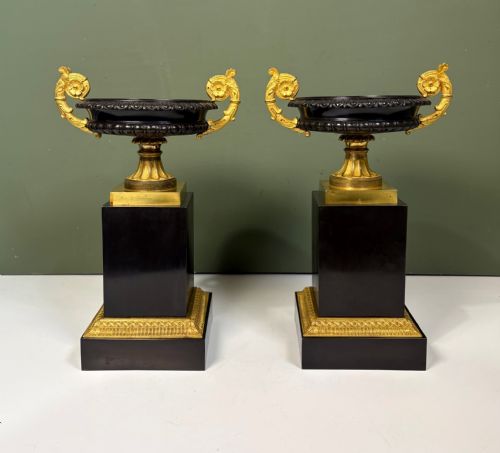


Empire Style Urns
Empire style urns are neoclassical decorative vessels bringing formal presence and classical dignity to any room.
What Empire style urns are
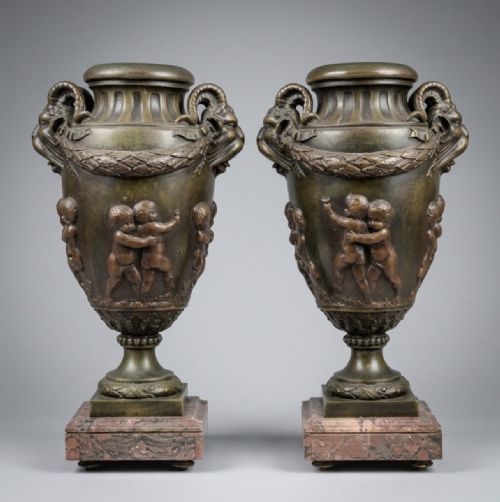
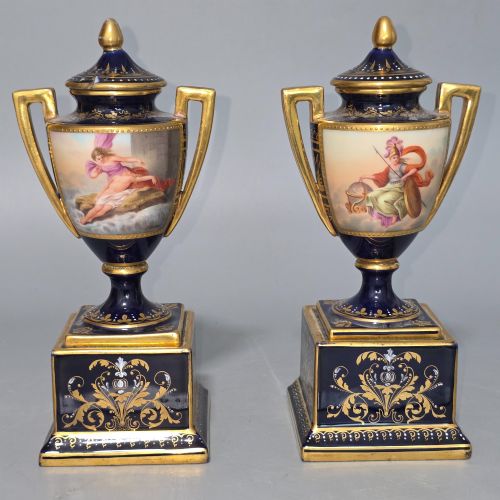
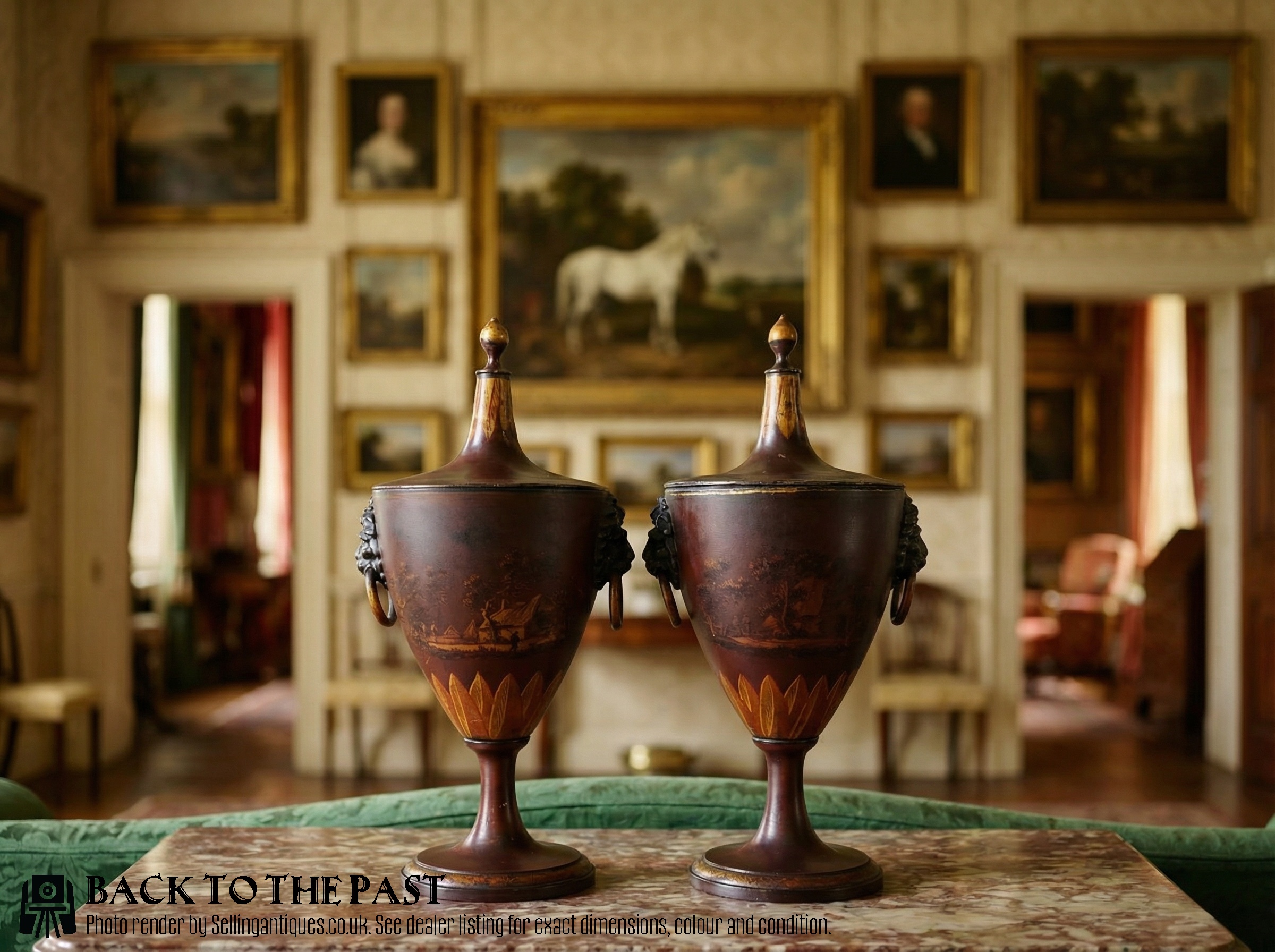
Empire style urns are classical decorative vessels originating in forms like campana shapes, cassolettes, amphorae, and chestnut urns. These pieces often arrive in matched pairs, designed to sit symmetrically on mantelpieces, console tables, or sideboards.
The pieces listed on this page span the nineteenth century up to nineteen thirty, including Italian, French, Dutch, and Grand Tour origins. They draw heavily on neoclassical design principles, echoing ancient Greek and Roman forms through disciplined proportions and classical silhouettes.
How they were made
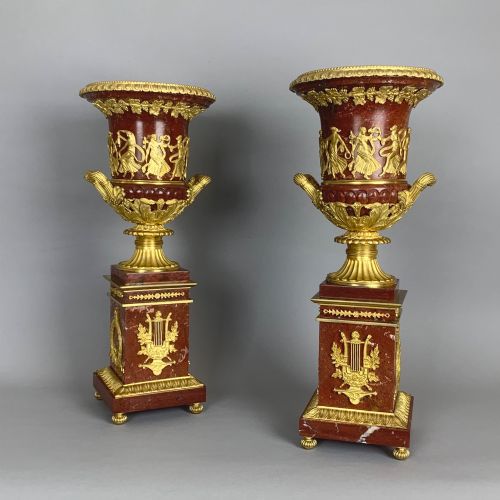
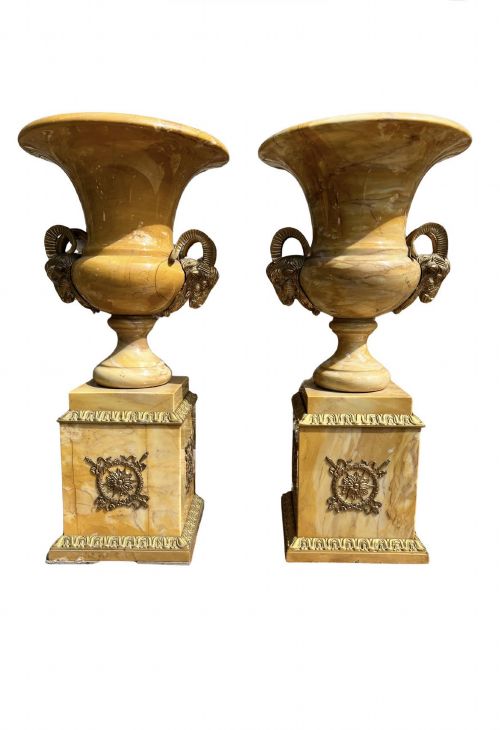
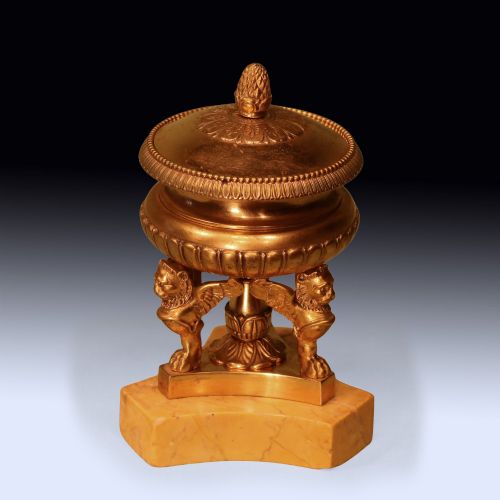
Maker's workshops combined heavy stone elements such as sienna marble, porphyry, and onyx with cast metals including bronze, brass, and pewter. These sturdy mineral bodies provided a solid foundation, often accented with gilding to highlight the classical reliefs and mounts.
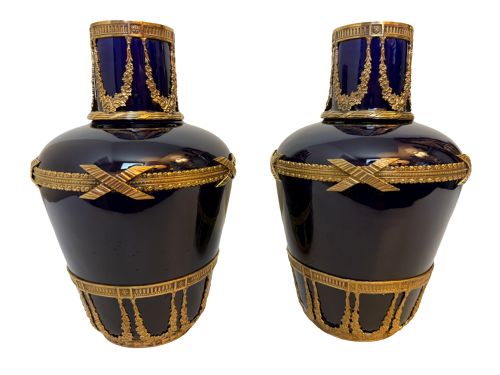
Ceramic pieces utilise French porcelain painted and glazed for a smoother finish, whilst metal examples employ japanning techniques on pewter. Stonework is typically turned and polished to reveal natural veining, then fitted with cast metal handles, rims, and bases.
Retail Price Guide 2026
Typical UK retail prices for empire style urns, calculated from the Sellingantiques database of over a million retail prices indexed since 2003. This retail price guide relies exclusively on Sellingantiques data; no external sources or auction records are used, so the figures do not describe the wider market.
Materials across these listings include sienna marble, porphyry, onyx, bronze, brass, pewter, and French porcelain.
What varies in quality
The distinction between standard decorative urns and superior examples lies in the selection and working of materials. Richly figured sienna marble and deep porphyry display finer natural patterning than plain stone, whilst crisply chased bronze mounts reveal sharper casting detail than softer brass.
Proportion and decorative harmony dictate visual success. Pieces with well-balanced handles, integrated gilding, and faithful neoclassical detailing hold the eye better than heavier or clumsily assembled counterparts.
The Empire Style Urns Glossary
- Campana
- A bell-shaped urn or vase originating in ancient Rome, typically featuring flared rims and lower loop handles.
- Cassolette
- A decorative urn with a reversible lid that functions either as a vase or a burner for perfumes.
- Porphyry
- A hard igneous rock containing distinct crystals, prized by classical sculptors for its deep purple or red colour.
- Japanning
- A European imitation of East Asian lacquerwork, applied here to metal surfaces for a dark glossy finish.
- Amphora
- A two-handled ancient jar shape utilised in classical design for decorative urns and vases.
Frequently Asked Questions
What were empire style urns used for?
These vessels served purely decorative functions in nineteenth-century interiors, displayed on mantelpieces or architectural furniture to project classical taste and scholarly refinement.
Unlike utilitarian jars, their primary role was visual, often arranged in pairs to create balanced, symmetrical focal points within a room.
How do I style empire style urns at home?
Pairs of urns work best when placed symmetrically on sturdy surfaces such as marble console tables, mantelpieces, or large sideboards where their weight is supported.
Allow them space to breathe rather than crowding them with smaller ornaments, letting the natural stone and metal finishes catch the light.
Are these pieces actually from the nineteenth century?
The selection includes items dated specifically to the nineteenth century, eighteen seventy, eighteen ninety, and nineteen thirty, reflecting genuine period production.
Physical indicators such as hand-turned marble, heavy cast bronze mounts, and period gilding help confirm their age and origins.
What is a Grand Tour urn?
Grand Tour pieces were acquired by wealthy travellers visiting classical antiquities in Italy during the nineteenth century, serving as sophisticated souvenirs of their travels.
These items often replicate famous Roman artefacts in bronze or marble, bringing Mediterranean neoclassical style back to British and European homes.