



Antique Porcelain Garniture
An antique porcelain garniture brings matching symmetry to a mantelpiece or sideboard through coordinated sets of vases, urns or clock sets.
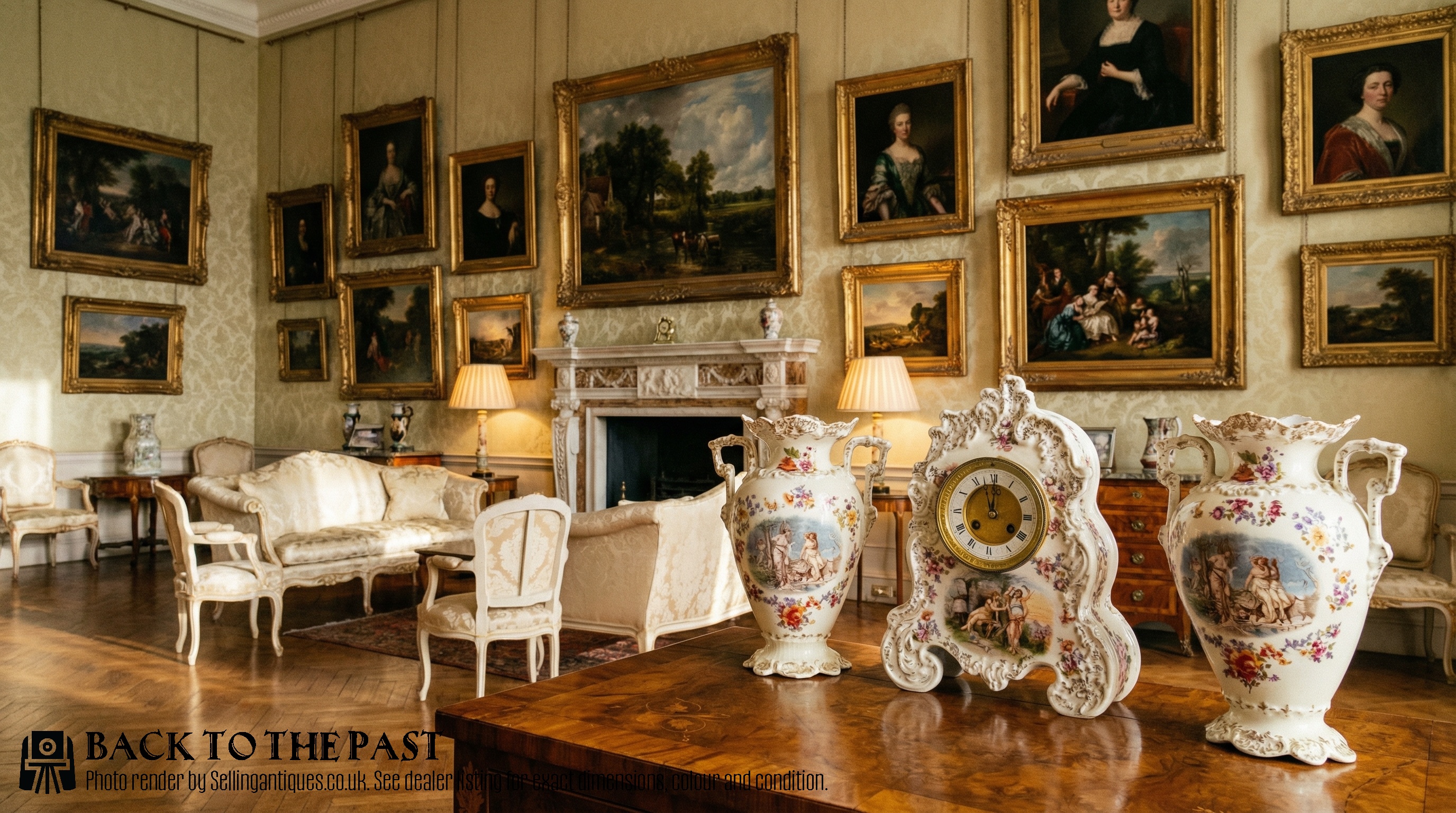
Antique Porcelain Garniture
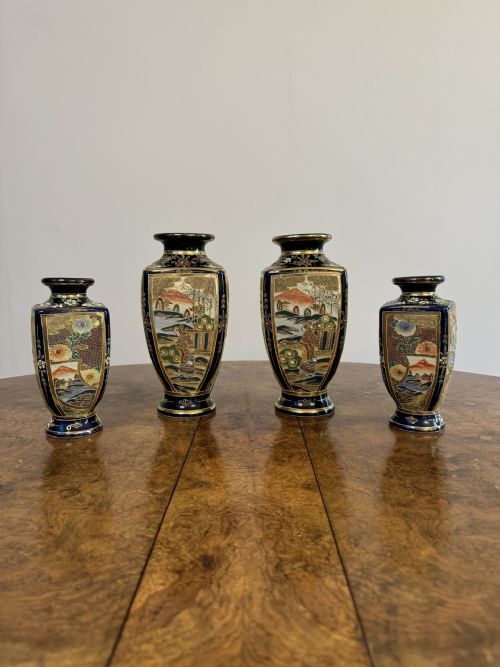
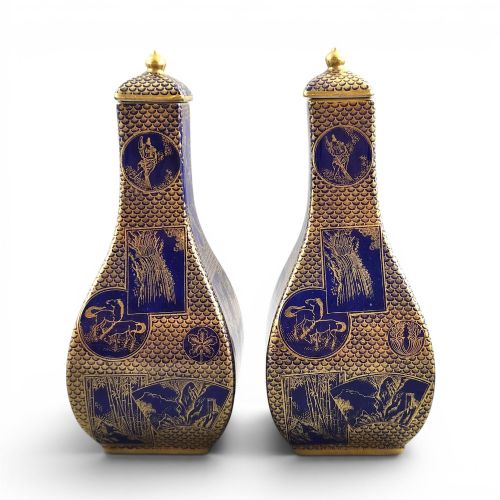
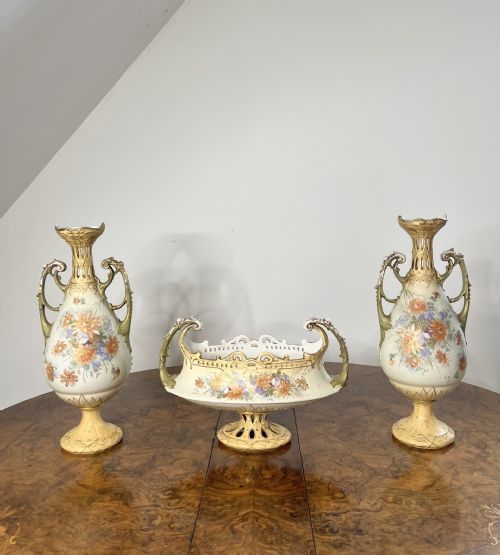
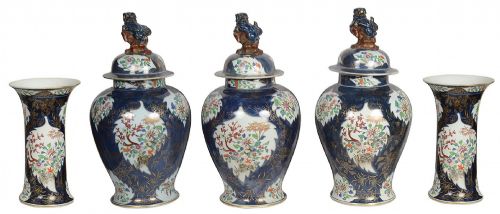
An antique porcelain garniture comprises coordinated sets of ceramic vessels, commonly appearing as pairs of vases, three-piece sets with urns, or comprehensive mantel clock arrangements. These decorative groupings span the nineteenth century, including Georgian and Victorian periods.
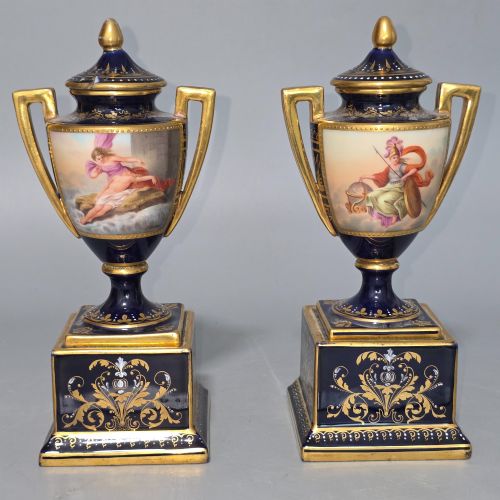
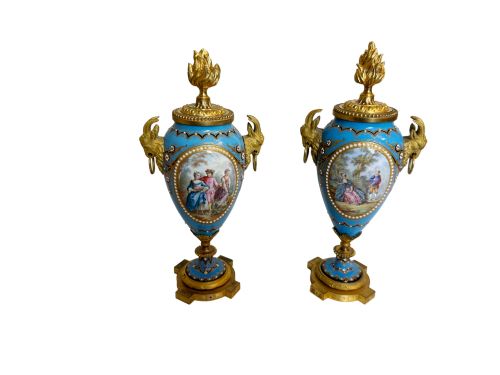
The selections on this page encompass various origins and styles, from French Sevres style works and Japanese Imari palettes to Vienna porcelain and Mason's ironstone. Sets frequently include central clocks flanked by matching candelabras or side vases designed to sit in balanced alignment.
Materials and Technique
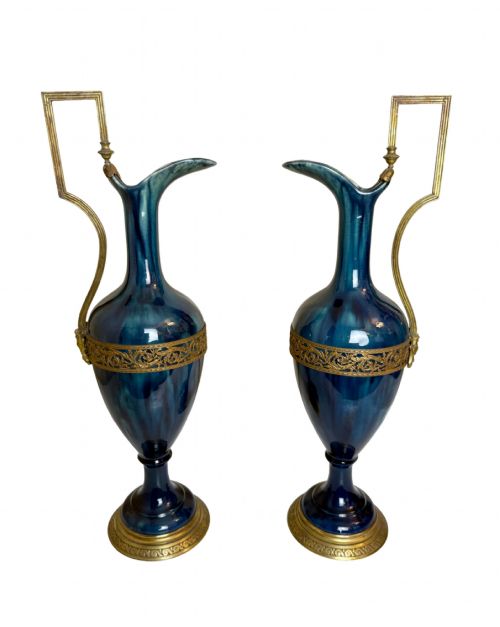
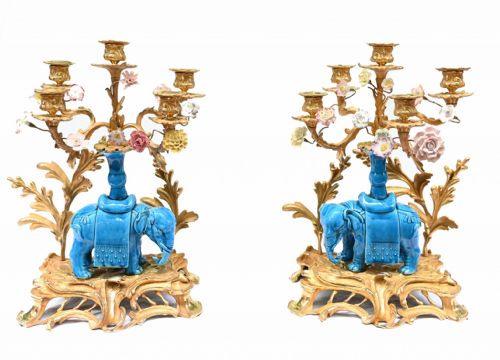
Makers combined ceramic bodies with metallic mounts, uniting porcelain, enamel and earthenware with cast gilt bronze, ormolu and brass trim. Artisans applied glaze and gold leaf highlights to enhance the visual depth of the painted surfaces.
Vessels feature hand-painted decorations, transfer printing and enamel work executed across European factories and Japanese kilns. Metal components were shaped through casting and then gilded to frame the ceramic sections.
Porcelain elephants double as functional candelabras in select Victorian designs.
Judging the Work
Quality rests in the precision of the hand-painting, the crispness of the porcelain moulding and the weight of the metal mounts. Superior sets display detailed enamel work and harmonious proportions across every matched component.
The integration between the ceramic body and mounts reveals the maker's hand, where tight fitting and balanced gilding distinguish standard production from exhibition pieces.
Flight Barr and Barr·KPM Berlin·Mason's Patent Ironstone·Royal Vienna·Vincenti of Paris
The Antique Porcelain Garniture Glossary
- Garniture
- A set of matched ceramic or metal vases, urns or figures designed to be displayed together as a decorative unit on furniture or mantelpieces.
- Ormolu
- Gilded bronze or brass mounts applied to furniture, clocks and porcelain vessels to provide structural framing and decorative accents.
- Imari
- A style of Japanese export porcelain decorated in underglaze blue, iron red, gold and additional enamel colours.
- Cassolette
- A decorative vessel shaped like a vase or urn, often featuring a reversible lid that functions as a burner or candle holder.
- Bleu de Roi
- A rich deep blue enamel glaze utilised extensively on Sevres and other French porcelain bodies during the eighteenth and nineteenth centuries.
Antique Porcelain Garniture: Frequently Asked Questions
What is an antique porcelain garniture?
An antique porcelain garniture is a matched set of decorative vessels, such as vases, urns or a mantel clock accompanied by side pieces, designed for symmetrical display.
These sets were produced in various European and Asian workshops during the nineteenth century to adorn formal rooms.
How were garnitures displayed?
Garnitures were traditionally arranged on mantelpieces, consoles or large sideboards with a central piece flanked by matching companions.
This balanced layout created a focal point within nineteenth-century drawing rooms and parlours.
How do I identify French Sevres style pieces?
French Sevres style pieces typically feature rich blue enamel grounds, detailed hand-painted panels and prominent ormolu mounts.
They often reflect classical or Napoleonic themes influenced by French court aesthetics.
What is a clock garniture?
A clock garniture combines a central mantel clock with a matching pair of side ornaments, such as vases, urns or candelabras.
The entire set shares matching materials, glazes and decorative motifs to ensure a unified appearance.