
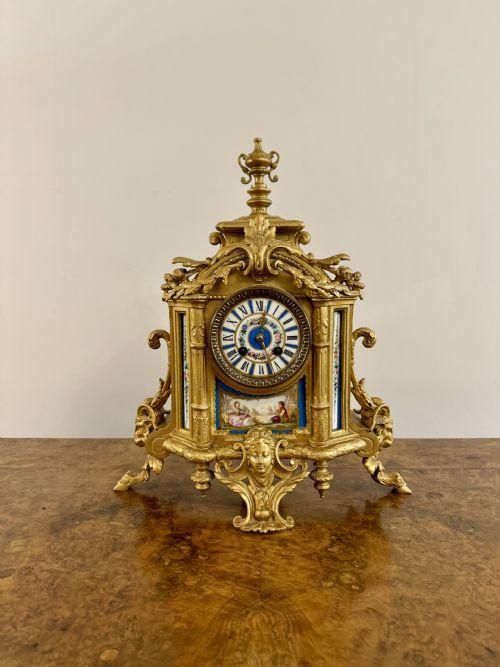


Ornate Porcelain Mantle Clock
An ornate porcelain mantle clock brings undeniable French flair to a room, combining painted ceramic panels with gilded mounts for a grand chiming centrepiece.
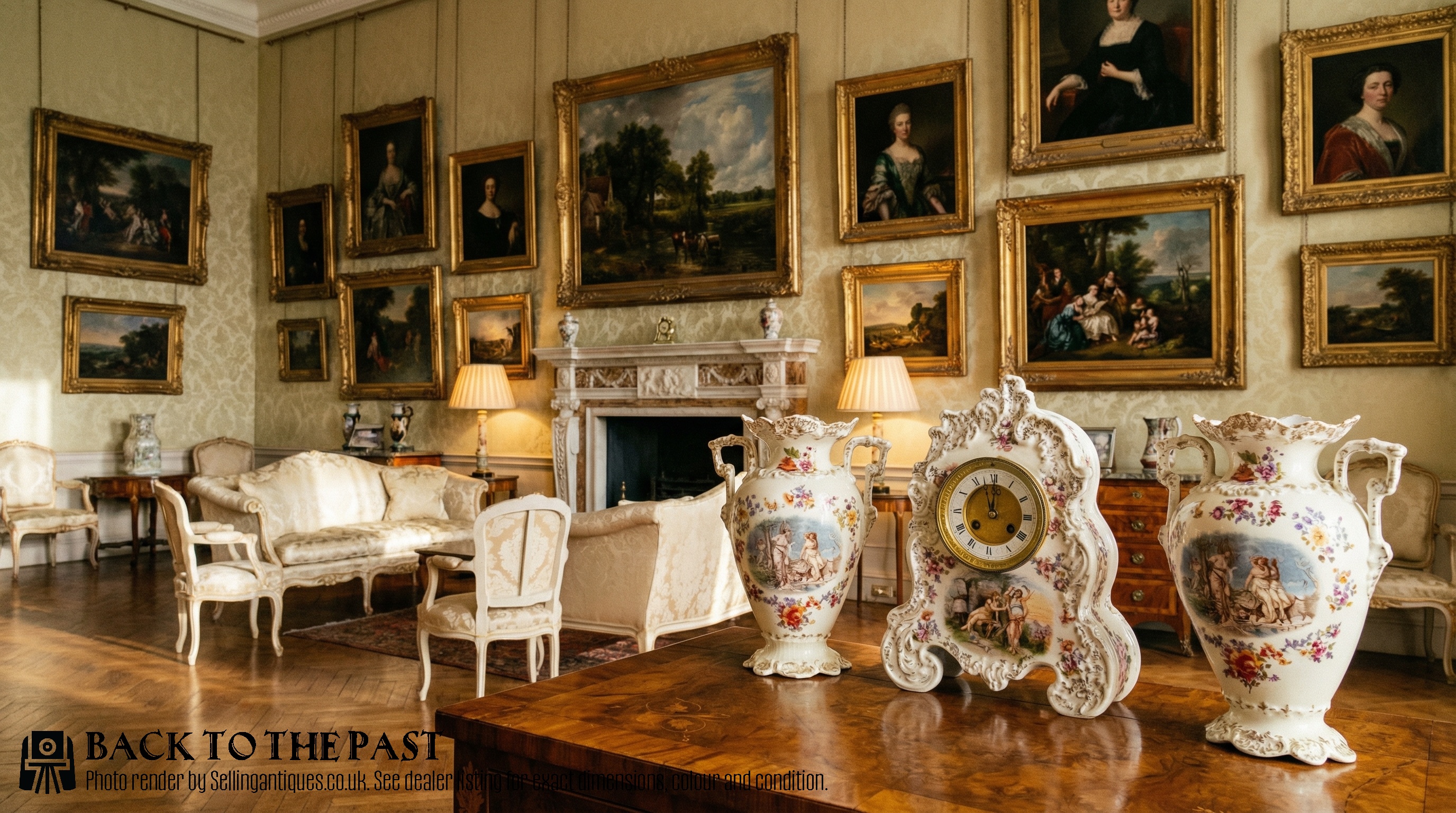
Ornate Porcelain Mantle Clock
When you search for an ornate porcelain mantle clock, you are looking at decorative timepieces produced predominantly during the nineteenth century in France. These objects combine sculptural metalwork with glazed ceramic panels, often accompanied by matching garniture urns or set beneath glass domes.
The most common examples you will meet on this page hail from the Victorian era and the Belle Epoque, spanning styles from Rococo Revival and Napoleon III to Louis XVI Revival. They are designed to sit prominently upon a fireplace mantelpiece or console table, serving as both practical timekeepers and elaborate decorative statements.
Materials and construction
Makers constructed these clocks using a heavy foundation of gilt metal, brass, or ormolu, shaped into elaborate scrolls, floral motifs, and figural ornaments such as cherubs. Porcelain panels and dials were hand-painted and glazed, frequently imitating the esteemed output of Sevres factories.
Movements were engineered to strike bells on the hour or half-hour, driven by mechanical gear trains. Many pieces incorporated delicate glass crystals and wooden bases, sometimes protecting the entire assembly beneath a blown glass dome.
Listings feature French nineteenth-century mantel clocks utilising porcelain, gilt metal, ormolu, and glass domes across Victorian and Belle Epoque styles.
Assessing quality
The distinction between standard production and the finest work lies in the crispness of the gilt bronze or ormolu chasing and the artistry of the hand-painted porcelain. Superior examples display deeply sculpted metalwork with varied surface finishes rather than flat, uniform cast metal.
The quality of the porcelain panels also dictates value, with finely detailed figural scenes and delicate floral polychrome work sitting far above simple transfer-printed designs. Additionally, complete garniture sets and original glass domes elevate the historical integrity of the piece.
The Ornate Porcelain Mantle Clock Glossary
- Ormolu
- A technique of applying finely ground high-carat gold to a bronze or brass object using a mercury amalgam. This process creates a rich, durable golden finish characteristic of fine French decorative arts.
- Garniture set
- A decorative grouping consisting of a central clock flanked by matching side ornaments such as urns or vases. These sets were designed to create a balanced display across a mantelpiece.
- Crystal regulator
- A mantel clock housed within a brass frame featuring glass panels on multiple sides, allowing the mechanical movement and pendulum to be viewed from various angles.
- Belle Epoque
- A period of French cultural and artistic abundance lasting from the late nineteenth century until the First World War. Objects from this era often embrace ornate revival styles and decorative exuberance.
Ornate Porcelain Mantle Clock: Frequently Asked Questions
How do I wind my clock?
Most mechanical nineteenth-century timepieces require a specialised metal key inserted into the dial holes to tension the springs. Turn the key gently until you feel resistance, taking care not to overwind the mechanism.
Ensure you do not force the hands backward past certain points if the strike train is engaged, as this can disrupt the synchronization of the chimes.
What is a garniture set?
A garniture set comprises a main mantel clock accompanied by two matching side pieces, such as urns or decorative vases. These matching objects were manufactured together to create a symmetrical arrangement on a mantelpiece or sideboard.
Finding a complete set together with the central clock is particularly desirable for collectors seeking a unified decorative scheme.
How do I date these clocks?
Dating relies on stylistic clues, such as the exuberant scrolls of Rococo Revival pieces from the mid-nineteenth century compared to the lighter neoclassical motifs of later Louis XVI styles. Hallmarks on the brass movements or cast numbers can also offer specific production years.
Construction methods, such as the shift in casting techniques and the evolution of glass dome use, help narrow down the decade of manufacture.
Can these clocks keep accurate time?
While mechanical movements can be adjusted using the pendulum regulation nut, antique clocks rarely match the precision of modern quartz timepieces. Environmental factors like temperature and humidity can cause them to gain or lose a few minutes over the course of a week.
Regular professional servicing and proper placement on a level surface will ensure the most reliable performance from the vintage gear train.