



French Style Clock Set
These matching clock sets and garnitures bring together ornate mantel clocks and sidepieces in classic continental styles.
French Style Clock Set
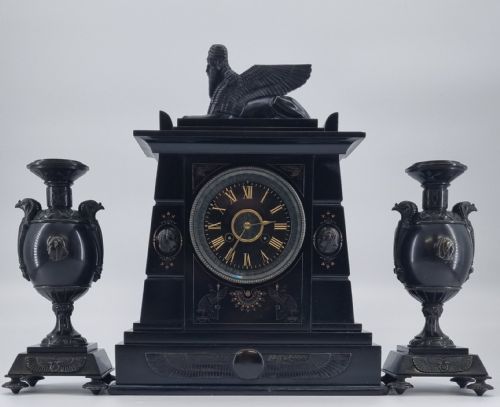
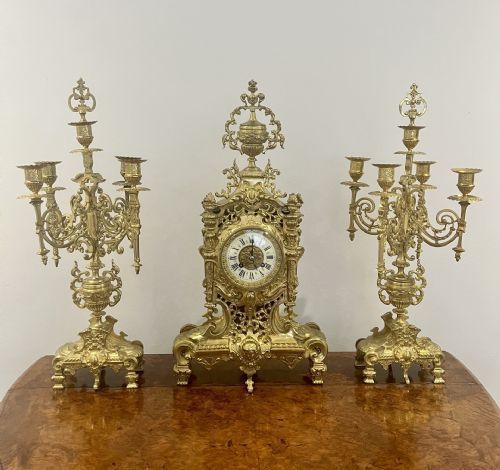
A french style clock set typically comprises a central mantel clock accompanied by matching sidepieces such as candelabras or urns, forming a unified three-piece arrangement for the chimneypiece. These decorative ensembles draw heavily on historical design vocabularies including Louis XVI, Rococo, and Egyptian Revival aesthetics.
The versions most commonly met on this page date from the nineteenth century, particularly the Victorian era, reflecting a period of prolific European decorative manufacturing. They combine timekeeping utility with ambitious sculptural and architectural presence designed to dominate a formal interior.
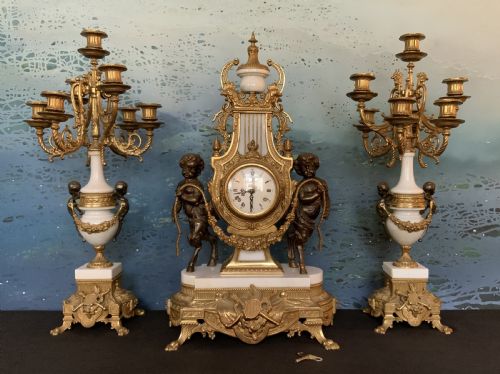
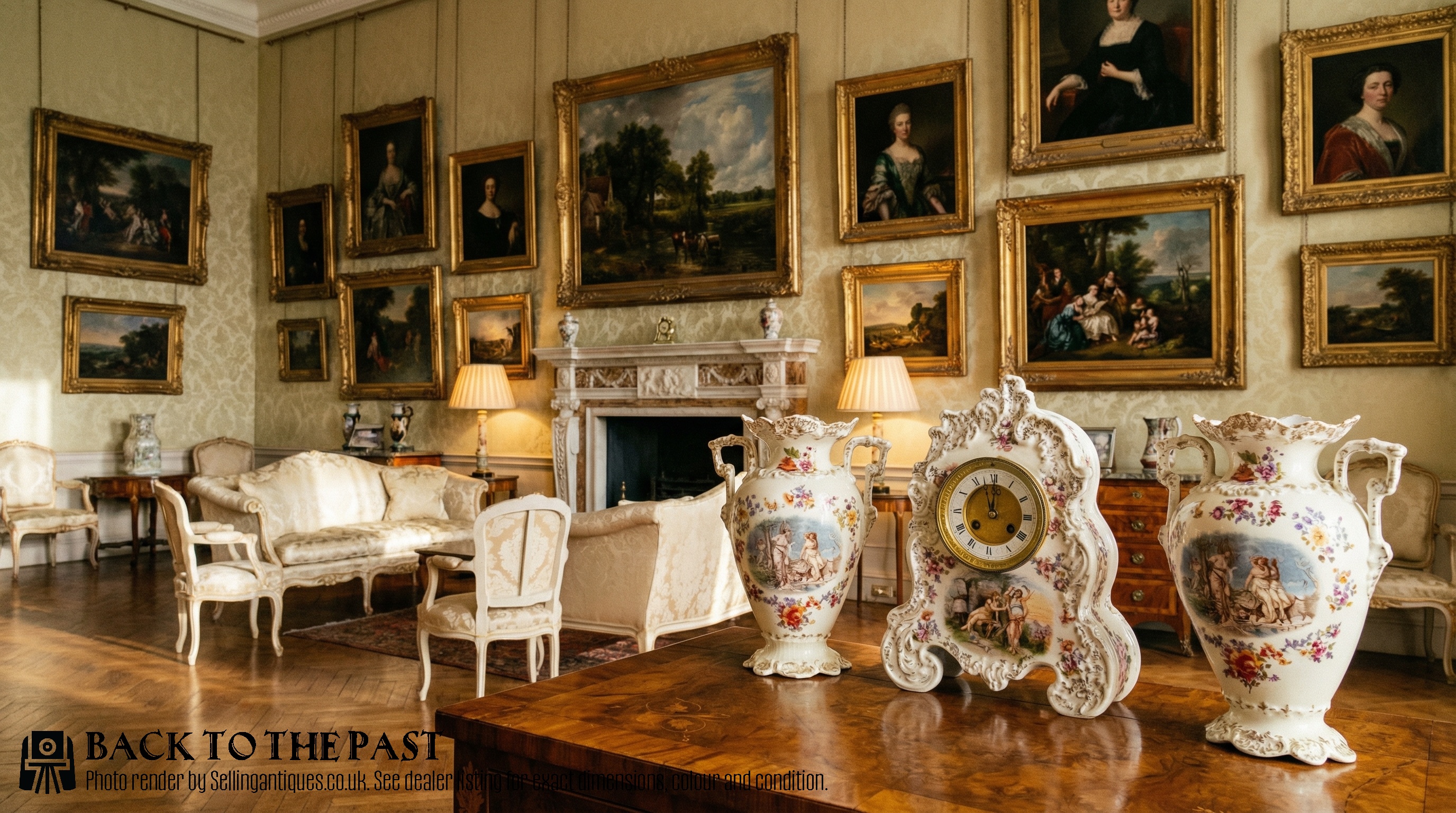
Compositions range from symmetrical architectural marbles mounted with gilt metal to elaborate porcelain urns and lyre-shaped bodies sheltered beneath glass domes. Each configuration demonstrates a coordinated decorative scheme where the central timepiece and its flanking garnitures share identical material palettes and ornamental motifs.
Materials and construction
Foundational structures rely heavily on natural stones such as white, black, and sienna marble, green onyx, and occasionally bronze, providing substantial weight and architectural rigidity to the clock bodies and matching garnitures. These mineral elements are paired with cast metals, most notably brass, gilded bronze, and ormolu.
Ceramic components form another major tier of manufacture, incorporating painted porcelain panels and vessels from notable houses like Sevres and Berlin, frequently inset into the metal and stone frameworks. Enamel dials and protective glass domes complete the assemblies, safeguarding intricate mechanical movements and delicate hand-painted surfaces.
Listings feature nineteenth century pieces spanning materials from marble and porcelain to gilt bronze and glass domes.
Distinctions in execution
Superior examples display crispness in the metal casting and chasing, where ormolu mounts exhibit sharp relief and refined hand-finishing rather than soft, industrial uniformity. The integration of high-grade porcelain panels with detailed hand-painting elevates an assemblage above standard commercial production.
The choice and matching of materials dictate the upper tiers of the range, such as solid polished marbles paired with heavy fire-gilded bronze rather than simple brass and painted timber. Mechanical complexity also plays a role, with eight-day striking movements and signed Parisian makers marking the distinction between ordinary domestic timepieces and masterworks.
H Luppens Paris·VINCENTI of PARIS
The French Style Clock Set Glossary
- Garniture
- A set of ornamental objects designed to match and display together, typically comprising a central clock flanked by two matching vases, urns, or candelabras.
- Ormolu
- Finely ground high-carat gold applied to a bronze base using a mercury amalgamation technique, yielding a rich golden surface characteristic of luxury French metalwork.
- Mantel clock
- A domestic timepiece designed to sit upon the shelf or mantelpiece above a fireplace, often housed in an elaborate decorative case.
- Sevres style
- A decorative manner imitating the soft-paste porcelain and characteristic turquoise or bleu de roi ground colours produced by the French royal porcelain manufactory.
- Lyre clock
- A mantel clock featuring a case shaped in the symmetrical outline of a classic stringed musical instrument, often mounted in gilt bronze with suspension threads.
French Style Clock Set: Frequently Asked Questions
What is a french style clock set?
A matching ensemble featuring a central mantel clock accompanied by two side ornaments such as urns or candelabras.
These pieces were produced to create a balanced decorative display upon formal mantelpieces.
How do you style a clock garniture?
The central clock is placed at the exact centre of the mantel shelf with the matching garnitures flanking it symmetrically.
Original glass domes, where present, sit directly over the assembled pieces to protect delicate ormolu and porcelain surfaces.
What materials are used?
Construction combines heavy natural stones like marble and onyx with cast metals including brass, bronze, and ormolu.
Many examples incorporate painted porcelain panels and enamel clock faces framed by decorative metal mounts.
How do you date these pieces?
Dating relies on stylistic revival periods, mechanical signatures, and the specific material combinations popular during the nineteenth century.
Victorian and Second Empire manufacturing traits help narrow the period of production alongside maker marks stamped on the movements.