


Floral Porcelain Mantel Clock
A floral porcelain mantel clock brings colour and mechanical movement to a room, combining painted ceramic bodies with ornate metal mounts.
Floral Porcelain Mantel Clock
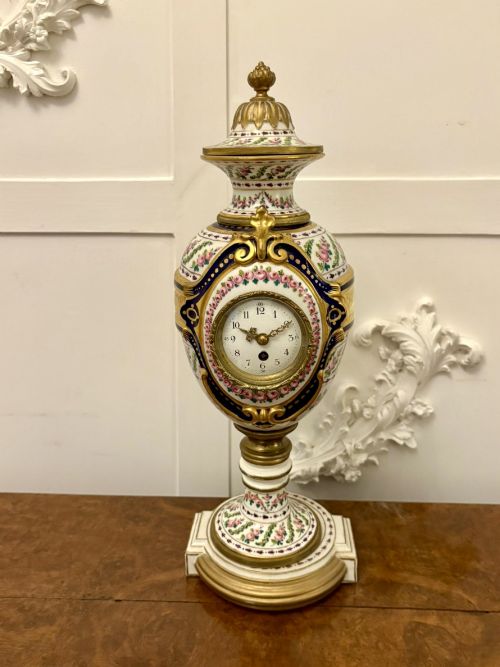
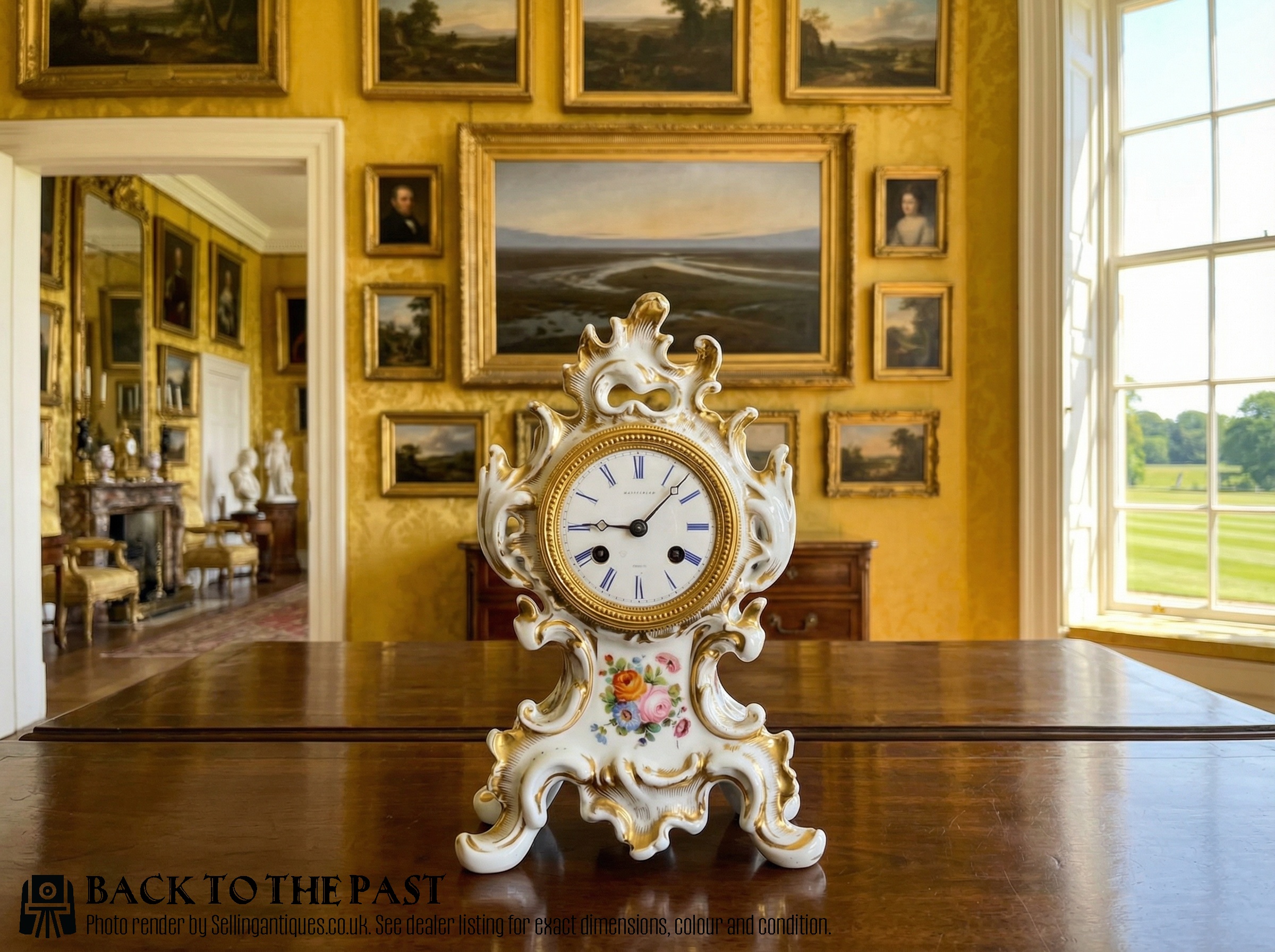
A floral porcelain mantel clock is a decorative timekeeper housed in a ceramic case adorned with painted flowers, often accompanied by matching garniture sets. These pieces date from the nineteenth century, spanning Victorian and Edwardian periods as well as French Rococo Revival styles.
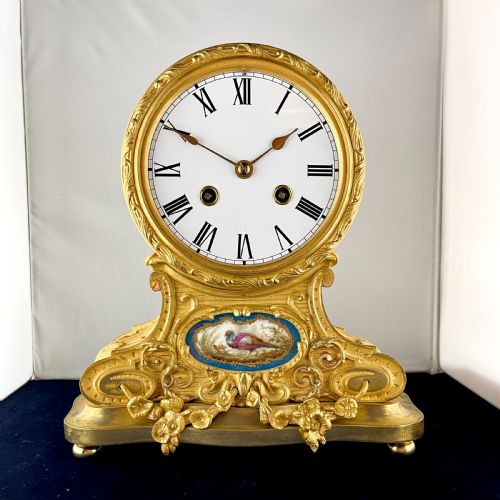
The most common formats on this page include urn shapes, drumhead designs, and boudoir clocks. Many originate from French workshops or bear Meissen attributes, reflecting the popularity of elaborate domestic timepieces during the Victorian era.
Materials and construction
Makers shaped these clocks from porcelain bodies, frequently applying hand-painted floral motifs and rich gilding. These ceramic elements rest within frameworks of gilt bronze, gilt metal, or brass.
Movements sit behind enamel dials, while glass covers protect the clock face. Gilt elements often feature elaborate scrollwork and asymmetrical detailing characteristic of Rococo revival aesthetics.
Some clocks depict the four seasons, letting you tell the time while pondering the turning of the year.
Assessing quality and craftsmanship
Quality rests in the precision of the hand-painted floral decoration upon the porcelain and the crispness of the surrounding gilt bronze or metal mountings. Finer examples display detailed brushwork and substantial metal casting rather than simple press-moulded forms.
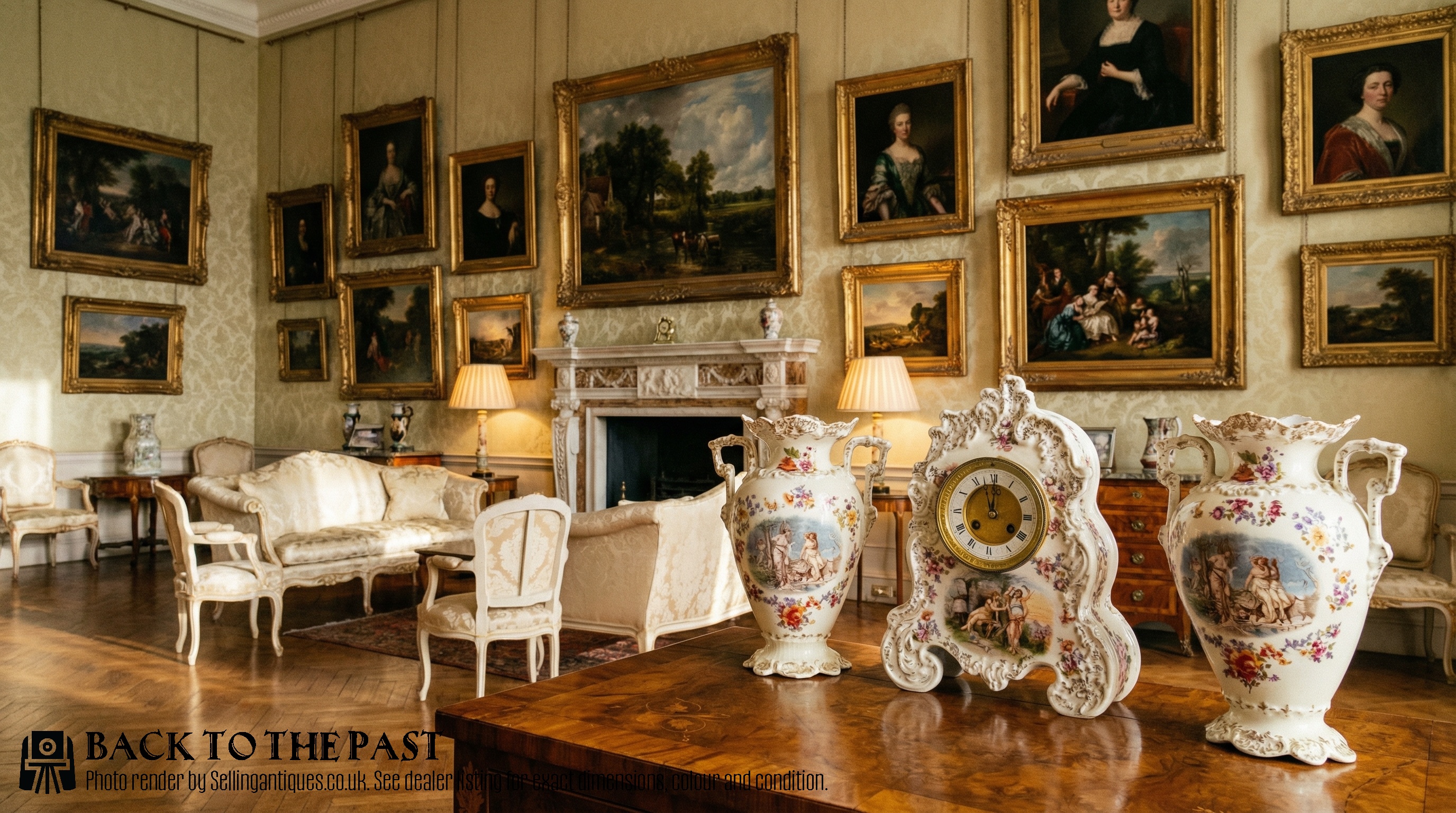
The integration of the clock set also dictates distinction, where complete garniture sets with matching side pieces demonstrate a higher level of original interior coordination than isolated clocks.
Meissen
The Floral Porcelain Mantel Clock Glossary
- Garniture set
- A central clock flanked by matching ornamental pieces such as urns or vases designed to sit together on a mantelpiece.
- Gilt bronze
- Metal cast in bronze and treated with a gold wash or mercury gilding to create a bright metallic finish.
- Drumhead clock
- A timekeeper featuring a circular dial housing shaped like a drum, mounted upon a decorative base.
- Rococo Revival
- A nineteenth-century design movement favouring ornate asymmetry, scrollwork, and naturalistic curves.
- Enamel dial
- A clock face formed by fusing powdered glass to a metal substrate at high temperatures, producing a glossy white surface for painted numerals.
Floral Porcelain Mantel Clock: Frequently Asked Questions
What is a clock garniture?
A clock garniture is a matching set comprising a central mantel clock and two flanking ornamental vases or urns. These pieces were designed to be displayed together on a fireplace mantel or sideboard to create a balanced decorative arrangement.
Such sets were popular throughout the nineteenth century in both French and English interiors. They unify the room's design scheme through shared porcelain bodies, matching floral hand-painting, and identical metal mounts.
How do I identify a Victorian clock?
Victorian clocks often feature heavy ornamentation, combining porcelain cases with gilt metal or bronze mounts. They frequently adopt French Rococo Revival styles with curved lines and floral details.
Examining the materials, such as enamel dials and hand-painted ceramic surfaces, helps place an object within the nineteenth-century timeline. Dating is further supported by the construction methods of the brass movements and interior components.
Where should I place a mantel clock?
A mantel clock suits a prominent shelf, sideboard, or fireplace mantel where its mechanical presence and decorative porcelain case can be appreciated. It needs a stable, level surface to ensure the pendulum and internal escapement operate correctly.
Keep the clock away from direct heat sources and excessive moisture to protect the enamel dial and gilt metal surfaces. Position it where you can easily access the back door for winding and routine adjustments.
Are these clocks mechanical?
These pieces use traditional mechanical movements powered by springs or weights, requiring a key for regular winding. The internal gears control both the timekeeping and any associated striking mechanisms.
Living with a mechanical clock involves understanding its daily or weekly winding routine to keep the hands moving accurately. Professional servicing every few years ensures the brass gears and pivots remain clean and functional.