




Vintage Porcelain Mantel Clock
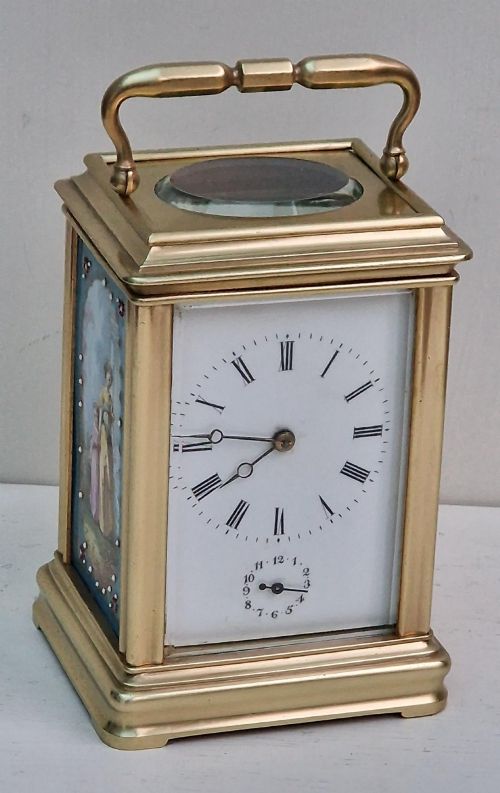
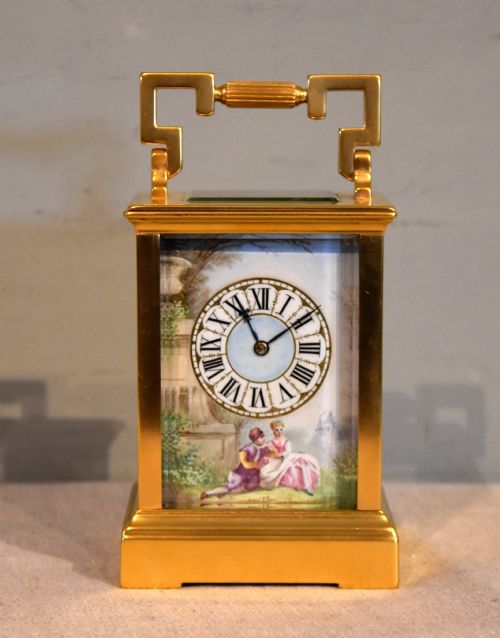
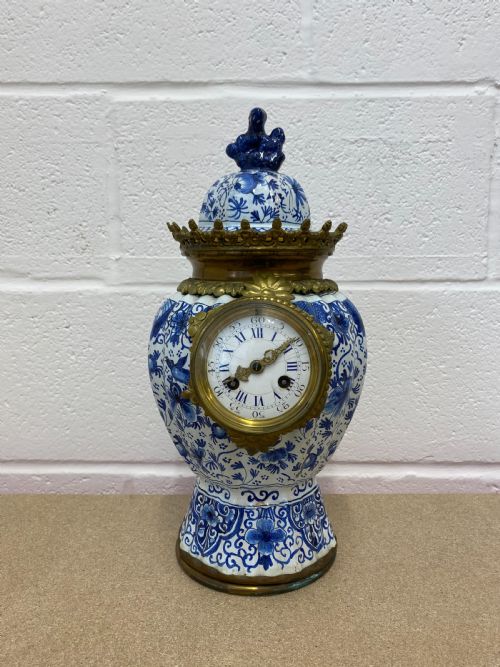
These vintage porcelain mantel clock pieces bring together ceramic panels, gilt metal and striking movements from the Victorian era.
Vintage Porcelain Mantel Clock
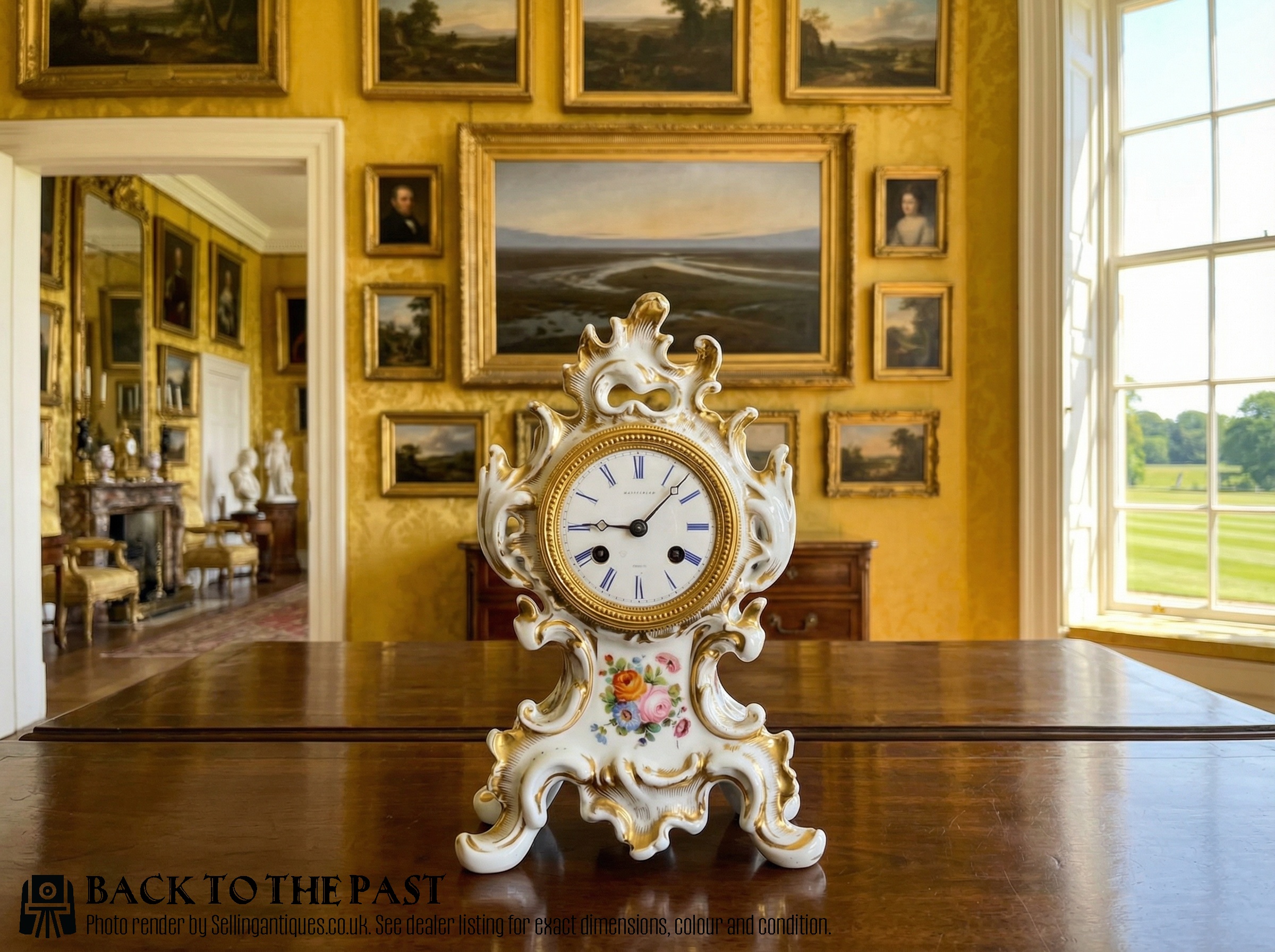
A vintage porcelain mantel clock forms part of a domestic interior tradition spanning the Victorian period and the latter half of the nineteenth century. Buyers searching this phrase encounter French Rococo revival designs alongside carriage timepieces and clock garniture sets incorporating ceramic elements. These objects combine timekeeping mechanisms with decorative porcelain panels, enamel dials and sculpted metalwork.
The pieces appearing on this page originate predominantly from the nineteenth century, including specific dates from eighteen fifty to nineteen hundred. Forms range from boudoir clocks and miniature longcase shapes to large clock garniture sets with matching side pieces. Brass, ormolu and gilt bronze frequently frame the porcelain components across these diverse mantel designs.
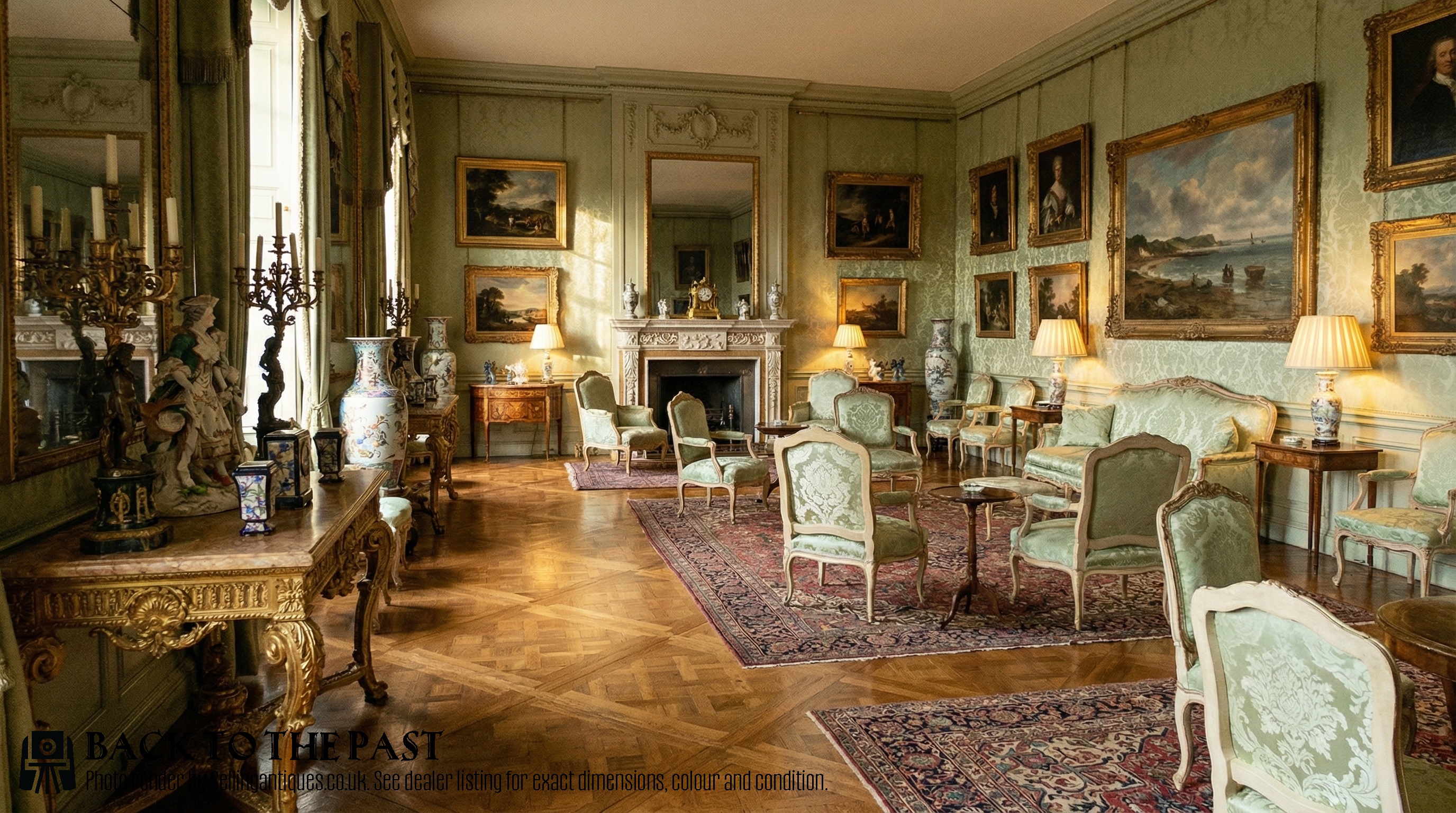
Materials and construction methods
The construction relies on the combination of fired ceramic or porcelain with cast metal mounts, brass movements and glass dial covers. Makers utilised porcelain for painted panels, dial faces and entire clock bodies, often accented with gilt bronze, ormolu or gilt metal casings. Enamel appears on circular clock faces featuring Roman or Arabic numerals.
Stylistic details draw heavily on French Rococo revival aesthetics, incorporating ornate frets, columns and sculptural figures such as elephants or decorative side garnitures. Metal components are cast and gilded, while carriage clock formats integrate bevelled glass panels to display the internal escapement and gear trains.
Listings feature pieces from the Victorian era and the nineteenth century, including specific dates from eighteen fifty to nineteen hundred.
Distinctions in craftsmanship
The standard of a vintage porcelain mantel clock rests upon the intricacy of the metal casting, the execution of the hand-painted porcelain panels and the reputation of the movement maker. Pieces produced by established Parisian workshops display crisper chiselling in the gilt bronze and more refined enamel work on the dial faces. Complete clock garniture sets with matching candelabra or side urns represent a higher tier of domestic display.
The complexity of the internal mechanism also distinguishes the range, moving from simple timepieces to striking and alarm movements housed within carriage or mantel formats. The integration between the ceramic body and the metal mounts reveals the precision of the original assembly during the nineteenth century.
DROCOURT·P.H MOUREY·JAPY FRERES
The Vintage Porcelain Mantel Clock Glossary
- Ormolu
- A gilded bronze technique used extensively in nineteenth-century French clock mounts. It provides a bright golden surface finish over cast metal.
- Clock garniture
- A set comprising a central clock accompanied by matching decorative side pieces such as vases or candelabra. These matched arrangements sat symmetrically on nineteenth-century mantelpieces.
- Carriage clock
- A portable spring-driven timepiece developed for travel during the nineteenth century. They often feature glass panels that reveal the internal movement.
- Enamel dial
- A clock face created by fusing powdered glass to a metal substrate at high temperatures. These dials usually feature painted numeric markers and minute tracks.
- Rococo Revival
- A nineteenth-century design style characterised by asymmetrical scrollwork, naturalistic floral motifs and curved organic forms. It heavily influenced French mantel clock decoration.
Vintage Porcelain Mantel Clock: Frequently Asked Questions
What is a clock garniture set?
A clock garniture set consists of a central timekeeper displayed alongside matching decorative side objects, such as urns or candelabra. These sets were designed to create a symmetrical arrangement on a nineteenth-century mantelpiece.
Matching components share the same porcelain panels, gilt metal mounts and stylistic motifs characteristic of French Rococo revival design.
How do carriage clocks differ from mantel clocks?
Carriage clocks are portable timepieces originally built for travel, featuring glass side panels and a carrying handle on top. Mantel clocks are heavier, stationary objects designed to sit permanently on a fireplace shelf.
Both formats incorporate porcelain and brass elements, but carriage clocks place greater visual emphasis on the visible escapement through glazed panels.
What periods do these clocks date from?
The pieces listed span the nineteenth century, with specific examples recorded from eighteen fifty, eighteen sixty, eighteen eighty and nineteen hundred. Many carry the Victorian designation or reflect French nineteenth-century styling.
Stylistic indicators such as Rococo revival scrolls and specific maker signatures help contextualise the manufacturing era within this timeframe.
How should I care for a porcelain clock?
Maintenance involves keeping the clock in a stable environment away from direct sunlight and extreme temperature fluctuations to protect the painted porcelain and gilt metal. Mechanical movements require professional cleaning and lubrication by a specialist clock restorer every few years.
Cleaning the exterior requires soft, dry cloths to avoid damaging delicate enamel dials or gilt surfaces on the metal mounts.