

Antique French Mantel Garniture
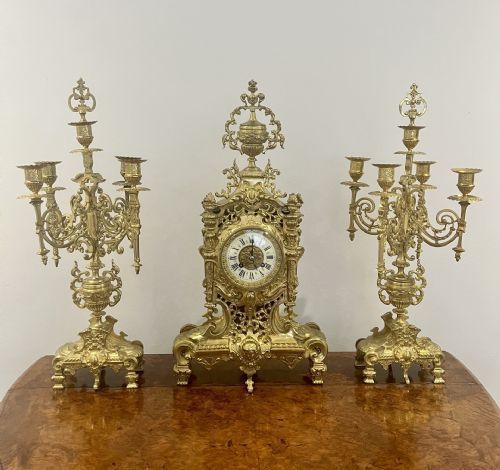
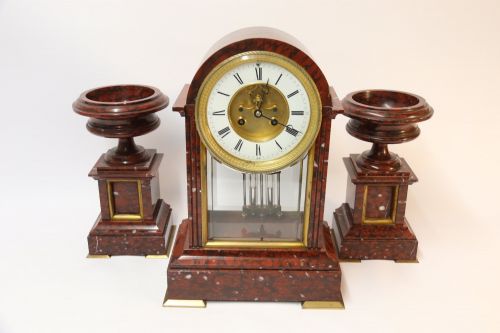
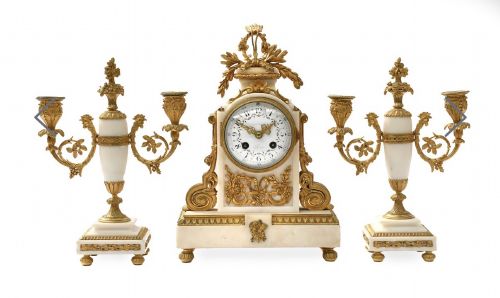
These antique french mantel garniture sets bring together a central clock and matching side pieces, designed to anchor a room with balanced metalwork and stone.
Antique French Mantel Garniture
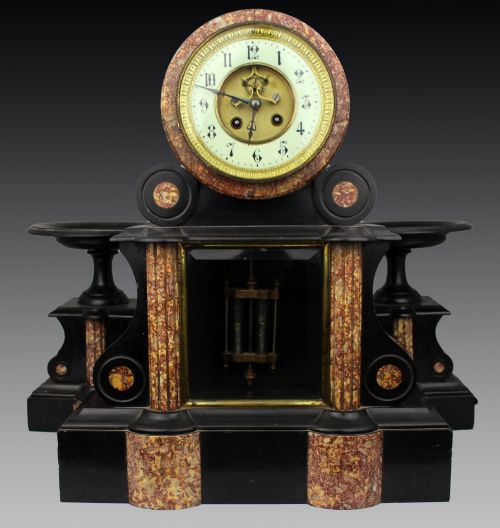
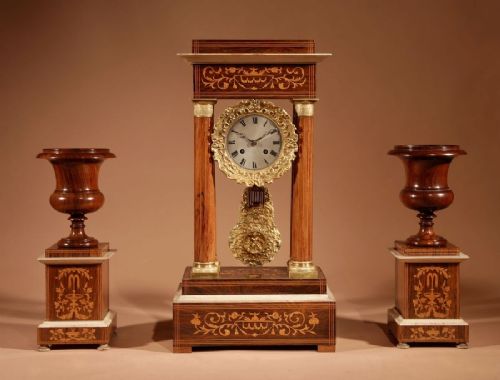
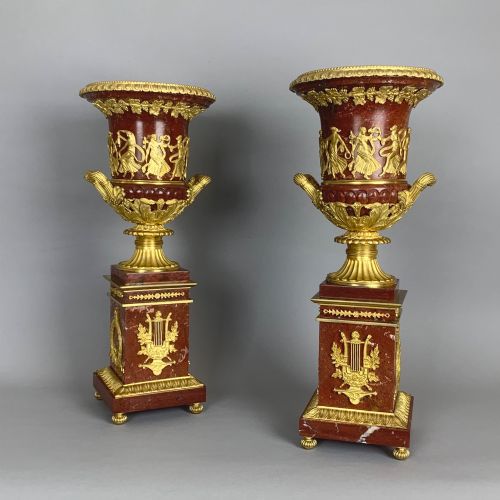
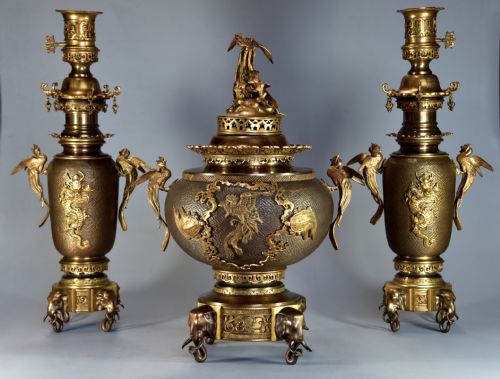
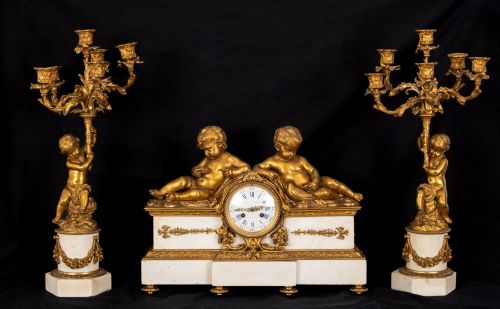
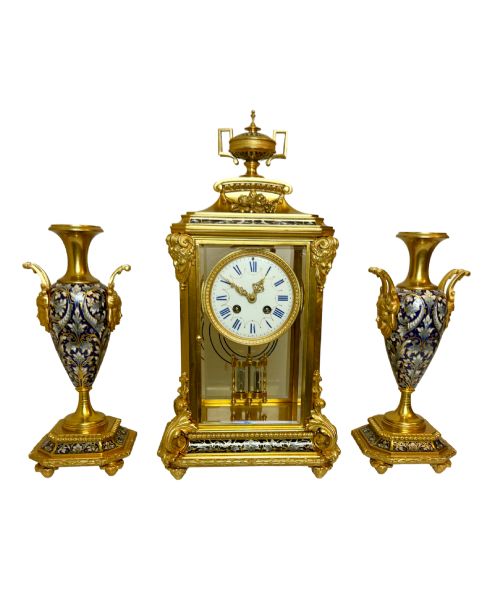
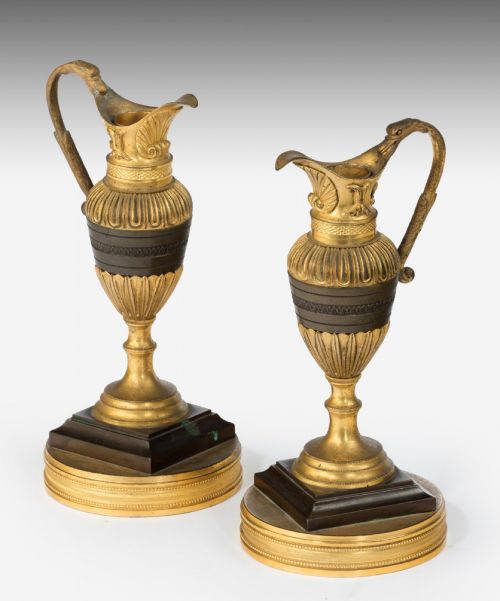
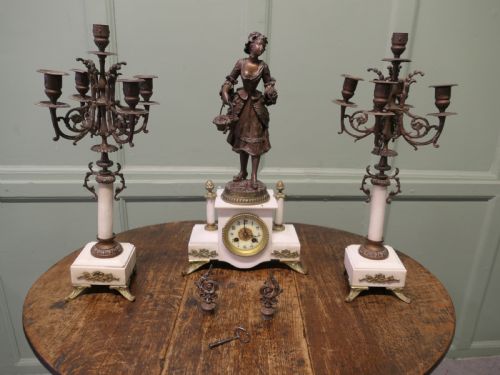
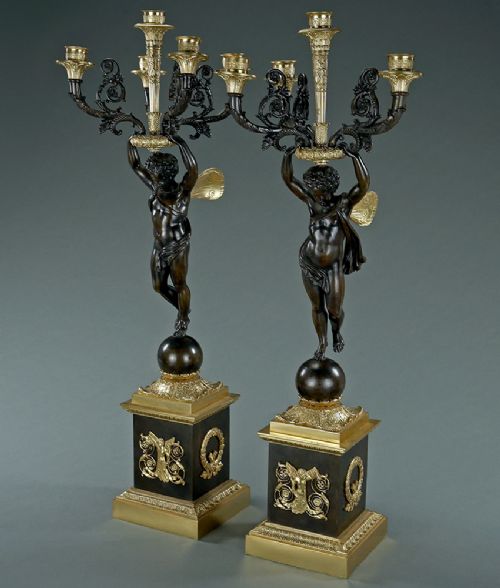
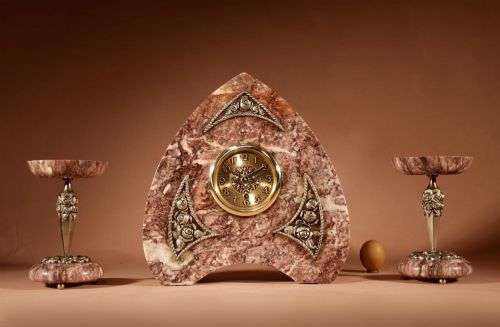
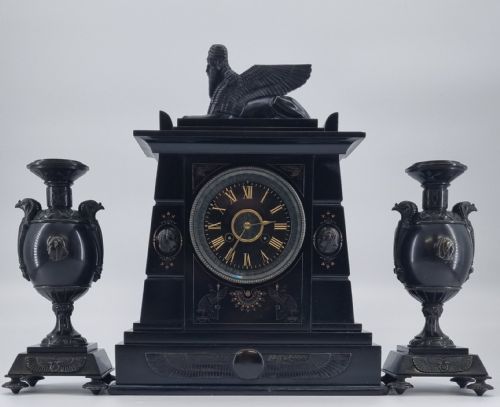
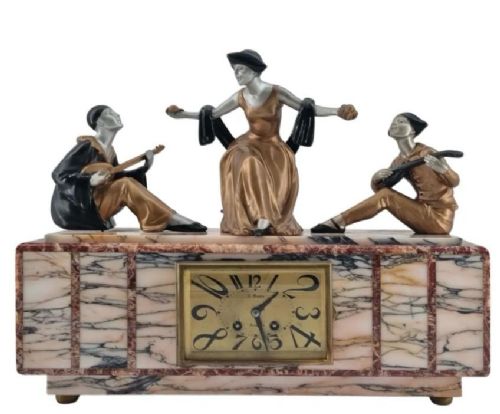
An antique french mantel garniture combines a mantel clock with matching side objects such as urns, vases, candelabra, or ewers designed to sit symmetrically on either side. The groupings emerge in forms ranging from Louis XVI style and Neoclassical designs to French Second Empire, Rococo Revival, and Art Deco.
Buyers most frequently encounter three-piece sets featuring a central clock paired with two identical flanking ornaments made of marble, onyx, or cast metal. The periods span the nineteenth century through the early twentieth century, incorporating diverse stylistic revivals from Egyptian motifs to Japonisme.
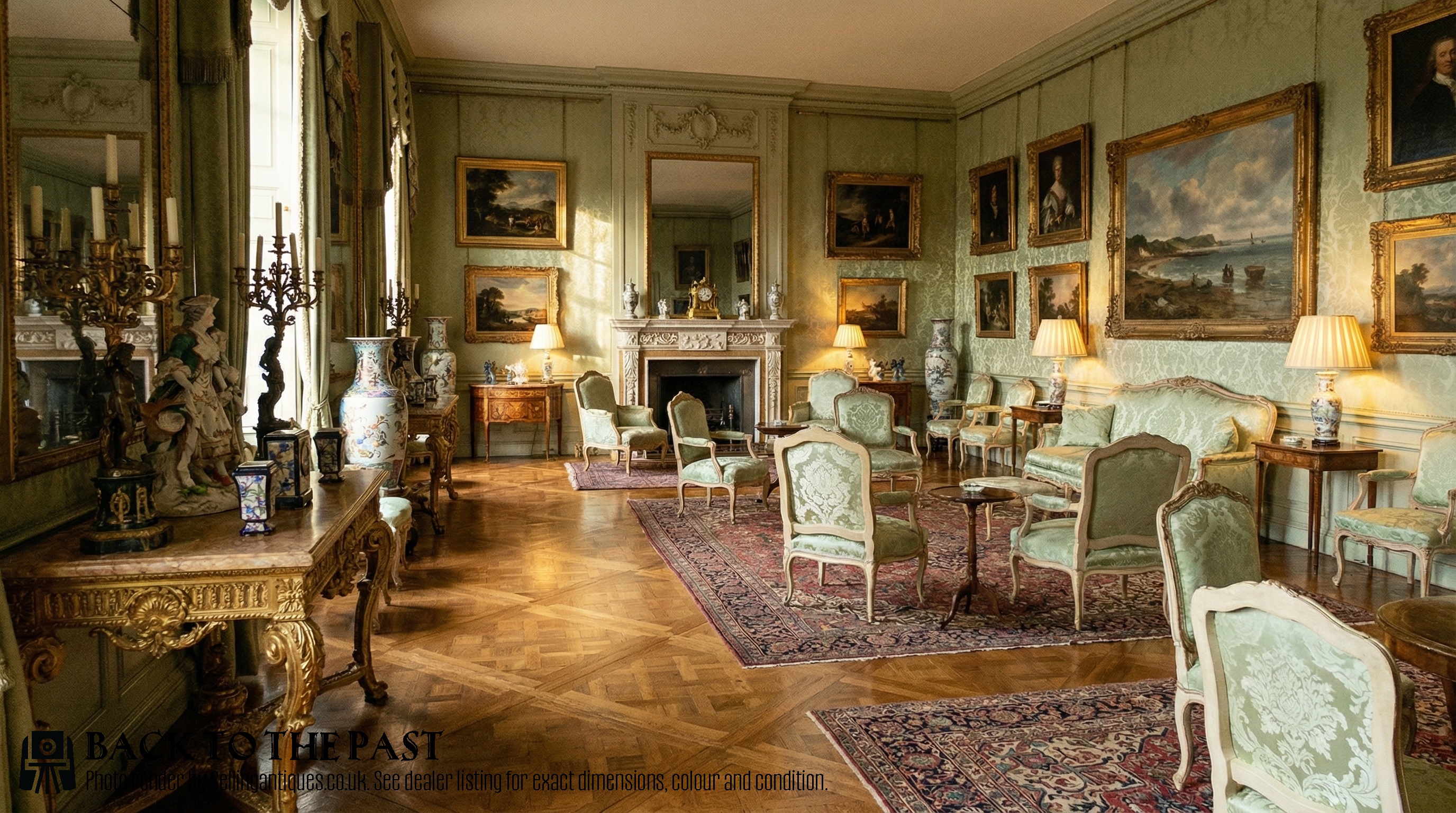
Individual components within a garniture share decorative themes, casting details, and material palettes to create a unified presentation for a mantelpiece, console, or sideboard. The matching side pieces function independently as decorative objects or frame the central timepiece.
Materials and Construction
Foundries and workshops shaped these pieces using cast bronze, brass, and gilded metal, often applying mercury gilding known as ormolu to create a bright golden finish on mounts and figures. Skilled artisans combined these metallic elements with carved black, red, or white marble, onyx, and porcelain bodies.
Enamel work, including champlevé techniques, adds colour and pattern to dials and structural mounts, while glass domes occasionally protect delicate configurations. Bronze castings received patination or fine chasing by hand to define architectural details, drapery, and naturalistic motifs.
Listings feature materials spanning gilt bronze, brass, champlevé enamel, marble, onyx, porcelain, and glass across the nineteenth and twentieth centuries.
Craftsmanship and Proportion
The distinction between tiers of quality rests in the crispness of the bronze chasing and the depth of the casting work, where superior examples exhibit sharp relief in foliage, figures, and architectural moulding. Poorer specimens rely on softer, shallower casts with indistinct surface details and minimal hand finishing.
Proportion and material selection also divide the range, as finer garnitures employ dense, richly veined marbles or unblemished onyx paired with heavy, substantial gilt bronze rather than thin plated brass. The integration of movement makers and signed components elevates certain sets through documented mechanical provenance.
Japy Freres·Samuel Marti·Henry Dasson·Mougin·Sega
The Antique French Mantel Garniture Glossary
- Garniture
- A set of matching decorative objects designed to be displayed together on a mantelpiece or furniture top, typically consisting of a central clock flanked by two matching vases, urns, or candelabra.
- Ormolu
- Gilt bronze produced by applying a mercury and gold amalgam to a bronze base and heating it to drive off the mercury, leaving a durable golden coating.
- Champlevé
- An enamelling technique where troughs or cells are hollowed out of a metal surface and filled with vitreous enamel powder before firing.
- Portico clock
- A mantel clock featuring an architectural case supported by four or more columns, resembling a classical temple facade.
- Ewer
- A large pitcher or jug with a wide spout and ornate handle, frequently produced as a decorative matching side piece in a garniture set.
Antique French Mantel Garniture: Frequently Asked Questions
What is an antique french mantel garniture?
An antique french mantel garniture is a matched decorative set containing a central clock accompanied by side ornaments like urns or candelabra.
These collections were manufactured in France during the nineteenth and early twentieth centuries to provide symmetrical decoration for fireplace mantels.
How do I style a garniture set?
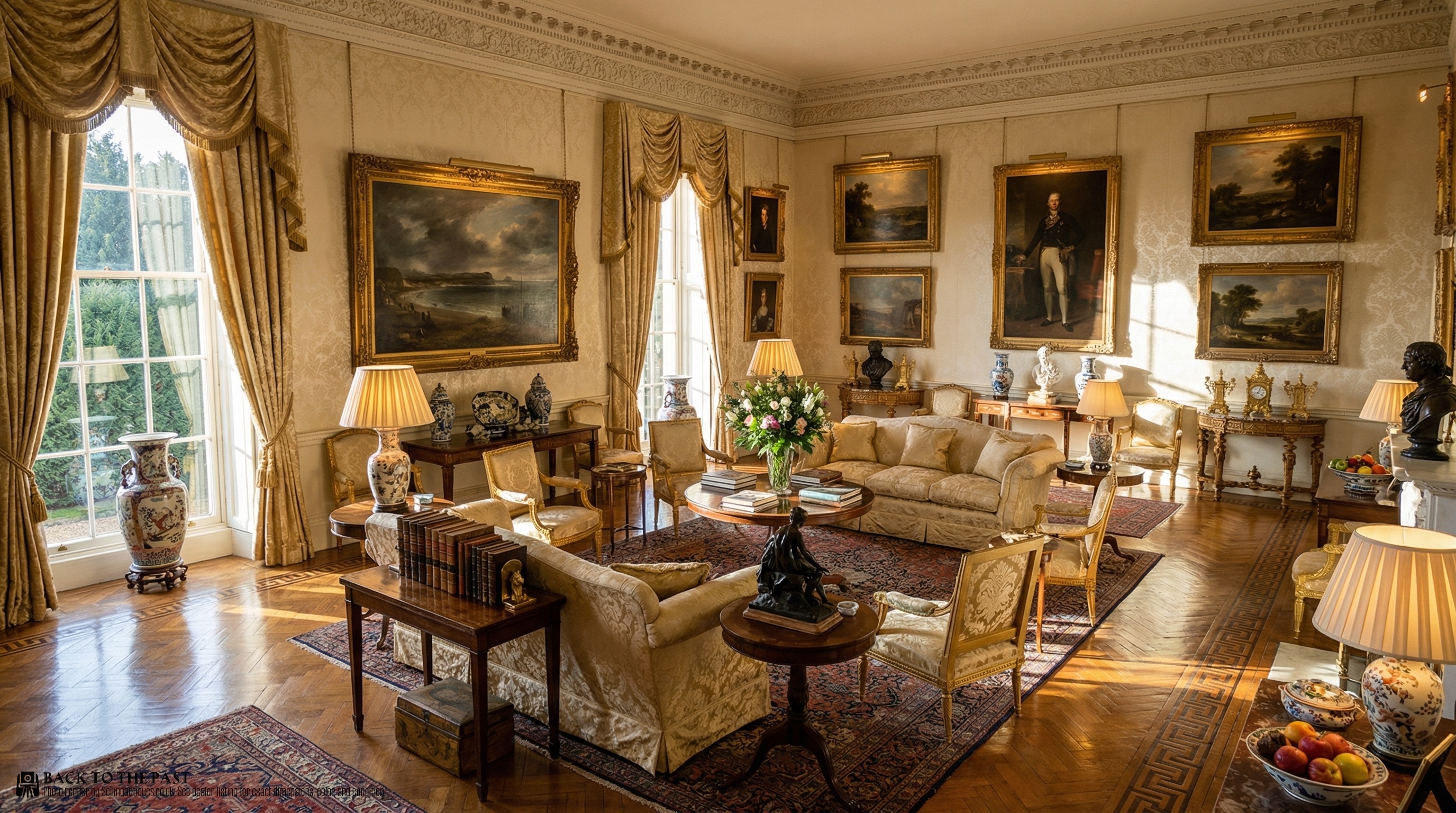
Place the central clock in the middle of a mantelpiece, sideboard, or console table with the matching side pieces positioned symmetrically on either side.
The balanced arrangement creates a formal focal point that reflects historical interior display traditions.
What materials are used in these clock sets?
These sets combine natural stones such as marble, onyx, and porcelain with cast metals including gilt bronze, brass, and ormolu.
Enamel accents and glass domes also appear across various nineteenth-century and Art Deco examples.
How do I identify the period of a set?
Period identification relies on stylistic indicators such as Neoclassical columns, Louis XVI revival motifs, Victorian ornamentation, or geometric Art Deco lines.
Maker signatures on movements and marble types further help narrow down the date of manufacture.