
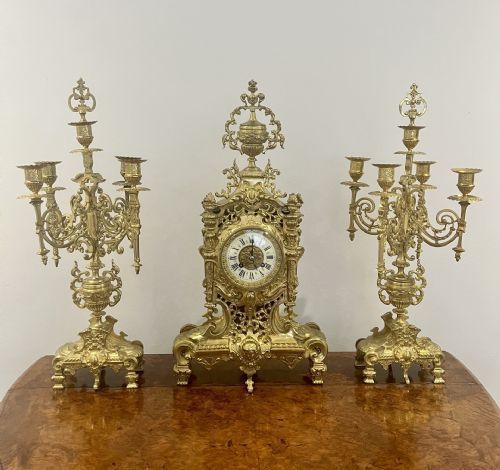
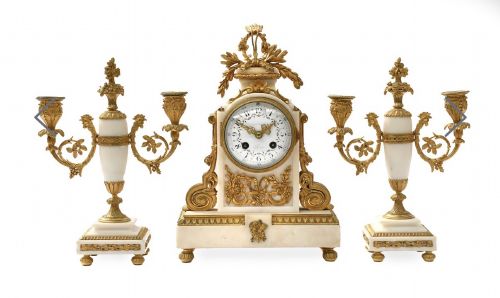


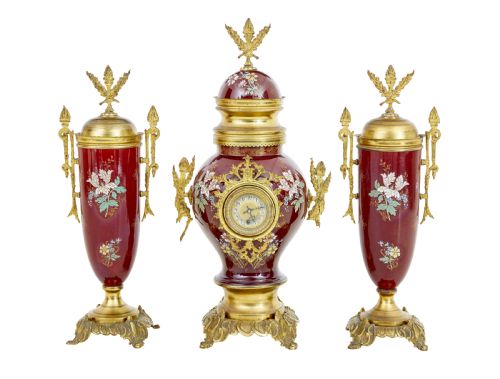

French Mantelpiece Clock Set
A french mantelpiece clock set brings together a striking centrepiece clock and matching garnitures, offering a coordinated display of period craftsmanship for the home.
French Mantelpiece Clock Set
A french mantelpiece clock set comprises a main clock flanked by matching side ornaments such as candelabras or urns, forming a complete decorative arrangement. These ensembles originate primarily from the nineteenth century, spanning Victorian, Napoleon III, and Edwardian periods.
Buyers encounter varied configurations on this page, ranging from ornate gilt bronze and marble compositions to porcelain and ormolu designs. The matching side pieces balance the mantelpiece display, creating a unified focal point in a room.
Makers and designers drew upon historical motifs, resulting in pieces reflecting French Empire, Louis XVI, and Rococo Revival styles. The selection here reflects diverse materials and forms typical of nineteenth-century European interiors.
Materials and construction
Craftsmen utilised cast metals including gilt bronze, ormolu, and brass as the foundational structure for many sets, often combining them with white, pink, or green marble and onyx bases. These substantial materials provided the necessary weight and durability for intricate casting and gilding.
Decorative elements frequently incorporated hand-painted porcelain panels, enamel dials, and cloisonne work, reflecting advanced ceramic and glass techniques of the period. Skilled metalworkers chased and gilded the bronze mounts to achieve crisp surface detail.
Assessing quality and execution
Quality in a french mantelpiece clock set rests upon the crispness of the bronze casting and the depth of the gilding or ormolu. Superior examples display sharply defined ornamentation, hand-chased details, and harmonious proportions between the clock and its matching garnitures.
The choice of materials also dictates standing, with fine marbles, genuine porcelain plaques like Sevres, and complex enamel dials elevating the piece. The skill evident in the figurative work, such as cherubs or classical figures, separates standard production from exceptional artistry.
Finnigan Manchester·Japy Freres·Etienne Maurice Falconet
The French Mantelpiece Clock Set Glossary
- Garniture
- A set of matching ornamental objects designed to be displayed together on a mantelpiece or sideboard. It typically consists of a central clock accompanied by two side vases, urns, or candelabras.
- Ormolu
- A technique of applying finely ground, high-carat gold to a bronze object using a mercury amalgamation process. This imparts a rich, durable golden finish characteristic of luxury nineteenth-century metalwork.
- Cloisonne
- An ancient technique for decorating metal object surfaces, using wire compartments filled with enamel paste and fired. In these sets, it frequently highlights the clock dial or surrounding bezel.
- Portico clock
- A specific architectural clock style featuring supporting columns or pillars reminiscent of classical building facades. They often utilise contrasting marbles and feature a visible pendulum swinging between the uprights.
- Candelabra
- A branched candlestick designed to hold multiple candles, commonly included as the matching side pieces in a garniture set. They mirror the decorative style and materials of the central clock.
French Mantelpiece Clock Set: Frequently Asked Questions
What is included in a clock set?
A standard set comprises a central mantel clock accompanied by two matching side pieces, such as candelabras, urns, or vases. These side ornaments balance the visual weight of the clock on a mantelpiece.
The ensemble was designed to be displayed together as a unified decorative scheme, maintaining identical materials and stylistic motifs across all components.
How do I identify the period?
Dating relies on examining the materials, construction methods, and stylistic revival influences present in the brass, marble, or porcelain. Nineteenth-century pieces frequently display distinct Victorian or Napoleon III characteristics.
Maker marks stamped on the movement backplate or dial can also narrow down the production era and origin workshop.
Where were these clocks placed?
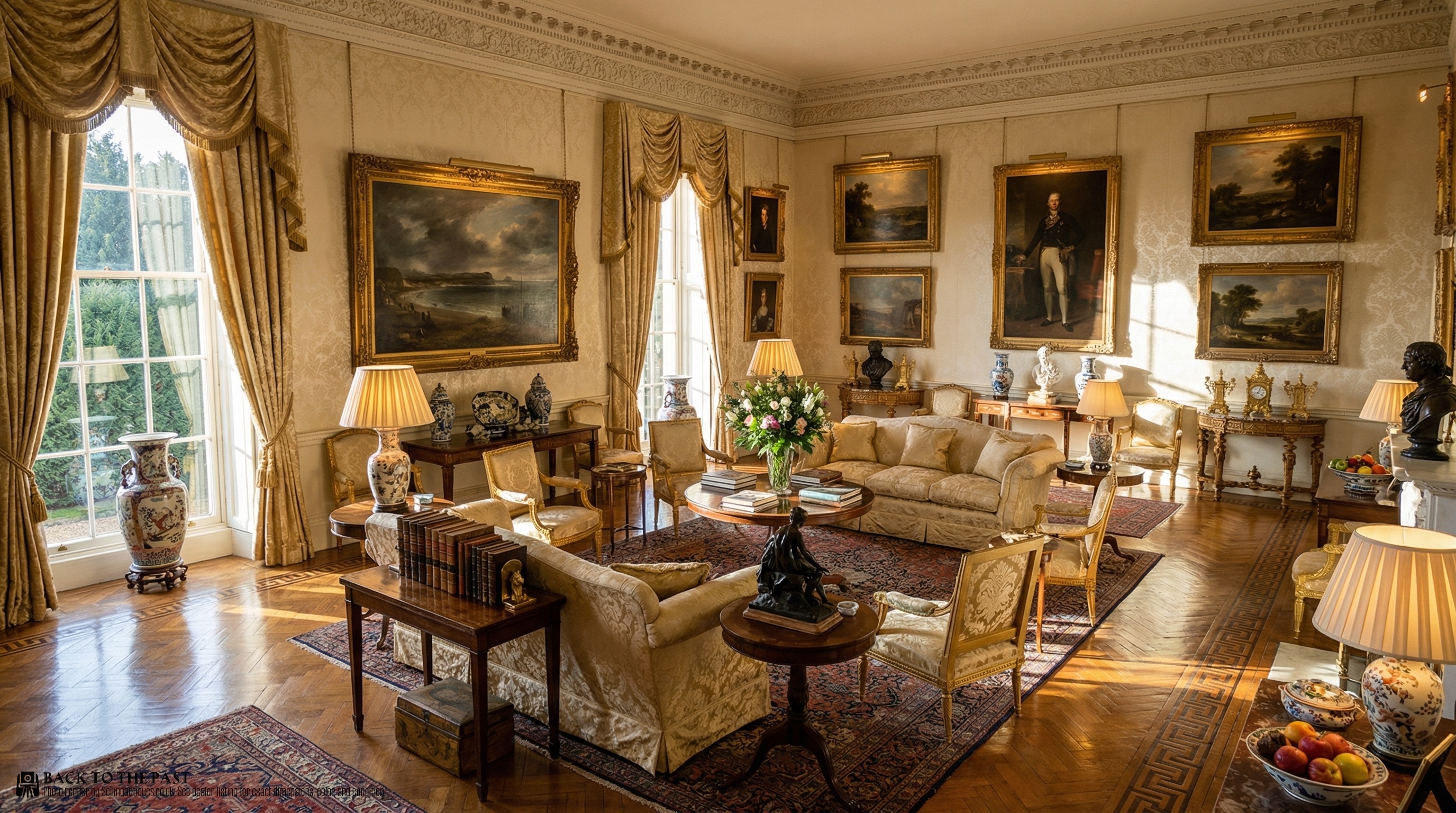
These sets were primarily designed for the mantelpiece in formal reception rooms, parlours, or drawing rooms of nineteenth-century homes. Their grand scale and reflective gilded surfaces caught candlelight and daylight alike.
They served both a practical timekeeping function and a high-status decorative purpose for entertaining guests.
How do I care for marble and ormolu?
Maintain the surfaces by dusting gently with a dry, soft cloth to prevent abrasive particles from scratching the gilt or polished stone. Avoid using chemical cleaners or water on ormolu, as moisture can damage the historic surface finish.
Keep the set away from direct heat sources and strong sunlight to protect delicate enamel dials and painted porcelain panels.