
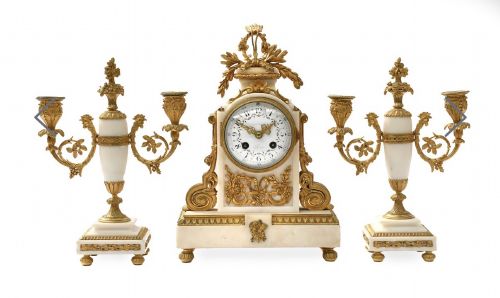


Louis XVI Ormolu Garniture
These gilded mantel sets command attention, bringing classical French symmetry and brilliant metalwork straight into a grand interior.
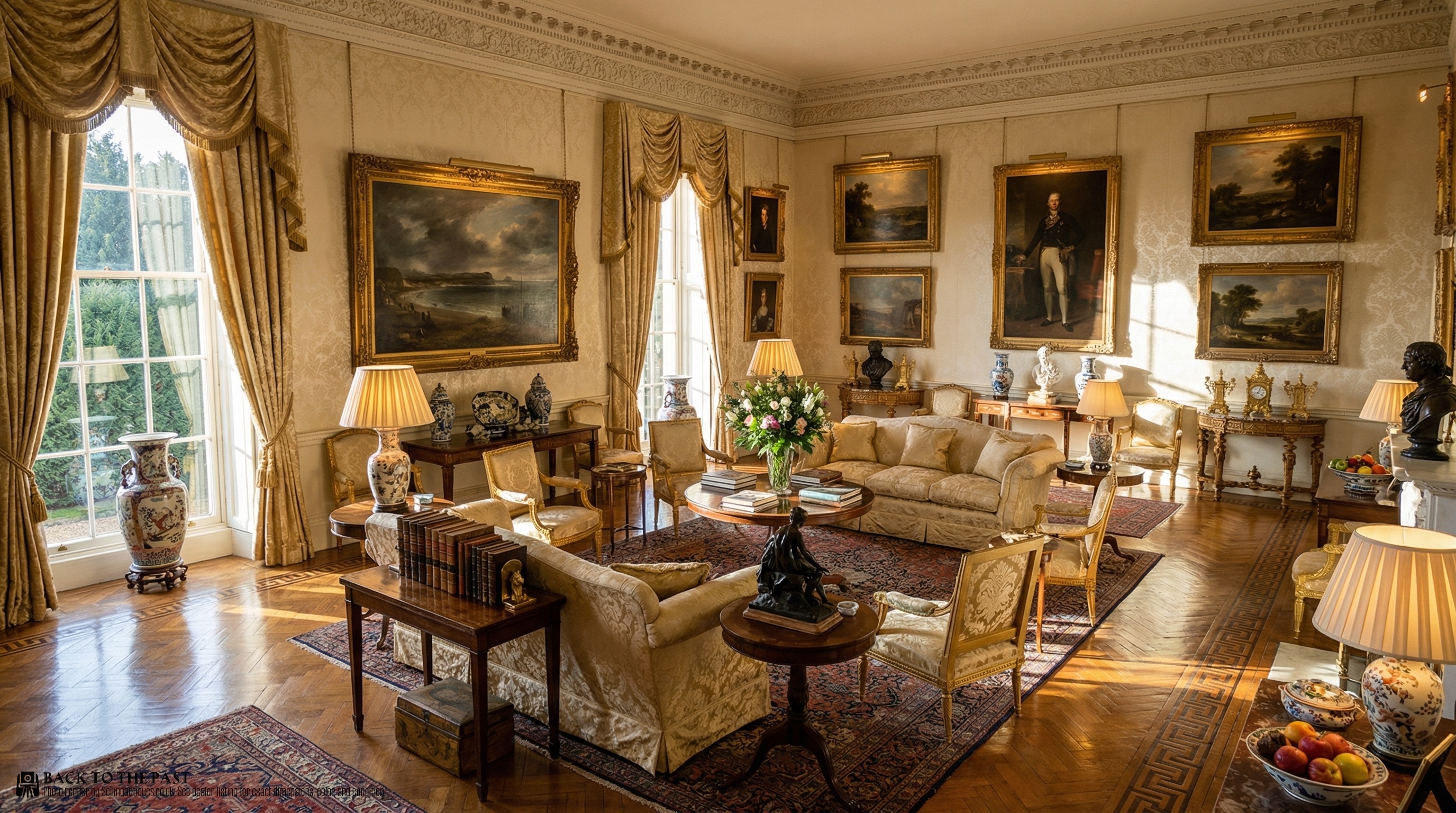
Louis XVI Ormolu Garniture
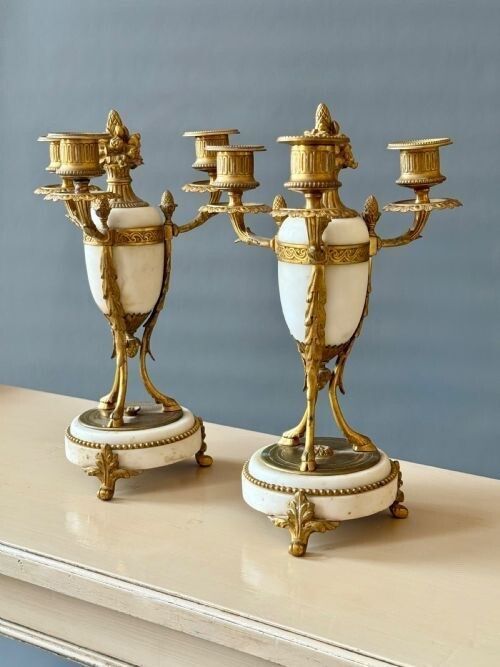
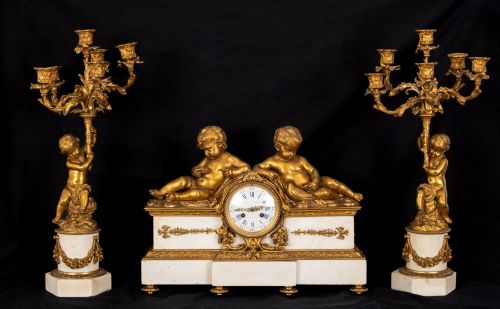
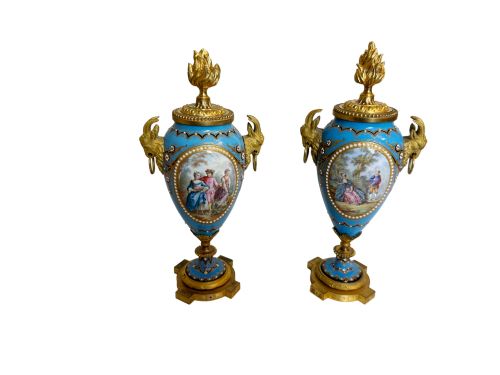
A louis xvi ormolu garniture is typically a three-piece ensemble comprising a central mantel clock flanked by matching cassolettes, candelabras, or decorative urns. You will encounter nineteenth-century interpretations heavily influenced by earlier French court aesthetics, often rendered in the Louis XVI style or revival manner.
The forms span from elaborate lyre clocks and cherub-adorned timepieces to tall marble and gilt metal clock sets complete with ten-light candelabras. Most pieces originate from French workshops active during the Victorian era, utilising symmetrical neoclassical motifs such as urns, garlands, and classical figures.
Defining quality
Quality rests upon the crispness of the gilt bronze chasing and the density of the selected marble or porcelain. Superior examples display deeply chiselled mounts with sharp relief, whereas lesser pieces rely on softer, shallower surface detailing.
The weight and cohesion of the matching pieces determine the overall standard, with premier sets showing identical patination and harmonious proportions across both the central clock and its flanking companions.
Many cassolettes feature clever reversible lids that let you transform a decorative stone urn into a functional candleholder whenever the mood strikes.
Henry Dasson·H Luppens Paris·AD Mougin Paris·Ferdinand Berthoud·Vincenti
The Louis XVI Ormolu Garniture Glossary
- Ormolu
- Gilt bronze produced by applying a mercury and gold amalgam to cast bronze before heating. This technique creates a durable, luminous golden surface characteristic of fine French decorative arts.
- Garniture
- A set of matched ornamental objects designed to be displayed together on a mantelpiece or sideboard. Typically comprises a clock paired with two matching urns, vases, or candelabras.
- Cassolette
- A decorative vessel featuring a reversible lid that transforms the object from a closed urn into a candleholder. These often incorporate ormolu mounts and marble bodies.
- Bleu de Roi
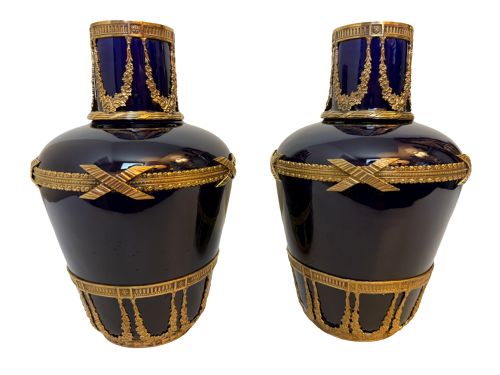
- A deep, rich cobalt blue glaze developed at the Sevres porcelain factory. It frequently provides a dramatic backdrop for ormolu mounts on clocks and vases.
- Chasing
- The manual finishing of cast metal using small punches and hammers to sharpen details and texture surfaces. Fine chasing separates masterwork bronzes from standard production pieces.
Louis XVI Ormolu Garniture: Frequently Asked Questions
How do I style a garniture set?
Place the central clock dead centre on a mantelpiece or large console table with the flanking candelabras or cassolettes spaced evenly on either side. Ensure the grouping has sufficient depth and support behind it, as these pieces carry considerable weight.
Allow the gilded bronze and marble elements to catch natural light by keeping surrounding decor minimal. This lets the classical symmetry and polished stone take full visual precedence in the room.
What periods do these pieces date from?
The vast majority of available pieces date from the nineteenth century, specifically between eighteen-fifty and nineteen-hundred. You will find many examples created during the Victorian period under the influence of the Louis XVI revival.
Earlier eighteenth-century origins exist but remain exceptionally scarce. Most items reflect nineteenth-century French manufacturing traditions rather than original pre-revolution production.
How do I care for marble and ormolu?
Dust the surfaces regularly with a soft, dry lint-free cloth to prevent particle buildup within the intricate bronze chasing. Avoid commercial chemical cleaners, water, or abrasive polishes that can strip the delicate mercury gilding.
Treat the marble bodies gently, using a slightly damp cloth only when strictly necessary and drying them immediately. Protecting the stone from acidic spills preserves the polished finish indefinitely.
Were these clocks meant to keep time?
These pieces housed fully functional mechanical clock movements designed to keep accurate time alongside their decorative purpose. Many featured visible pendulums and enamel dials requiring periodic professional servicing to run smoothly.
While some owners maintain them as working timepieces, others appreciate them purely as sculptural objects of art. Regular winding is necessary if you choose to operate the mechanical movement.