

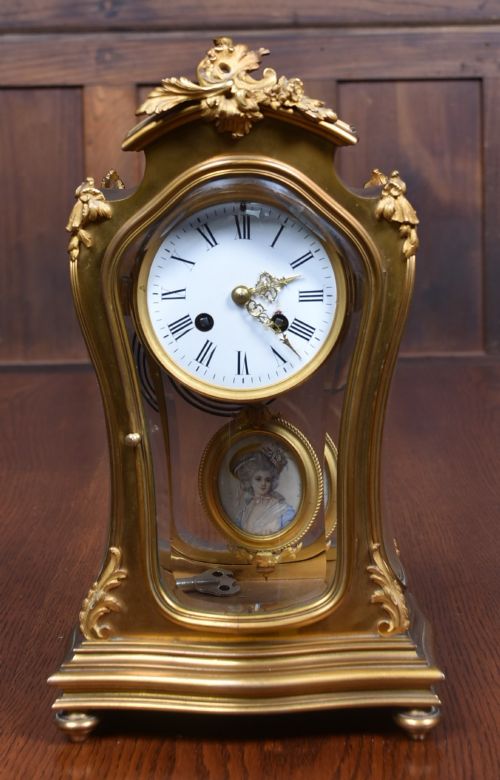
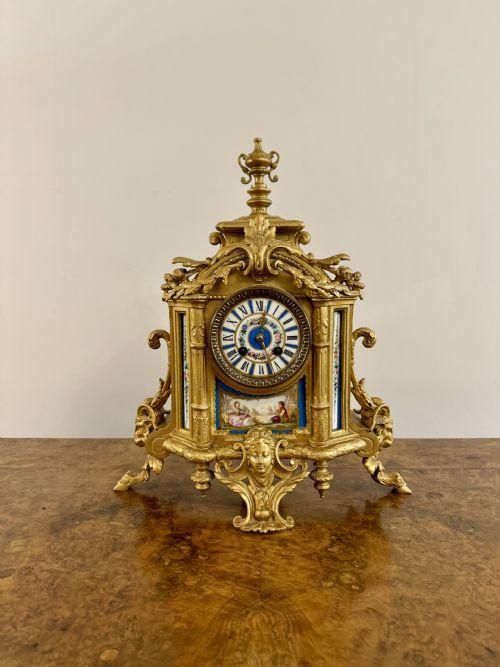

Gilt Porcelain Table Clock
A gilt porcelain table clock brings together bright ceramic panels and shining gilt metal to mark the passing hours with nineteenth-century flair.
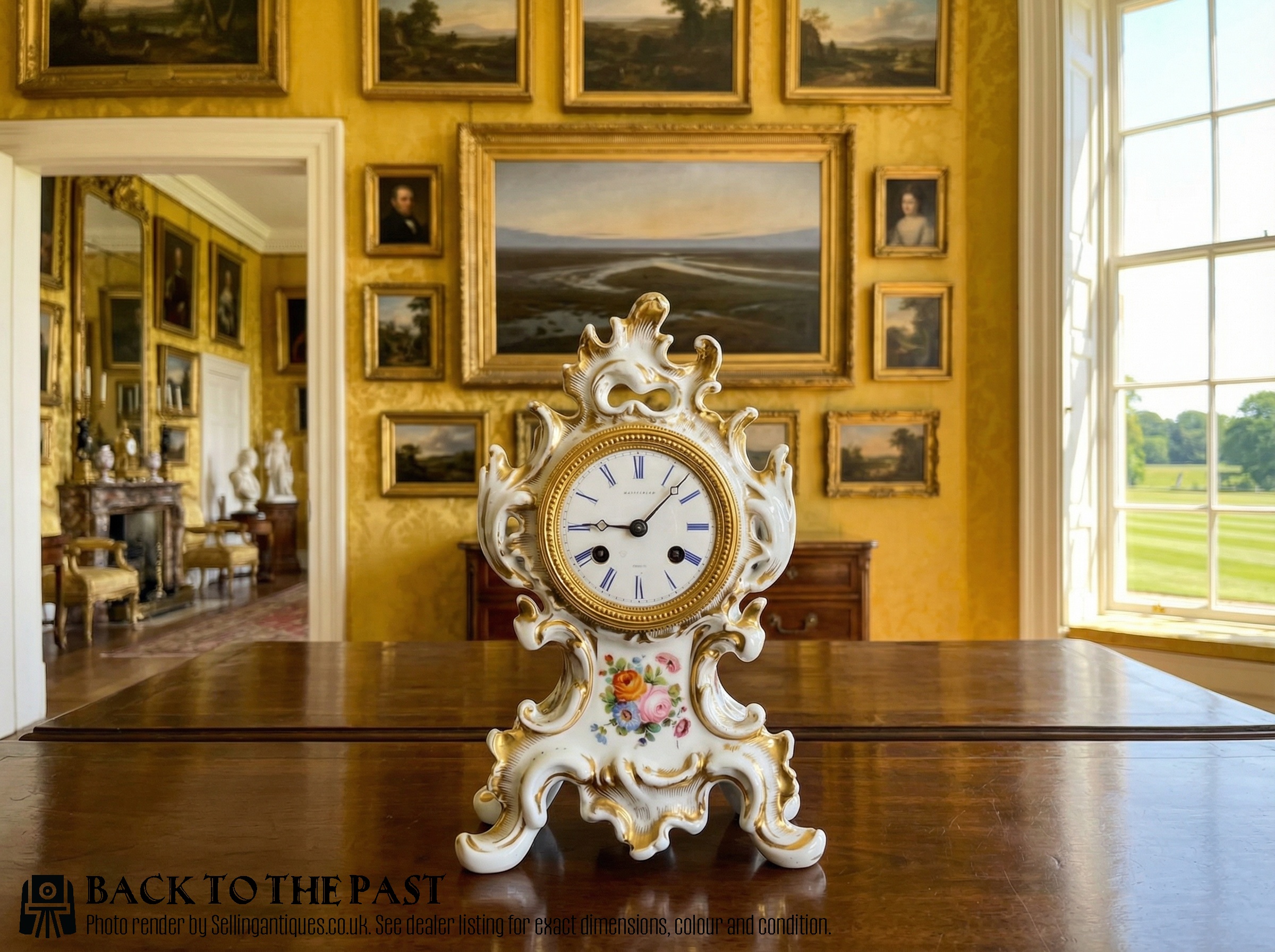
Gilt Porcelain Table Clock
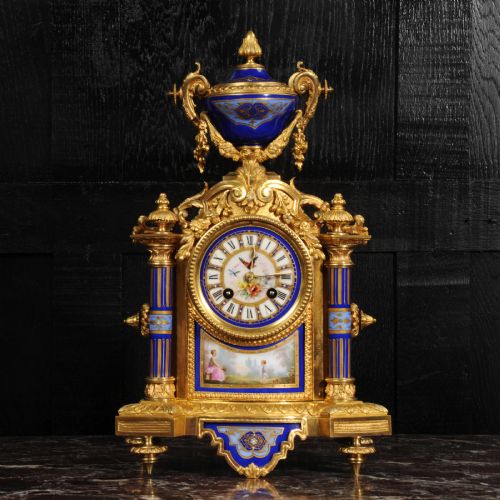
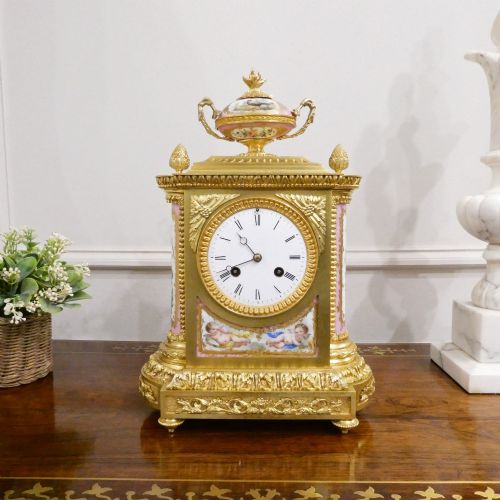
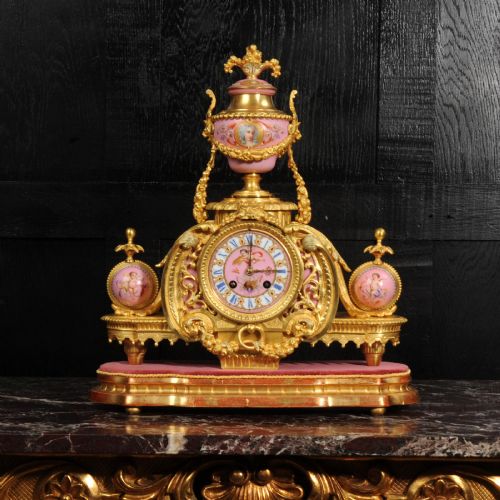
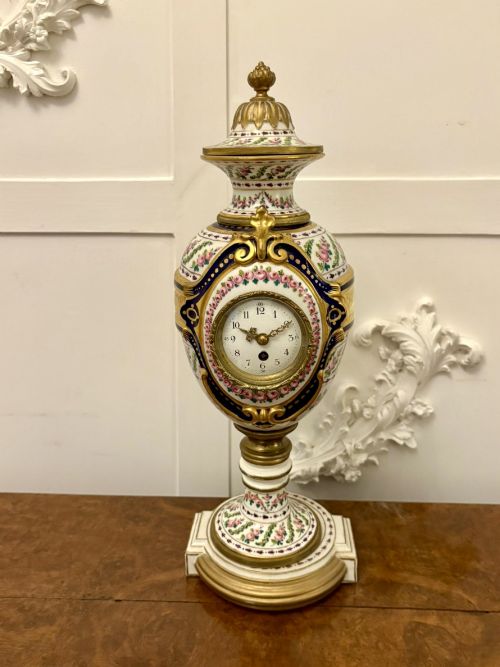
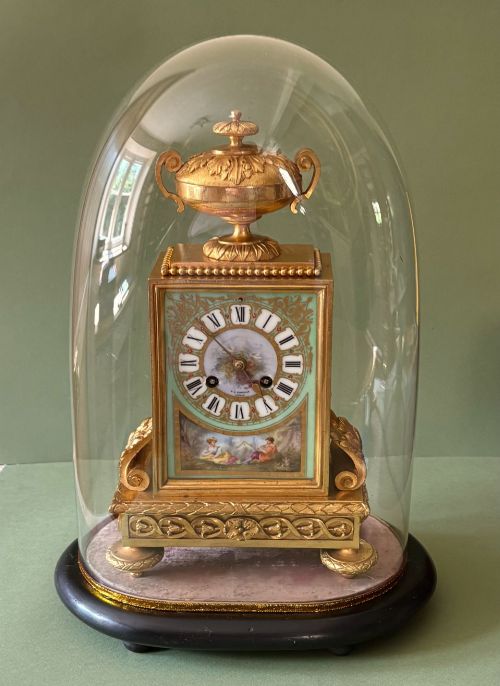
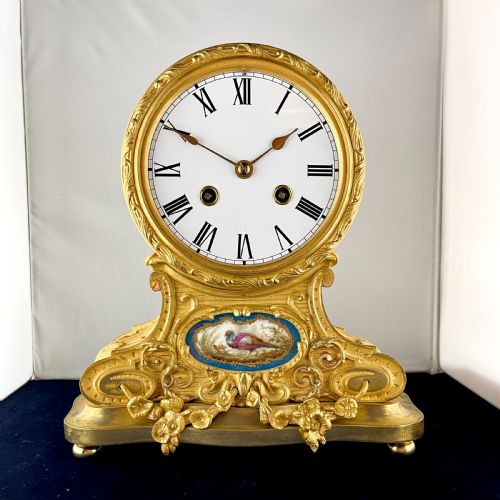
When you search for a gilt porcelain table clock, you find nineteenth-century French mantel clocks that combine painted ceramic elements with cast metal mounts. These decorative timepieces generally take the form of mantel clocks, drum head clocks, or urn-shaped cases designed to sit proudly on a surface.
The versions you meet most often on this page date from the Victorian era, spanning the decades between eighteen-fifty and eighteen-ninety. French workshops dominate these listings, bringing together styles such as Louis XVI Revival, Napoleon III, and Rococo Revival into substantial decorative objects.
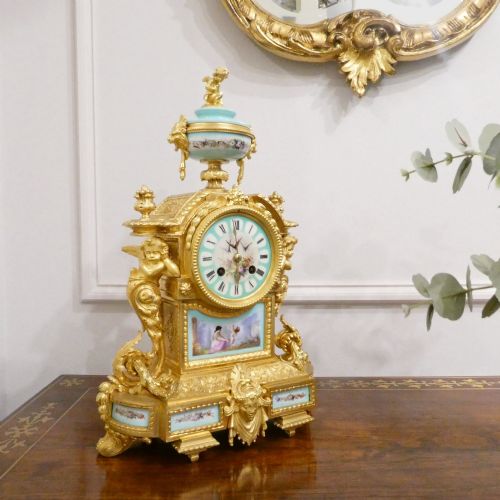
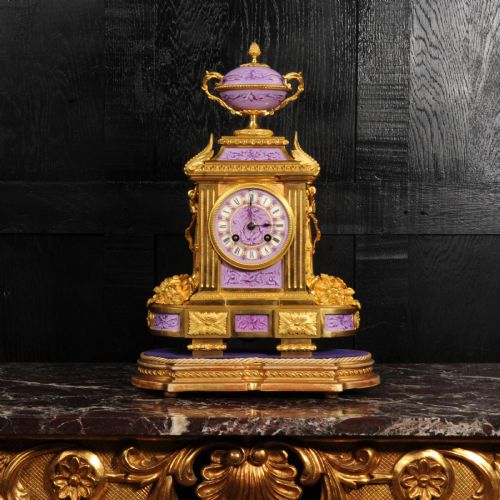
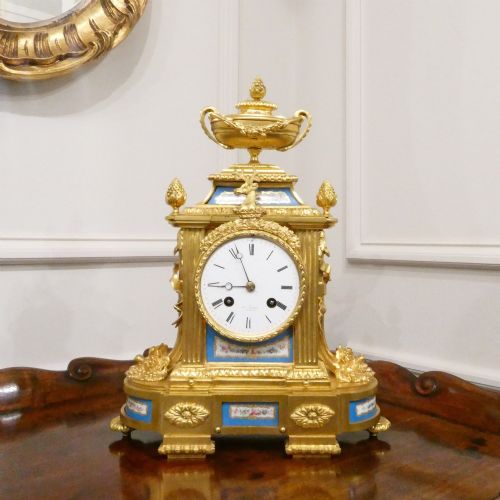
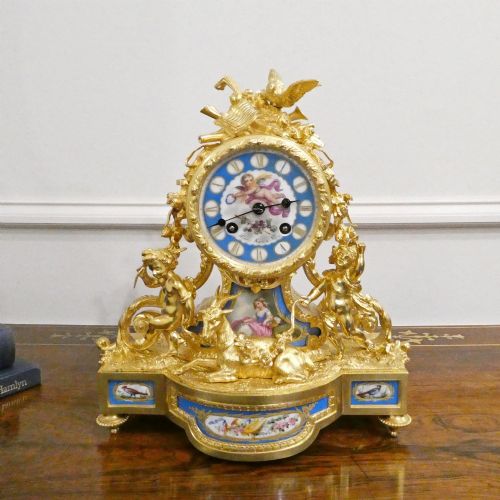
Makers and horologists housed these movements in cases made of ormolu, gilt bronze, or gilt metal, inset with hand-painted porcelain panels often associated with Sèvres. They range from compact boudoir pieces to large urn-shaped mantle clocks standing over fifty centimetres tall.
How they were made
Foundries cast bronze, brass, and ormolu into ornate frames decorated with scrolls, putti, and classical foliage, then applied fire-gilding to achieve a lasting metallic shine. These heavy metal structures provide the architectural skeleton that supports the delicate ceramic and glass components.
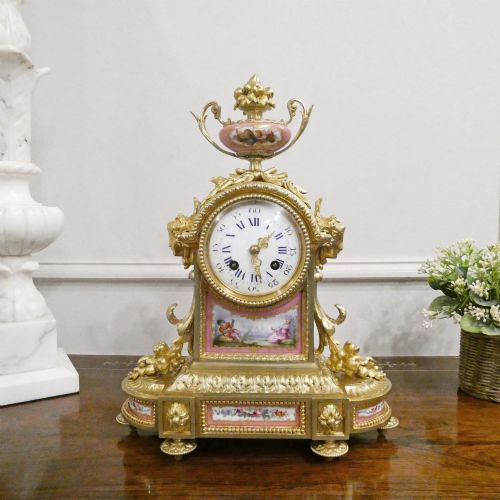
Ceramic panels and urn bodies received hand-painted decoration, frequently featuring romantic scenes or floral motifs against coloured grounds, before being glazed and fired. Enamel dials with delicate numerals were fitted alongside glass bezels to protect the moving mechanical parts inside.
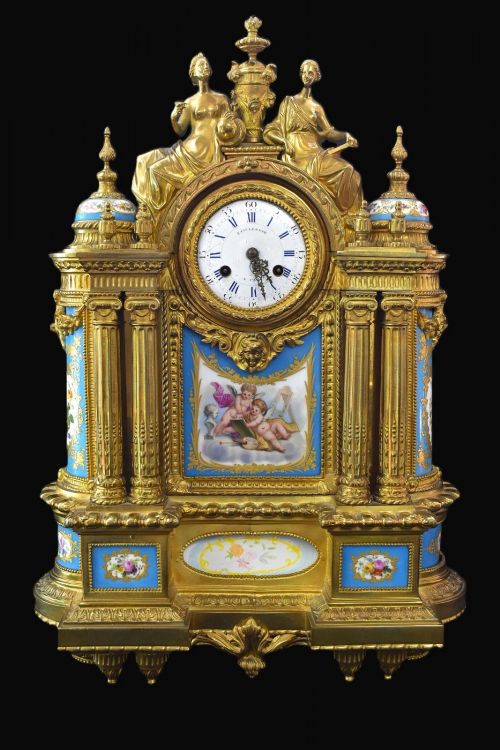
Several porcelain-mounted clock cases feature sculpted putti keeping watch over the dial.
What varies in quality
The crispness of the bronze or ormolu casting dictates the initial visual impact, separating sharp, hand-chased relief work from softer, mass-produced surfaces. Fine examples show meticulous detail in the rendering of floral garlands, putti figures, and architectural moulding.
The standard of hand-painted porcelain artistry marks another clear division, with superior pieces displaying finely detailed miniature scenes rather than repetitive transfer prints. Signed movements by notable makers and fully restored mechanical components further elevate the standing of an individual clock.
Japy Freres·Jean-Baptiste Delettrez·Achille Brocot·Henry Marc·Etienne Lenoir·PH Mourey·Le Roy & Fils·Drocourt
The Gilt Porcelain Table Clock Glossary
- Ormolu
- Gilded bronze produced by applying a mercury and gold amalgam to a bronze base and heating it. This historic technique creates a deep, durable metallic lustre found on nineteenth-century French clock cases.
- Sèvres
- A French porcelain manufactory known for producing fine ceramic bodies and hand-painted panels. Many nineteenth-century mantel clocks incorporate porcelain plaques attributed to or inspired by this historic house.
- Drum head clock
- A timepiece featuring a circular clock case mounted on a pedestal or base, resembling the shape of a snare drum. This distinct form appears frequently among nineteenth-century gilt bronze and porcelain designs.
- Carriage clock
- A small, portable spring-driven timepiece fitted with a carrying handle and glass panels. These travel clocks often include striking and alarm mechanisms.
- Mantel clock
- A decorative clock designed to sit on the shelf above a fireplace. These objects serve as prominent interior ornaments while keeping time.
Gilt Porcelain Table Clock: Frequently Asked Questions
What periods do these clocks come from?
The listings on this page belong to the nineteenth century, with particular concentration in the Victorian decades between eighteen-fifty and eighteen-ninety.
These pieces reflect the historic revival styles popular during the French Second Empire and the reign of Napoleon III.
How do I identify a Sèvres style panel?
Sèvres style panels on these clocks typically feature hand-painted pastoral scenes or floral bouquets framed within gilt borders against coloured porcelain grounds.
Craftsmen integrated these ceramic plaques directly into the cast bronze or ormolu housing of the clock case.
Where should I place a mantel clock?
These timepieces suit prominent display surfaces such as mantelpieces, console tables, or large sideboards where their gilt finish catches the light.
Because many examples stand quite tall or feature delicate porcelain urn elements, they require a stable and level platform.
How are these clocks powered?
Most of these pieces utilise mechanical eight-day spring-driven movements that require manual winding with a key at regular intervals.
Many examples include striking mechanisms to mark the hours and half-hours alongside their traditional enamel clock dials.