
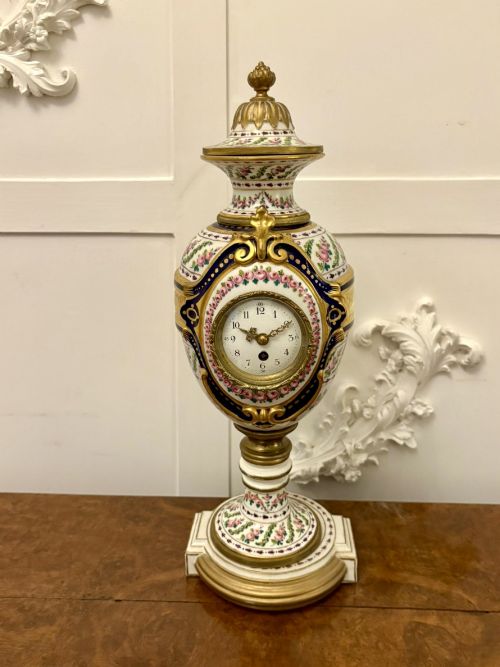


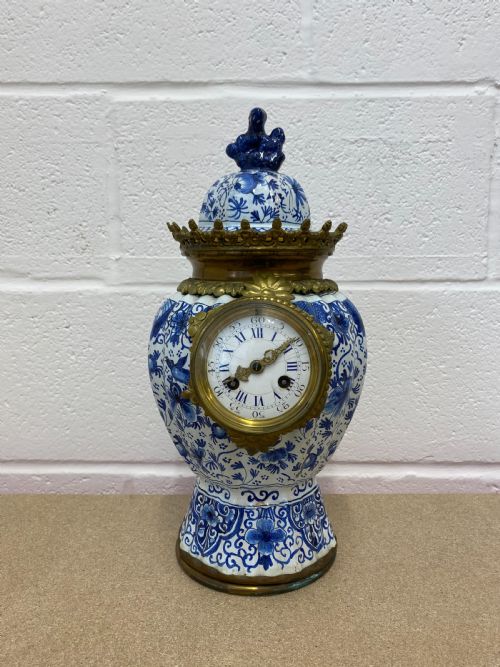


White Porcelain Mantel Clock
White porcelain mantel clocks combine precision movement with sculptural ceramic forms, offering both decorative presence and functional timekeeping.
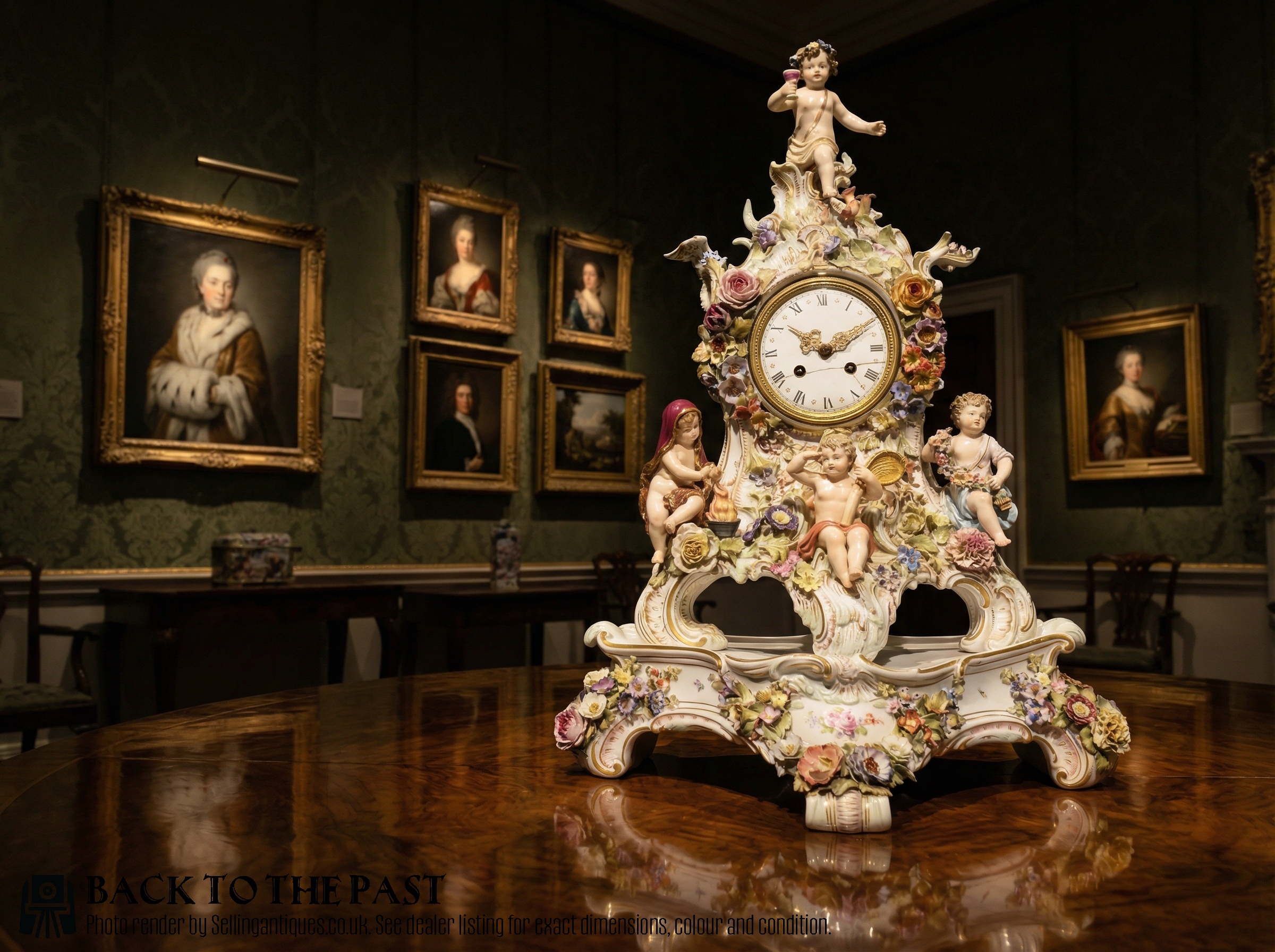
White Porcelain Mantel Clock
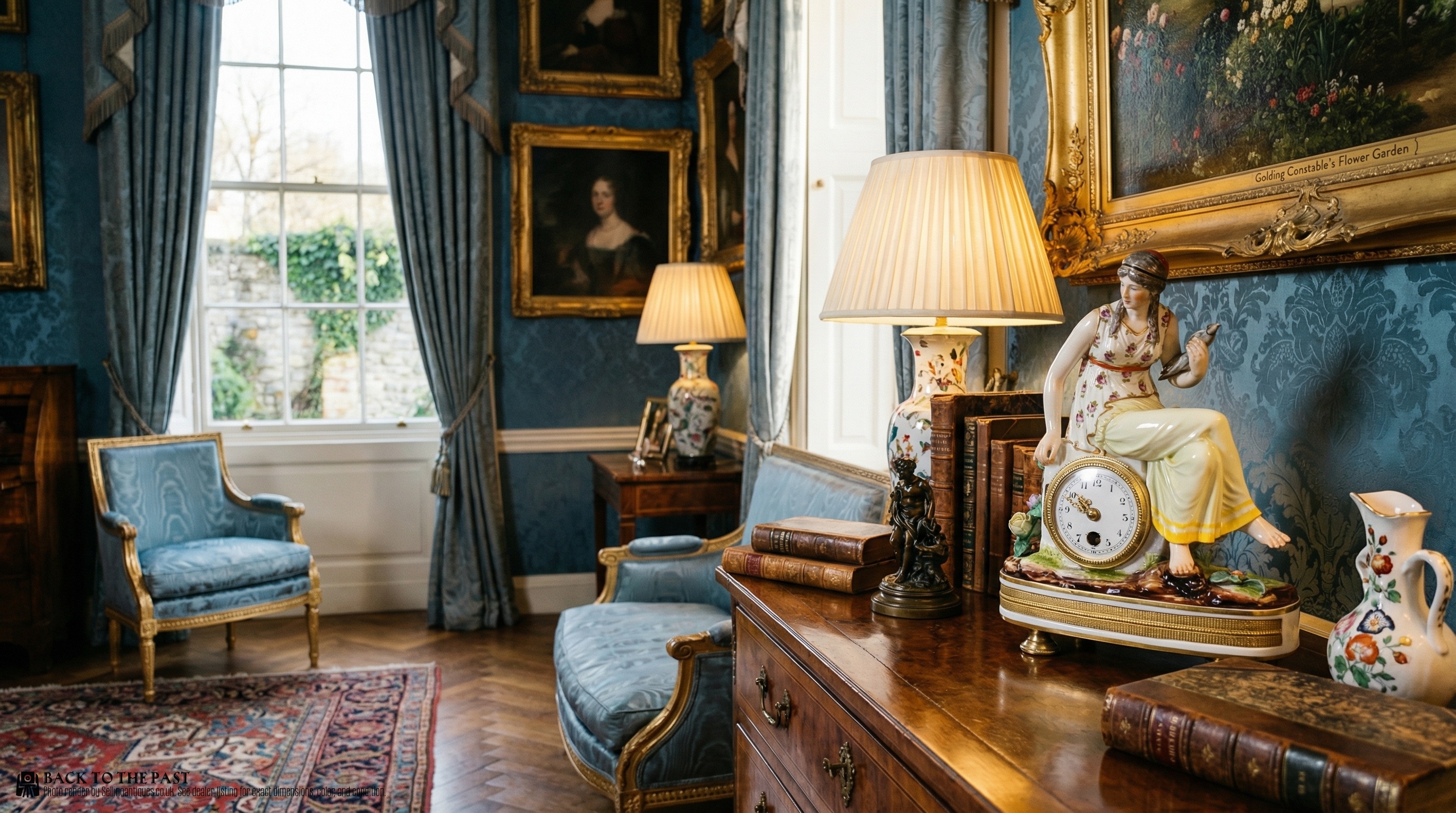
A white porcelain mantel clock sits on a fireplace shelf or side table, combining a mechanical movement with a ceramic housing. These pieces appear across the nineteenth century, including Victorian interpretations and French designs from eighteen-fifty to eighteen-ninety.
The selections span urn shapes, boudoir clocks, and full clock garnitures accompanied by matching side pieces. Makers drew on French Rococo Revival, French Neoclassical, and Chinoiserie styles, alongside Dutch Delftware and Meissen traditions.
Buyers encounter smaller boudoir formats alongside massive bracket mantel clocks and figural works depicting putti or seasonal allegories. The ceramic bodies are frequently paired with brass, gilt bronze, or ormolu mounts to frame the enamel dials.
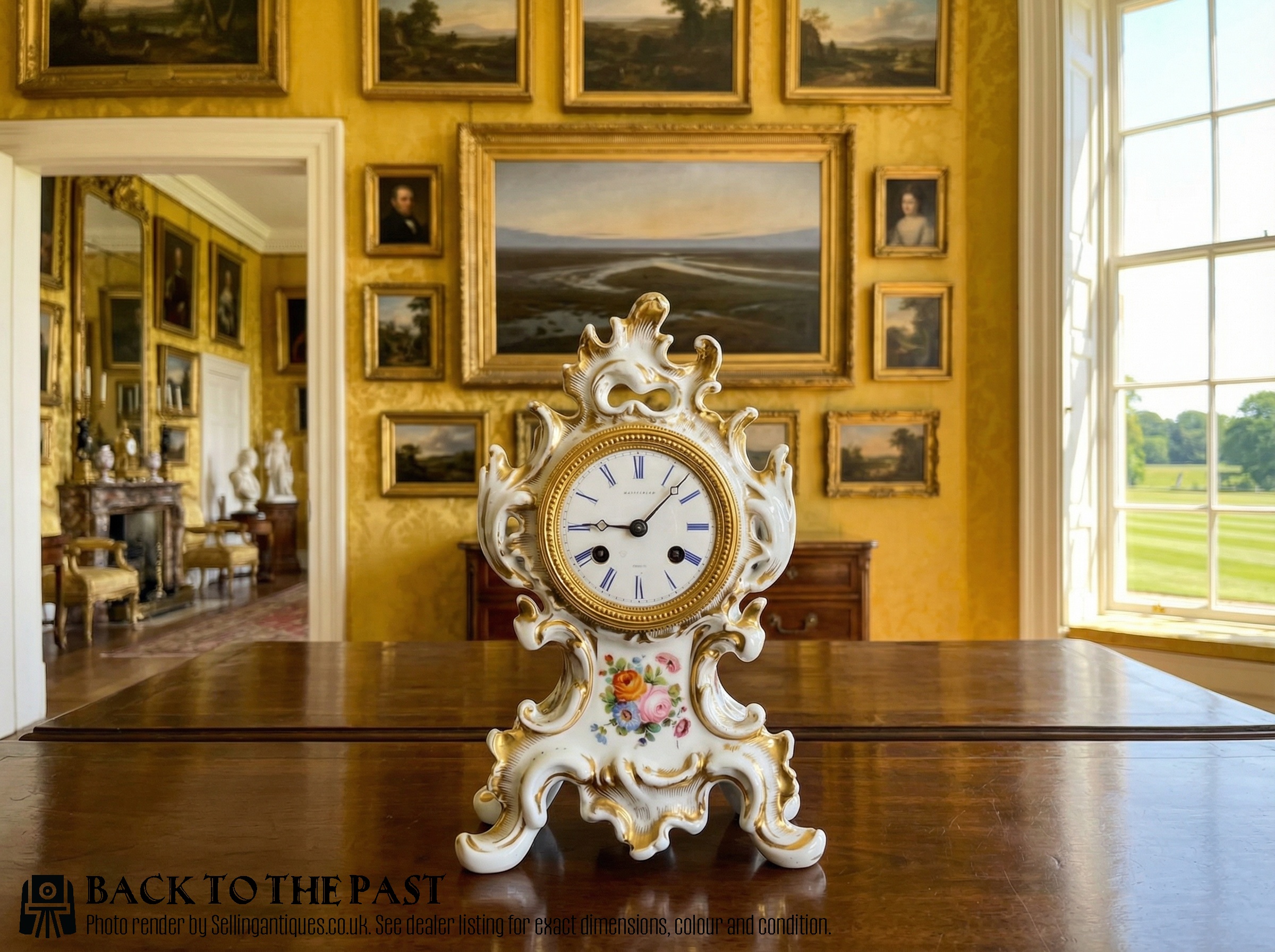
How they were made
Potters shaped the ceramic and porcelain bodies by hand or in moulds before applying glaze and hand-painted details. Many examples integrate gilt bronze, ormolu, or gilded metal mounts that frame the porcelain panels and structural supports.
Movements relied on brass gear trains, often striking on the hour or half-hour over an eight-day cycle. Enamel dials were hand-painted with roman or arabic numerals, then protected behind convex glass bezels.
Several pieces feature chubby porcelain putti keeping a permanent, motionless watch over the passing hours.
What varies in quality
The crispness of the porcelain modelling and the delicacy of the hand-painted decoration set the finer examples apart from standard production. Superior works show clean definition in the figural elements, such as putti or floral motifs, without blurring in the glaze.
Metalwork quality depends on the weight and channelling of the gilt bronze or ormolu mounts rather than surface plating. Better clock sets maintain harmony between the porcelain body and the secondary decorative elements.
Meissen
The White Porcelain Mantel Clock Glossary
- Gilt bronze
- Copper and zinc alloy treated with a gold amalgam finish to create a permanent metallic lustre. It provides structural mounts and decorative highlights on nineteenth-century clock cases.
- Clock garniture
- A set comprising a central clock flanked by matching ornamental side pieces such as urns or vases. These decorative ensembles anchor a mantelpiece arrangement.
- Ormolu
- A finely ground gold-mercury amalgam applied to a bronze base, historically used by French metalworkers. The technique yields a rich golden tone that resists tarnishing.
- Putti
- Depictions of plump male toddlers, often winged, derived from classical art. They appear frequently as sculptural supports or decorative motifs on nineteenth-century timepieces.
- Boudoir clock
- A smaller scale timepiece designed for private rooms rather than large reception spaces. These items prioritize delicate ceramic bodies and intimate detail.
White Porcelain Mantel Clock: Frequently Asked Questions
How do I wind an antique mantel clock?
Most mechanical movements use a key inserted into winding holes on the dial face to tension the mainspring inside the brass mechanism.
Care should be taken not to overwind the spring, stopping as soon as resistance increases to protect the vintage gear train.
What is a clock garniture set?
A garniture set includes a central clock accompanied by matching decorative vases, urns, or candelabra designed to sit together on a mantelpiece.
This format gained popularity in nineteenth-century French and Victorian interiors to create a balanced symmetrical display.
How do I date a porcelain clock?
Dating relies on stylistic clues such as Rococo revival scrolls, Victorian aesthetic movement ebonised details, or neoclassical proportions combined with material analysis.
Maker marks on the porcelain base or stamped serial numbers on the brass movement also help establish the decade of production.
Where should I place a porcelain clock?
These clocks suit stable horizontal surfaces away from direct sunlight, excessive moisture, and rapid temperature fluctuations that can affect ceramic glazes and brass movements.
Mantelpieces and sturdy sideboards provide the ideal weight support and visual framing for heavy ceramic and bronze structures.