


Cherub Porcelain Mantel Clock
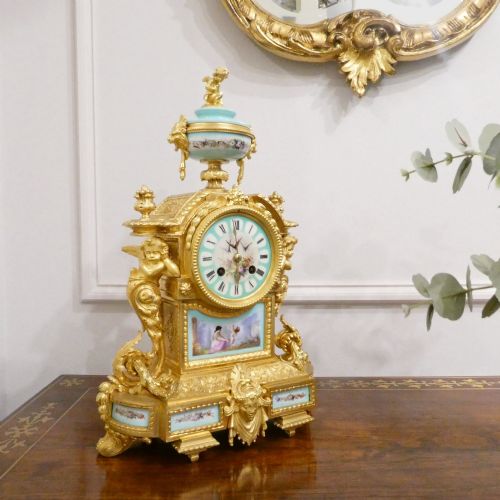
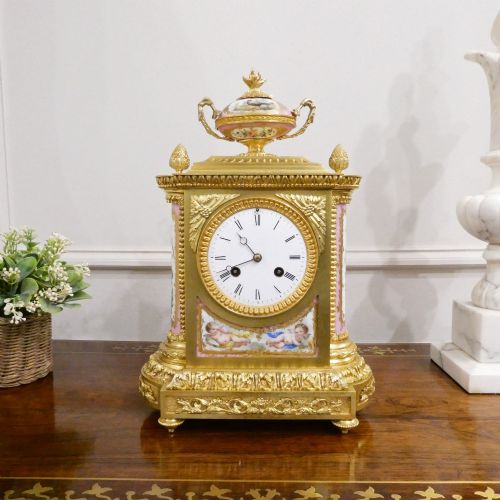
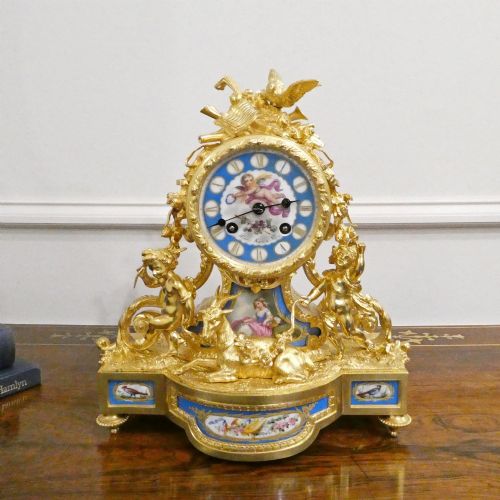
A cherub porcelain mantel clock brings undeniable French nineteenth-century theatricality to a room, combining sculptural putti with gilt bronze and painted ceramic dials.

Cherub Porcelain Mantel Clock
When you search for a cherub porcelain mantel clock, you are looking at nineteenth-century French horology where winged figures and putti lean against or support ceramic-faced timepiece housings. These ornamental objects bridge the gap between sculpture and domestic timekeeping, dominating nineteenth-century drawing rooms with their ornate presence.
The version you are most likely to meet on this page is a French mantel clock or clock garniture from the Victorian era, specifically spanning the decades between 1850 and 1900. These pieces frequently combine gilt bronze, ormolu, and porcelain, sometimes arriving as a three-piece set flanked by matching vases or urns.
Stylistically, these clocks draw heavily on Rococo Revival, Louis XVI Revival, and French Empire aesthetics. They incorporate painted porcelain panels, often in the manner of Sevres or Meissen, depicting pastoral scenes or floral motifs alongside the sculptural putti.
How they were made
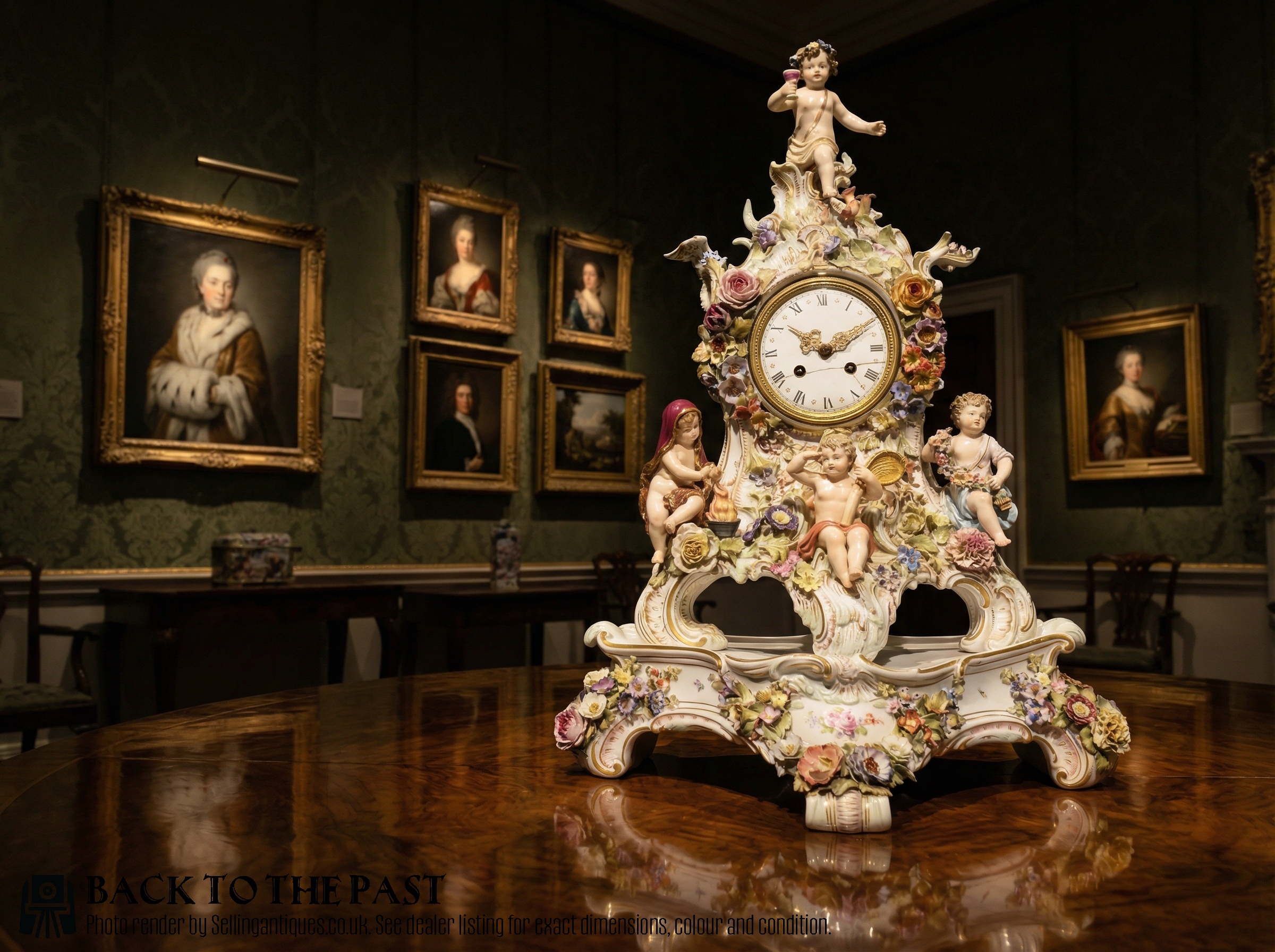
The construction of these pieces relies on the union of cast metalwork and fired ceramic. Foundries shaped gilt bronze, ormolu, and brass to form the structural chassis and decorative mounts, framing porcelain plaques and enamel dials that carried the painted ornamentation.
Makers utilised skilled porcelain painting and gilding techniques, firing ceramic panels multiple times to set vibrant colours and metallic accents. These ceramic elements were then mounted securely into heavy metal frames alongside mechanical brass clock movements.
Listings here span the nineteenth century, capturing the Victorian era through styles such as French Rococo Revival, Louis XVI Revival, and French Empire.
What varies in quality
The standard of a piece is defined by the crispness of the bronze or ormolu casting and the artistic depth of the painted porcelain panels. Finer examples display sharply chiselled details on the putti and meticulous hand-painting on the ceramic surfaces rather than flat, uniform factory decoration.
Another differentiator lies in the integration of the movement and the maker's mark. Clocks bearing the signatures of established French horologists or foundries demonstrate superior mechanical reliability and housing construction compared to unmarked workshop pieces.
Jean-Baptiste Delettrez·Henry Marc·Japy Frères·Achille Brocot·Phillipe H. Mourey
The Cherub Porcelain Mantel Clock Glossary
- Ormolu
- Gilded bronze achieved through a mercury amalgamation process, widely used on nineteenth-century French clock mounts. It provides a warm, deep metallic lustre that differs from modern electroplating.
- Putto
- A plump, winged mythological infant figure, often appearing as a cherub on these clock cases. These figures frequently recline against the clock dial or interact with floral garlands.
- Garniture
- A set consisting of a central clock flanked by matching decorative objects such as vases or urns. They were designed to sit symmetrically on a mantelpiece.
- Sevres style
- Ceramic decoration mimicking the soft paste porcelain produced by the royal French manufactory. It is characterised by rich background colours, often pink or blue, paired with hand-painted reserves.
- Drum head clock
- A timepiece featuring a circular, drum-shaped housing for the movement elevated on a decorative plinth. This specific silhouette is common among mid-nineteenth-century French designs.
Cherub Porcelain Mantel Clock: Frequently Asked Questions
What is a cherub porcelain mantel clock?
These pieces are ornate nineteenth-century French timepieces decorated with sculptural putti and porcelain elements. They combine mechanical clockwork with decorative arts.
They served as status symbols in period drawing rooms, functioning both as reliable timekeepers and sculptural centerpieces for the fireplace mantel.
How do I wind the clock?
Most of these mechanical clocks utilise a key-wind movement accessed through holes on the enamel or porcelain dial. Turning the key tensions the internal springs.
Care must be taken not to over-wind the movement, as historic springs require a gentle touch to maintain their operational integrity.
Where should I place it?
The traditional placement is upon a mantelpiece, though any sturdy sideboard or console table can support their considerable weight. Ensure the surface is level so the pendulum swings truly.
Keep the clock away from direct sunlight and strong drafts to protect the delicate painted porcelain and exterior gilding over time.
How do I identify the period?
The combination of materials, such as ormolu and Sevres-style porcelain, alongside stylistic revivals like Louis XVI or Rococo, points directly to the nineteenth century. Maker signatures on the movement also assist with dating.
Victorian and Second Empire design cues, including heavy bronze casting and specific putti postures, help narrow the manufacturing window between 1850 and 1900.