
Antique Gilt Bronze Clock
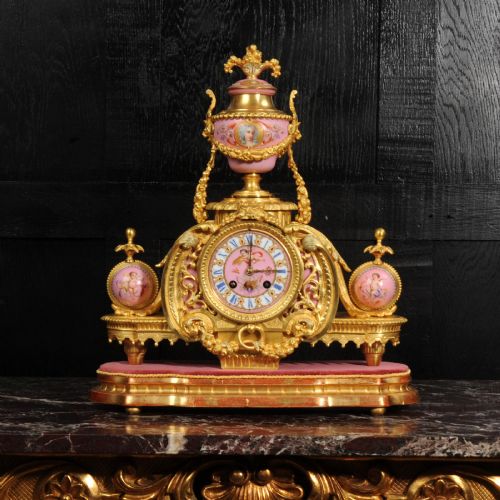
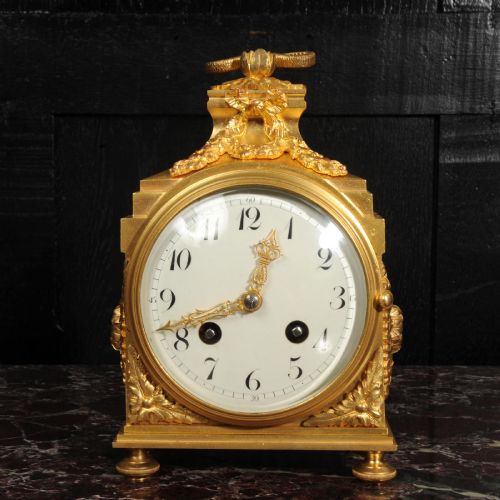
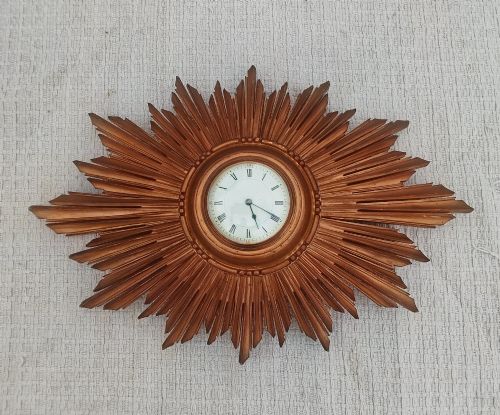
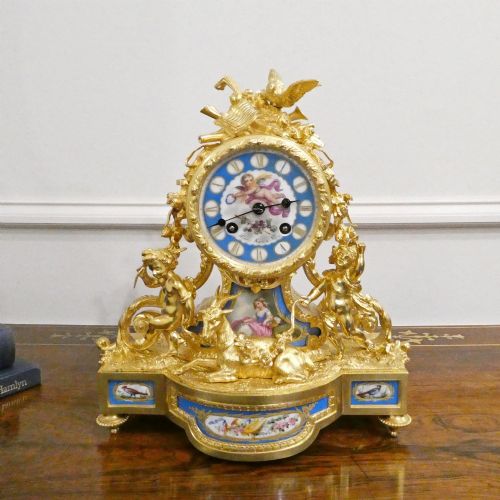
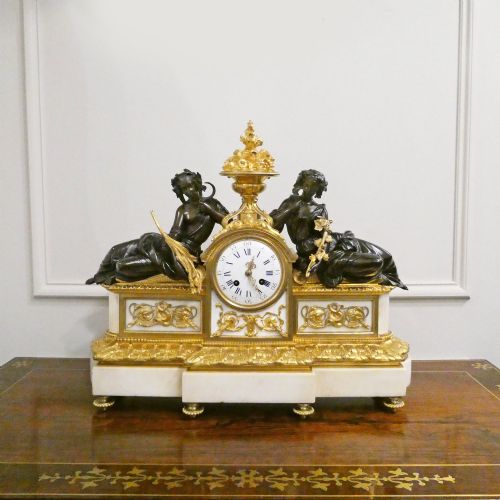
These antique gilt bronze clock designs range from exuberant rococo mantel pieces to restrained neoclassical cartel wall clocks.

What an antique gilt bronze clock is
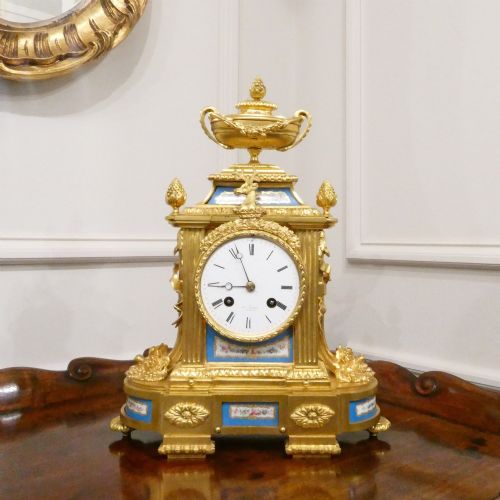
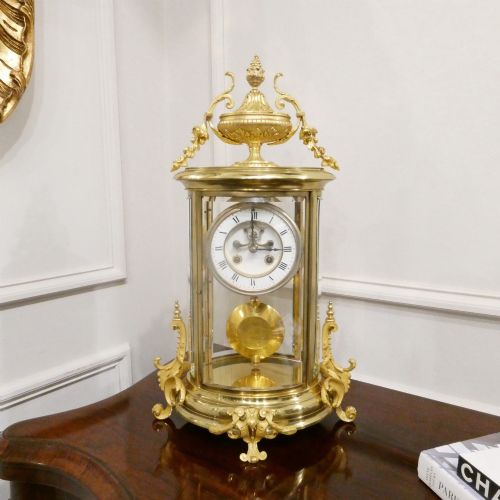
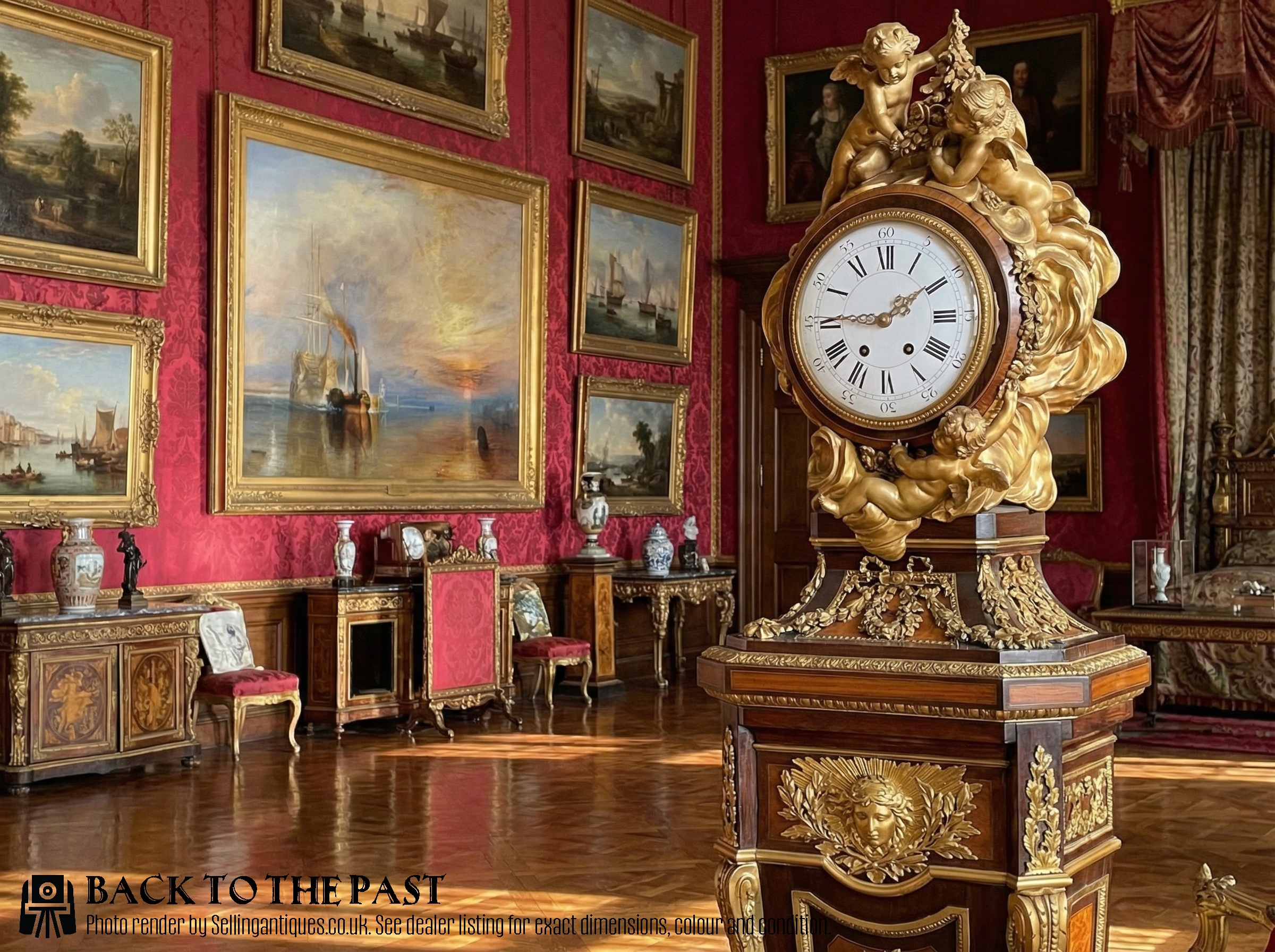
An antique gilt bronze clock is a horological object cast in metal and finished with gold, designed primarily for domestic interiors during the nineteenth century.
You are most likely to meet French mantel clocks and wall-hanging cartel clocks on this page, originating predominantly from the Victorian era and the 1860s to 1880s.
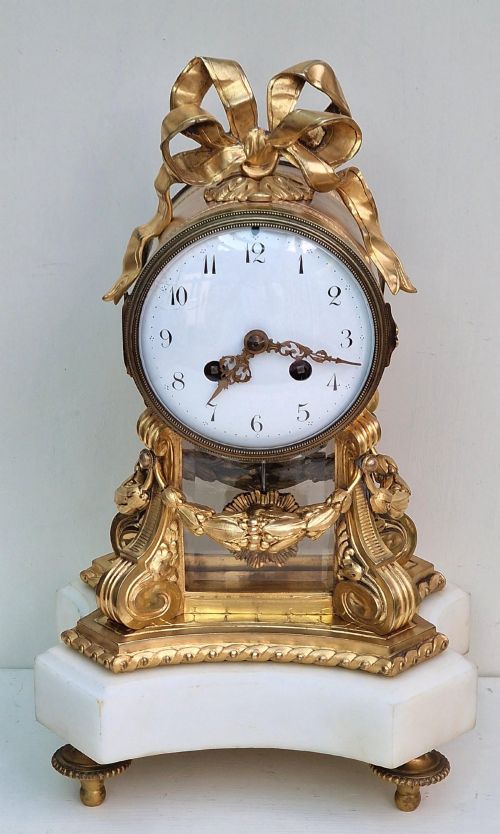
The styles span French Empire, Louis XVI revival, and French Rococo, offering buyers a choice between ornate figural forms and architectural symmetry.
How they were made
The construction of an antique gilt bronze clock relies on metal casting, bringing together ormolu, gilded bronze, brass, and standard bronze components.
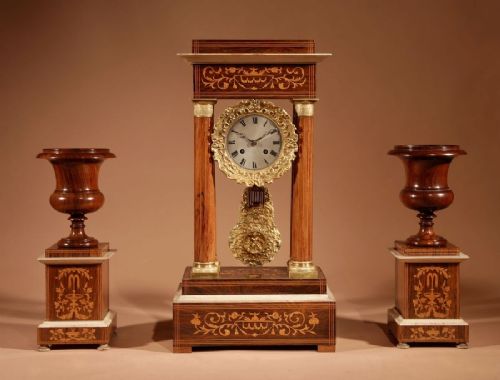
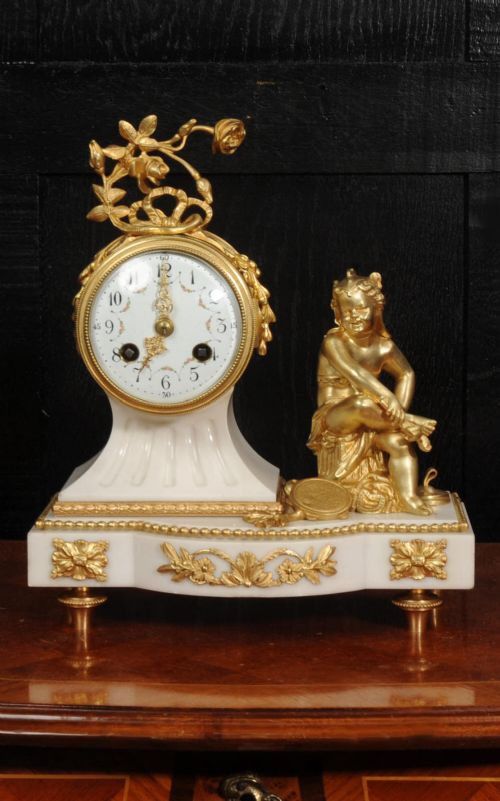
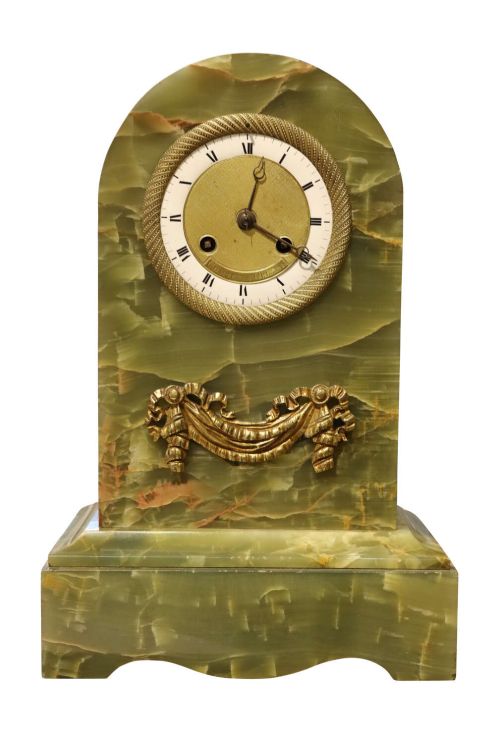
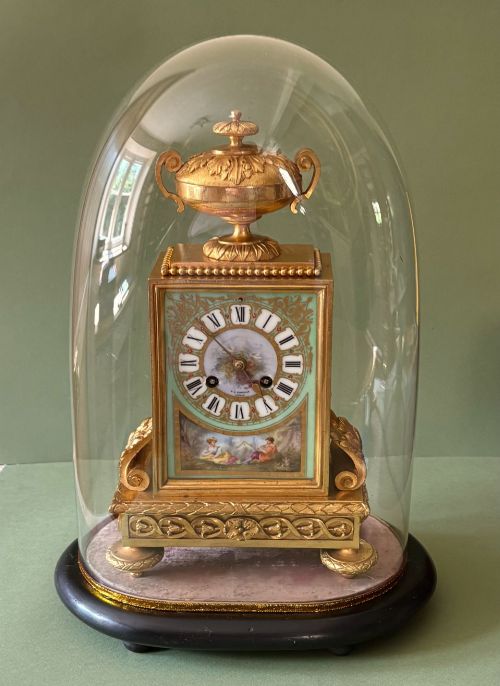
Many cases incorporate contrasting elements such as marble, alabaster, kingwood, glass, and hand-blown glass domes to protect the dial.
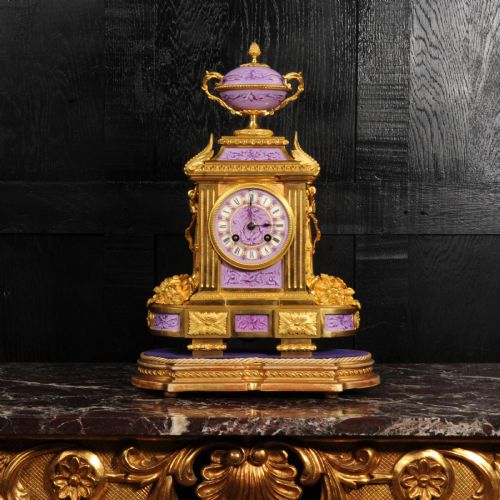
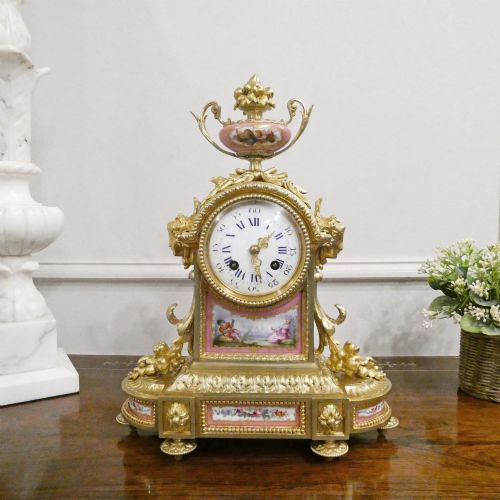
Enamel dials feature alongside porcelain panels, notably from Sevres, while complex mechanisms utilise fusee chains and specialised movements.
Retail Price Guide 2026
Typical UK retail prices for gilt bronze clock, calculated from the Sellingantiques database of over a million retail prices indexed since 2003. This retail price guide relies exclusively on Sellingantiques data; no external sources or auction records are used, so the figures do not describe the wider market.
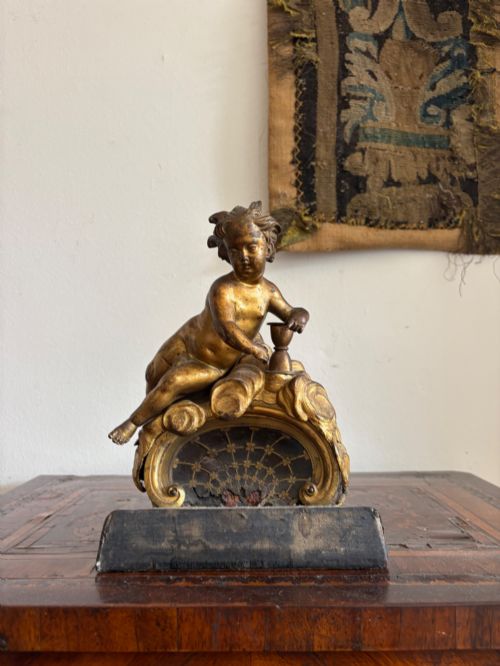
Some mantel clocks feature playful sculpted spaniels or leaping dolphins keeping watch over the passing hours.
What varies in quality
The distinction between tiers rests on the crispness of the bronze casting and the depth of the fire-gilding or ormolu finish across the case.
Maker attribution elevates certain pieces, with works from established workshops and clockmakers showing superior mechanical complexity alongside refined sculptural modeling.
The integration of precious supplementary materials, such as hand-painted porcelain panels or matched marble bases, separates standard production from exceptional examples.

Japy Freres·Samuel Marti·Tiffany and Co·Vincenti·Achille Brocot·Payne London·Baetens London
The Antique Gilt Bronze Clock Glossary
- Ormolu
- A metallic technique involving the application of finely ground high-carat gold to a bronze base. This finish yields a warm, enduring lustre characteristic of high-end French horology.
- Cartel clock
- A wall-mounted clock housed in an ornate, asymmetrical or architectural frame. These pieces often feature elaborate gilt bronze mounts designed to hang securely.
- Fusee
- A conical pulley used within clock movements to maintain even tension on the chain as the mainspring unwinds. This mechanism improves timekeeping accuracy.
- Drum head clock
- A clock design featuring a circular dial housing resembling a drum, frequently mounted upon a decorative base of marble or gilt bronze.
Frequently Asked Questions
How do I wind an antique gilt bronze clock?
Use the designated key to turn the arbors located on the enamel dial, taking care not to over-wind the mainspring.
Consult the specific movement type, such as a chain fusee, to understand the winding resistance and ensure the mechanism remains in good working order.
Where should I place a cartel wall clock?
Mount the cartel clock on a sturdy interior wall capable of supporting the combined weight of the bronze case and mechanical movement.
Ensure the location avoids direct sunlight and fluctuating temperatures to protect the enamel dial and gilded surfaces.
What is the difference between ormolu and gilt bronze?
Ormolu specifically denotes traditional mercury gilding applied to bronze during the eighteenth and nineteenth centuries, creating a distinctive golden hue.
Gilt bronze is a broader term encompassing various methods of applying gold leaf or plating to a bronze substrate.
How do I identify a Louis XVI style clock?
Look for neoclassical design elements such as symmetry, straight architectural lines, urn motifs, and classical foliate scrollwork.
These clocks often contrast polished and matte gilt bronze finishes rather than using the asymmetrical curves typical of earlier rococo pieces.