


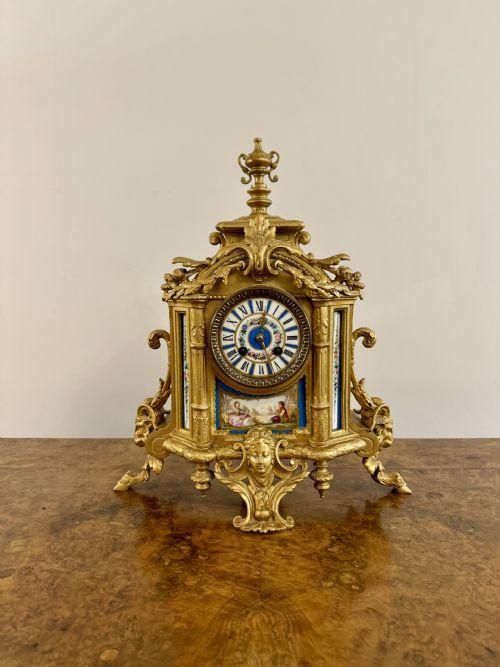

French Porcelain Clock
A french porcelain clock brings together gilt bronze and hand-painted ceramic into a striking domestic centrepiece.
French porcelain clock types and periods
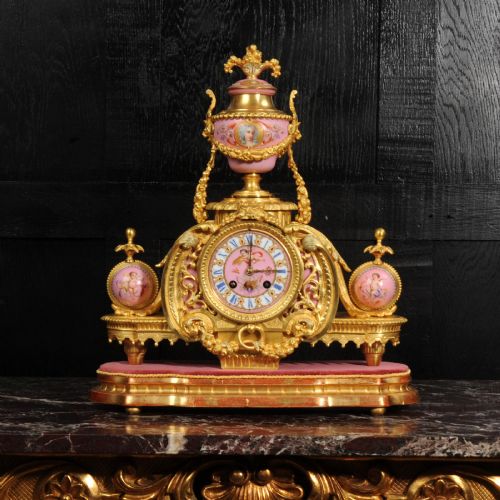
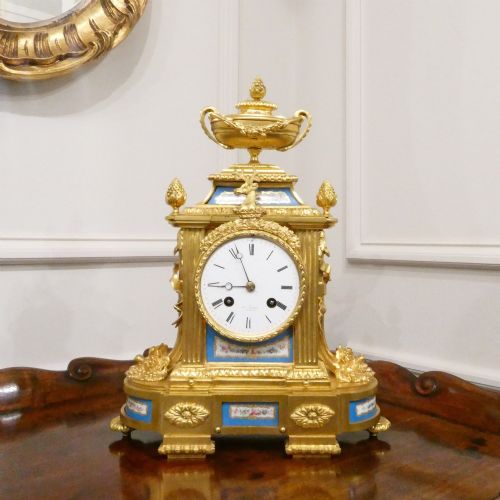
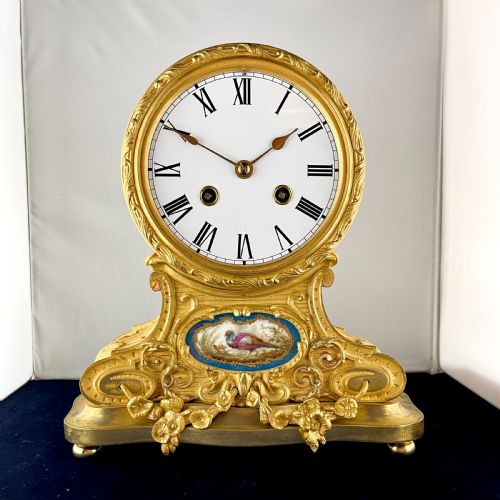
A french porcelain clock combines ceramic bodies with metal mounts, appearing primarily as mantel clocks from the nineteenth century. These objects draw heavily on eighteenth-century design vocabularies, specifically the Louis XVI style with its symmetrical lines and classical detailing.
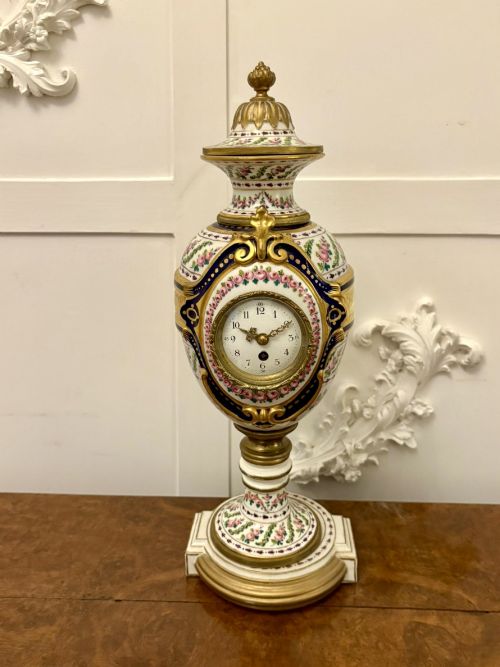
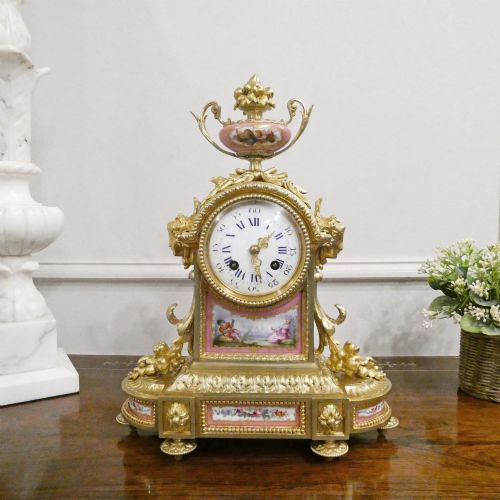
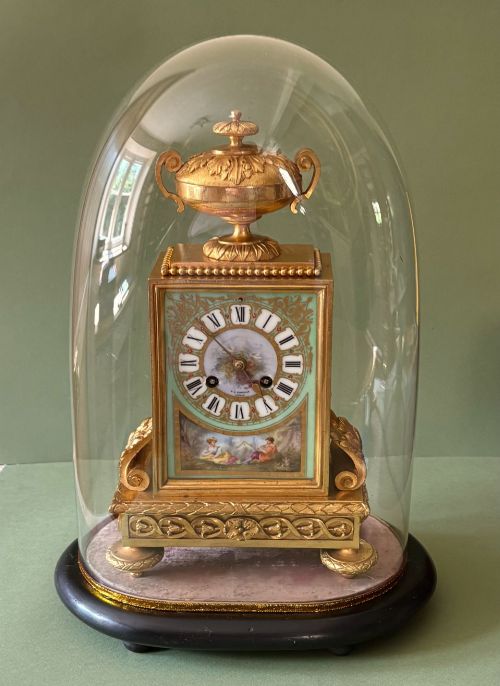
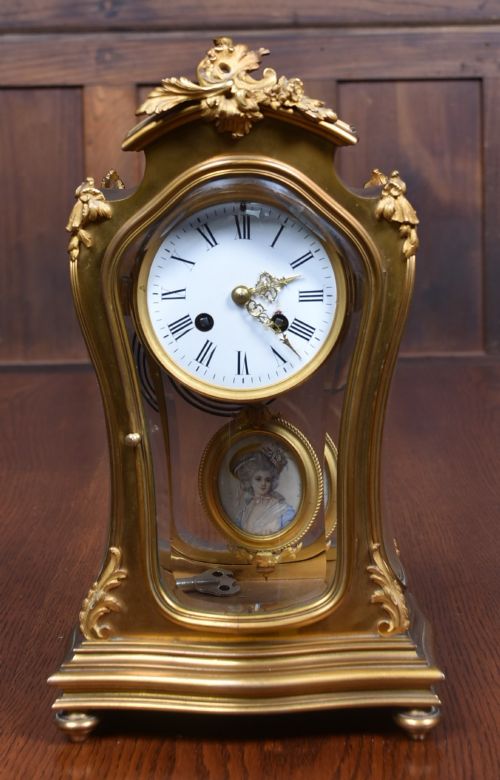
Buyers frequently encounter mantel clocks featuring urn shapes, painted panels, or boudoir scales, often accompanied by glass domes. The archive shows production spanning the decades from eighteen sixty to eighteen eighty, alongside Napoleon III and Victorian period interpretations.
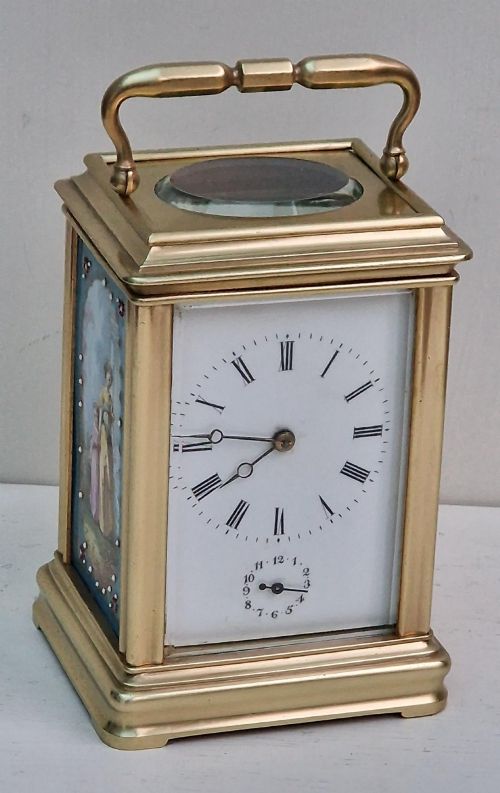
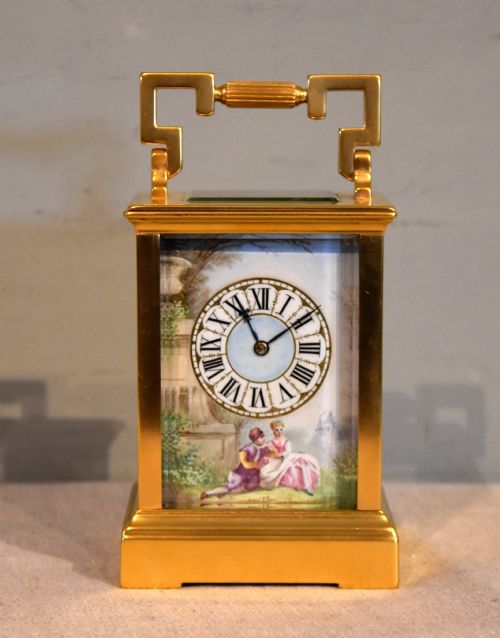
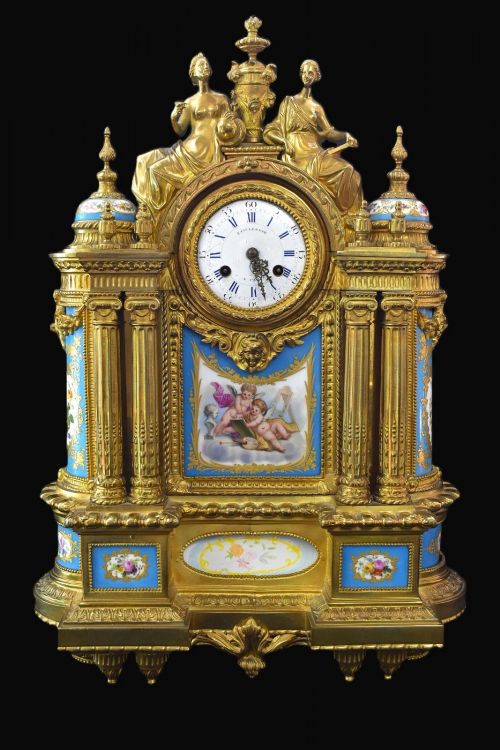
Alternative forms include carriage clocks with porcelain panels and elaborate clock sets incorporating matching side ornaments. The aesthetic ranges from classical floral motifs to occasional Japonisme and Gothic departures.
Materials and construction
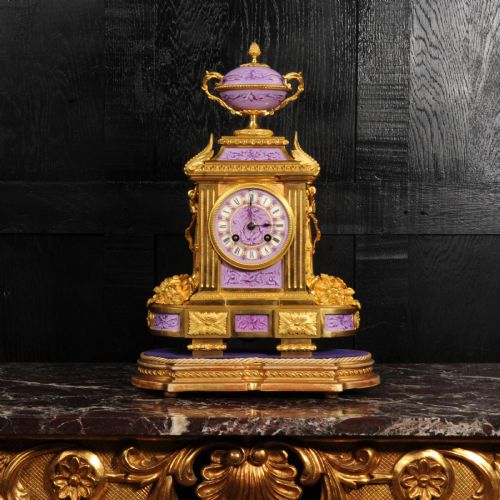
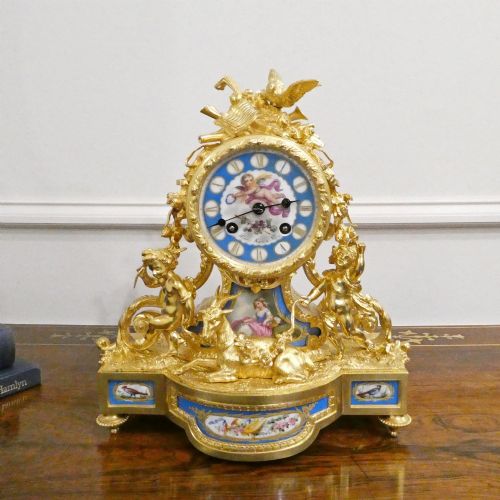
Makers utilised porcelain elements, frequently styled after Sevres or Meissen production, decorated with hand-painted scenes and gilt highlights. These ceramic components house mechanical movements while serving as the visual core of the piece.
Metalwork involved gilt bronze, ormolu, and gilded metal to form the structural mounts, bezels, and decorative feet. Enamel dials with delicate numerals were fitted behind glass covers, sometimes protected beneath glass domes.
Retail Price Guide 2026
Typical UK retail prices for french porcelain clock, calculated from the Sellingantiques database of over a million retail prices indexed since 2003. This retail price guide relies exclusively on Sellingantiques data; no external sources or auction records are used, so the figures do not describe the wider market.
Some nineteenth-century makers could not resist adding hand-painted gun dogs or startled birds to otherwise classical porcelain timepiece dials.
Distinguishing quality in design and execution
The division between standard production and the finest work lies in the crispness of the gilt bronze chasing and the delicacy of the porcelain painting. Finer examples display deeply sculpted ormolu mounts and finely rendered hand-painted panels depicting figures, birds, or floral arrangements.
Movement execution also dictates standing, with renowned makers providing superior mechanical reliability alongside their signed dials and plates. The harmony between the porcelain body and the cast bronze elements determines the overall visual balance.
Japy Freres·Japy Fils·A D Mougin·Achille Brocot·PH Mourey·Vincenti
The French Porcelain Clock Glossary
- Ormolu
- Gilded bronze achieved through a mercury amalgamation process used extensively in nineteenth-century French metalwork. This technique produces a deep, warm golden finish that resists tarnishing.
- Sevres
- The preeminent French porcelain manufactory whose distinct soft-paste and hard-paste styles inspired numerous nineteenth-century clock bodies and decorative panels. Many pieces on the market adopt this aesthetic.
- Japy Freres
- A prominent French clockmaking firm responsible for producing mechanical movements housed within porcelain and gilt bronze cases. Their machinery is frequently encountered in nineteenth-century mantel clocks.
- Mantel clock
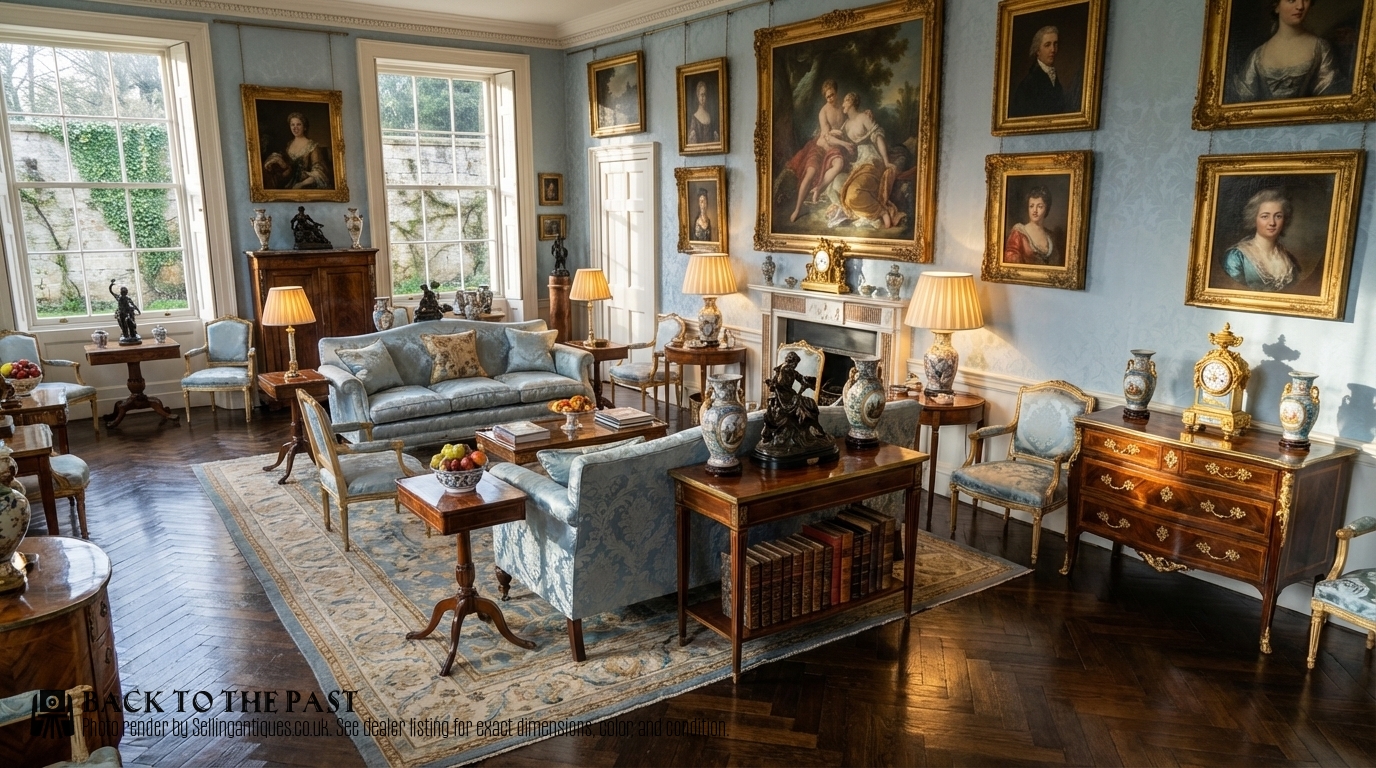
- A freestanding clock designed to sit on a fireplace mantel or shelf, combining decorative housing with a striking mechanical movement. These items formed central components of period domestic interiors.
Frequently Asked Questions
How do I wind a french porcelain clock?
Use the designated key on the dial face to gently wind the springs until resistance is felt, taking care not to overwind the movement.
Consult the specific striking arrangement to ensure the chime train and time train are wound in proper correspondence.
What styles are common in these clocks?
The Louis XVI style dominates, featuring classical symmetry, urn contours, and refined gilt bronze mounts.
Alternative expressions include Gothic interpretations, Aesthetic Movement Japonisme details, and simpler carriage clock formats.
Where were these clocks placed originally?
They served as decorative and functional centrepieces on drawing room mantelpieces, often paired with matching side urns or candelabra.
Smaller boudoir formats and carriage clocks were intended for bedrooms or travel use by affluent owners.
How do I identify the maker?
Makers typically stamped their names or trademarks onto the brass movement plates hidden at the back of the clock case.
Additional signatures occasionally appear on the white enamel dial faces or painted porcelain panels.