


Pink Porcelain Clock
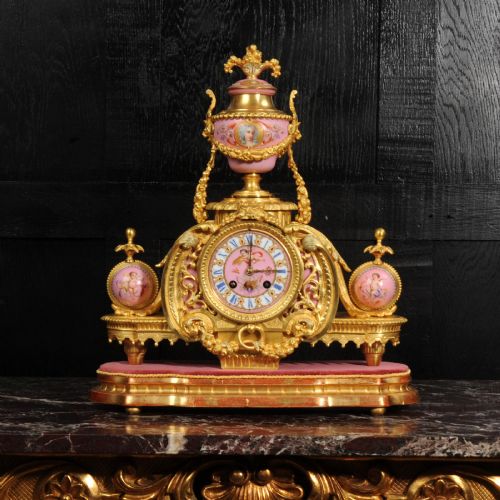
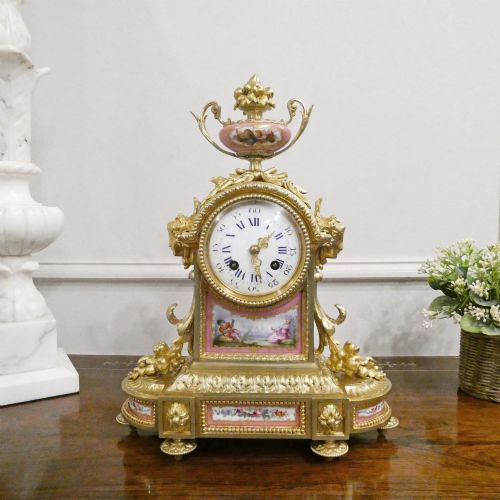
A pink porcelain clock brings a touch of ornate French style to a mantelpiece, combining vibrant ceramics with gleaming gilt mountings.
Understanding a pink porcelain clock
A pink porcelain clock represents a distinctive group of nineteenth-century decorative timepieces, frequently styled with French Rococo Revival or Louis XVI influences. These objects generally take the form of mantel clocks, occasionally accompanied by matching garniture sets consisting of side pieces.
Most examples originate from the Victorian era and the 1860s up to the 1880s, reflecting a strong period preference for bright ceramic panels and gilt metal housings. Buyers frequently encounter pieces associated with Sevres-style decoration or makers such as Japy Freres.
The primary visual impact relies on the contrast between the painted pink porcelain dial or panels and the surrounding ormolu, gilt bronze, gilt brass, or gilt metal mounts. Glass components also appear, notably in crystal regulator formats that showcase the internal movement.
Materials and construction
Maker workshops constructed these timepieces using fired porcelain decorated with pink glazes and painted details, paired with cast metal frames. Ormolu and gilt bronze or brass provided durable, reflective housings that complemented the delicate ceramic panels.
Enamel featured prominently on clock faces for numbers and markers, while glass protected sensitive dials and internal mechanisms. Gilt metal or brass elements were shaped into classical or revivalist decorative motifs to frame the central porcelain bodies.
Retail Price Guide 2026
Typical UK retail prices for pink porcelain clock, calculated from the Sellingantiques database of over a million retail prices indexed since 2003. This retail price guide relies exclusively on Sellingantiques data; no external sources or auction records are used, so the figures do not describe the wider market.
Some clocks require a matched trio on the mantel, because a single pink porcelain clock simply refuses to stand unaccompanied.
Distinctions in quality
Quality differences emerge in the crispness of the metal chasing and the depth of the gilding applied to the bronze, brass, or ormolu mounts. Finer pieces display sharper relief and more refined detailing across decorative scrollwork and architectural elements.
The hand-painted execution of the pink porcelain panels and dials distinguishes superior examples from simpler mass-produced output. Greater care in ceramic firing and enamel work produces a more durable and visually cohesive finish.
Japy Freres
The Pink Porcelain Clock Glossary
- Ormolu
- Gilded bronze or brass used for decorative mounts on furniture and clocks. This technique provides a bright, durable metallic surface that imitates solid gold.
- Garniture
- A set of matching decorative objects designed to be displayed together on a mantelpiece. These typically include a central clock flanked by two matching side pieces.
- Sevres
- A famous French porcelain manufactory whose distinct styles and marks heavily influenced nineteenth-century decorative arts. The term often describes similar painted porcelain items from the period.
- Crystal Regulator
- A clock housed within glass panels that allow clear visibility of the mechanical movement inside. These pieces often incorporate decorative porcelain elements.
- Mantel clock
- A portable clock designed to sit on a fireplace mantel or shelf. These objects combine timekeeping utility with ornamental display.
Frequently Asked Questions
What is a pink porcelain clock?
A pink porcelain clock is a nineteenth-century decorative timepiece featuring ceramic panels combined with metal mounts. These objects often display French revival styles.
They serve primarily as ornamental mantel clocks, frequently produced during the Victorian period.
How do I date these clocks?
Dating relies on stylistic indicators such as Louis XVI revival motifs or French Second Empire design elements. Reference points usually place them within the nineteenth century.
Materials like gilt bronze, ormolu, and specific porcelain painting styles help narrow the period to the 1860s, 1870s, or 1880s.
What are clock garnitures?
Clock garnitures are matching sets consisting of a central mantel clock accompanied by side pieces. These arrangements were popular decorative displays in nineteenth-century interiors.
They share identical materials, such as pink porcelain and gilt metal, to create a uniform look.
How do I care for my clock?
Maintenance involves keeping the porcelain and gilt surfaces clean using soft, dry cloths without harsh chemicals. Professional servicing ensures the mechanical movement functions correctly.
Placement away from direct heat sources helps preserve the enamel dials and delicate metal finishes.