



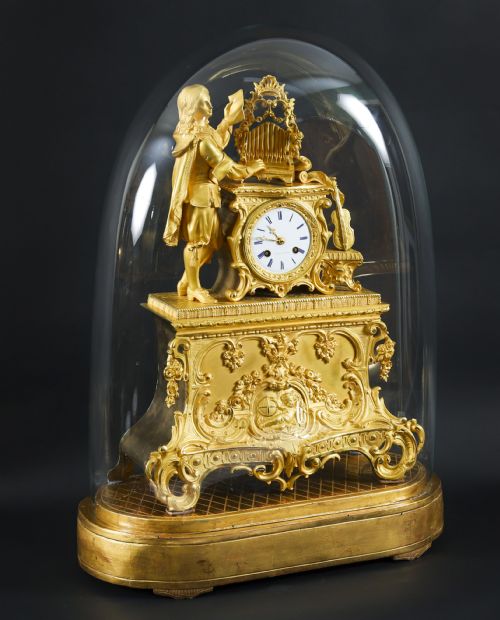


Sevres Style Mantel Clock
A sevres style mantel clock brings nineteenth-century French elegance to a room with hand-painted porcelain and gilt bronze.
What a sevres style mantel clock is
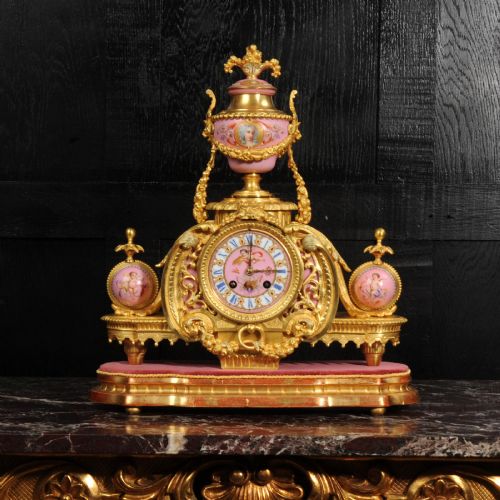
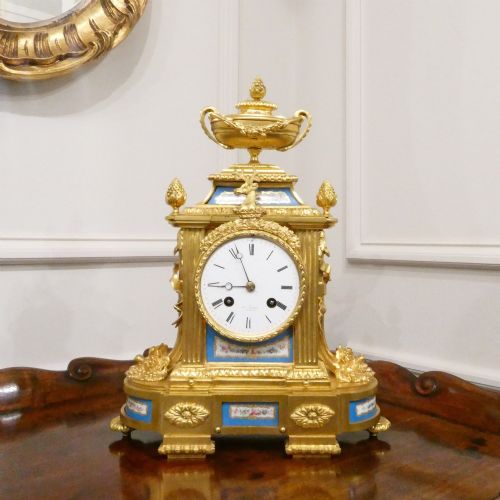
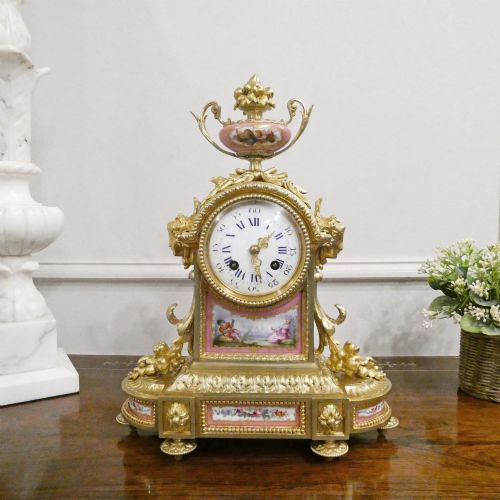
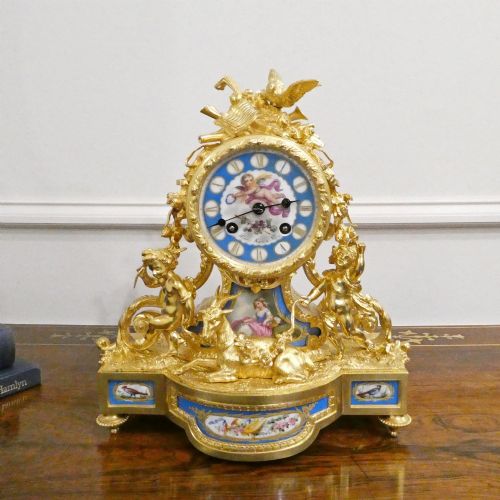
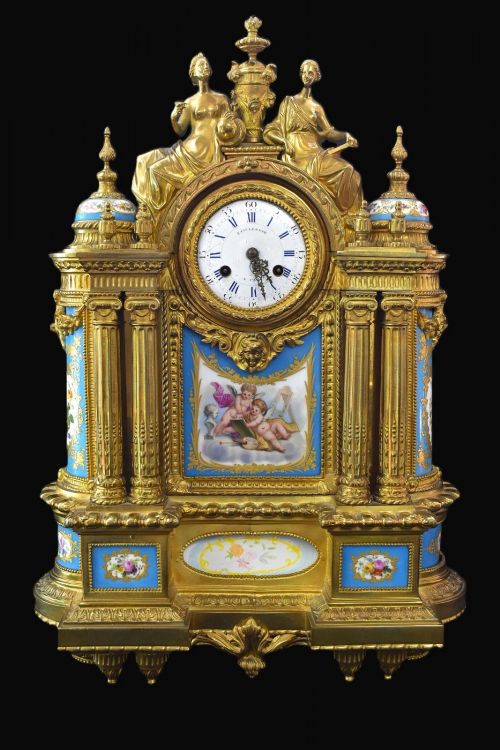
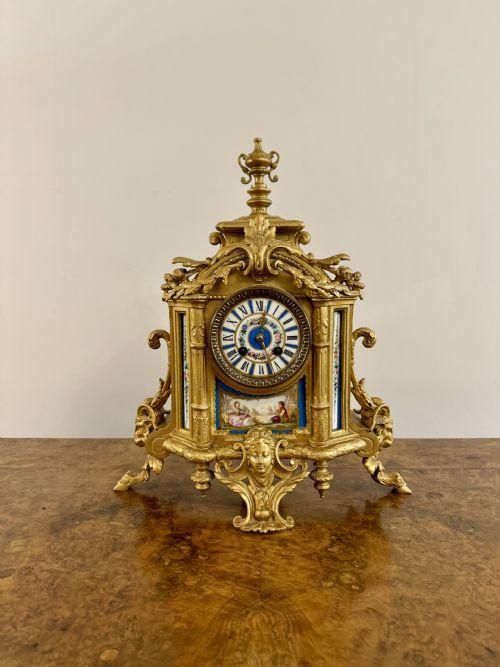
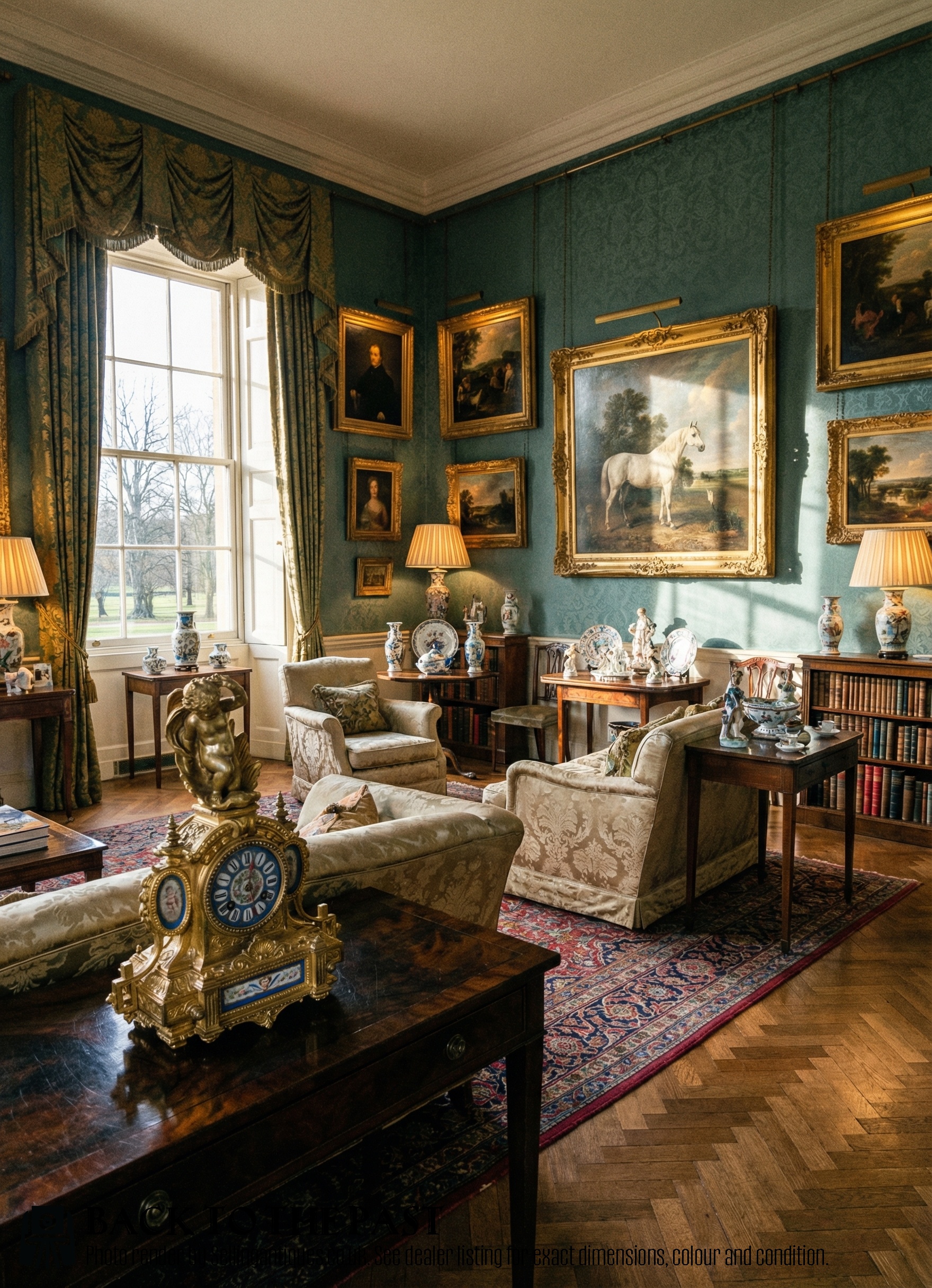
A sevres style mantel clock combines hand-painted porcelain panels with gilt bronze or ormolu mounts, emerging from nineteenth-century French workshops. These pieces span the Victorian era, drawing heavily on Louis XVI style and French Rococo Revival aesthetics.
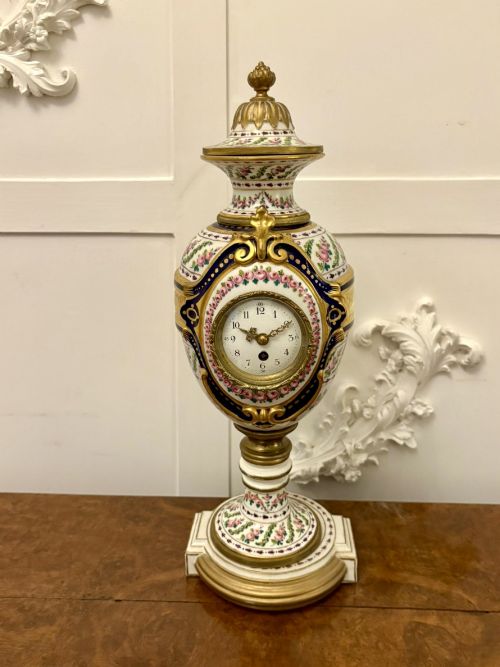
The most common forms on this page include urn-shaped mantel clocks and complete clock garnitures featuring matching side ornaments. They date across the 1860s, 1870s, and 1880s, reflecting the enduring popularity of classical revival design during that century.
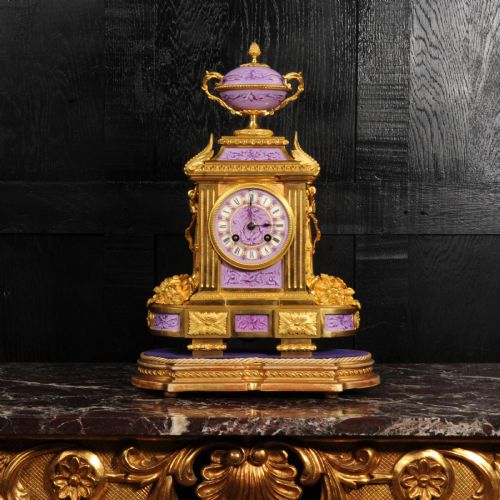
Buyers seeking a sevres style mantel clock will encounter pink porcelain variants alongside deep polychrome painted panels set within elaborate metalwork. Each piece demonstrates the nineteenth-century taste for decorative domestic timepieces that mimic royal French porcelain manufactory outputs.
How they were made
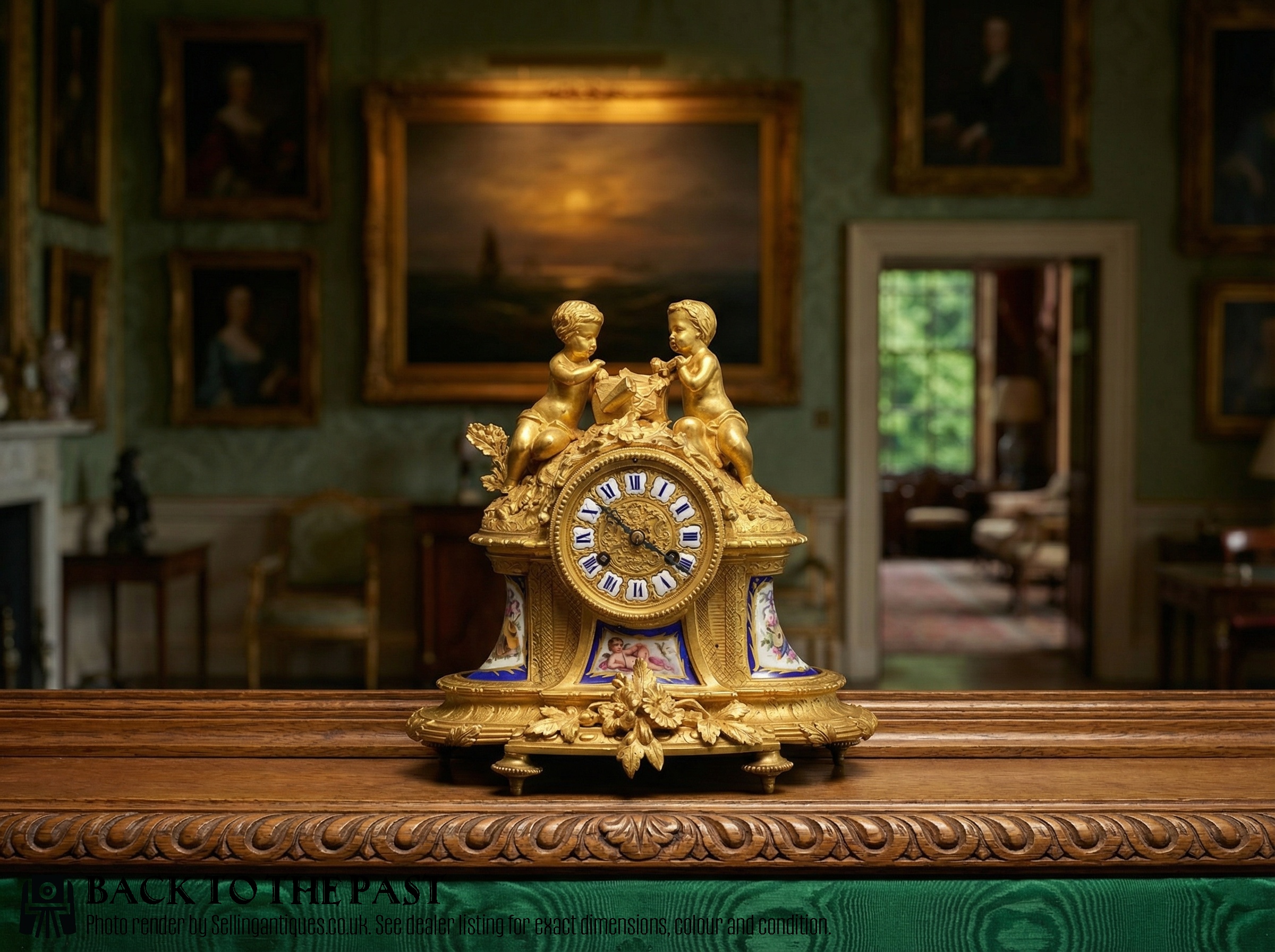
The construction relies on combining fired ceramic components with cast metal mounts finished in fire gilding or ormolu. Artisans shaped porcelain into urns and flat panels before applying hand-painted scenes, often featuring figures or floral motifs, alongside enamel dial markers.
Gilt bronze and ormolu frames were cast and chased to support the porcelain bodies securely, incorporating glass bezels to protect the clock faces. These materials required close collaboration between bronze founders, porcelain painters, and horologists during the nineteenth century.
Retail Price Guide 2026
Typical UK retail prices for sevres style mantel clock, calculated from the Sellingantiques database of over a million retail prices indexed since 2003. This retail price guide relies exclusively on Sellingantiques data; no external sources or auction records are used, so the figures do not describe the wider market.
Listings in this category span the Victorian era, focusing specifically on pieces produced across the 1860s, 1870s, and 1880s.
What varies in quality
The standard of a sevres style mantel clock rests on the crispness of the ormolu chasing and the artistic merit of the hand-painted porcelain panels. Superior examples display finely detailed figures and botanical scenes with rich enamel work, whereas simpler pieces rely on standard transfer prints or heavier, less refined metal casting.
Architectural harmony also dictates worth, where the proportion of the gilt bronze mounts to the porcelain body feels integrated rather than assembled at random. The inclusion of matched clock garniture sets elevates the scope of the piece.
Servant of Paris
The Sevres Style Mantel Clock Glossary
- Ormolu
- Gilded bronze created through an amalgam of mercury and gold applied to a cast brass or bronze base. This technique produces a deep, warm metallic lustre characteristic of nineteenth-century French decorative arts.
- Garniture
- A set of decorative matching objects designed to be displayed together on a mantelpiece, typically comprising a central clock flanked by two urns or candelabra. These sets create a symmetrical visual arrangement.
- Rococo Revival
- A nineteenth-century design movement that reinterprets eighteenth-century French rococo forms, featuring asymmetric curves, C-scrolls, and naturalistic shell motifs. It heavily influences the mounts on many Victorian clocks.
- Louis XVI Style
- A neoclassical design vocabulary marked by straight lines, symmetrical proportions, classical urns, and foliate swags. This aesthetic informs the more restrained architectural frames found in this category.
- Enamel
- A glassy substance fused to metal surfaces through firing, used primarily here to create crisp white clock dials with black numerical markers. Its smooth finish resists fading over time.
Frequently Asked Questions
How do I wind a sevres style mantel clock?
Wind the clock using the appropriate key inserted into the winding arbors on the enamel dial, turning gently until resistance is felt.
Take care not to overwind the mainspring, as this can cause damage to the nineteenth-century mechanical movement inside.
Where should I place a clock garniture?
A clock garniture suits a prominent mantelpiece, large sideboard, or console table where the central clock and matching side pieces can be viewed together.
Ensure the surface is stable and level to protect the heavy porcelain and ormolu construction from accidental tipping.
How do I identify a Louis XVI style clock?
Look for architectural symmetry, straight columns, urn motifs, and restrained neoclassical ornamentation within the gilt bronze mounts.
These design elements distinguish the style from the more fluid and curving lines of the Rococo Revival pieces.
What is the difference between ormolu and bronze?
Bronze is the underlying alloy of copper and tin used to cast the physical frame of the clock mount. Ormolu refers specifically to the gold-gilt surface treatment applied to that bronze casting.
This finish gives the metal its characteristic golden sheen without tarnishing like untreated brass.