
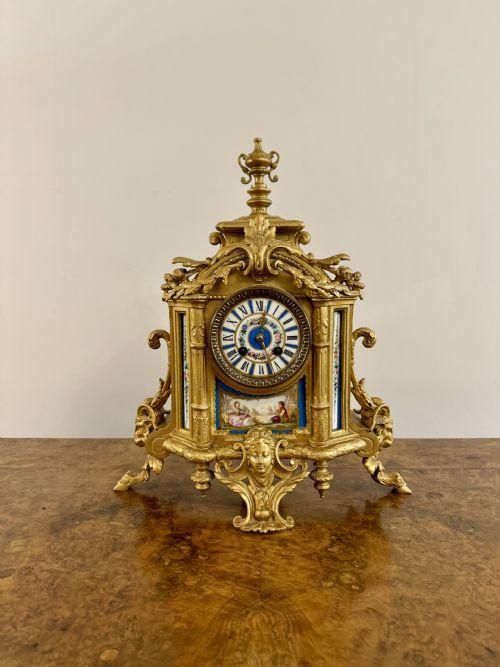


Antique Porcelain Shelf Clock
An antique porcelain shelf clock brings nineteenth-century French domestic ornament and precise timekeeping together upon the mantelpiece.
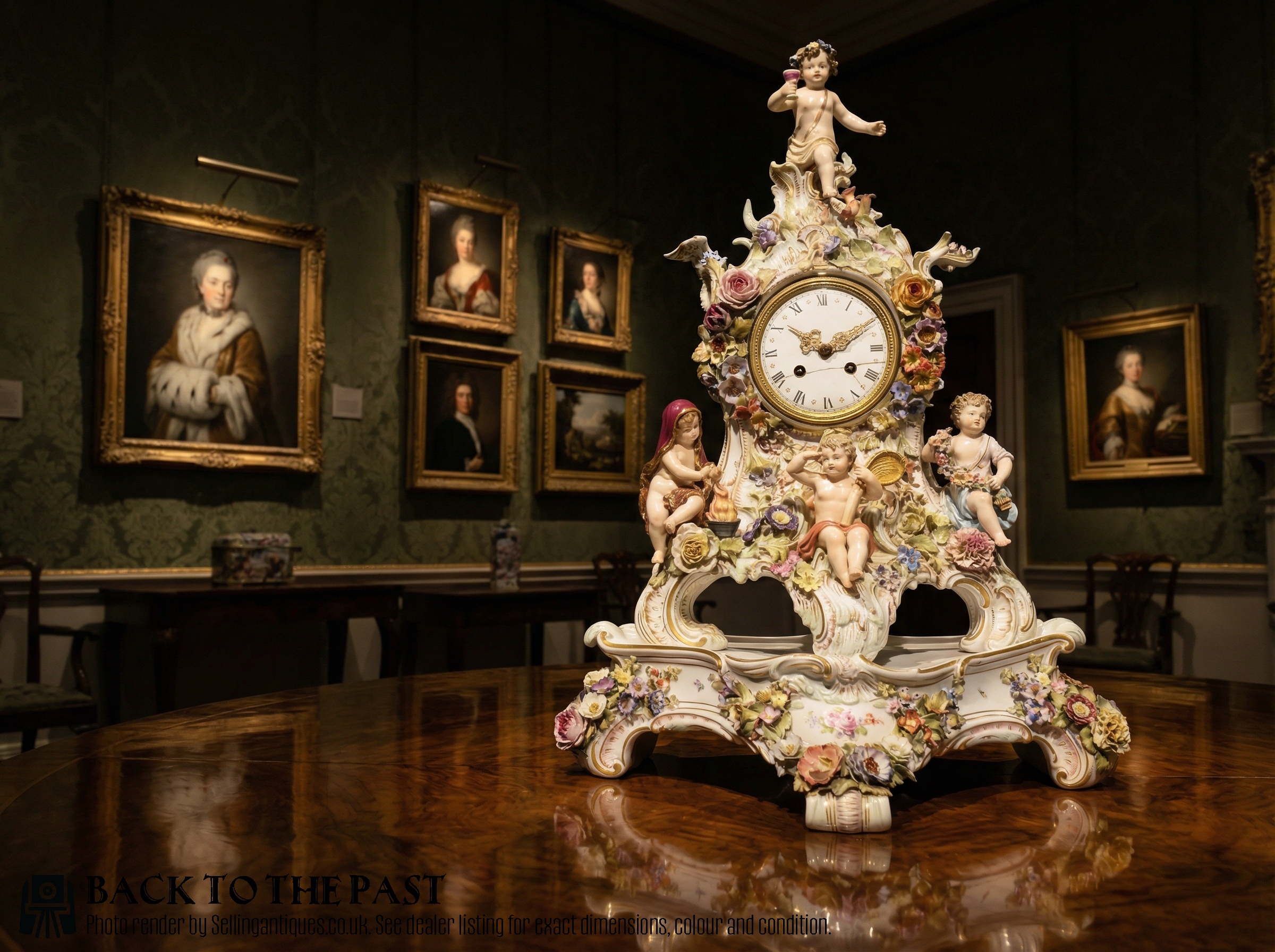
Antique Porcelain Shelf Clock
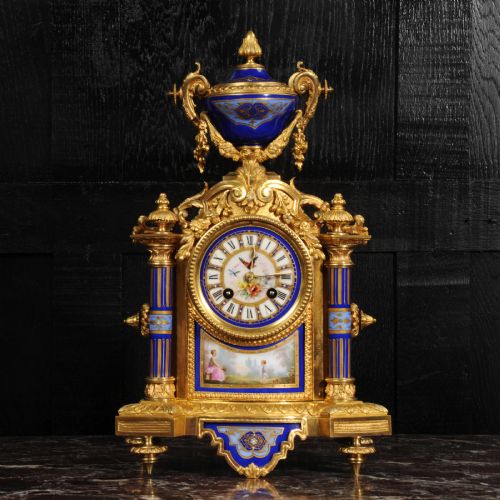
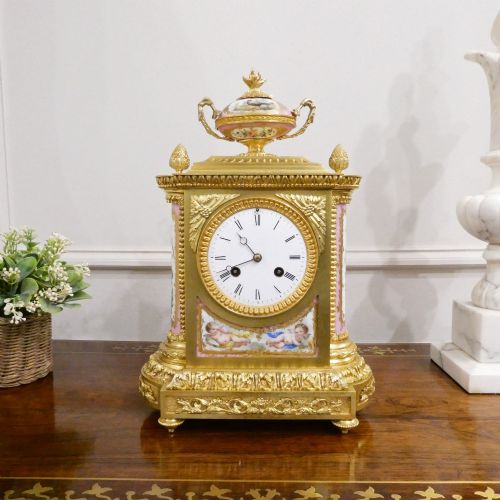
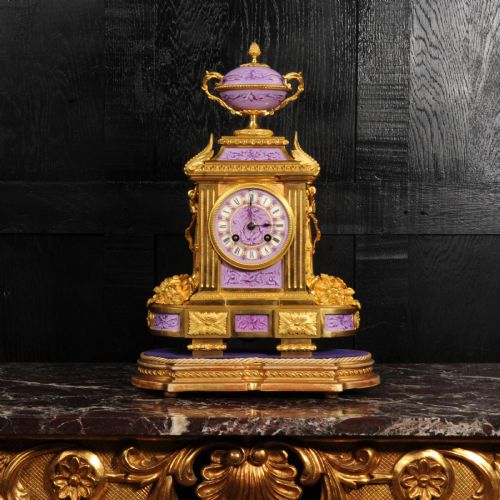
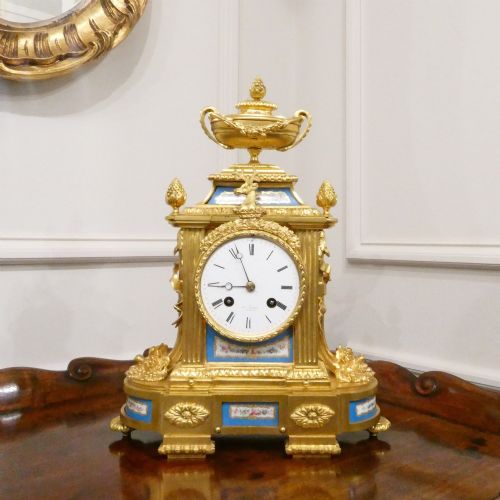
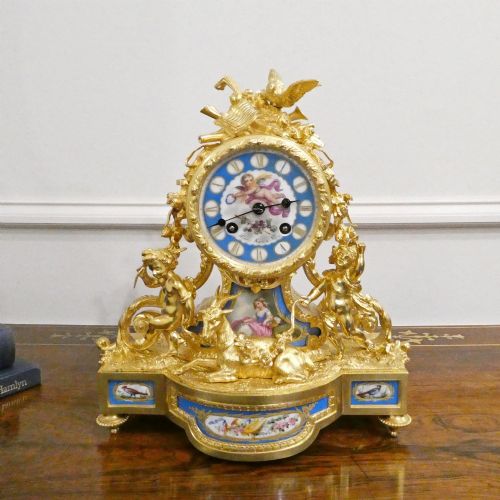
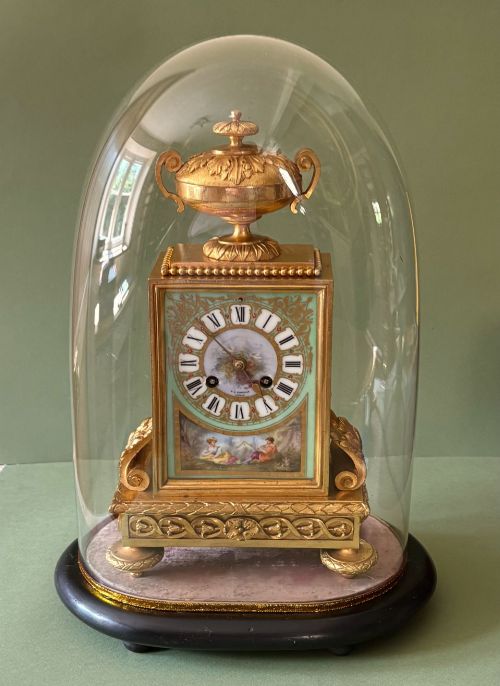
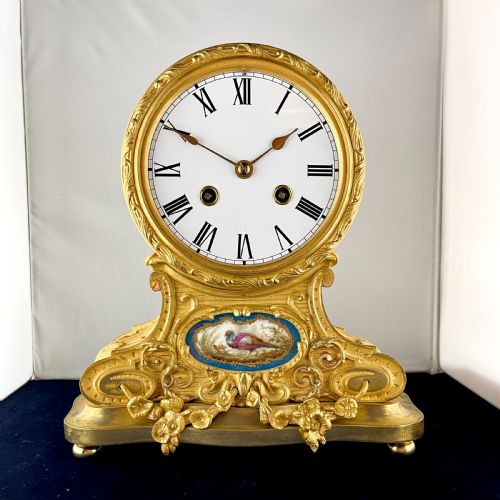
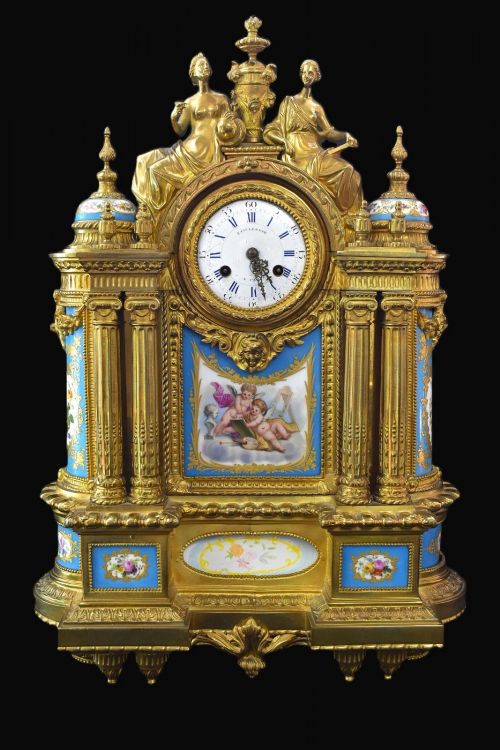
An antique porcelain shelf clock combines decorative ceramics with metal framing, taking the form of a mantel clock or drumhead clock designed for domestic interiors. These pieces emerge predominantly from nineteenth-century French workshops, spanning the Victorian era and periods such as Napoleon III. The most common version met here pairs painted porcelain plaques or urns with gilt bronze, ormolu, or gilt metal mounts.
Makers and makers' movements shape many of these items, employing eight-day striking movements housed within cases styled after French Rococo Revival and Louis XVI aesthetics. Stylistic variations include neoclassical elements, putti, and figurative porcelain scenes depicting subjects like the four seasons. Marble and glass elements occasionally appear alongside the core porcelain and metal construction.
How they were made
The construction of an antique porcelain shelf clock relies on the combination of hand-painted ceramic components with cast bronze, ormolu, or gilt metal frameworks. Metal founders cast intricate decorative motifs such as scrolls, floral garlands, and figures in bronze or brass before applying a fine layer of gilding.
Potteries supply the porcelain panels, dials, and urns, often decorated with hand-painted pastoral scenes or floral motifs against coloured grounds. Clockmakers then fit mechanical movements, including eight-day striking mechanisms, into these combined ceramic and metal housings.
Some nineteenth-century French mantel clocks feature porcelain putti lounging beside the clock face, apparently taking a permanent rest from telling the time.
What varies in quality
The quality of an antique porcelain shelf clock rests on the crispness of the bronze or ormolu casting and the finesse of the hand-painted porcelain details. Finer examples display deeply chased metal mounts with sharp relief and well-defined ornamentation, whereas simpler pieces show softer casting lines.
The reputation of the movement maker and the complexity of the porcelain decoration further distinguish the pieces. Signed movements from known horological workshops paired with finely executed ceramic plaques command greater interest among collectors.
Japy Freres·Jean-Baptiste Delettrez·Achille Brocot·Henry Marc·Etienne Lenoir·Japy Fils·Phillipe H. Mourey·P.H Mourey
The Antique Porcelain Shelf Clock Glossary
- Ormolu
- Gilded bronze produced by applying a mercury and gold amalgam to a bronze casting and heating it. This technique creates a durable golden finish characteristic of many nineteenth-century French clock cases.
- Sev্রের
- A type of porcelain associated with the historic French royal factory, though the term also describes decorative ceramic styles emulating that tradition. These porcelain elements usually feature hand-painted scenes and rich background colours.
- Japy Freres
- A prominent French clockmaking dynasty known for producing reliable movements used in nineteenth-century mantel clocks. Their mechanisms are frequently found paired with decorative porcelain and gilt bronze cases.
- Louis XVI Style
- A neoclassical design aesthetic popular during the nineteenth-century revival periods, defined by symmetry, straight lines, and classical motifs like urns and floral ribbons. Clocks in this style often incorporate porcelain panels within gilt bronze frames.
- Drumhead clock
- A clock design featuring a circular case perched upon a plinth or base, resembling the shape of a drum. These variants occasionally utilise marble or metal alongside porcelain dials.
Antique Porcelain Shelf Clock: Frequently Asked Questions
What is an antique porcelain shelf clock?
An antique porcelain shelf clock is a nineteenth-century timepiece featuring a ceramic case or porcelain panels mounted in gilt bronze, brass, or ormolu. These decorative items were designed to sit upon mantelpieces or shelves in formal rooms.
They combine the work of ceramic artists and metal founders with mechanical clock movements, often driven by eight-day striking mechanisms.
How do I tell Louis XVI style from Rococo Revival?
Louis XVI style clocks show symmetry, straight architectural lines, and classical motifs such as ribbons, urns, and columns. Rococo Revival pieces feature asymmetric curves, naturalistic scrollwork, and exuberant floral ornamentation.
Both styles frequently utilise porcelain plaques and gilt bronze mounts, but the underlying geometric discipline differs between the two.
Were these clocks made to keep accurate time?
These pieces were built as functional timekeepers for domestic use, utilising mechanical movements that required periodic winding. Many feature eight-day striking movements that sound the hours and half-hours.
While capable of reliable timekeeping, their primary role in nineteenth-century interiors was decorative ornament alongside utility.
What materials besides porcelain are used?
The cases commonly incorporate gilt bronze, ormolu, and gilt metal to frame the porcelain components and house the movement. Glass doors protect the dials, and marble occasionally serves as a base material.
Enamel is frequently used for the clock face dials, featuring painted numerals.