





Blue and White Clock
These blue and white clocks combine ceramic faces and bodies with brass, porcelain, and gilt bronze for striking domestic timekeeping.
Blue and White Clock
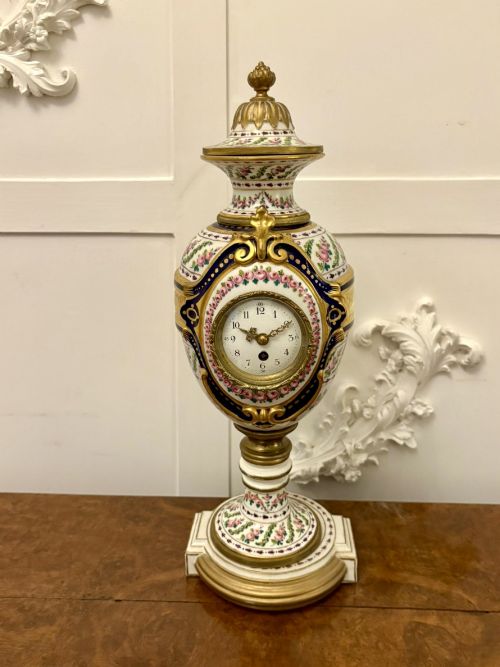
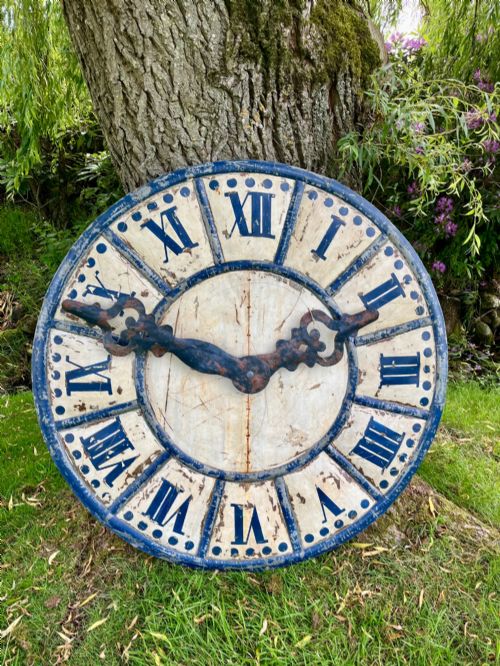
When you search for a blue and white clock, you are looking at timepieces that incorporate ceramic, porcelain, or Delft elements into their design. The pieces on this page span the Victorian era, the Edwardian period, and the early twentieth century, showing a mix of architectural salvage, carriage clocks, and mantel clocks.
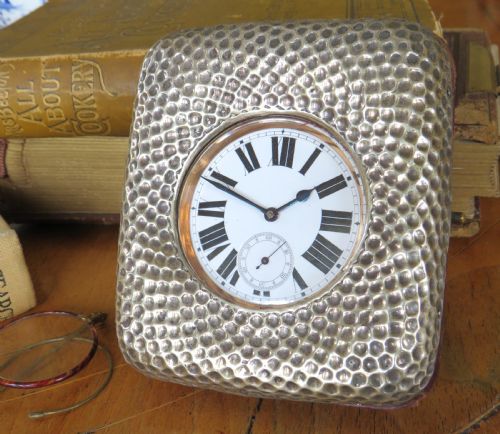
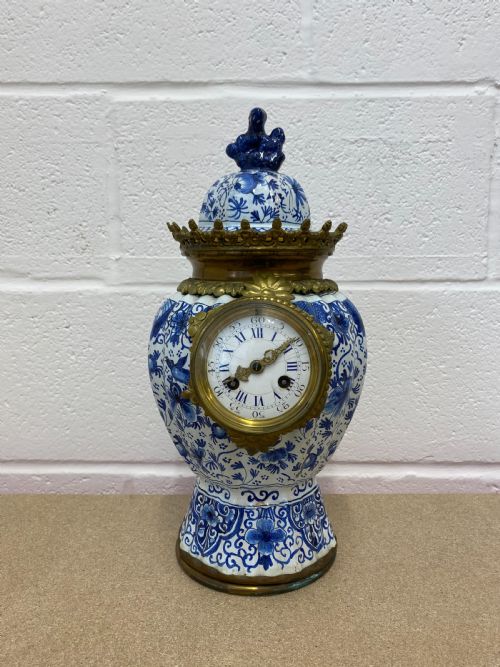
You are most likely to meet French mantel clocks and porcelain urn shapes from the mid-nineteenth century onwards. These range from substantial architectural tower faces to miniature Delft longcase designs and travel clocks housed in silver cases.
The selection includes decorative clock sets complete with garnitures, as well as bracket mantel clocks mounted in gilt bronze. Styles stretch from French Rococo Revival and Aesthetic Movement to Chinoiserie and Dutch Delftware.
How they were made
Maker workshops built these clocks using robust internal movements housed within brass, iron, zinc, and gilt bronze frames. Enamel dials and hand-painted porcelain or ceramic bodies provided the characteristic blue and white visual scheme.
Cabinets frequently utilised ebonised wood or inlaid timbers for the Aesthetic Movement and Victorian mantel pieces, whilst delicate travel clocks incorporated glass panels and silver cases.
One miniature longcase clock even comes with its own tiny lid.
What varies in quality
The distinction between ordinary and exceptional pieces lies in the crispness of the hand-painted porcelain and the weight of the bronze or brass mounts. Pieces featuring intricate gilt bronze framing and finely detailed ceramic urns stand apart from simpler utilitarian dials.
Integrity of the original ceramic components and the presence of matching garniture sets elevate certain mantel clocks above single isolated items.
Japy Freres
The Blue and White Clock Glossary
- Mantel clock
- A household clock designed to sit on a fireplace mantelpiece. These typically feature decorative ceramic or wooden cases.
- Garniture
- A set of matching ornamental objects, often including a central clock accompanied by matching vases or urns.
- Carriage clock
- A small, portable spring-driven clock made for travel during the nineteenth century. They frequently include glass panels to reveal the movement.
- Delftware
- Tin-glazed earthenware originating from the Netherlands, known for its distinctive blue and white painted decoration.
- Aesthetic Movement
- A late nineteenth-century design style that emphasised visual beauty over narrative subject matter, often utilising ebonised wood finishes.
Blue and White Clock: Frequently Asked Questions
What periods do these clocks come from?
The available pieces originate primarily from the Victorian era and the early twentieth century, spanning decades from eighteen fifty to nineteen twenty. You will encounter styles reflecting nineteenth-century revival movements alongside Edwardian pieces.
Materials range from traditional porcelain and brass to zinc, iron, and glass, showing how timepieces evolved across different European workshops.
How do carriage clocks differ from mantel clocks?
Carriage clocks are compact, portable timepieces originally built for travel, featuring glass sides and a carrying handle. Mantel clocks are larger, heavier decorative objects designed to remain stationary on a shelf or fireplace.
Both types incorporate the blue and white ceramic or enamel elements characteristic of this selection, but their scales and intended uses diverge significantly.
What is a clock garniture?
A clock garniture is a matching decorative set that pairs a central clock with accompanying ornamental pieces, such as vases or urns. These sets were designed to create a balanced, symmetrical display on a mantelpiece.
In this collection, garnitures often incorporate hand-painted porcelain and gilt bronze mounts that match the primary clock body.
Where were most of these clocks made?
A significant portion of the pieces originates from French workshops, particularly during the Victorian period, alongside Dutch Delftware productions. Makers utilised local ceramic traditions combined with brass and bronze metalwork.
Design influences range from French Rococo Revival to Chinoiserie and the English Aesthetic Movement.