


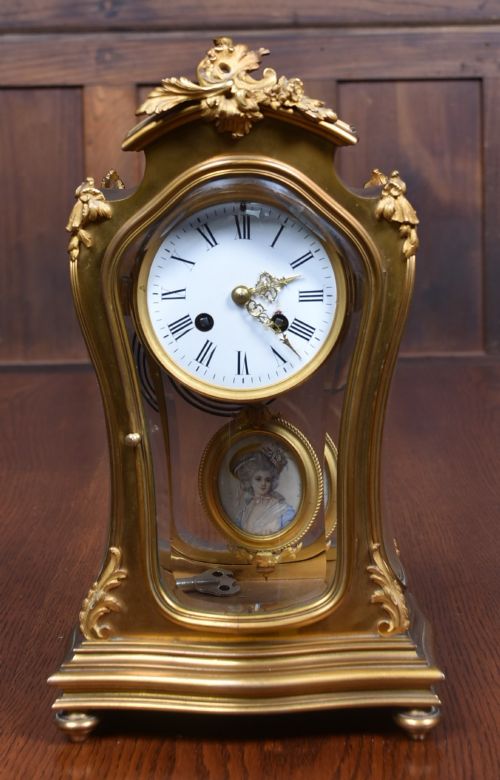
Ormolu and Porcelain Clock
An ormolu and porcelain clock brings nineteenth-century French metalwork and hand-painted ceramic into a room with decorative presence.
Ormolu and Porcelain Clock
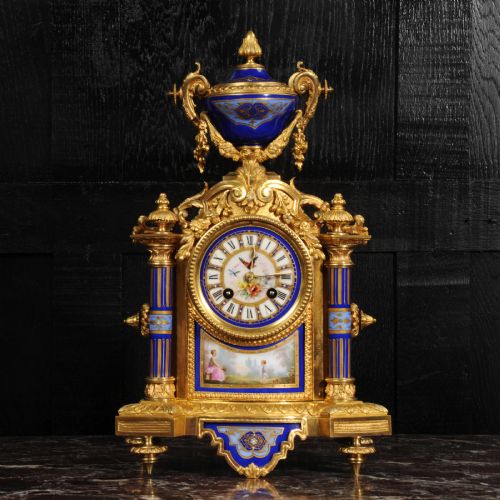
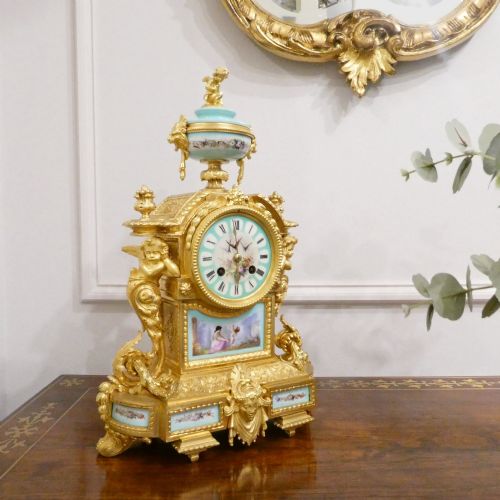
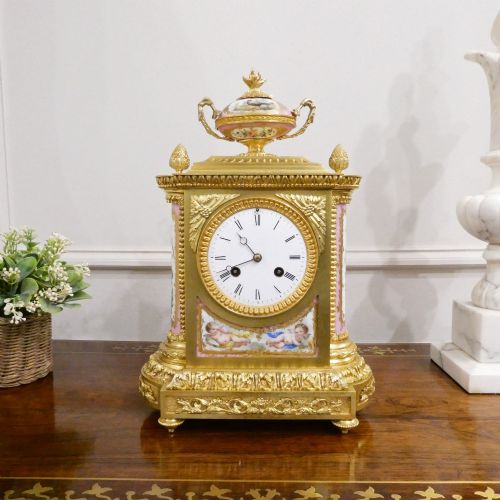
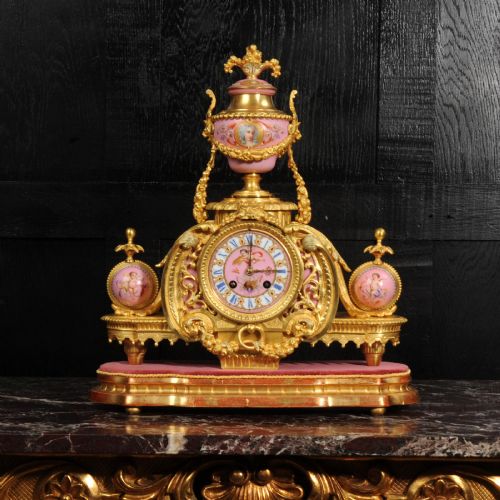
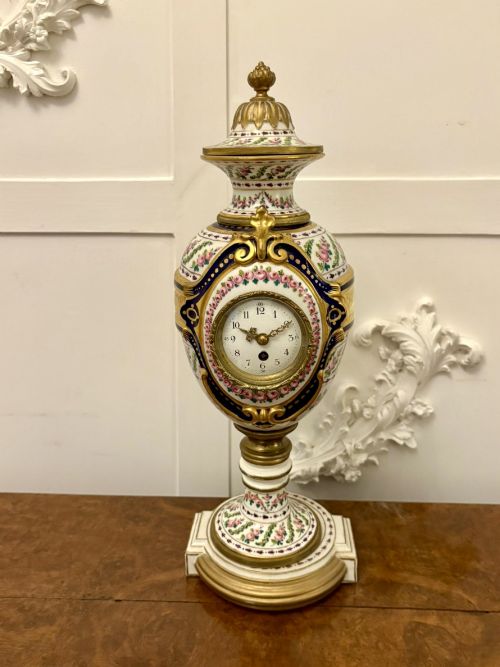
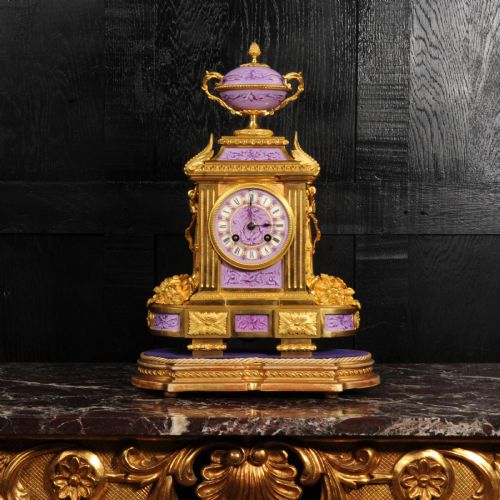
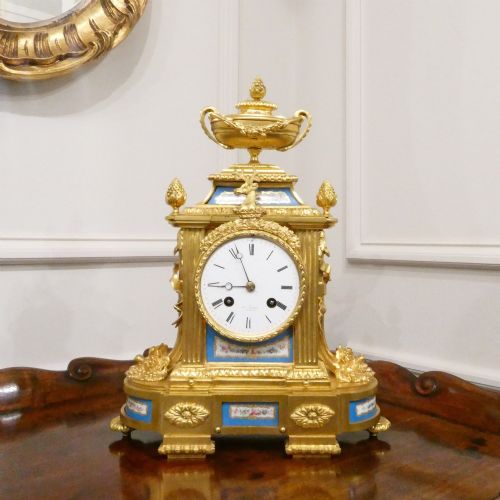
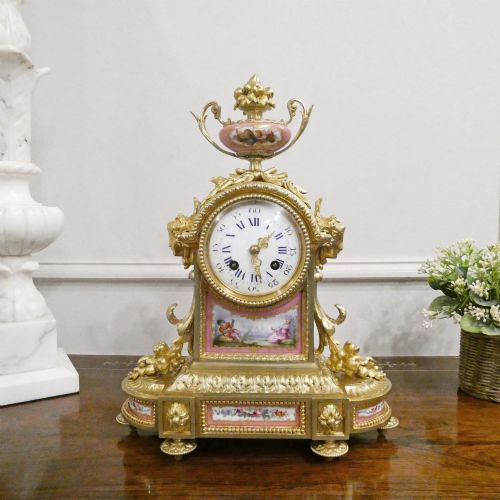
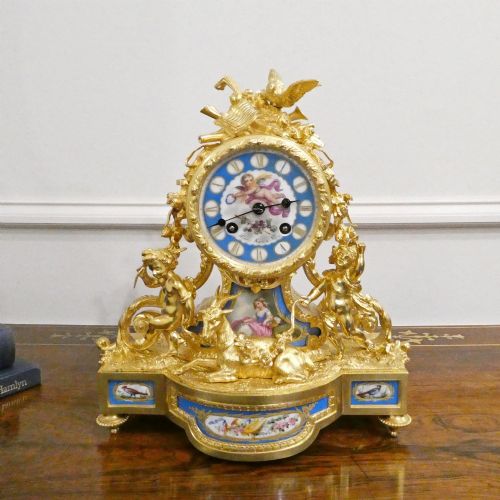
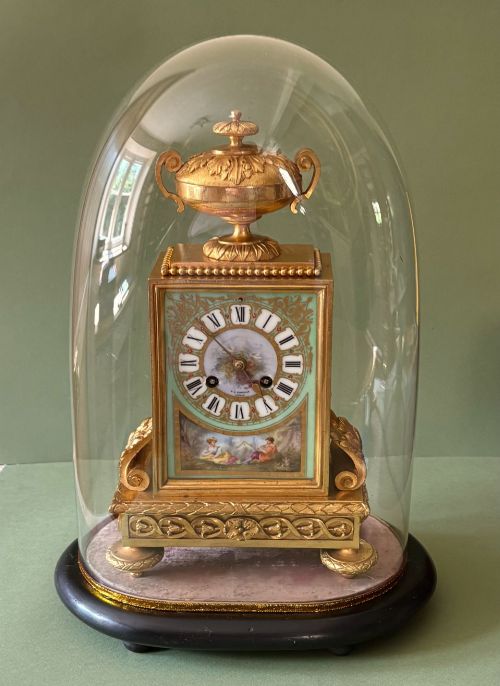
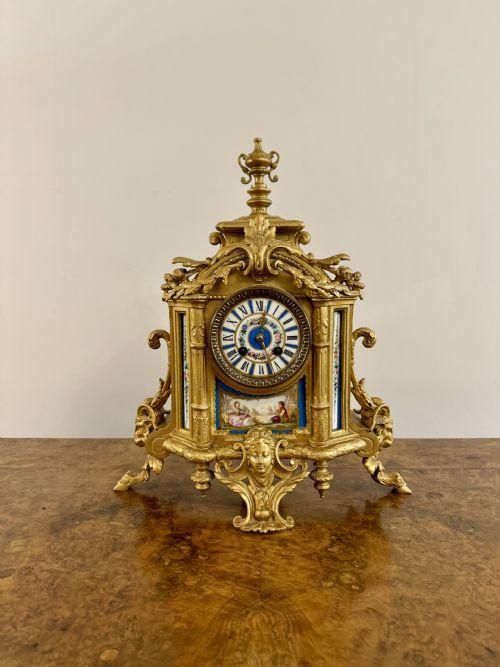
When you search for an ormolu and porcelain clock, you encounter nineteenth-century French mantel clocks and garniture sets produced during the Victorian era and the Napoleon III period. These objects combine cast metal mounts with ceramic dial faces and painted panels depicting figures, birds, or landscapes.
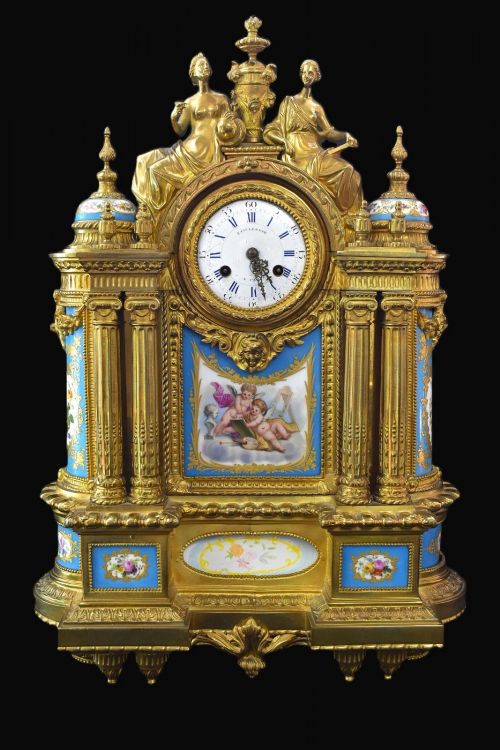
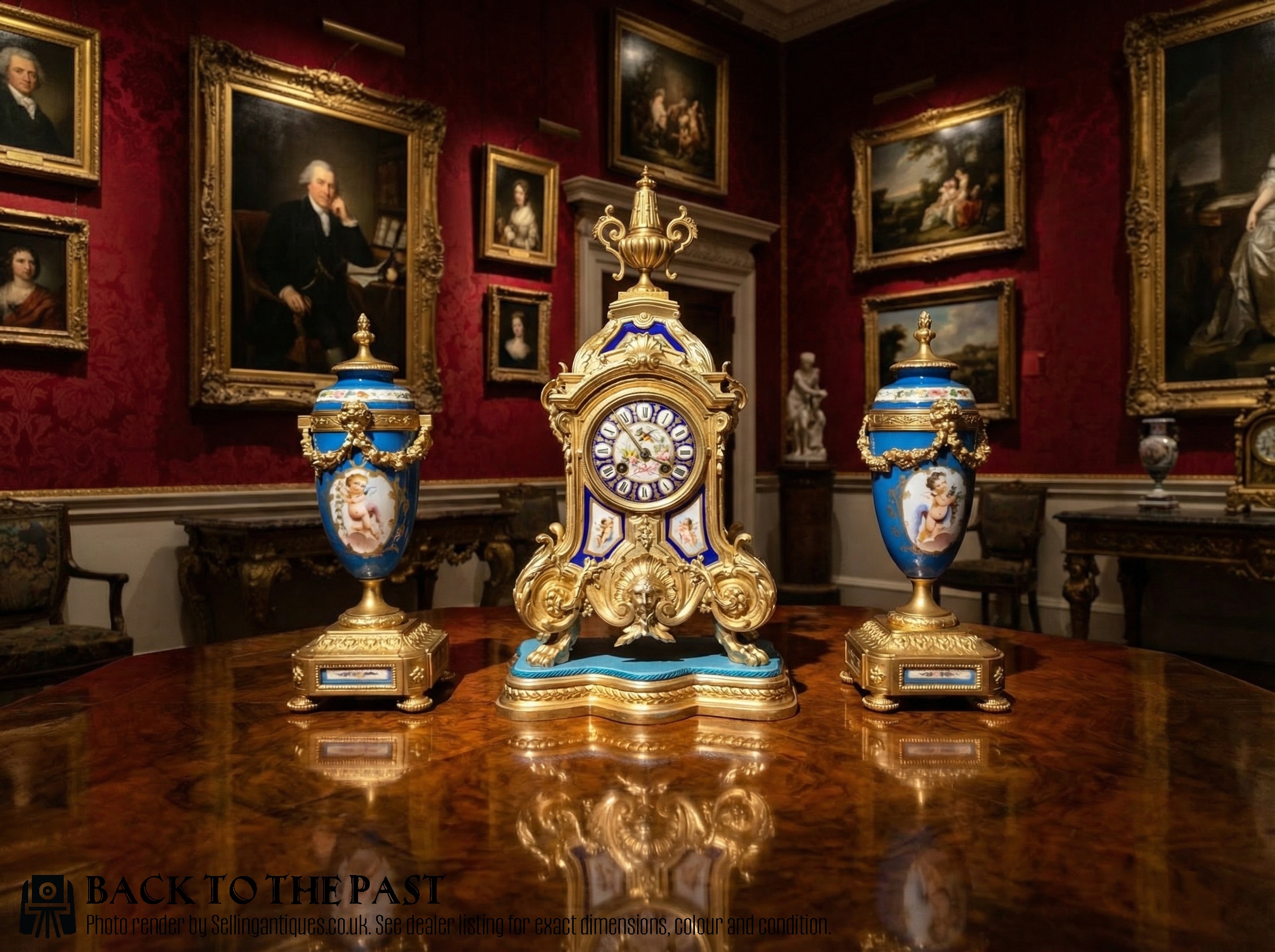
The most common version met on this page is the mantel clock in the Louis XVI style or French Rococo Revival, often housing a movement by makers such as Japy Frères or Achille Brocot. Many examples include matching side urns or candelabra to form a complete garniture set.
How they were made
Maker workshops cast metal in bronze or brass before applying a gold-coloured mercury gilt finish known as ormolu, while other pieces utilise gilded metal or solid bronze. These mounts are secured around ceramic components, frequently featuring Sèvres-style hand-painted porcelain panels or enamel dial chapters.
Clock movements relied on brass gear trains constructed by specialist Parisian mechanists, housed within cases embellished with glass domes or mounted on matching onyx bases.
Among the gilded bronzes and porcelain dials, a windmill automaton hides a tiny Meissen harlequin and columbine ready to dance.
What varies in quality
The precision of the bronze casting and the crispness of the chased detail define the upper tier of these clocks, separating sharply cast floral scrolls from softer, repetitive production. Hand-painted ceramic panels showing fine detail and controlled polychrome palettes elevate an example above standard factory decoration.
The reputation of the movement maker and the complexity of the clockwork integration into the housing also dictate the standing of an individual piece.
Japy Freres·Achille Brocot·Henry Marc·Jean-Baptiste Delettrez·Le Roy et Fils·PH Mourey·Raingo Freres·A D Mougin
The Ormolu and Porcelain Clock Glossary
- Ormolu
- A gilded bronze finish achieved through mercury amalgamation or electrogilding, creating a bright gold-coloured surface on decorative metal mounts. This technique protects the underlying bronze from oxidation while providing a rich sheen.
- Garniture
- A set of decorative objects consisting of a central clock flanked by matching side pieces such as urns, vases, or candelabra. These matched assemblies were designed to sit symmetrically on a mantelpiece.
- Drumhead clock
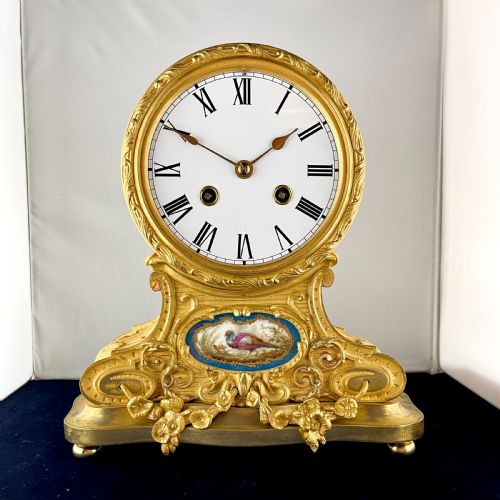
- A mantel clock featuring a circular dial housing shaped like a drum, elevated on a plinth or base. This distinct form often incorporates porcelain panels set directly into the metal drum case.
- Louis XVI Style
- A neoclassical design vocabulary characterised by straight lines, symmetry, classical urn motifs, and restrained floral swags. It heavily influenced nineteenth-century French clock production.
- Rococo Revival
- A decorative style favouring asymmetrical C-scrolls, naturalistic foliage, and exuberant ornamentation drawn from eighteenth-century models. This aesthetic appears frequently on nineteenth-century clock cases.
Ormolu and Porcelain Clock: Frequently Asked Questions
How do I wind an antique French clock?
Winding requires inserting a dedicated key into the dial apertures and turning gently until resistance meets the spring. Care must be taken not to overwind the mainspring.
Most nineteenth-century movements operate on an eight-day cycle, meaning weekly attention keeps the mechanism running continuously.
What is a clock garniture set?
A clock garniture set comprises a primary mantel clock accompanied by two matching ornamental pieces, such as urns or candelabra. These items were manufactured together to create a unified decorative scheme for a fireplace mantel.
Matching materials and design motifs tie the central timekeeper and the side pieces into a single ensemble.
How do I identify a Louis XVI style clock?
Louis XVI style clocks are recognised by their geometric rigour, symmetrical arrangements, and classical architectural elements such as columns or urns. The decoration relies on straight lines and restrained floral motifs rather than asymmetric curves.
This aesthetic reflects the neoclassical revival popular during the nineteenth century.
Where were these clocks made?
The vast majority of these clocks originated in France, specifically within Parisian workshops and manufacturing centres. Specialist movement makers collaborated with bronze founders and ceramic painters to produce the finished pieces.
Signatures on the dial or movement backplate frequently record the specific Parisian maker responsible for the assembly.