

Antique Garniture Set
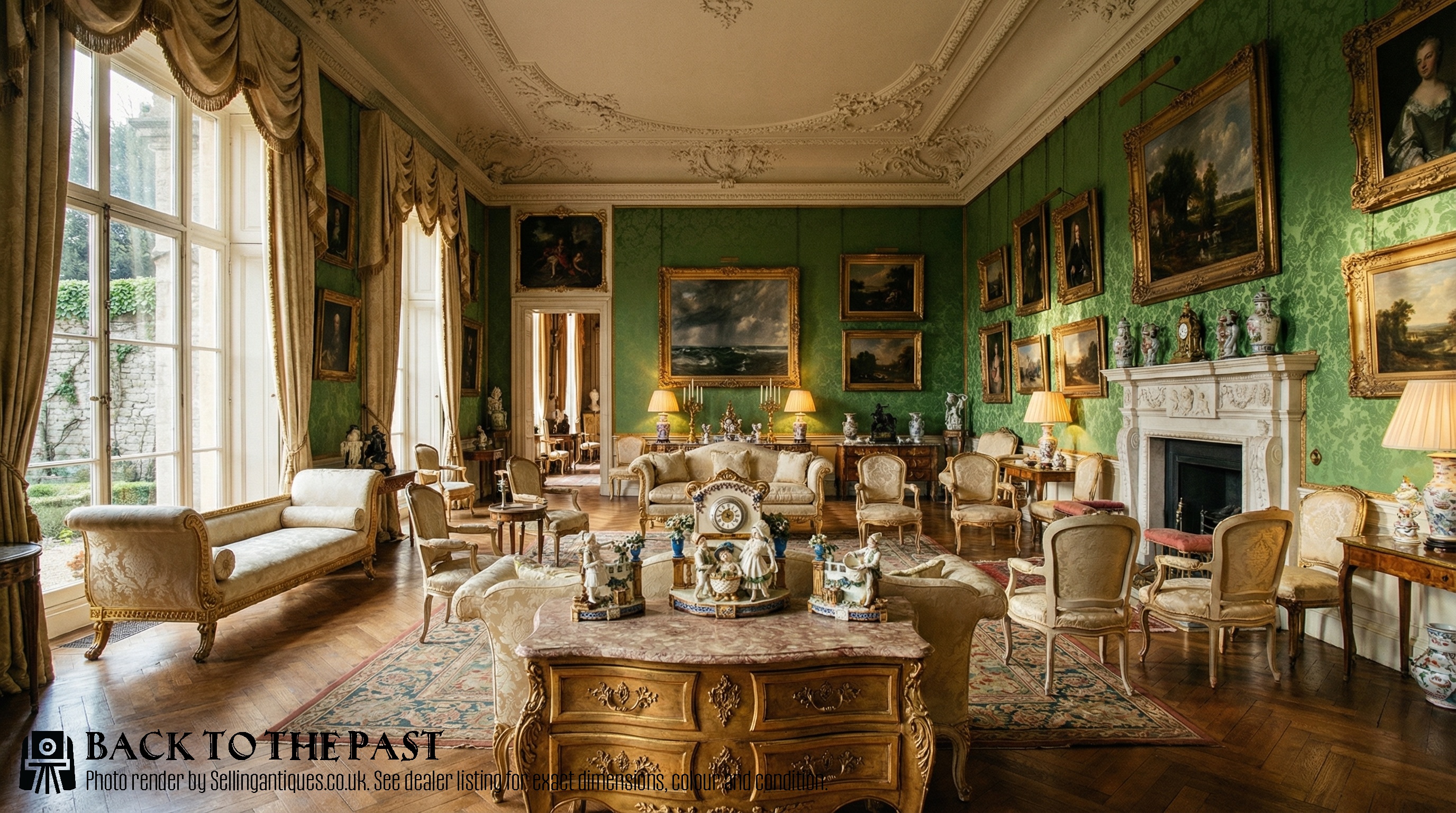
These antique garniture sets bring matched display harmony to a mantelpiece, pairing a central clock with flanking candelabra or urns.
Understanding the antique garniture set
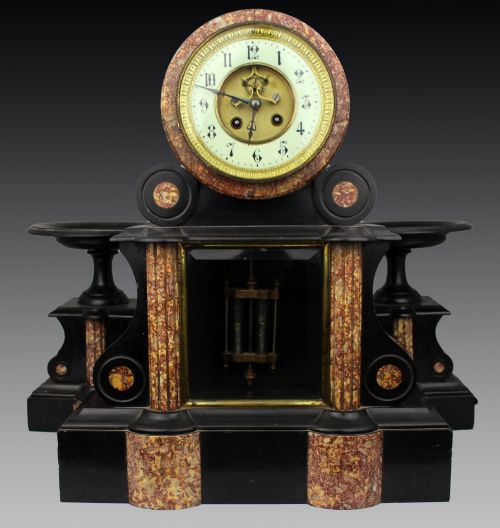
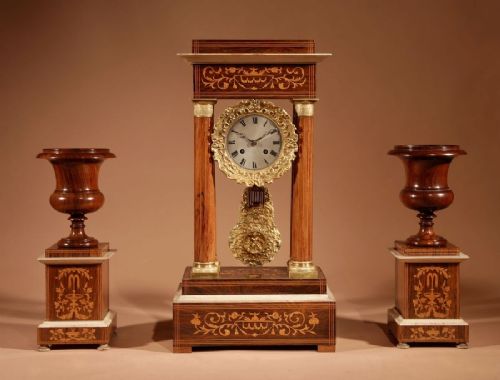
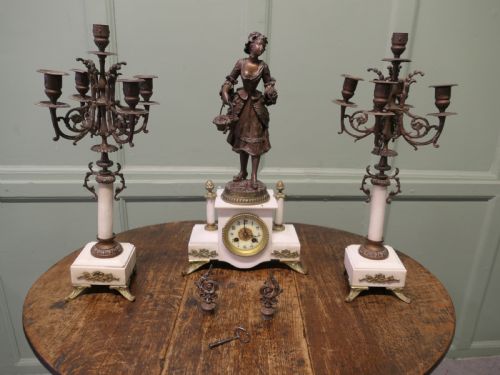
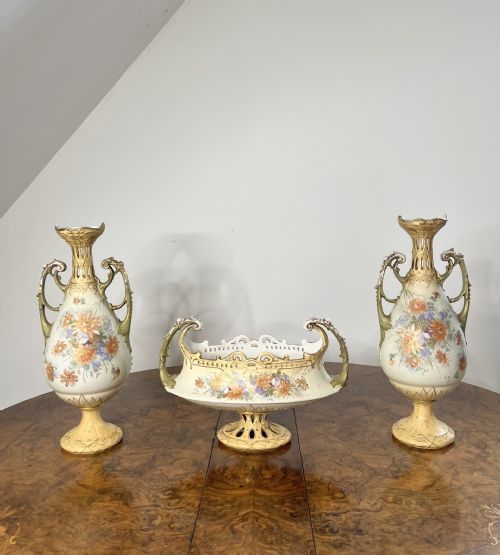
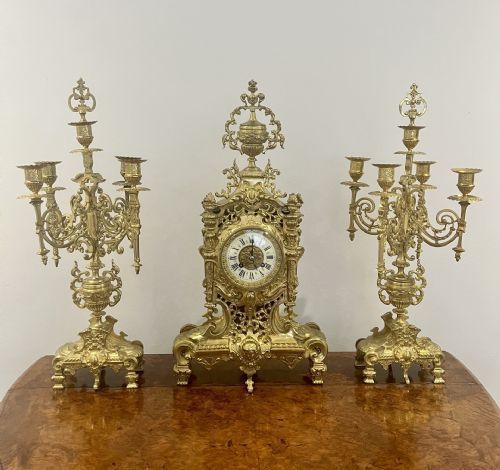
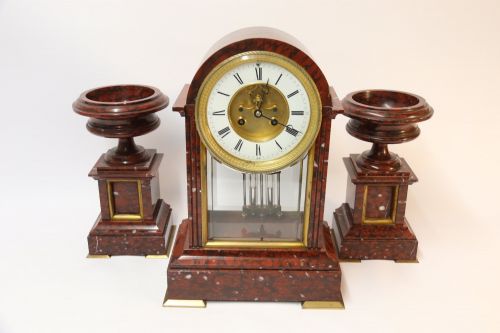
An antique garniture set is a coordinated grouping of ornamental objects designed for symmetrical display on a mantelpiece or table. The arrangement typically centres upon a mantel clock accompanied by matching candelabra, vases, or figural urns. Buyers searching for an antique garniture set encounter complete three-piece or multi-piece ensembles intended to create a balanced decorative scheme.
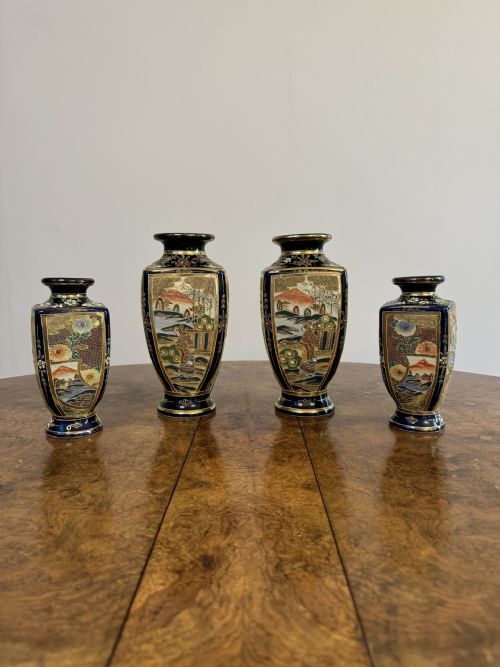
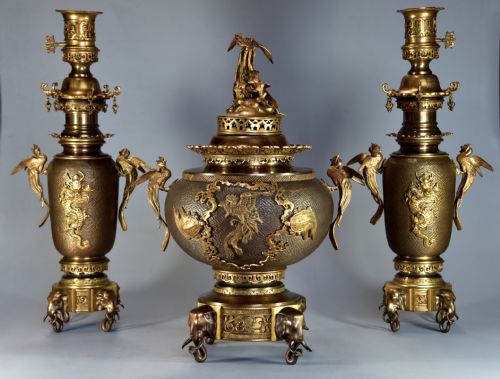
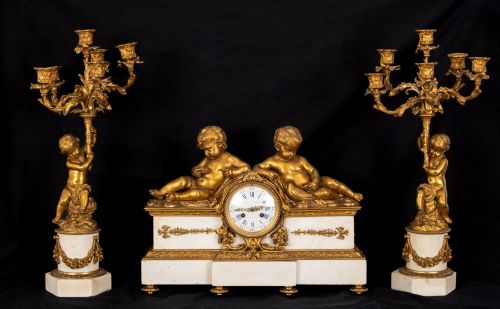
The pieces appearing on this page span the nineteenth century, including Victorian examples alongside French Empire Revival, Second Empire, Belle Epoque, and Rococo Revival styles. Forms range from dedicated clock garnitures and table garnitures to Black Forest carved sets and multi-piece mantel clock arrangements. French origins dominate the recorded material, often uniting timepieces with flanking light fittings.
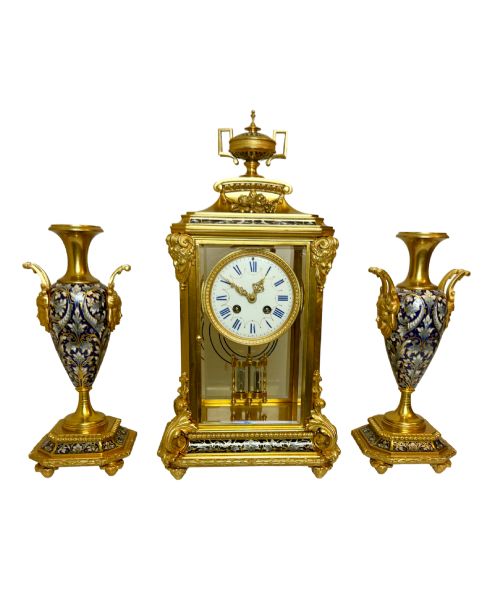
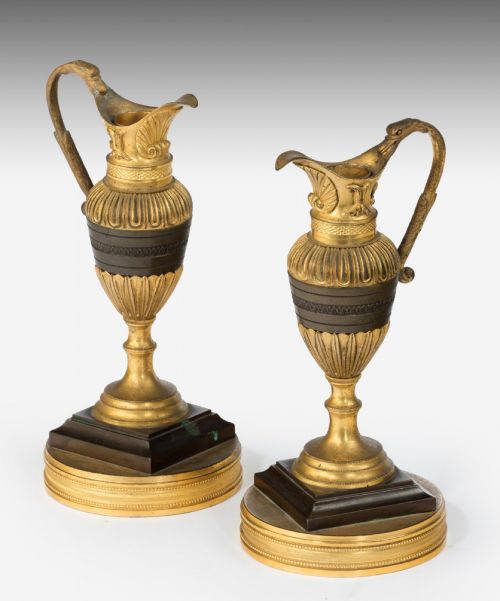
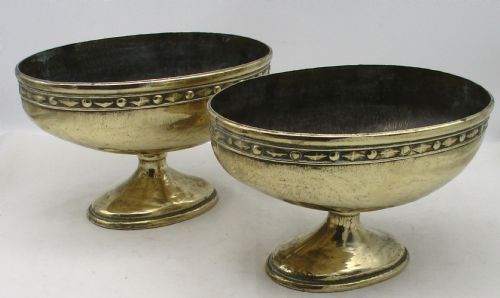
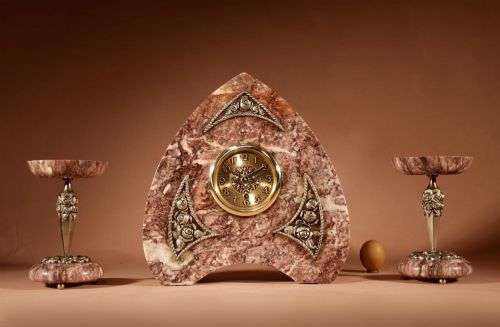
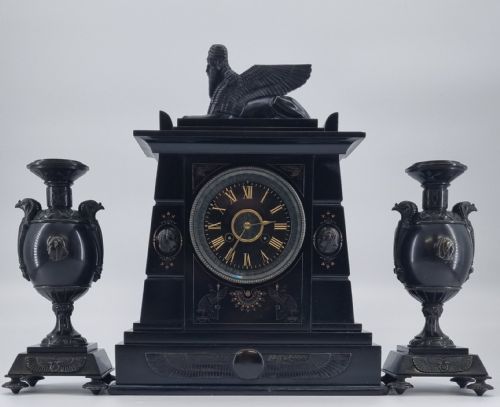
Materials and decorative motifs vary widely across the selection, featuring combinations of onyx, marble, porcelain, and glass paired with metallic mounts. Gilt bronze, ormolu, patinated bronze, and brass frequently frame panels of enamel or carved wood. These coordinated suites demonstrate the Victorian and continental preference for unified interior ornamentation.
Materials and construction
Foundries and cabinet makers utilised precision casting, fire gilding, and detailed hand-chasing to finish bronze and brass mounts. Stonework was turned, polished, and fitted with metal bezels and feet to house clock movements and support flanking candelabra. Artisans assembled these multi-piece suites to ensure visual harmony across every component of the garniture.
Retail Price Guide 2026
Typical UK retail prices for garniture set, calculated from the Sellingantiques database of over a million retail prices indexed since 2003. This retail price guide relies exclusively on Sellingantiques data; no external sources or auction records are used, so the figures do not describe the wider market.
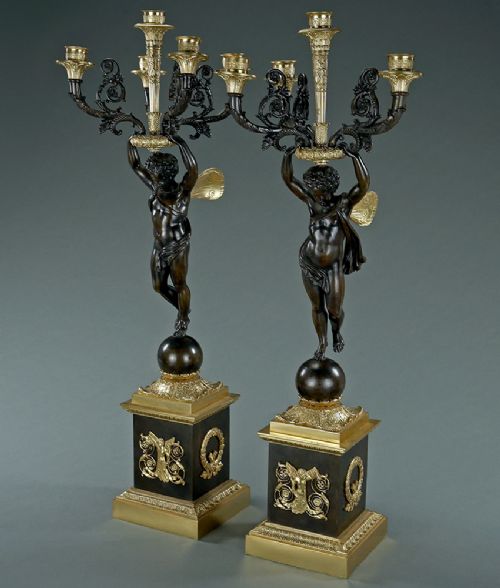
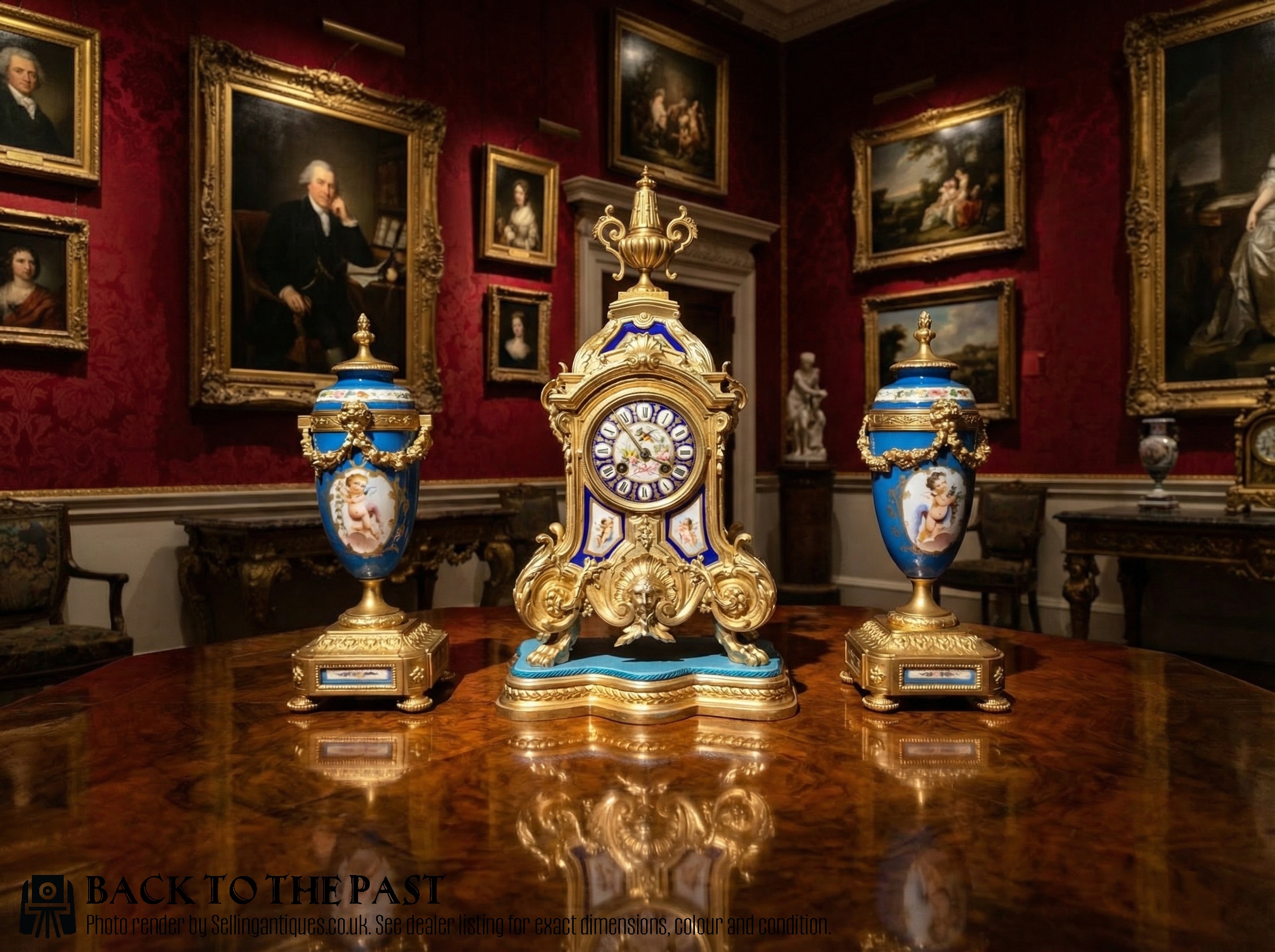
Cherubs frequently peer out from gilt bronze mounts, keeping a watchful eye over nineteenth-century mantelpieces.
Distinctions in execution
Quality in these ornamental ensembles rests upon the crispness of the metal chasing and the selection of materials. Finer examples display deeply sculpted gilt bronze or ormolu mounts with sharp definition, whereas simpler versions rely on softer castings. The choice of unblemished marble, rich onyx, or hand-painted porcelain elevates a set above standard production.
Coherence of the matched pieces dictates the standing of the ensemble within its type. Sets that retain their original unified patination and matching proportions across the central clock and lateral supports demonstrate superior workshop integration. The involvement of recorded movement makers further distinguishes high-tier suites from anonymous factory output.

VINCENTI of PARIS
The Antique Garniture Set Glossary
- Garniture
- A set of ornamental objects designed to be displayed together, usually comprising a clock and matching candelabra or vases.
- Ormolu
- Finely ground high-carat gold mercury-gilded to a bronze object, creating a bright metallic finish seen on nineteenth-century French sets.
- Candelabra
- Branched candlestick holders that frequently flank a central clock in a complete three-piece garniture arrangement.
- Champleve
- An enamelling technique where recessed areas are gouged out of a metal surface and filled with vitreous enamel before firing.
- Patinated bronze
- Bronze that has been chemically treated to produce a darkened or antiqued surface colour on sculptural figures.
Frequently Asked Questions
What is an antique garniture set?
An antique garniture set is a matching group of decorative objects designed for display together, usually consisting of a central mantel clock and two flanking candelabra or urns. These ensembles were created to provide symmetrical decoration for fireplace mantels and large tables.
The pieces share unified materials, styles, and decorative motifs, reflecting nineteenth-century interior design tastes across Victorian and French revival periods.
How were garniture sets used?
Garniture sets served a primarily decorative function in nineteenth-century formal rooms, placed centrally upon mantelpieces above fireplaces or upon console tables. The central clock provided a working timepiece while the flanking candelabra added ambient lighting and balanced visual weight.
Together, the matched components created a sense of order and opulence within domestic drawing rooms and parlours.
What materials do these sets use?
These sets combine heavy structural stones such as marble and onyx with cast metals including gilt bronze, ormolu, brass, and patinated bronze. Porcelain panels, glass, and enamel details frequently add colour and varied surface textures to the composition.
Certain regional variations, such as Black Forest pieces, utilise carved wood to achieve their distinct sculptural appearance.
How do I identify French styles?
French garniture sets often display specific revival characteristics linked to different periods of the nineteenth century, such as ornate rococo scrollwork or formal empire motifs. Look for cast bronze mounts, champleve enamel work, and makers' signatures on the clock movements to indicate origin.
Comparing the materials of the central clock with its flanking pieces helps confirm that the set was produced as a unified ensemble.