

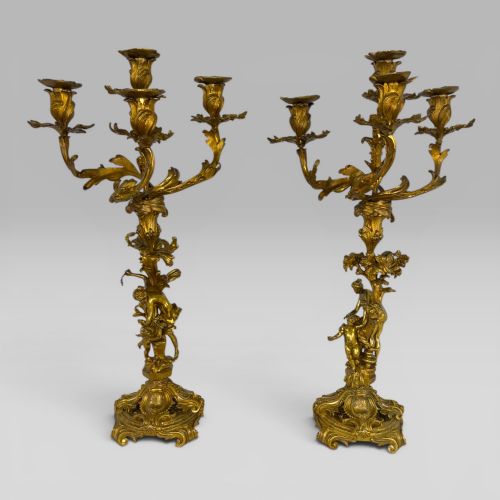
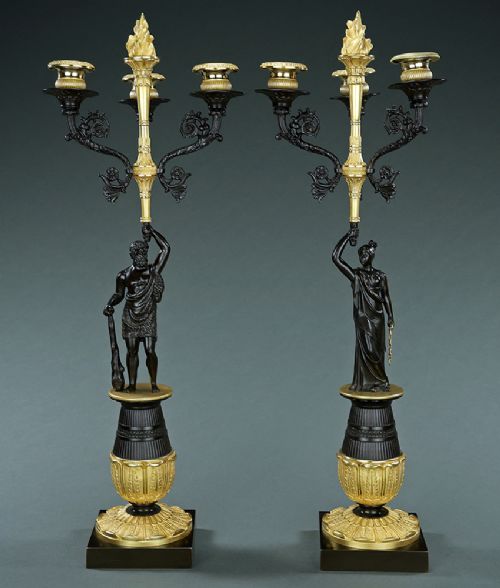


Figural Bronze Candelabra
Figural bronze candelabra combine sculptural weight with functional illumination, standing as centrepieces shaped by classical, neoclassical and revivalist hands.
Figural Bronze Candelabra
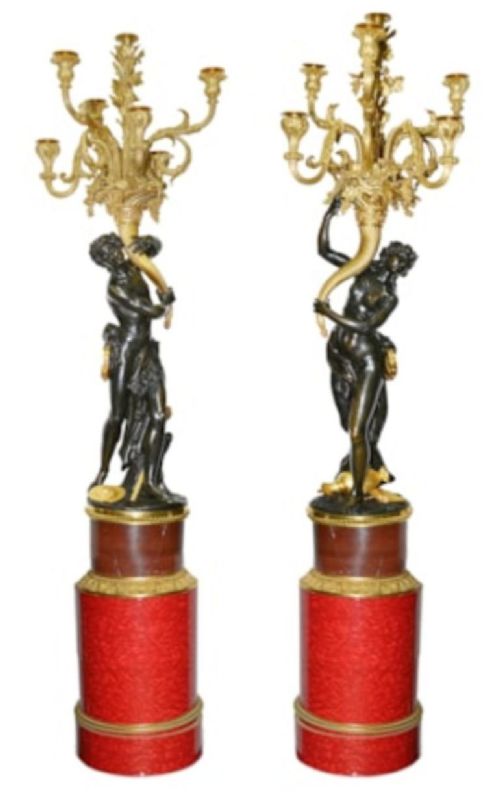
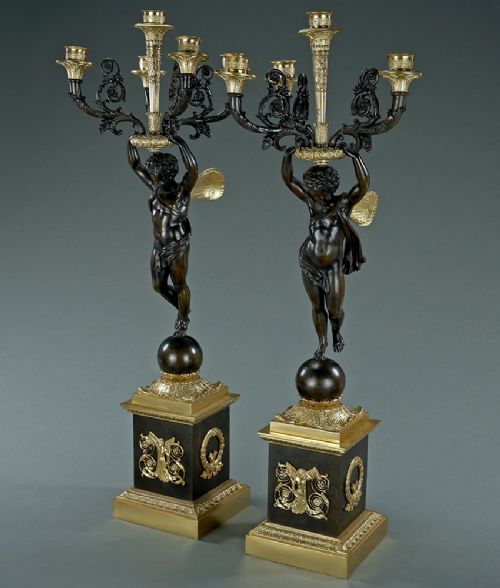
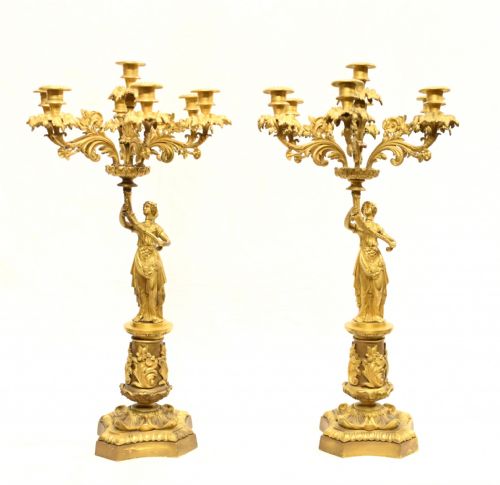
When you search for figural bronze candelabra, you encounter sculptural lighting formed around human, mythical or allegorical figures. The most frequent examples on this page are pairs of nineteenth-century French pieces depicting cherubs, maidens, puttis and classical figures.
The selection spans several distinct stylistic movements, including French Empire, Louis XVI style, French Rococo revival, Regency and Egyptian Revival. Beyond standard candelabra, the forms stretch to incorporate figural torchères, candelabras converted to table lamps, and mantel clock sets.
Origins cluster predominantly in nineteenth-century French workshops, though items extend from Regency pieces to twentieth-century examples. Figures often stand upon bases composed of marble, onyx, or china, serving as structural supports for multiple candle nozzles.
How they were made
Many items incorporate contrasting structural materials beneath or beside the metalwork. White or coloured marble and onyx form solid plinths, while porcelain, china and glass elements integrate into the bodies and bases of the pieces.
Figural Bronze Candelabra Retail Price Guide 2026
Typical asking prices for figural bronze candelabra among the pieces listed under this phrase on Sellingantiques today, from the lower quarter to the upper quarter. They describe what is for sale here now, not the wider market.
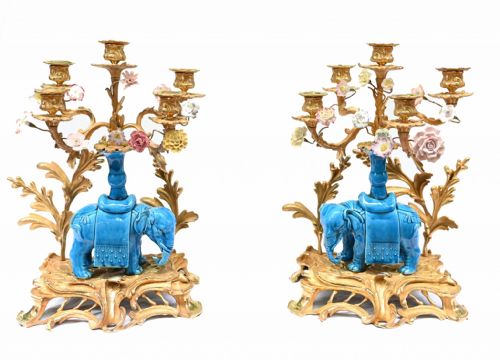
Several bronze cherubs share shelf space with porcelain elephants and exotic figures from the Au Bon Sauvage tradition.
What varies in quality
The crispness of the chasing and the depth of the casting separate simpler output from exceptional work. Finer examples display sharp facial expressions, articulated hair and deeply undercut drapery that demonstrate skilled hand-finishing after casting.
The cohesion of the materials dictates the overall standard. High-quality pairs feature heavy, uniform bronze casting paired with dense, well-cut marble or onyx bases rather than lighter substitute metals.
Humphrey Hopper·François-Christophe-Armand Toussaint·Jules Salmson
The Figural Bronze Candelabra Glossary
- Ormolu
- Gilt bronze produced by applying a finely ground mercury-gold amalgam to a bronze base before heating. This historic French technique yields a warm, durable golden finish found on fine revivalist pieces.
- Patinated bronze
- Bronze treated with chemical solutions to darken or colour the surface. It provides contrast against gilded or polished elements.
- Torchère
- A tall standing candelabrum or lamp designed to hold lights high. In nineteenth-century French work, these often take the form of classical figures bearing lights aloft.
- Grand Tour
- Souvenirs and artworks acquired by travellers exploring European cultural centres during the eighteenth and nineteenth centuries. These items often adopt classical motifs and ancient figural subjects.
- Louis XVI Style
- A neoclassical design vocabulary characterised by straight lines, symmetry and classical Greek and Roman motifs. Pieces in this idiom feature restrained ornamentation compared to earlier rococo styles.
Figural Bronze Candelabra: Frequently Asked Questions
What periods do these pieces come from?
The listings span the nineteenth century, with particular concentrations around eighteen-eighty and eighteen-sixty, alongside Regency and twentieth-century examples.
Stylistic revivals dominate, notably French Empire, Louis XVI and Rococo, reflecting nineteenth-century tastes for historicism.
How were figural candelabra used?
They functioned primarily as formal table lighting and decorative ornaments for mantelpieces, often arranged alongside matching clocks.
Many pairs have been adapted over time to hold electrical fittings as table lamps or floor lamps while retaining their original figural bases.
What materials are combined with bronze?
Marble and onyx frequently form heavy supporting bases that anchor the weight of the metal figures and candle arms.
Porcelain, china and glass elements also appear integrated into the bodies and candle-holders of specific French and Regency designs.
How do I identify Egyptian Revival pieces?
These items incorporate distinct iconography drawn from ancient Egypt, such as pharaonic figures, sphinxes and lotus motifs.
They stand apart from standard classical or rococo models through their specific architectural and sculptural references.