


Dark Bronze Candle Holders
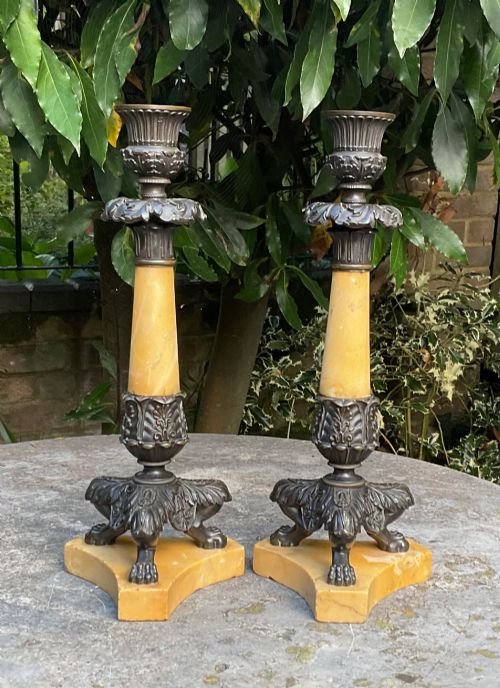
Dark bronze candle holders bring heavy metal presence and classical weight to a mantelpiece, ranging from Regency pairs to French Empire designs.

Dark Bronze Candle Holders
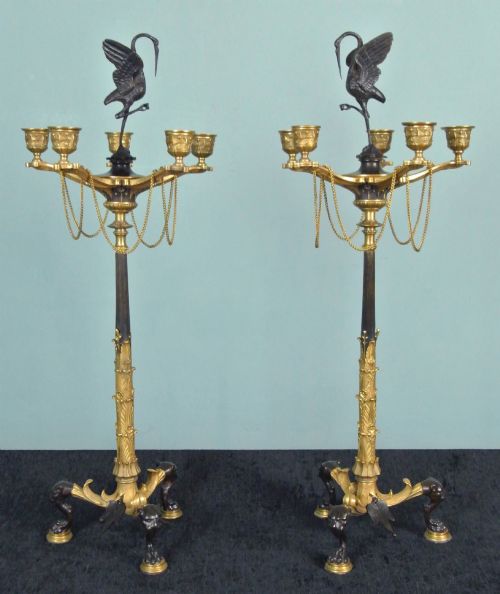
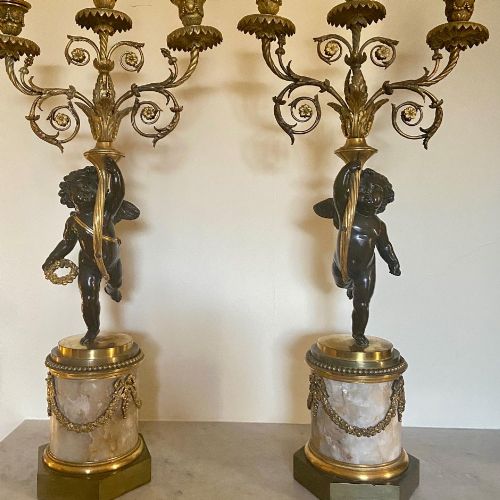
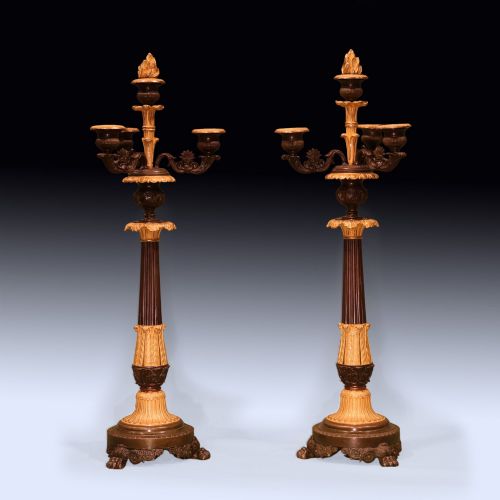
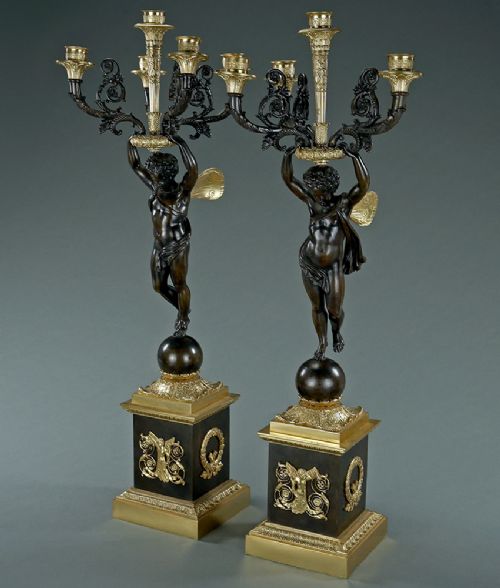
Dark bronze candle holders appear chiefly as pairs of candlesticks and multi-light candelabra spanning the eighteenth to nineteenth centuries. These pieces emerge from periods such as Regency, Victorian, and French Empire, taking forms that include classical figures, winged putti, and architectural columns.
Buyers meet numerous continental examples alongside English designs, often incorporating marble bases or gilt ormolu highlights. The selection ranges from compact chamber sticks to tall floor candle holders and figural statuettes.

Materials and casting
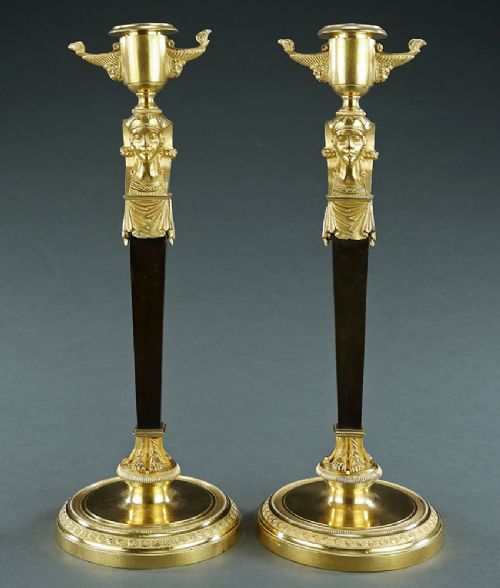
Foundry workers utilised bronze, patinated bronze, and brass, frequently combining dark metal bodies with contrasting gilt ormolu mounts and marble plinths. Pieces were cast and chased, relying on the contrast between the dark patination and bright gilded details to define the ornamentation.
Alternative materials such as onyx, fluorspar, and spelter appear among the listings, reflecting the manufacturing shifts of the nineteenth century. Skilled founders shaped these metals into complex figural groups and classical columns, securing them to stone bases for stability.
Dark Bronze Candle Holders Retail Price Guide 2026
Typical asking prices for dark bronze candle holders among the pieces listed under this phrase on Sellingantiques today, from the lower quarter to the upper quarter. They describe what is for sale here now, not the wider market.
Medieval characters balanced on stilts stand ready to hold your taper.
The standard of casting and chasing
The integration of secondary materials such as marble bases and ormolu mounts dictates the grade of the work. Finer items demonstrate careful assembly where metal components fit flush against stone plinths without visible gaps.
Barbedienne·Francois Redmond·Humphrey Hopper·Clodian
The Dark Bronze Candle Holders Glossary
- Ormolu
- Gilded bronze used as an ornamental mount on furniture and lighting. The technique involves applying finely ground gold mercury amalgam to bronze.
- Patinated bronze
- Metal treated with chemicals to produce a dark, protective surface layer. This finish deepens the tone of the bronze and protects against corrosion.
- Pricket candlestick
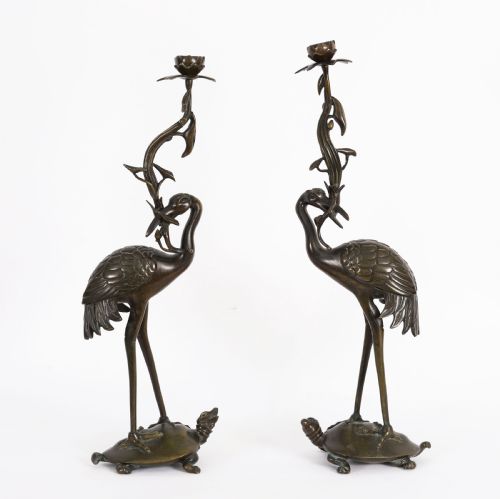
- A candle holder featuring an upright metal spike that pierces the base of the candle. This form appears frequently on ecclesiastical and Japanese bronze pieces.
- Girandole
- A branched wall sconce or tabletop candelabra holding multiple candles. These pieces often incorporate reflective backplates to amplify the light.
- Chamber stick
- A short candlestick fitted with a flat pan and a handle for carrying around a house. They provide stable illumination for moving through dark corridors.
Dark Bronze Candle Holders: Frequently Asked Questions
How do I clean dark bronze candle holders?
Dust the surface gently with a soft dry cloth to remove loose particles. Avoid abrasive polishes that strip the original dark patination.
Keep the metal away from moisture and direct heat sources to preserve the finish. Professional conservation is advised for valuable nineteenth-century pieces.
Are these candle holders safe for daily use?
Most antique holders accommodate standard taper candles securely. Monitor burning candles closely to prevent wax dripping onto ormolu mounts or marble bases.
Ensure the base sits level on a firm surface before lighting. Extinguish the flame before the wax reaches the metal socket.
What is the difference between bronze and spelter?
Bronze is a heavy alloy of copper and tin that takes a fine chased finish and dark patination. Spelter is a cheaper zinc-based white metal used as a substitute.
Bronze items feel noticeably heavier and cooler to the touch than spelter alternatives. Magnetic tests and weight comparisons help distinguish the two materials.
Why do some candle holders feature marble bases?
Marble bases provide necessary weight and stability for tall, top-heavy candelabra. They also introduce a contrasting colour and neoclassical aesthetic to the design.
French makers frequently paired dark bronze figures with sienna or white marble plinths during the nineteenth century. This combination elevates the decorative presence of the piece.