
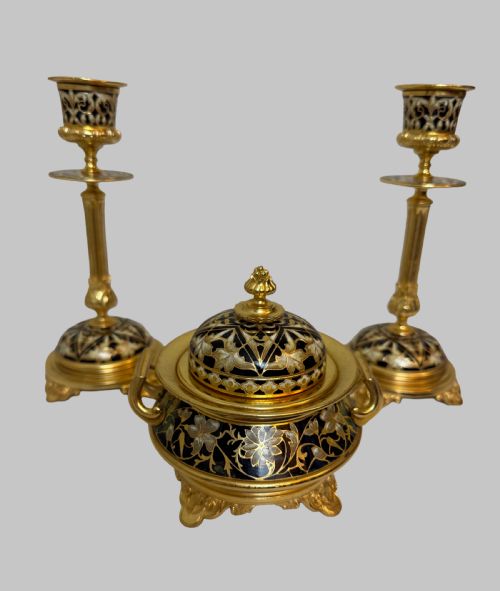


Nineteenth Century Candlesticks
These nineteenth century candlesticks bring together heavy metals, porcelain and glass in forms that range from simple brass columns to elaborate multi-branch candelabra.

Nineteenth Century Candlesticks
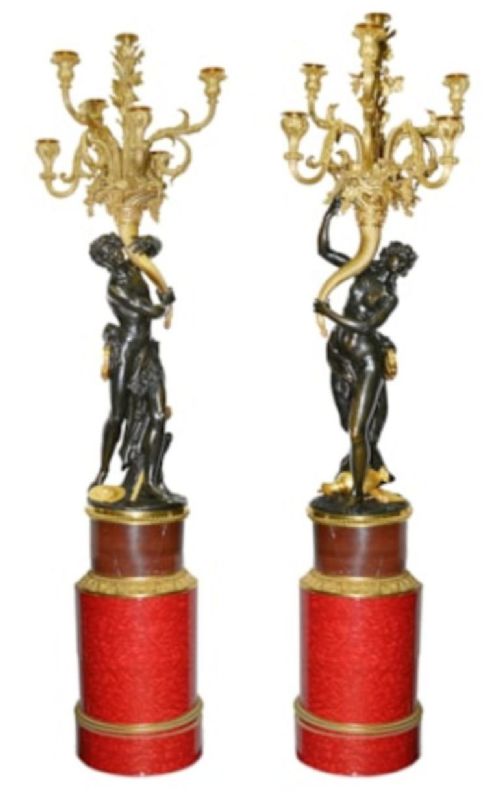
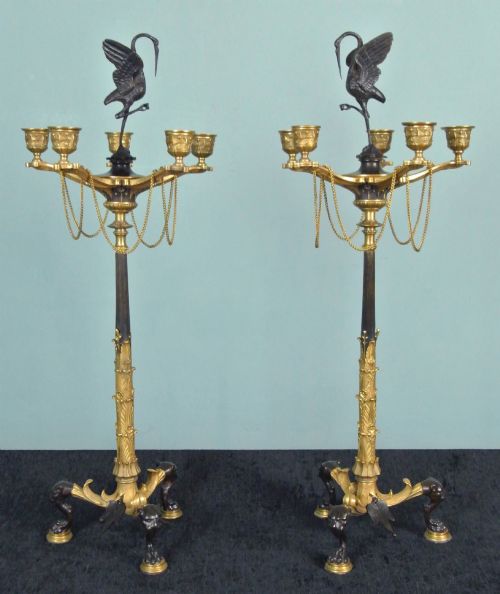
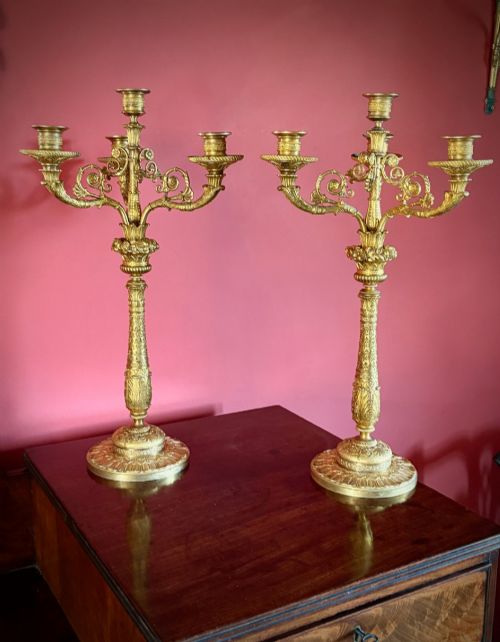
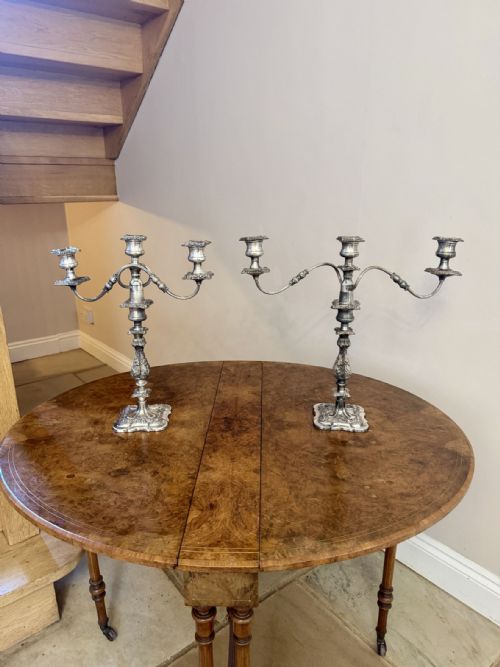
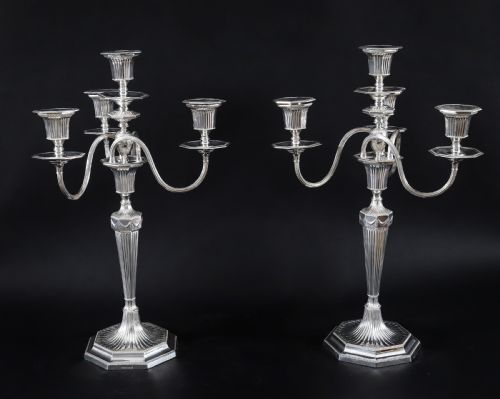
Nineteenth century candlesticks include tall multi-branch candelabra, desk accessories and chambersticks made across various decades of the period. Brass and ormolu examples from the Regency and Victorian eras appear frequently alongside porcelain and bronze pieces.
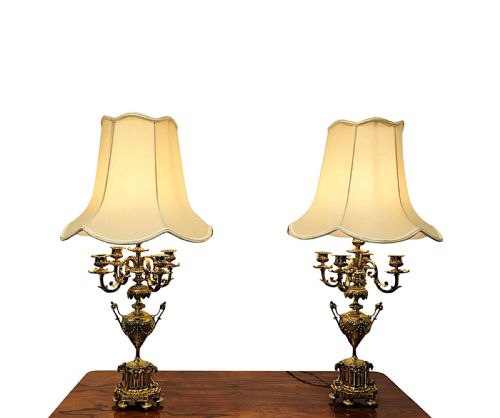
Buyers encounter distinct regional styles, from French Empire and Louis XVI revivals to English brass columns and German figural porcelain. Many original pairs have also been converted to table lamps over time.
Materials and technique
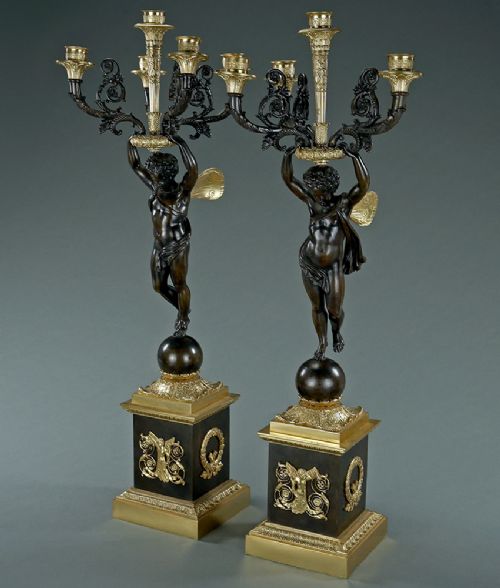
Foundry work combined cast bronze, brass, ormolu and spelter, often finished with patination, gilding or enamel decoration. Makers mounted metal components onto marble, slate or onyx bases for stability.
Ceramic pieces utilise porcelain from factories like Meissen, Dresden and Sitzendorf, frequently paired with hand-painted details. Silver plating on copper or pewter also forms a significant share of the metalwork.
Nineteenth Century Candlesticks Retail Price Guide 2026
Typical asking prices for nineteenth century candlesticks among the pieces listed under this phrase on Sellingantiques today, from the lower quarter to the upper quarter. They describe what is for sale here now, not the wider market.
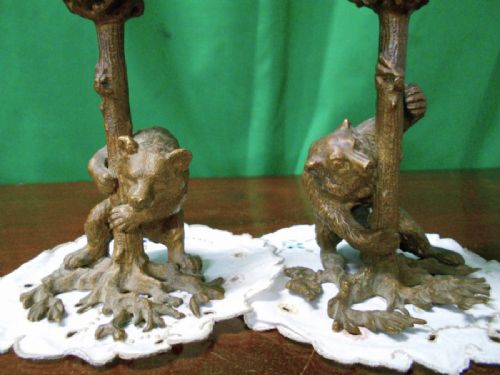
Medieval characters balanced precariously on stilts form the unexpected bronze supports for one whimsical pair of nineteenth century candlesticks.
Factors of quality
Detail in the cast ornamentation separates superior metalwork from simpler production, particularly in chased ormolu, figural bronzes and crisp acanthus leaf motifs. Sharp definition in cast brass and porcelain figures indicates a higher grade of manufacture.
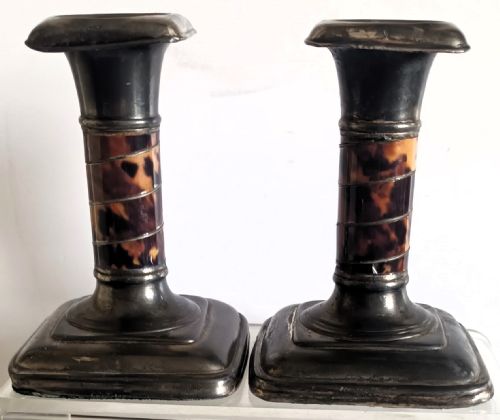
The integration of mixed materials, such as fossil marble bases, champlevé enamel or tortoiseshell panels, elevates the standing of a pair. Heavier gauge metal and complete, matching multi-light branches retain greater integrity.
Barbedienne·Hawksworth Eyre·Thomas Hope·Helena Wolfsohn
The Nineteenth Century Candlesticks Glossary
- Ormolu
- Gilt bronze produced by applying a finely ground high-carat gold mercury amalgam to a bronze object. This technique creates a rich golden surface found on French decorative pieces from the period.
- Chamberstick
- A short candlestick fitted with a wide drip pan and a loop handle for carrying from room to room. They often include a small conical snuffer resting in the saucer.
- Pricket
- A sharp metal spike set in the centre of a candleholder to skewer and secure a large wax candle. These appear frequently on ecclesiastical or heavy revival forms.
- Spelter
- A zinc alloy used as a cheaper alternative to bronze or brass for figural castings. It is usually given a bronze or patinated finish to mimic heavier metals.
- Champlevé
- An enamelling technique where troughs or cells are hollowed out of a metal surface and filled with vitreous enamel powder before firing. It appears often on nineteenth century decorative metalwork.
Nineteenth Century Candlesticks: Frequently Asked Questions
How do I clean nineteenth century brass?
Dust gently with a soft cloth to preserve the natural aged tone and patina built up over generations.
Avoid harsh commercial metal polishes that strip away historical surface character and remove the darker areas in cast recesses.
How do I date a pair?
Look to the combination of manufacturing marks, base construction materials and the prevailing decorative style.
French Empire and Regency forms lean towards neoclassical restraint, while later Victorian and 1880s pieces favour heavier revival ornamentation.
Why are some converted to lamps?
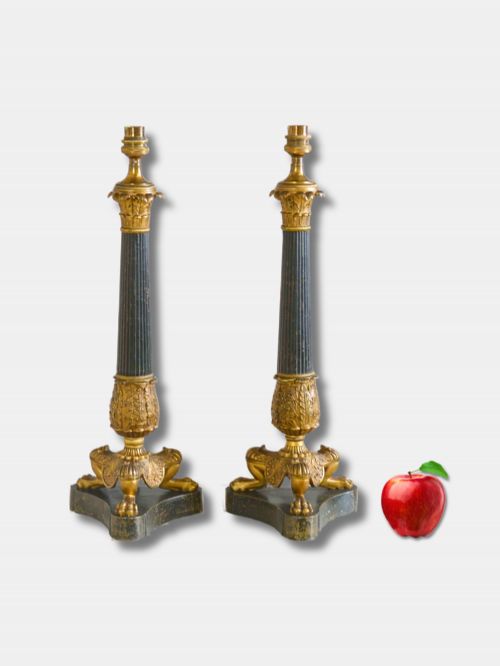
Wiring pairs for electricity became popular during the twentieth century to adapt old lighting fixtures for modern domestic use.
Many conversions preserve the original candle arms or columns without drilling through key maker signatures.