


Victorian Brass Candleholders
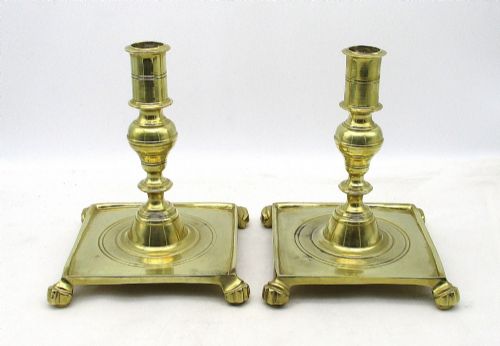
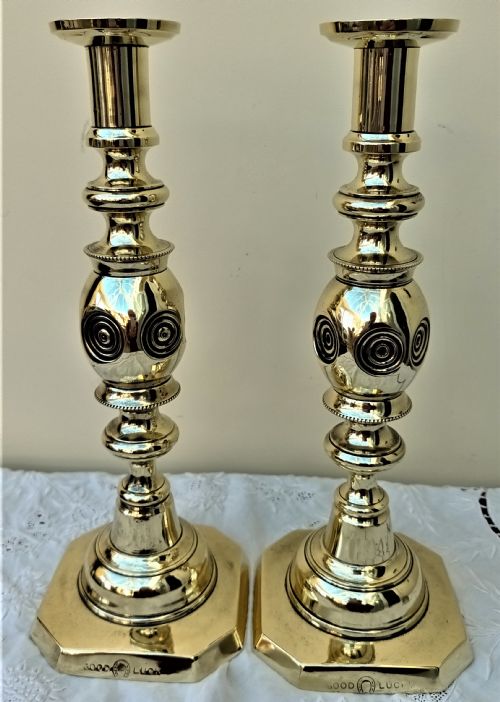
These victorian brass candleholders bring nineteenth-century weight and warm metal tones to a room, offering both domestic utility and distinct period ornament.
Victorian Brass Candleholders
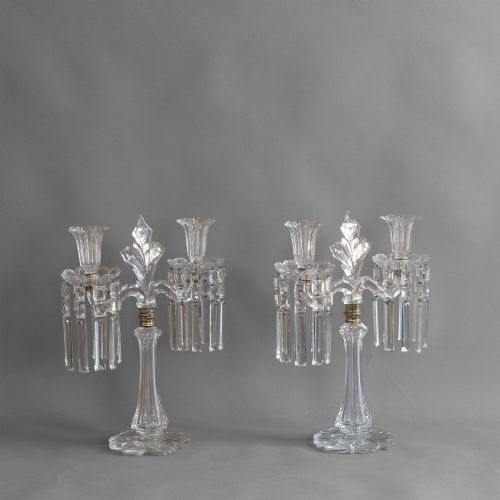
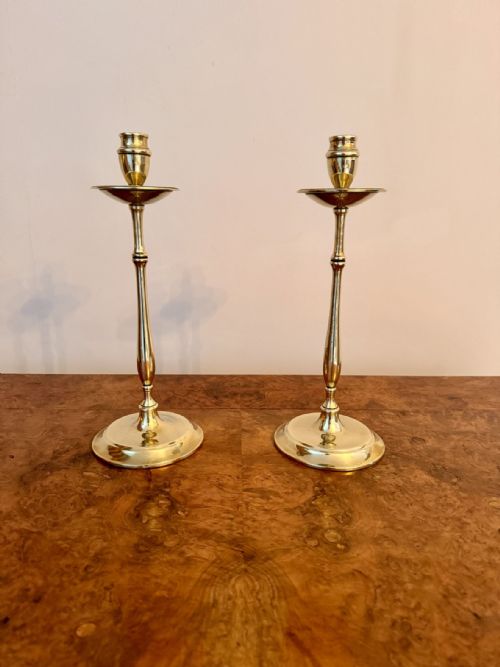
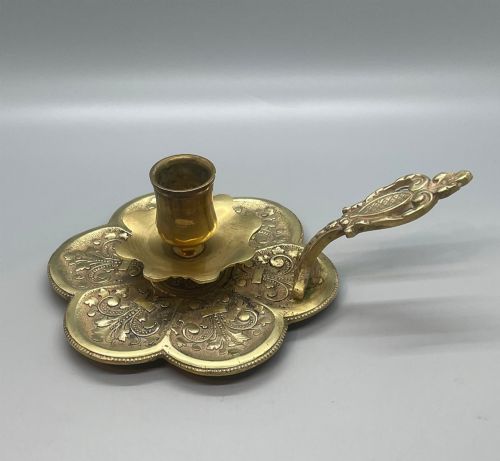
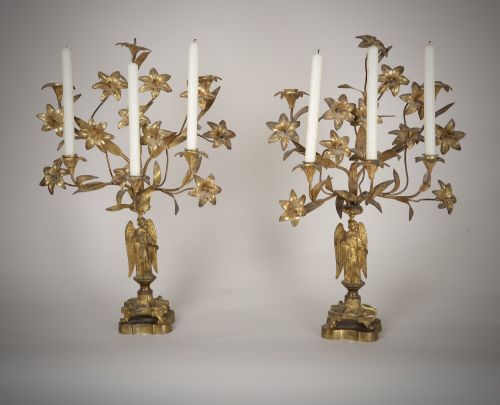
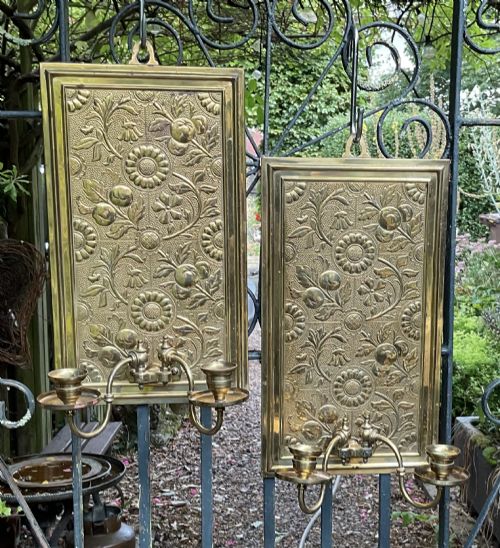
When you search for victorian brass candleholders, you encounter a varied selection of domestic and ecclesiastical lighting from the nineteenth century and adjacent decades. The items on this page range from standard candlesticks and chambersticks to multi-branch candelabras, wall sconces, student lamps, and lustres.
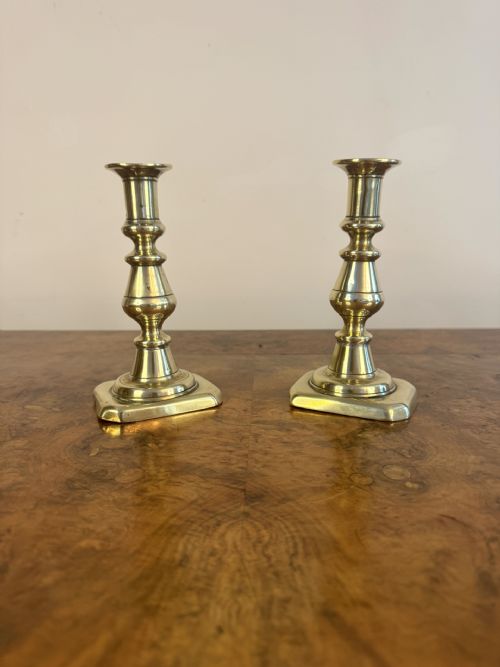
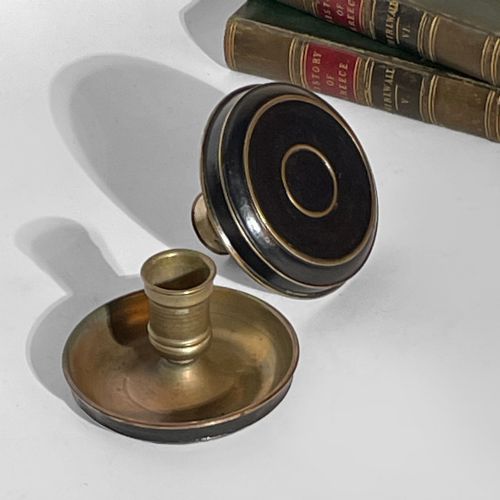
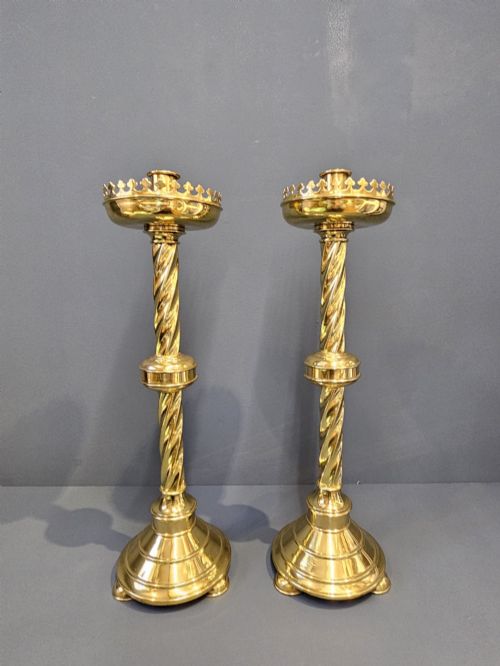
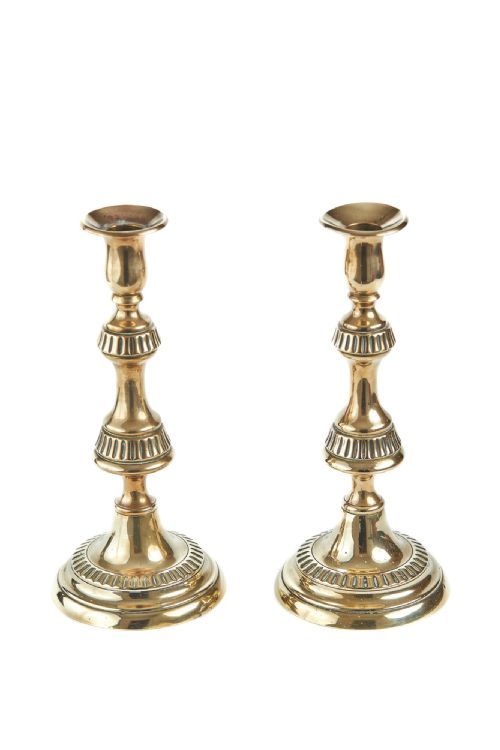
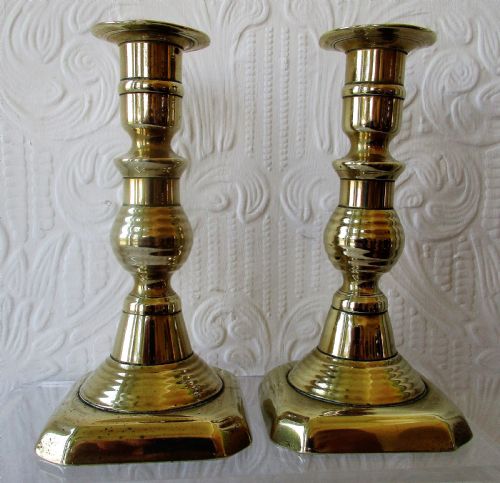
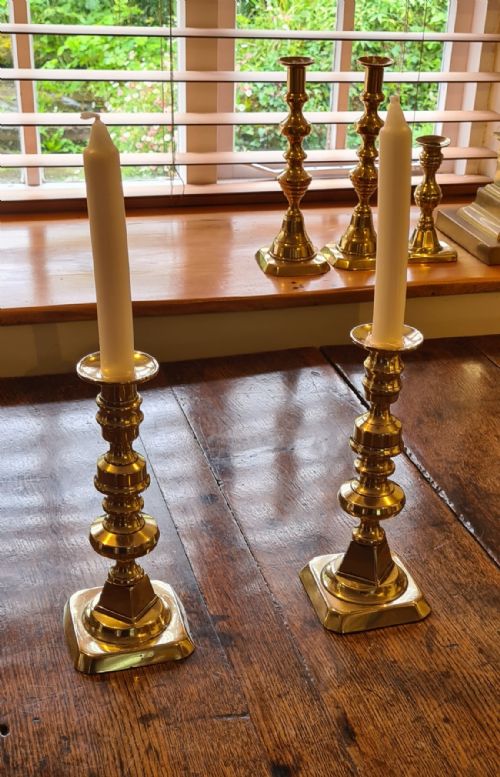
The versions you are most likely to meet on this page include matched pairs of candlesticks, often featuring turned or twisted stems, alongside decorative chambersticks fitted with handles and trays. These pieces span production dates from the mid-nineteenth century through to the early twentieth century.
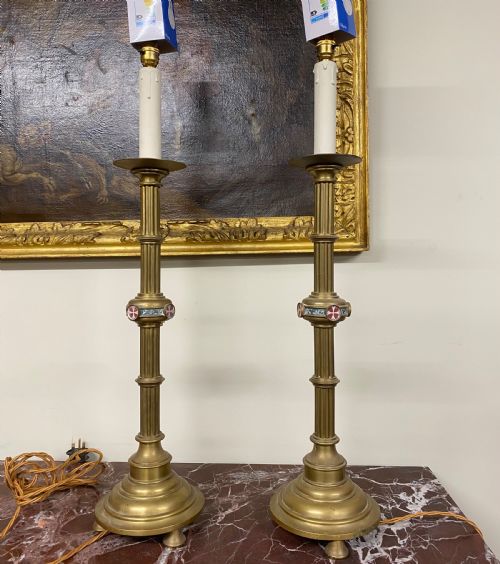
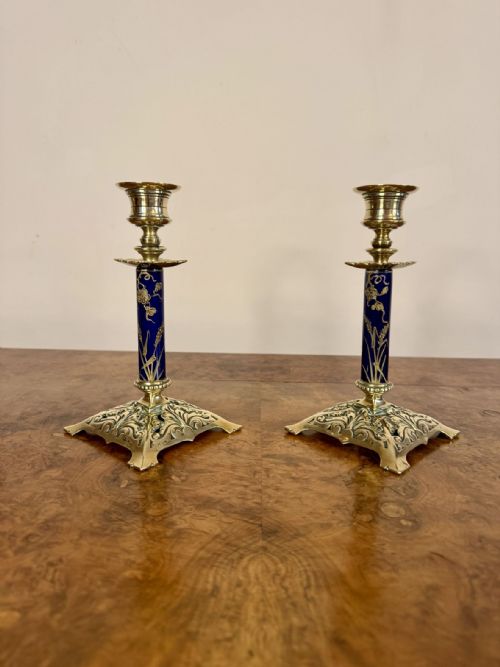
Makers and designers also surface within these listings, connecting functional household items to specific aesthetics such as Gothic Revival, Aesthetic Movement, and Arts and Crafts. Alongside standard brass, forms incorporate mixed media including marble bases, porcelain inserts, and glass components.
Materials and Technique
The items recorded here rely primarily on brass, gilt brass, and bronze, often shaped through casting and turning techniques to create rigid stems and stable bases. Many examples utilise seamed construction methods typical of the period, joining distinct metal components together to form the final object.
Surface treatments introduce variety through gilding, ormolu finishes, and patination, while combined media incorporate white or coloured marble plinths, enamel accents, and applied glass drops. Heavier church prickets and candelabras utilise substantial metal volume for structural balance.
Victorian Brass Candleholders Retail Price Guide 2026
Typical asking prices for victorian brass candleholders among the pieces listed under this phrase on Sellingantiques today, from the lower quarter to the upper quarter. They describe what is for sale here now, not the wider market.
Object forms include wall sconces, student lamps, chambersticks, church prickets, and girandole mirrors alongside standard candlesticks.
Distinctions in Manufacture
Quality separates through the crispness of casting detail and the weight of the metal used in the construction of the stem and base. Heavier pieces with clean, well-defined twisted or figural elements sit at the upper end of the range compared to lighter, simpler utilitarian versions.
The integration of secondary materials such as marble plinths, porcelain components, and cut glass lustres also elevates a piece. Superior examples maintain original surface finishes and matching components across pairs.
Bruce Talbert·Frederick J Smith & Co·Liberty
The Victorian Brass Candleholders Glossary
- Chamberstick
- A short candlestick set into a shallow pan or tray, often fitted with a loop handle for carrying from room to room.
- Ejector
- A mechanical internal slide mechanism designed to push the remaining candle stump out of the socket.
- Pricket
- A candlestick featuring an upward-pointing metal spike that impels the base of a large candle, common in ecclesiastical settings.
- Lustre
- A decorative tabletop vessel hung with cut glass pendants that reflect candle flame.
- Girandole
- An ornamental wall mirror featuring integrated candle arms or sconces branching from the frame.
Victorian Brass Candleholders: Frequently Asked Questions
How do I tell church candlesticks apart?
Ecclesiastical candlesticks often take the form of heavy prickets with spikes instead of sockets. They were built larger and heavier to support thick altar candles during services.
Domestic versions rely on standard cups with or without ejectors. Gothic revival styling frequently appears on ecclesiastical brassware.
Can I use modern candles in them?
Standard modern taper candles often vary in width compared to nineteenth-century sockets. Testing a taper gently without forcing prevents splitting old metal or fitted collars.
Using beeswax or dripless tapers helps secure the candle upright. Drip catchers and chambersticks specifically manage melted wax overflow.
What defines Aesthetic Movement pieces?
Aesthetic Movement items reflect late-nineteenth-century design reform focusing on visual refinement and stylized ornamentation. These objects often display Japanese-inspired motifs and clean geometric lines.
Named designers like Bruce Talbert or firms such as Liberty occasionally mark these distinctive items.