
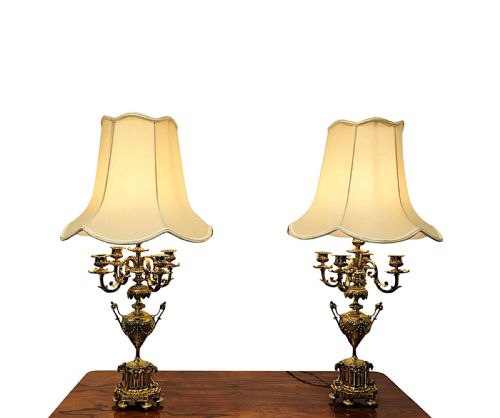
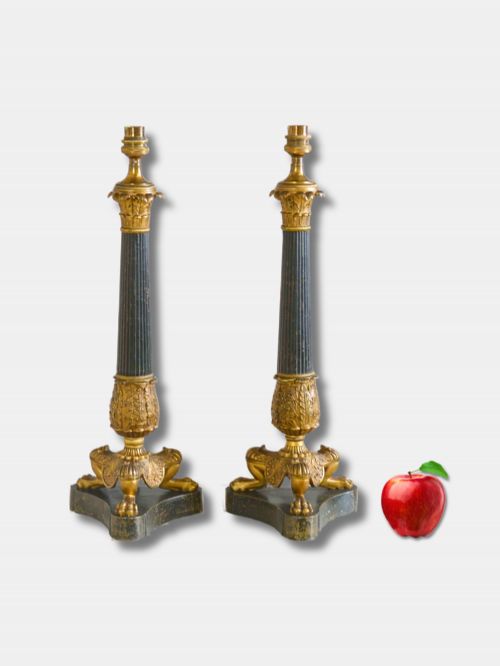


Nineteenth Century Brass Candlesticks
Nineteenth century brass candlesticks bring weight and steady light to a room, cast from metal and finished with classical or revival detail.

Nineteenth Century Brass Candlesticks
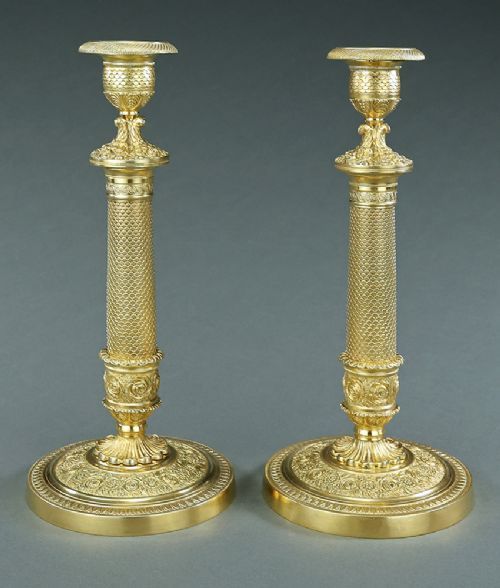
When collectors search for nineteenth century brass candlesticks, they look at heavy cast items designed to hold candles securely on tables, desks and altars. The selection spans straightforward domestic brass pieces alongside more ornate French and English work.
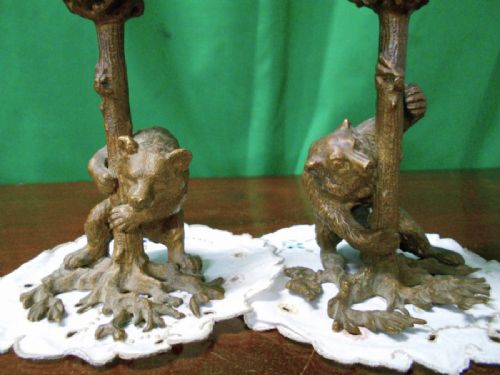
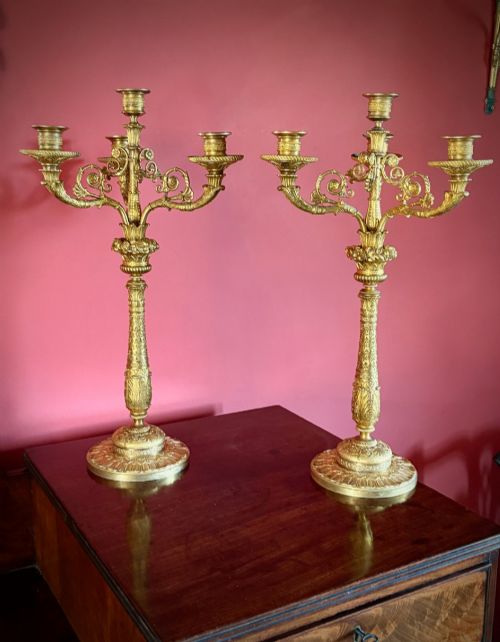
Most examples you will meet here date from the Victorian era and the broader nineteenth century, frequently appearing in pairs. Forms range from simple baluster shapes and barley twists to elaborate figural designs with multiple arms.
Origin varies between English domestic workshops and continental European foundries, particularly French makers working in Empire, Neoclassical and Rococo Revival styles. You also find specialised items such as pricket candlesticks and desk accessories.
Materials and methods
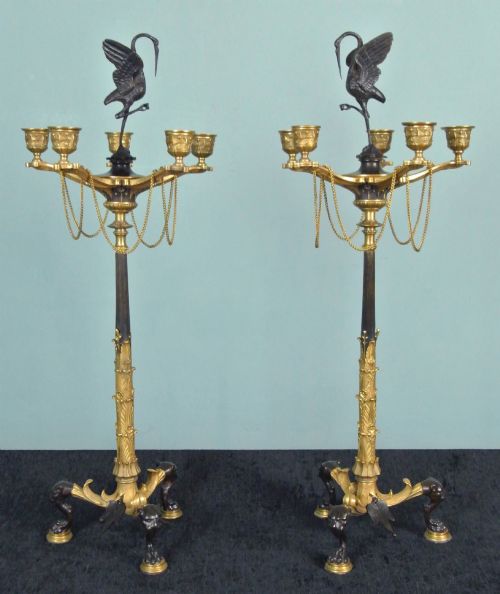
Foundries shaped these pieces primarily through casting in brass, bronze, and ormolu, often combining different metal finishes on a single body. Artisans utilised gilt bronze alongside patinated bronze to create contrast on neoclassical and empire forms.
Secondary elements occasionally incorporate marble for bases or fabric components on pieces later converted to table lamps. Craftspeople finished the metal surfaces through detailed chasing, turning and polishing to achieve crisp relief on foliate and figural motifs.
Nineteenth Century Brass Candlesticks Retail Price Guide 2026
Typical asking prices for nineteenth century brass candlesticks among the pieces listed under this phrase on Sellingantiques today, from the lower quarter to the upper quarter. They describe what is for sale here now, not the wider market.
Listings feature items spanning the 19th Century, Victorian era, Regency period, and specific decades from 1800 to 1890.
Qualities of distinction
Weight and structural integrity also separate standard production from exceptional examples, as heavier cast components and stable, well-balanced bases indicate superior foundry work. The sophistication of the design, whether a restrained Regency column or an elaborate French candelabra, dictates the piece's visual command.
Barbedienne
The Nineteenth Century Brass Candlesticks Glossary
- Ormolu
- Gilt bronze produced by applying a finely ground high-carat gold mercury amalgam to a bronze object. The technique creates a rich golden surface found frequently on French nineteenth-century lighting.
- Pricket
- A sharp metal spike set in the centre of a drip pan to secure a candle. This form appears often on church candlesticks and large altar pieces.
- Baluster
- A moulded shaft that swells outward toward the base, resembling a small architectural column. It is a common profile for domestic Victorian candlesticks.
- Barley twist
- A spiral column design carved or cast into the stem of the candlestick. This pattern catches the light along its diagonal ridges.
- Candelabra
- A branched candlestick holding multiple lights on separate arms. Many nineteenth-century examples feature adjustable arms or removable branches.
Nineteenth Century Brass Candlesticks: Frequently Asked Questions
How do I identify nineteenth century pieces?
Examine the casting method, weight, and wear patterns on the underside. Nineteenth-century examples often show sand-casting texture inside and possess substantial heft.
Style indicators also help date the object, as Regency, Victorian, and French Empire designs utilise specific decorative vocabularies tied to their decades of manufacture.
Were these originally for candles?
Most items served exclusively to hold wax or tallow candles for interior illumination before domestic gas and electric lighting became widespread. Some church pieces held large altar tapers.
Later in the period or subsequently, certain pieces were adapted to hold electrical fittings, though many survive in their original configuration.
How should I clean brass candlesticks?
Dust them gently with a soft dry cloth to preserve any existing patina and aged surface character. Avoid harsh chemical polishes that strip away historical depth.
If cleaning is necessary, use a mild, non-abrasive soap solution and dry thoroughly immediately afterward.
What is the difference between brass and ormolu?
Brass is an alloy of copper and zinc used widely for standard domestic candlesticks throughout the nineteenth century. Ormolu refers specifically to gilded bronze where a gold mercury layer coats the bronze base.
Ormolu provides a brighter, richer golden finish and typically appears on high-end French decorative pieces.