




Tall Brass Taper Holders
These tall brass taper holders bring genuine period weight and warm metal tones to a room, offering both practical light and striking vertical presence.
Tall Brass Taper Holders
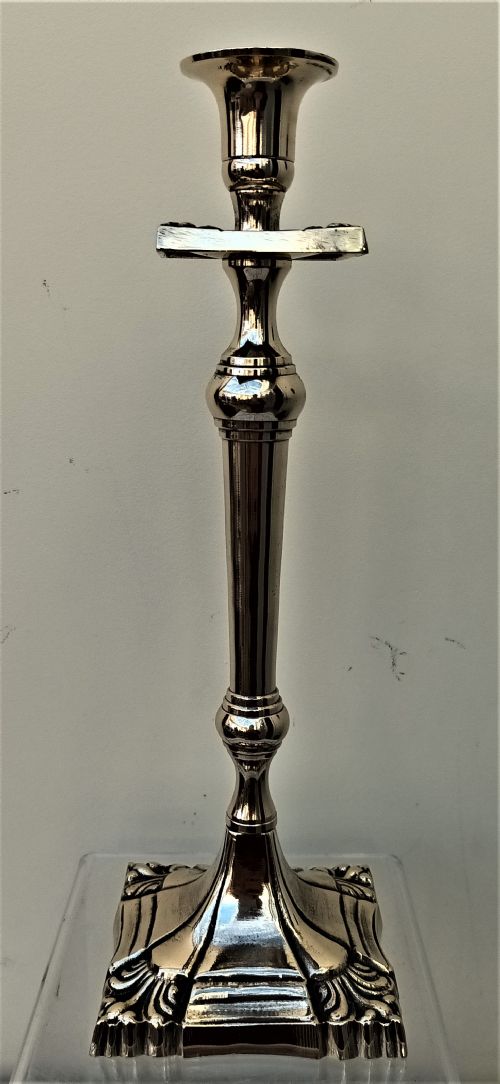
When you search for tall brass taper holders, you are looking at substantial metal candlesticks designed to elevate a single candle above the table or mantel. Most examples on this page date from the Victorian and Edwardian eras, spanning the nineteenth and early twentieth centuries, with occasional eighteenth-century pieces appearing too.
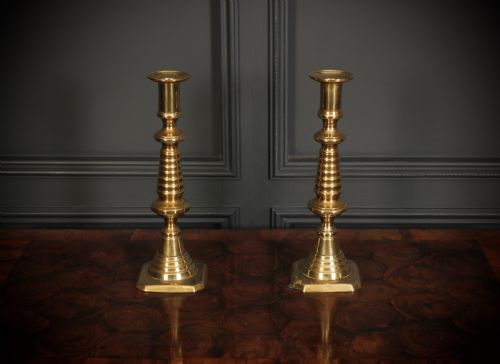
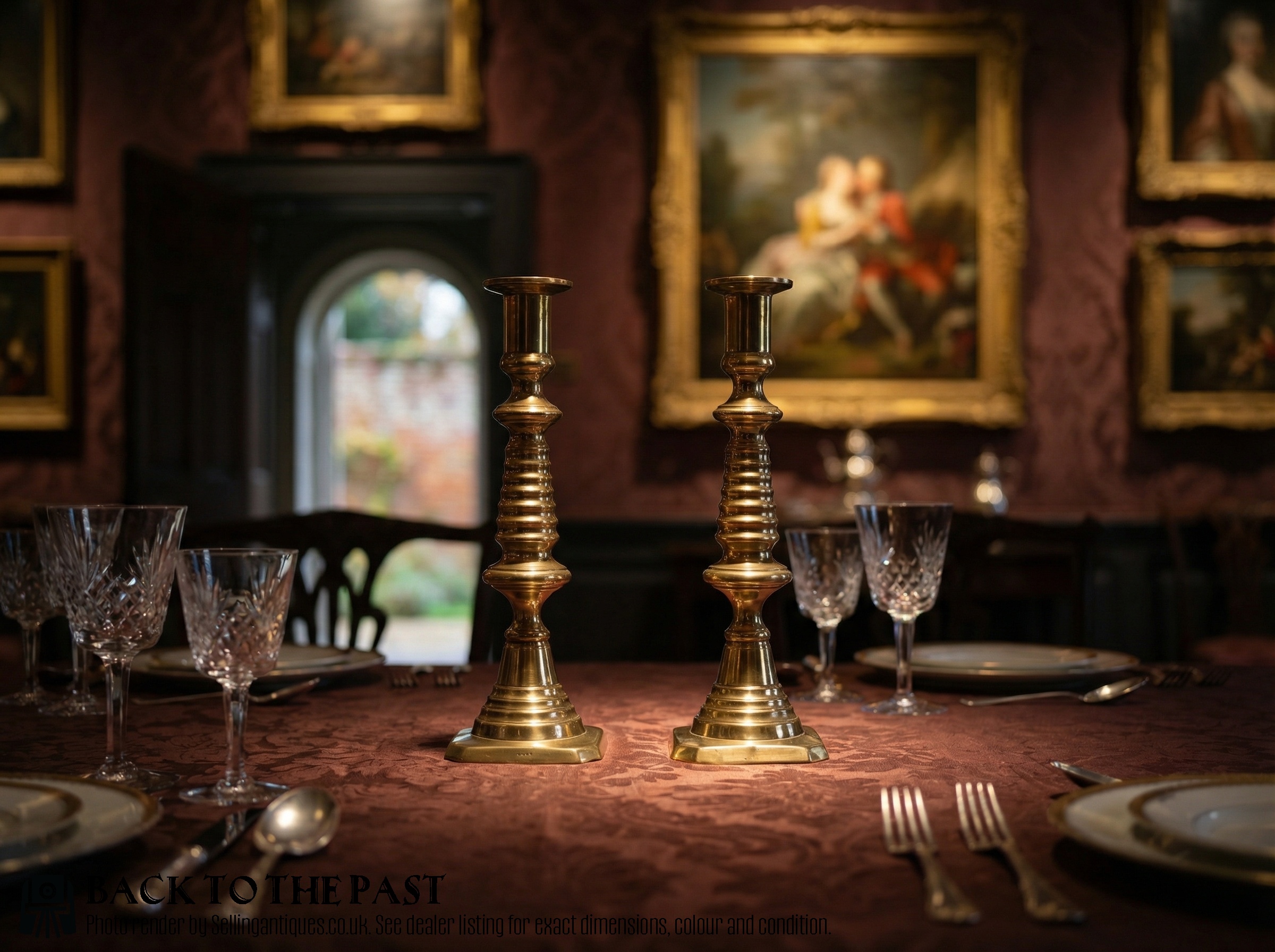
The forms vary from simple turned shafts to architectural Gothic Revival designs and the distinctive multi-ringed profile of beehive candlesticks. You will encounter them most frequently as matched pairs, standing significantly taller than standard domestic chambersticks or small desk lights.
How they were made
Makers shaped these objects primarily from brass, utilising traditional casting and turning methods that leave subtle tooling marks on the metal surfaces. Selected pieces combine brass with heavier bronze elements, particularly in pairs spanning the mid to late nineteenth century.
Components were often cast in separate sections, including the base, stem, and socket, and then joined securely together. Seamed construction appears on certain bronze and brass examples, reflecting the manufacturing techniques standard to Victorian workshops.
What varies in quality
The distinction between ordinary and superior pieces rests on the crispness of the casting and the thickness of the metal used. Finer candlesticks display deep, clean turning on the stem and weighted bases that give them a reassuring heft in the hand.
Proportion and decorative detail also set items apart, as better examples feature harmonious profiles and well-defined mouldings rather than simplified, uniform shapes. The finish of the brass ranges from bright polished surfaces to deep, undisturbed historical patina.
The Tall Brass Taper Holders Glossary
- Beehive candlestick
- A Victorian style featuring distinct ringed swellings along the stem that resemble traditional skep beehives. These decorative turns add strong horizontal accents to the tall vertical shaft.
- Gothic Revival
- An architectural and decorative style drawing inspiration from medieval forms, prevalent during the nineteenth century. Candlesticks in this manner often incorporate ecclesiastical motifs and heavier structural lines.
- Seamed construction
- A method where sheet metal is bent and joined along a visible seam or where cast components are fitted together. This technique is frequently noted in nineteenth-century bronze and brass production.
- Taper holder
- A device intended to support a thin wax taper rather than a thick household candle. In practice, many tall brass examples on the market accommodate standard narrow candles for formal dining.
Tall Brass Taper Holders: Frequently Asked Questions
How do I clean tall brass taper holders?
Maintain the metal simply by dusting with a soft cloth to prevent grime accumulation over time. Avoid harsh chemical polishes that strip away historical patina and leave an overly bright finish.
Allow the natural oxidation to remain where possible, as collectors generally prefer untouched surfaces that show age and handling. Gentle soap and water suffice for removing stubborn wax drips from the socket.
Were these candlesticks used for dining?
Tall candlesticks played a central role in illuminating large dining tables during the Victorian and Edwardian periods. Their height ensured that the flame sat above eye level, preventing glare for seated guests.
They also graced mantelpieces and sideboards, where reflective brass surfaces helped amplify the modest light cast by wax candles.
How can I tell Victorian from Georgian pieces?
Georgian candlesticks tend to feature simpler, cleaner columnar or knopped stems with square or stepped bases. They often employ heavier cast brass construction typical of eighteenth-century metalworking.
Victorian and Edwardian examples introduce more eclectic ornamentation, including Gothic Revival details and the characteristic rounded rings of beehive designs.
Why do these candlesticks usually come in pairs?
Domestic lighting in formal rooms was traditionally arranged in symmetrical pairs to flank mirrors, clocks, or centrepieces. Makers produced them together to ensure matching proportions and identical casting details.
Finding a true matched pair from the nineteenth century remains a primary goal for buyers seeking traditional table arrangements.