



Victorian Brass Altar Candlesticks
Victorian brass altar candlesticks bring heavy church metalwork into domestic spaces, offering sturdy columns and ecclesiastical forms that anchor a room.
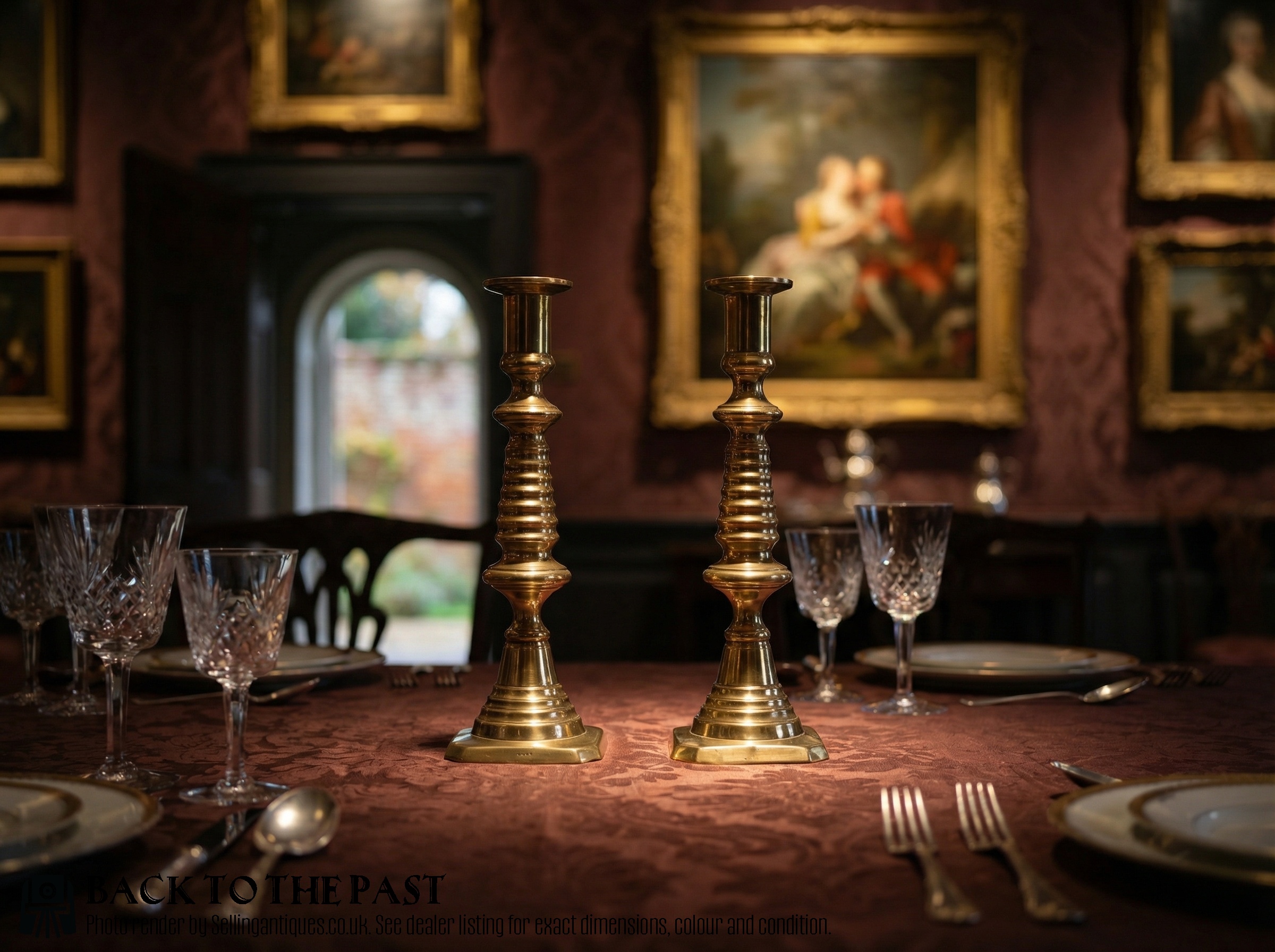
Victorian Brass Altar Candlesticks
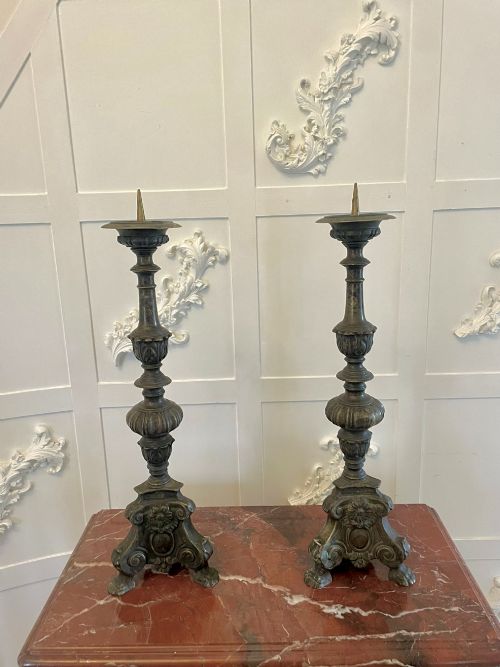
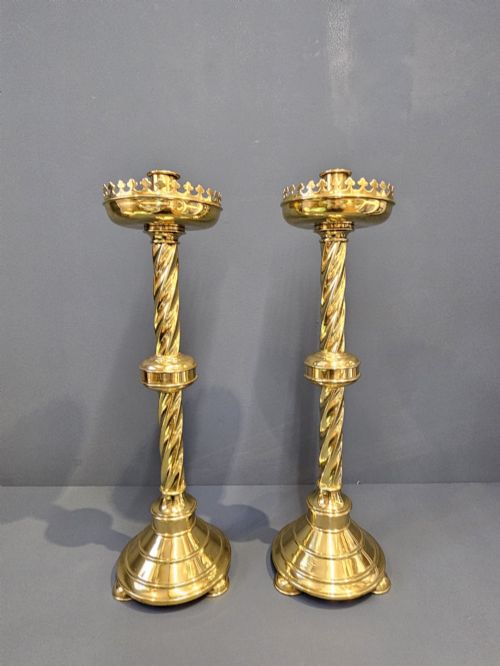
Victorian brass altar candlesticks are heavy ecclesiastical light fittings designed originally for church altars, appearing now in pairs and larger sets across domestic interiors. These pieces frequently manifest as tall columns or pricket forms that held large candles for liturgical services.
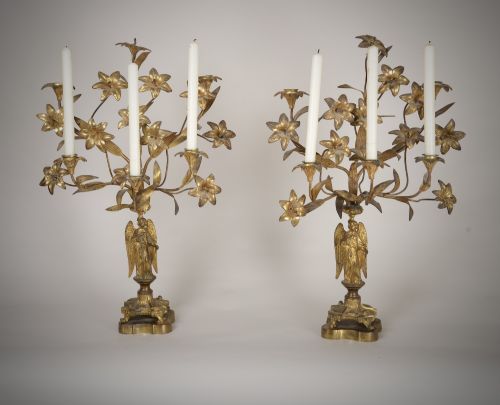
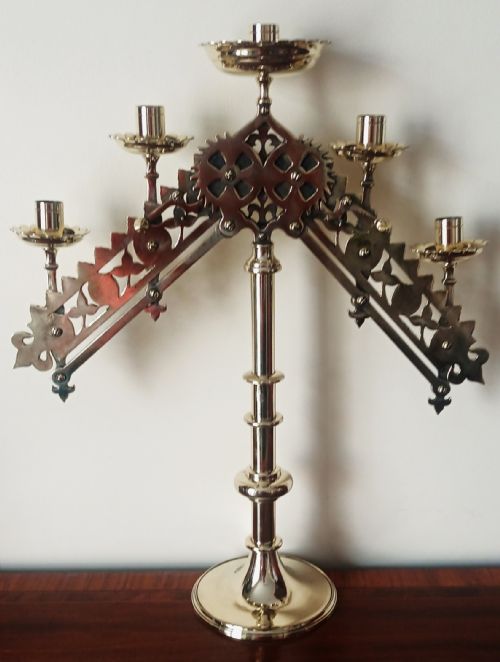
Buyers meet examples shaped heavily by Gothic Revival design, featuring trefoils, knops and stepped bases that reflect nineteenth-century church architecture. Other pieces adopt French Rococo Revival or neoclassical lines, showing that ecclesiastical metalwork borrowed widely from secular decorative vocabularies.
Many survivors retain their original socket fittings, while others show later conversions to table lamps utilising silk fringe and fabric shades. The forms range from simple domestic pairs to massive graduated sets originally made for Masonic or church use.
How they were made
Foundries produced these items primarily through sand casting and brass turning, building weight into the bases to support tall stems safely. Molten brass or bronze poured into moulds formed the structural components, which artisans then lathed and polished to finish.
Makers integrated gilt brass and ormolu finishes onto specific surface areas to heighten contrast against the darker cast metal underneath. Articulated joints and screw-threaded assemblies allowed multi-branch candelabra to adjust their arms during use.
The listings span the nineteenth and early twentieth centuries, recording periods from 1850 through to the Edwardian era and the 1930s.
What varies in quality
Quality rests in the crispness of the casting detail and the sheer weight of the metal used in the stem and base. Heavy cast brass items with deep, sharp Gothic mouldings sit at the upper end of the scale, whereas lighter stamped components represent simpler production.
The integrity of original screw threads and the presence of matching components across a set dictate the desirability of larger assemblies. Complete sets of four or graduated heights demand closer inspection to ensure uniform casting origins rather than assembled groups.
T Thomason & Co
The Victorian Brass Altar Candlesticks Glossary
- Pricket
- A sharp metal spike set on a drip pan to hold a candle without a socket. This form appears frequently on church pieces.
- Gothic Revival
- An architectural and decorative style drawing on medieval forms like pointed arches and heavy quatrefoils. Victorian makers applied these motifs directly to ecclesiastical metalwork.
- Ormolu
- Finely ground high-carat gold mercury-gilded to a bronze or brass base. It provides a bright golden surface layer on select nineteenth-century examples.
- Ecclesiastical
- Design relating to the Christian Church or its clergy. Items built for liturgical use carry this description.
- Knop
- A decorative knob or protuberance on the stem of a candlestick. It provided a secure grip for moving hot metal objects.
Victorian Brass Altar Candlesticks: Frequently Asked Questions
What is a pricket candlestick?
A pricket candlestick uses a spike rather than a socket to secure the candle. This design supported large wax cylinders used in church services.
Such pieces require wide drip pans underneath the spike to catch melting wax before it reaches the surface below.
Were these made for churches?
Many items matching this description served in nineteenth-century ecclesiastical settings, including chapels and cathedrals. Their heavy construction and towering height suited large stone altars.
Other examples were produced for domestic use or Masonic lodges while retaining distinct church-inspired motifs.
How do I clean antique brass?
Dust accumulation requires only a soft cloth to protect the underlying metal surface. Aggressive chemical polishes strip away the aged patina that collectors value.
Heavier grime responds to warm water and mild soap applied gently with a soft brush.
Can converted lamps be restored?
Many examples on the market retain their lamp conversions wired for modern electricity. Reverting a converted piece back to a standard candlestick depends on whether original internal fittings remain intact.
Professional rewiring ensures safe daily use when living with electrified antique lighting.