


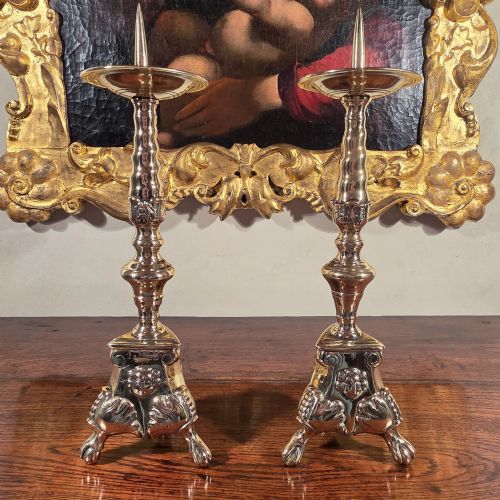


Pair Tall Brass Candlesticks
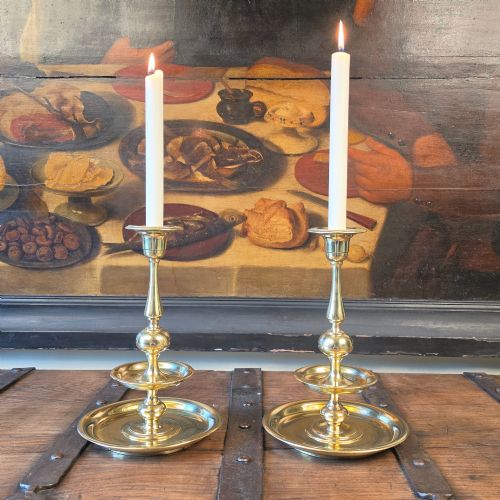
Pair tall brass candlesticks bring monumental height and bright metal warmth to a mantel or console table.

Pair Tall Brass Candlesticks
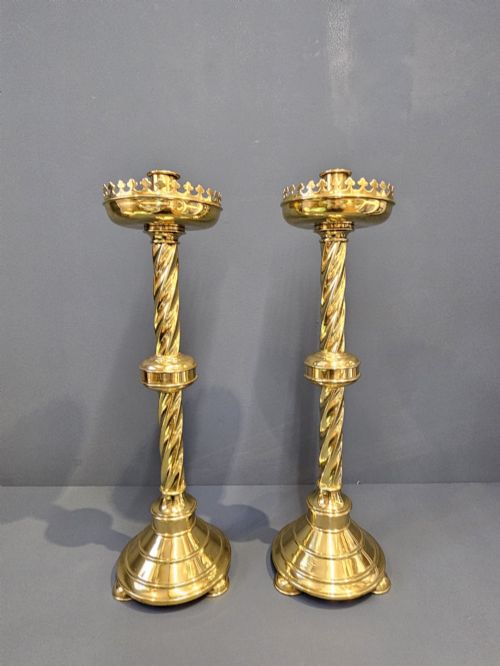
A pair tall brass candlesticks search uncovers vertical domestic lighting and grand church altar fittings from the Georgian, Victorian and Edwardian eras. These pieces typically display slender columns, barley twists or heavy cast bases designed to elevate a single taper.
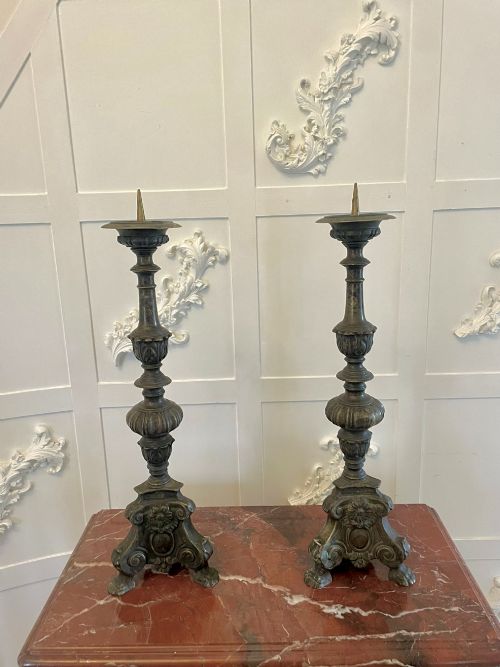
Church and ecclesiastical examples frequently feature pricket spikes to impale large wax candles rather than standard sockets. Domestic variants often incorporate side ejectors, Corinthian capitals or turned wooden elements in oak and mahogany.
Originating largely from British workshops alongside continental European schools, these items bridge functional hearth lighting and decorative interior display.
How they were made
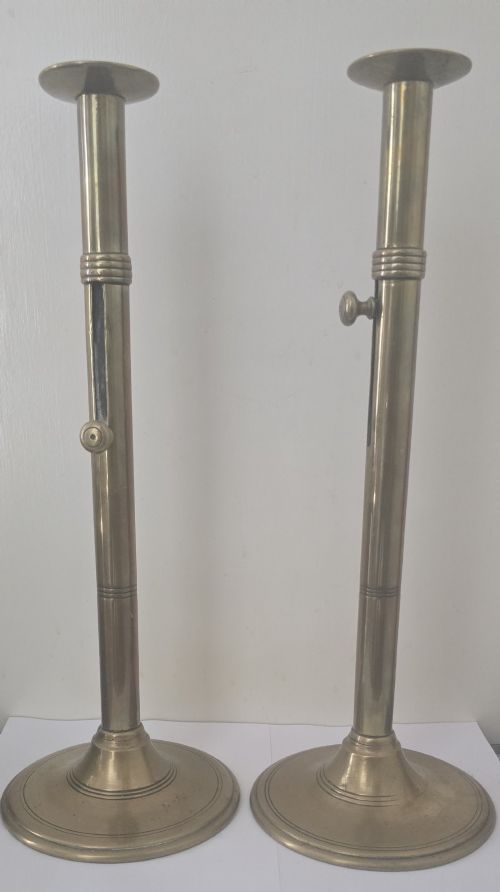
Early examples rely on heavy brass casting techniques, where molten metal is poured into sand moulds before being finished on a lathe. Seamed constructions reveal where rolled sheet metal was joined vertically down the shaft.
Twisted stems utilise manual shaping while the metal is hot, or precise lathe-turning for timber combinations. Surface finishes range from polished brass and ormolu to patinated bronze and copper.
What varies in quality
Substantial physical weight distinguishes superior casting from lighter, hollow alternatives. Thick gauge metal resists bending and provides a stable foundation for elevated heights.
Hand-finishing separates mass-produced items from better workshop output, visible in crisp surface detailing, tight joints and balanced proportions across both matched components.
James Clews
The Pair Tall Brass Candlesticks Glossary
- Pricket
- A sharp metal spike on a candlestick designed to hold a candle by piercing its base. This form is common on ecclesiastical altars.
- Seamed
- A method of construction where flat sheet brass is rolled into a tube and joined down the side. This technique appears frequently on older Georgian and Victorian examples.
- Barley twist
- A spiral column carved into wood or cast into metal. This decorative motif adds vertical movement and visual texture to the stem.
- Side ejector
- A mechanical lever fitted to the socket to push out the remaining candle stub. This feature helps clear the holder without damaging the metal.
- Ormolu
- Finely ground high-carat gold applied to a bronze base. This technique creates a rich decorative surface seen on grander decorative objects.
Pair Tall Brass Candlesticks: Frequently Asked Questions
How were tall brass candlesticks used originally?
These tall fixtures provided significant illumination in large domestic rooms, drawing rooms and churches before electric lighting. Their height allowed candlelight to project further across large gatherings.
Ecclesiastical variants specifically served on altars to hold heavy liturgical wax candles during services.
Can these antique candlesticks hold modern candles?
Many standard sockets accommodate modern tapers, though older hand-turned sockets can vary slightly in diameter. A small adapter or paring the base of the candle often ensures a secure fit.
Pricket versions require candles with a pre-drilled base or soft wax that accepts the vertical metal spike.
How do I date a pair of brass candlesticks?
Construction methods offer clear clues, as early pieces often show seamed shafts and heavy cast brass bases. Stylistic shifts from Georgian columns to Victorian ecclesiastical gothic forms help narrow the manufacturing era.
Patent marks, registration numbers or maker stamps on the base provide precise production years.
How should I clean polished brass?
Gentle dusting with a soft, dry cloth preserves the existing surface and prevents dust accumulation in recessed details. Avoid harsh chemical polishes that strip away historical patina and age.
Applying microcrystalline wax periodically protects the metal from oxidation and handling marks.