

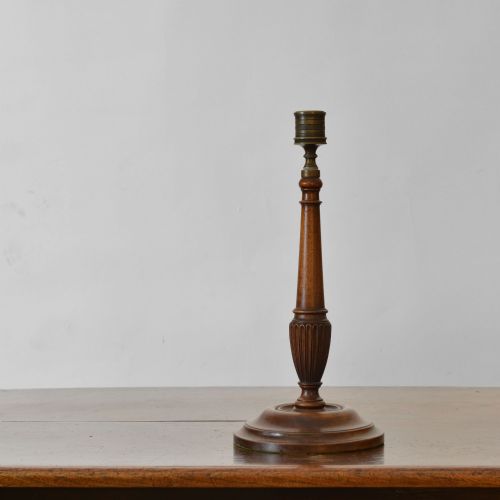
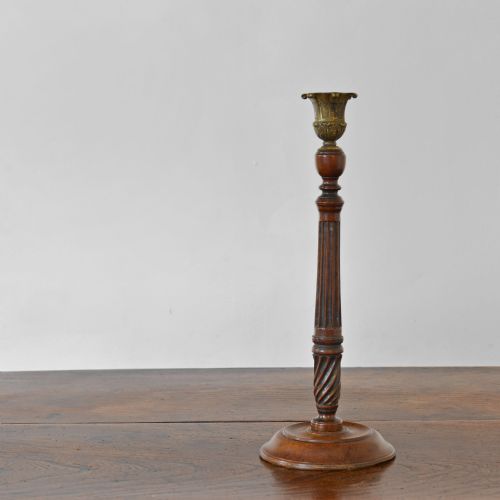
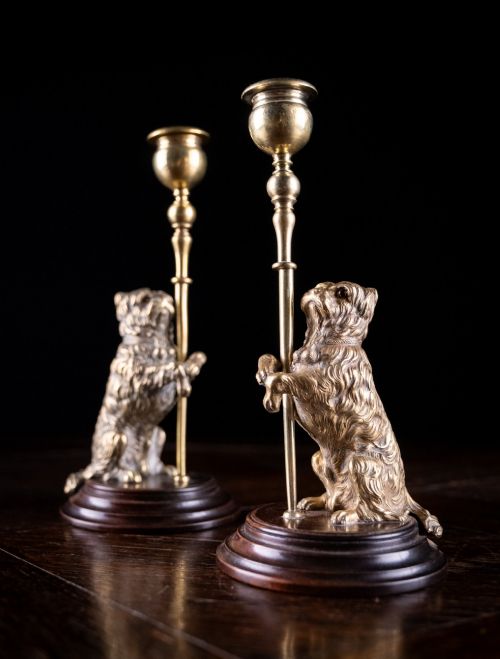
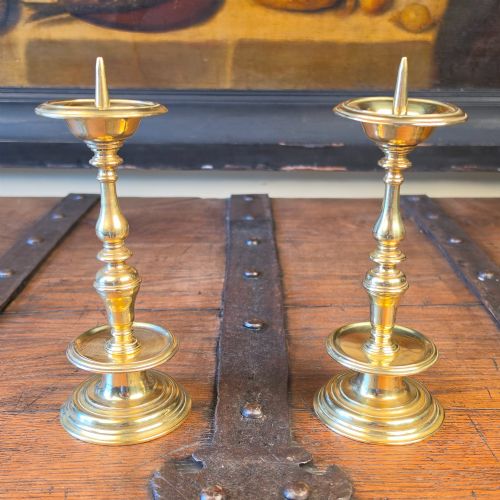
Brass Candle Stands
These brass candle stands are sturdy items of functional metalwork that bring warmth and period character to any room.
Brass candle stands
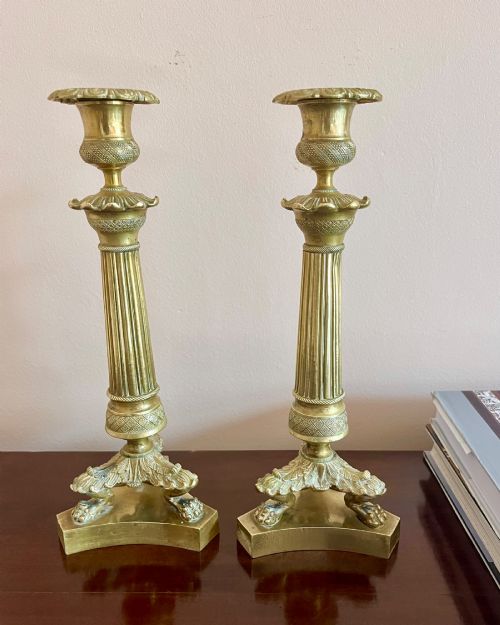
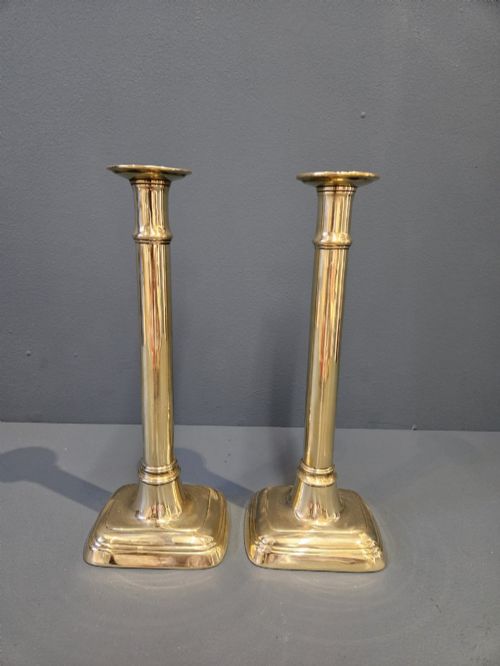
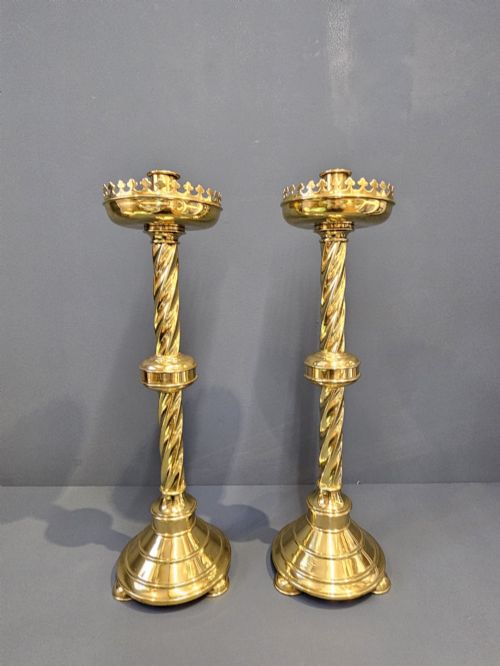
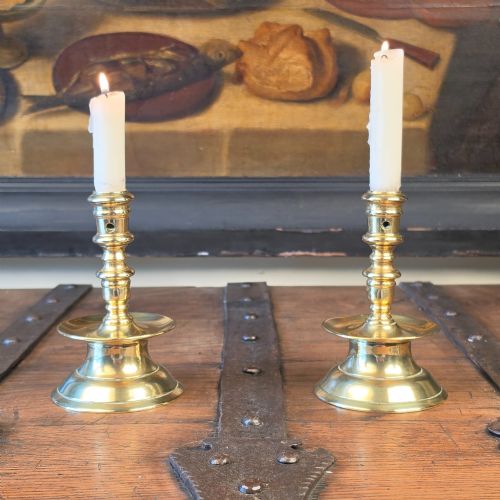
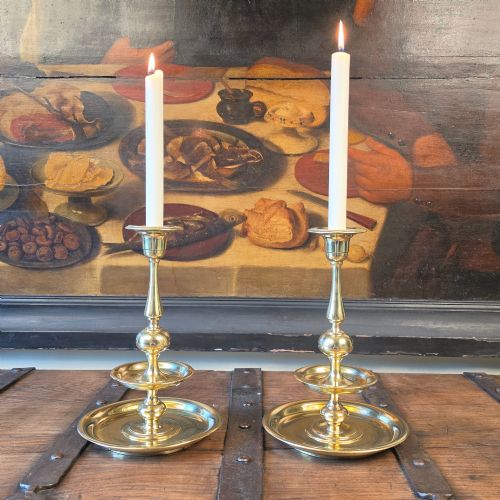
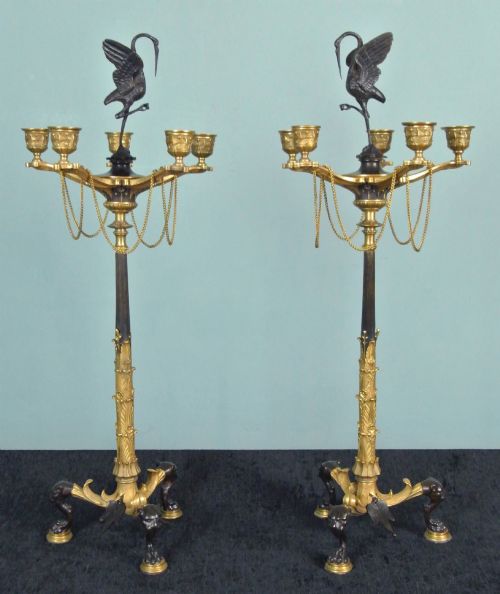
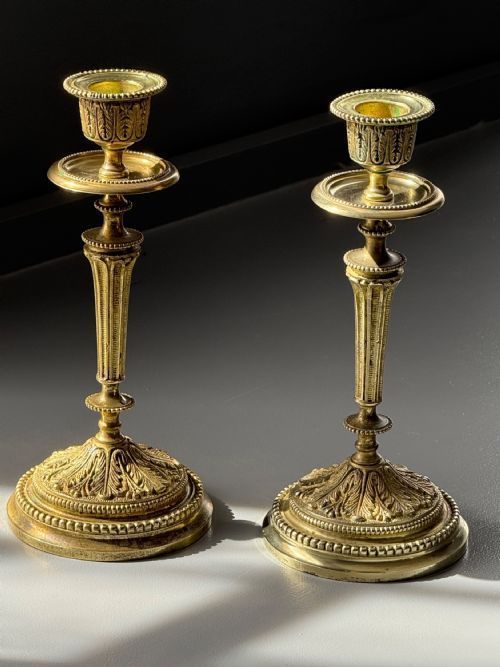
Brass candle stands appear in various forms across this selection, primarily as pairs of candlesticks designed for domestic or ecclesiastical use. The pieces span several distinct periods, including the Victorian era, the nineteenth century, and the year nineteen hundred.
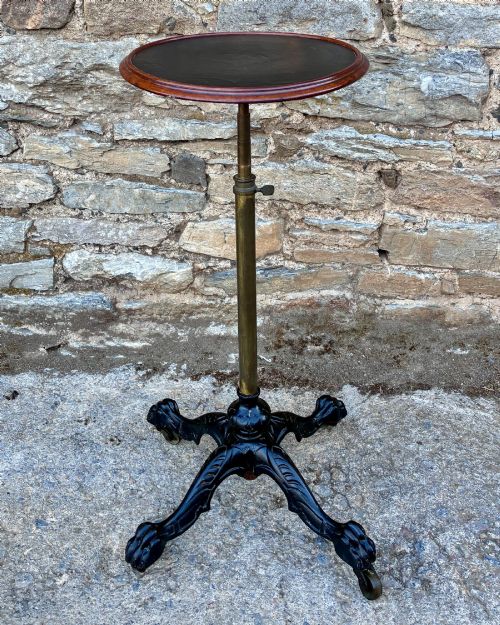
Buyers encounter diverse stylistic influences when searching for brass candle stands, ranging from Georgian designs and seventeenth-century revivals to Arts and Crafts and Amsterdam School creations. Telescopic mechanisms and side ejectors demonstrate the practical evolution of these domestic items.
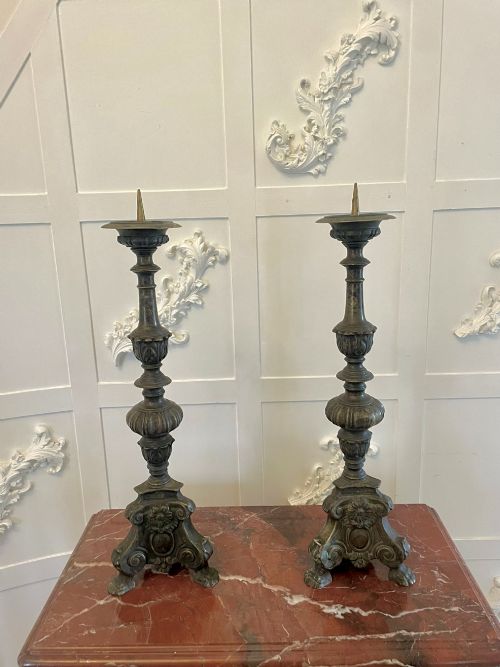
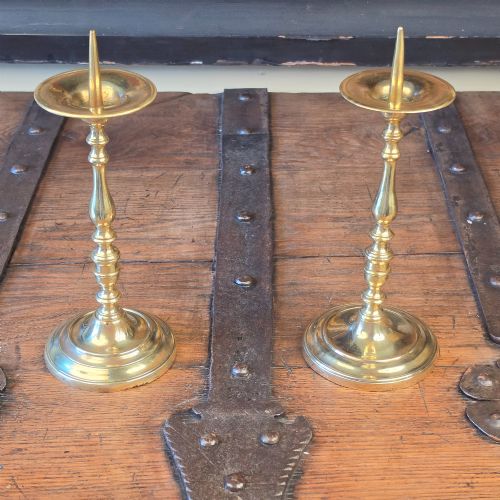
Makers and workshops of the past utilised brass alongside wrought iron to construct both short domestic table pieces and tall ecclesiastical candle stands. French Gothic styles and church settings also appear within the wider history of these objects.
Materials and construction
Makers forged brass candle stands using metalworking techniques appropriate to each period, occasionally combining brass with wrought iron for added structural support in taller or pricket forms. Telescopic shafts and mechanical side ejectors required precise engineering to function smoothly within the metal column.
Articles from the Arts and Crafts and Amsterdam School movements display specific material handling distinct from earlier Georgian production methods. Surface textures and joinery reflect the workshop practices of the nineteenth century and the early twentieth century.
Some nineteenth-century brass stands include sneaky side levers to eject stubborn candle stubs without burning fingers.
Judging quality
Quality in brass candle stands rests upon the crispness of the casting and the structural integrity of the metal components. Pieces featuring working mechanical elements like side ejectors or telescopic shafts demonstrate higher manufacturing ambition.
Distinction also arises from stylistic coherence, such as the deliberate design choices seen in Arts and Crafts or Amsterdam School items compared to standard domestic wares. The visual weight and balance of the metal shape the overall presence of the object.
Benhan and Froud
The Brass Candle Stands Glossary
- Side ejector
- A small lever on the side of a candlestick column designed to push the spent candle stub upward for removal. This mechanical addition appears on Georgian examples.
- Pricket
- A sharp metal spike set in the drip pan to secure a pillar candle, commonly found on ecclesiastical or church candle stands. The design predates socket candlesticks.
- Telescopic
- A shaft design that permits the height of the candlestick to be adjusted via sliding metal tubes. This feature is characteristic of certain Georgian brass pieces.
- Arts and Crafts
- A design movement emphasising handcraftsmanship and simple forms over mass production. Pieces from this era often display honest construction and distinct material textures.
- Amsterdam School
- An architectural and design style of the early twentieth century noted for expressive forms and organic use of metals. Pricket stands from this period combine brass and wrought iron.
Frequently Asked Questions
What is a pricket candle stand?
A pricket candle stand utilises an upright metal spike rather than a socket to hold the candle in place. This form was traditionally used in churches and ecclesiastical settings.
Such stands often accommodate larger candles and are frequently paired with wrought iron elements as seen in Amsterdam School designs.
How were telescopic candlesticks used?
Telescopic candlesticks allowed users to adjust the height of the light source depending on the room or table setting. The inner metal tube slid smoothly within the main column.
This practical innovation is particularly associated with Georgian telescopic brass examples found in domestic interiors.
Where were these stands placed?
Domestic candlesticks served to illuminate tables, mantlepieces, and writing desks throughout the home. Taller ecclesiastical versions stood in churches or chapels for ceremonial lighting.
Pairing was common, providing symmetrical illumination for rooms before the advent of electric lighting.