



Gothic Revival Brass Candlesticks
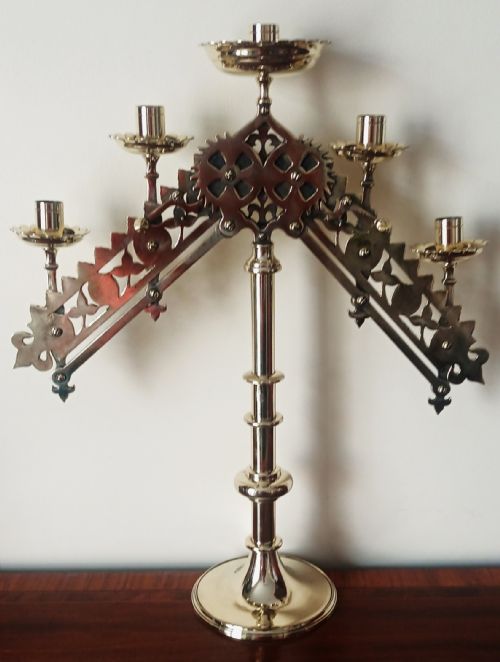
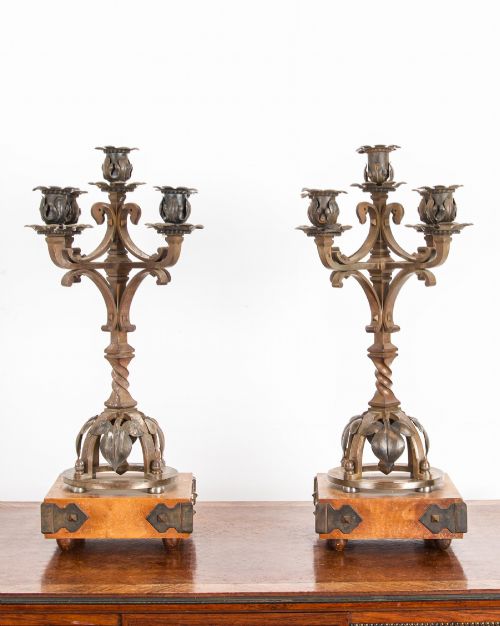
Gothic revival brass candlesticks are heavy, striking altarware and lighting pieces shaped by nineteenth-century church design that bring dramatic architectural presence to a room.
What they are
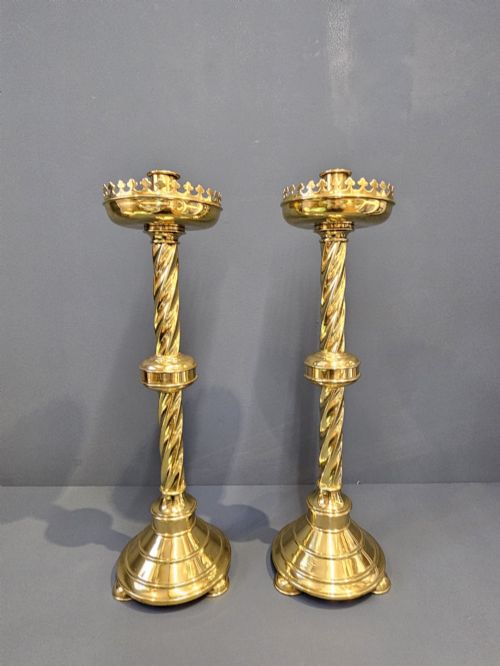
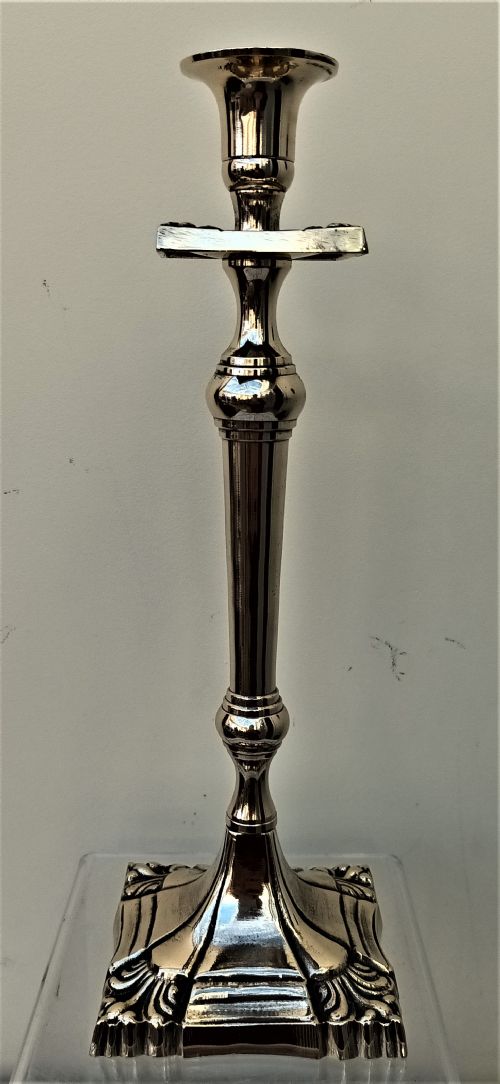
When you search for gothic revival brass candlesticks, you find nineteenth-century lighting and ecclesiastic items spanning the Victorian era, c1900, and the wider nineteenth century. These objects include church candlesticks, tall pricket candlesticks, and candlestands shaped by Victorian and gothic revival, aesthetic movement, and arts and crafts styles.
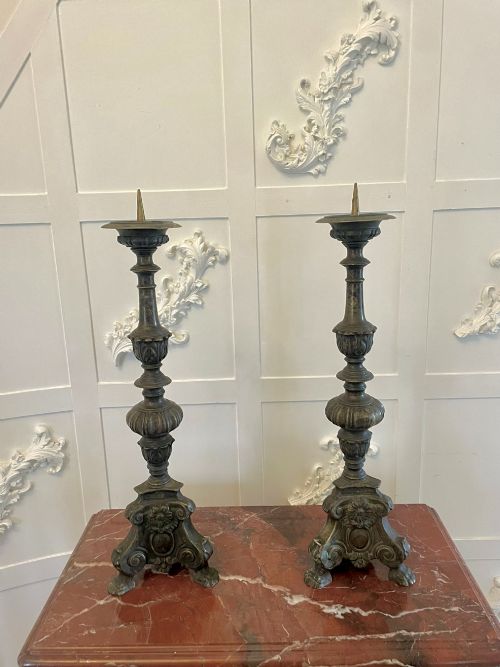
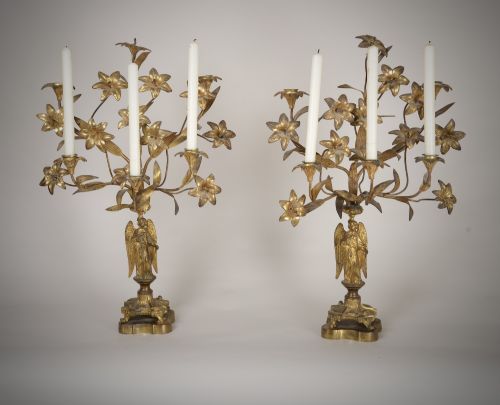
You are most likely to meet pairs of large church candlesticks and pricket candlesticks from the Victorian period on this page. These pieces often feature ornate brass construction, sometimes accented with bronze and fabric elements, reflecting the architectural ambitions of nineteenth-century ecclesiastical metalwork.
What varies in quality
The distinction between standard production and superior work lies in the crispness of the cast ornamentation and the architectural ambition of the design. Simpler brass stems contrast with heavily decorated pricket candlesticks featuring intricate brass casting and cabochon insets.
Proportion and scale also define the hierarchy, with unusually large pairs and sophisticated aesthetic movement or arts and crafts interpretations commanding greater visual weight. The integration of bronze components and fabric details elevates specific Victorian examples above ordinary baseline items.
Retail Price Guide 2026
Typical UK retail prices for gothic revival brass candlesticks, calculated from the Sellingantiques database of over a million retail prices indexed since 2003. This retail price guide relies exclusively on Sellingantiques data; no external sources or auction records are used, so the figures do not describe the wider market.
Some nineteenth-century churchgoers apparently needed very large brass spikes to keep their candles steady.
The Gothic Revival Brass Candlesticks Glossary
- Pricket candlestick
- A candlestick featuring a sharp metal spike at the top to secure a candle rather than a socket. This form is common in church and altar settings.
- Gothic Revival
- An architectural and decorative style drawing on medieval ecclesiastical forms, pointed arches, and structural traceries. It dominated nineteenth-century church metalwork.
- Aesthetic Movement
- A late nineteenth-century design current emphasising visual beauty and artistic reform over strict historical revival. Pieces from this movement display refined surface qualities.
- Arts and Crafts
- A design movement valuing visible handcraftsmanship, honest materials, and simple construction. It emerged in the late nineteenth century as a reaction against industrial mass production.
- Cabochon
- A polished, convex gemstone or glass insert without facets, frequently set into metal mounts. These insets provide points of colour on nineteenth-century brasswork.
Frequently Asked Questions
What is a pricket candlestick?
A pricket candlestick uses an upright metal spike instead of a socket to hold the candle in place. This traditional form was essential for large altar candles in nineteenth-century churches.
Today, these pieces serve as striking decorative objects rather than primary light sources. Their sturdy construction makes them ideal for display on mantelpieces or side tables.
How do I date these candlesticks?
Dating relies on stylistic clues such as Victorian gothic revival motifs, aesthetic movement lines, or arts and crafts simplicity. The evidence points to pieces originating across the nineteenth century up to around nineteen hundred.
Examining the casting quality, patination, and material combinations helps narrow down the period of manufacture. Most examples date securely within the Victorian era.
Were these made for churches?
Many examples on this page are explicitly catalogued as church candlesticks or ecclesiastic candlestands. They were originally manufactured for use on altars and in places of worship.
Over time, many of these heavy brass pieces transitioned into domestic settings. Their imposing scale suits them to grand architectural interiors.
How do I clean antique brass?
Antique brass accumulates a natural patination over decades of exposure to air and handling. Collectors generally prefer to leave this aged surface intact rather than polishing it to a bright shine.
Gentle dusting with a dry cloth is usually sufficient for regular maintenance. Avoid harsh chemical cleaners that strip away historical character.