

Gold Brass Candle Stands
Gold brass candle stands bring warm metallic light and sculptural form to a room.
Gold Brass Candle Stands
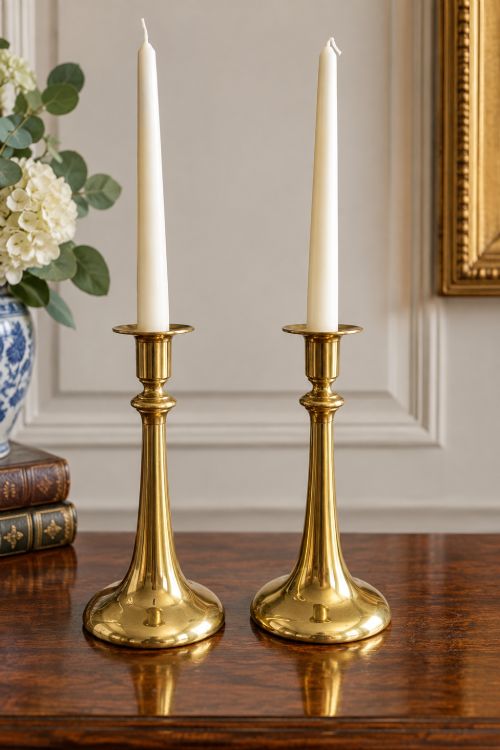
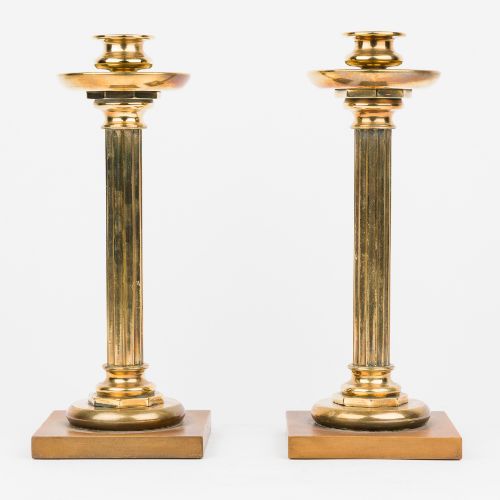
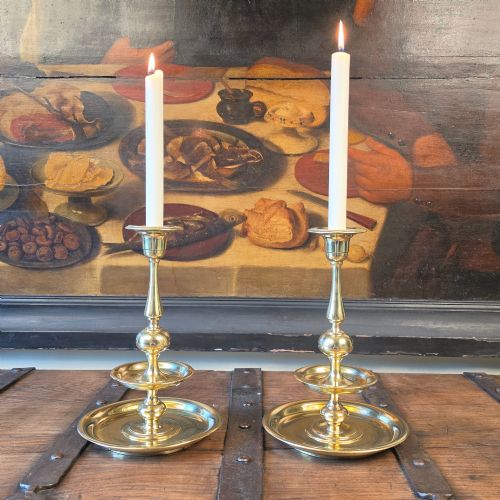
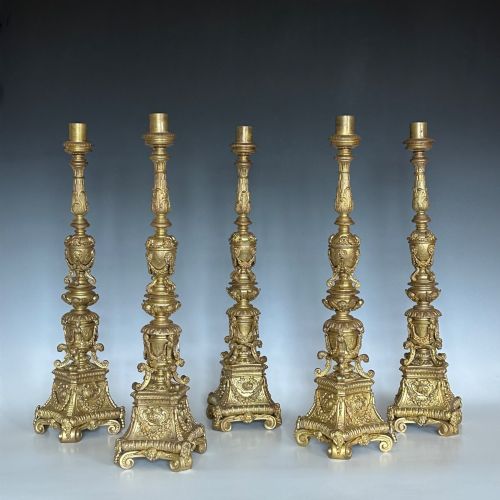
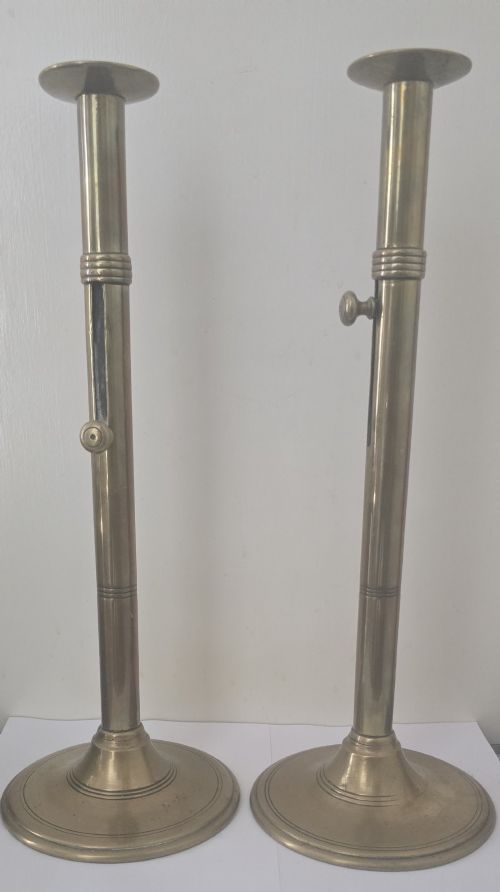
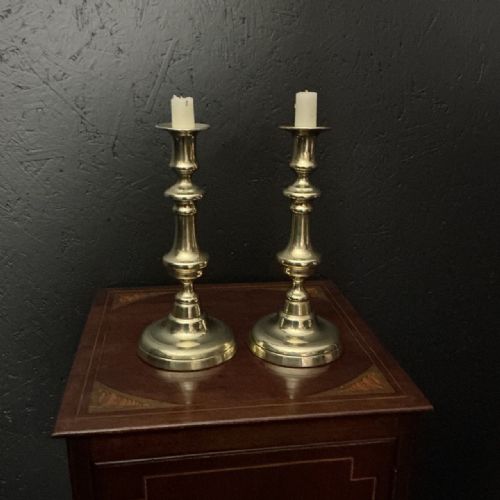
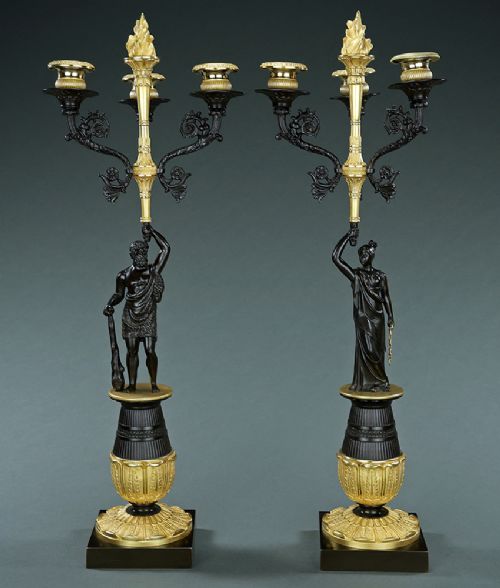
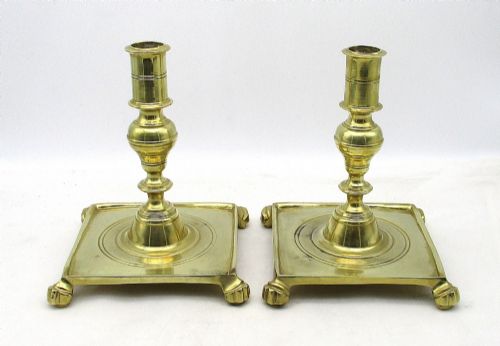
These items comprise candlesticks, candelabras, and single candle holders fashioned from metal alloys that yield a luminous gold appearance. When searching for gold brass candle stands, buyers encounter various historical periods ranging from the eighteenth century through the Edwardian era. The most common forms on this page include tall church candlesticks, Georgian column designs, and figural Victorian pairs.
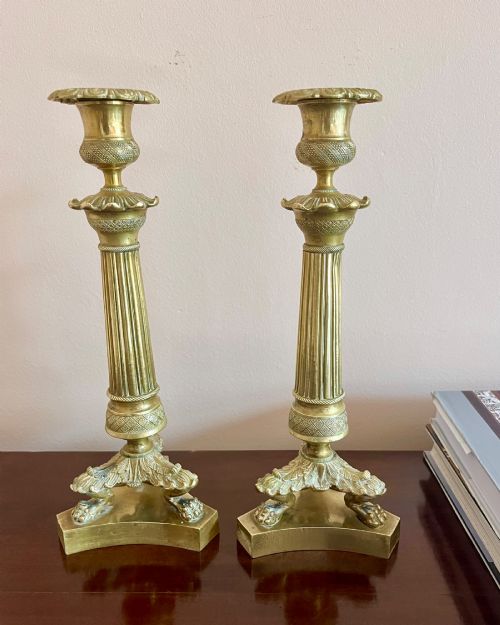
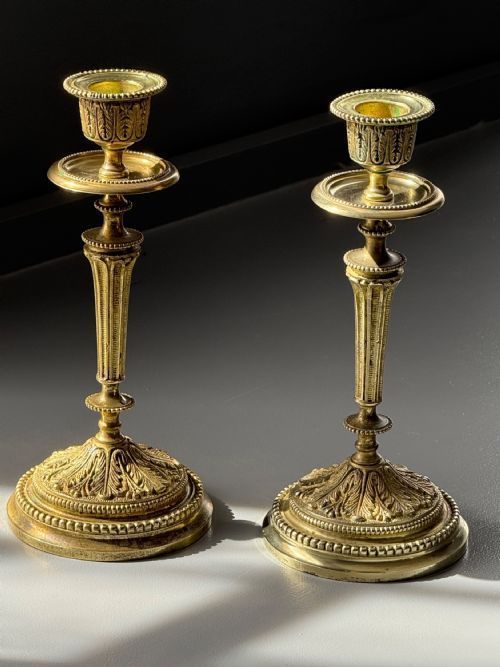
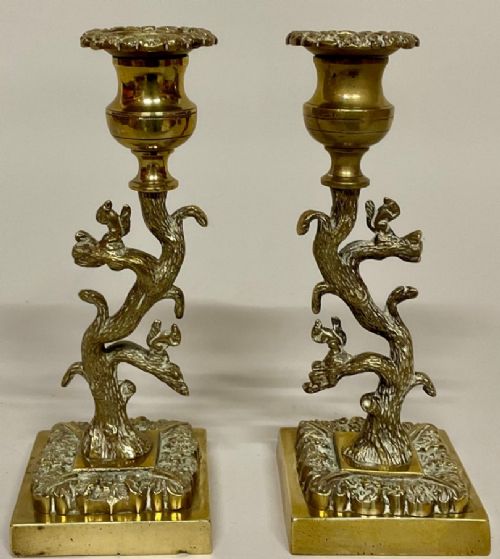
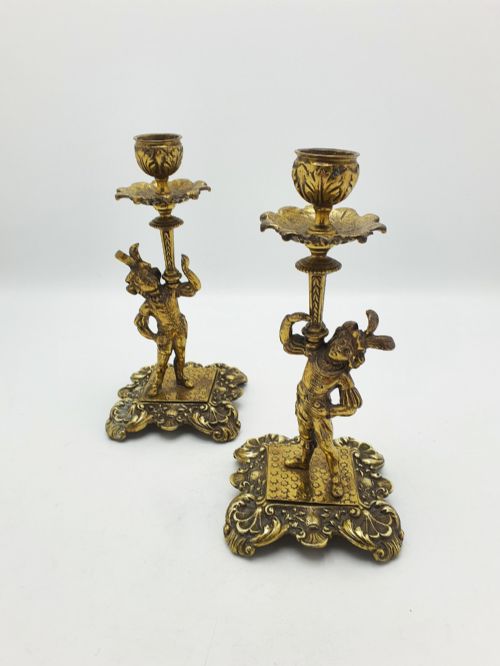
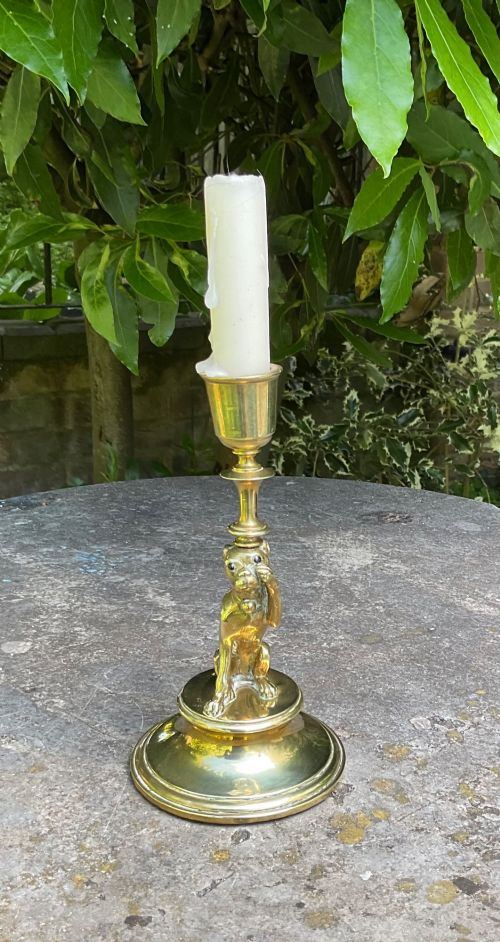
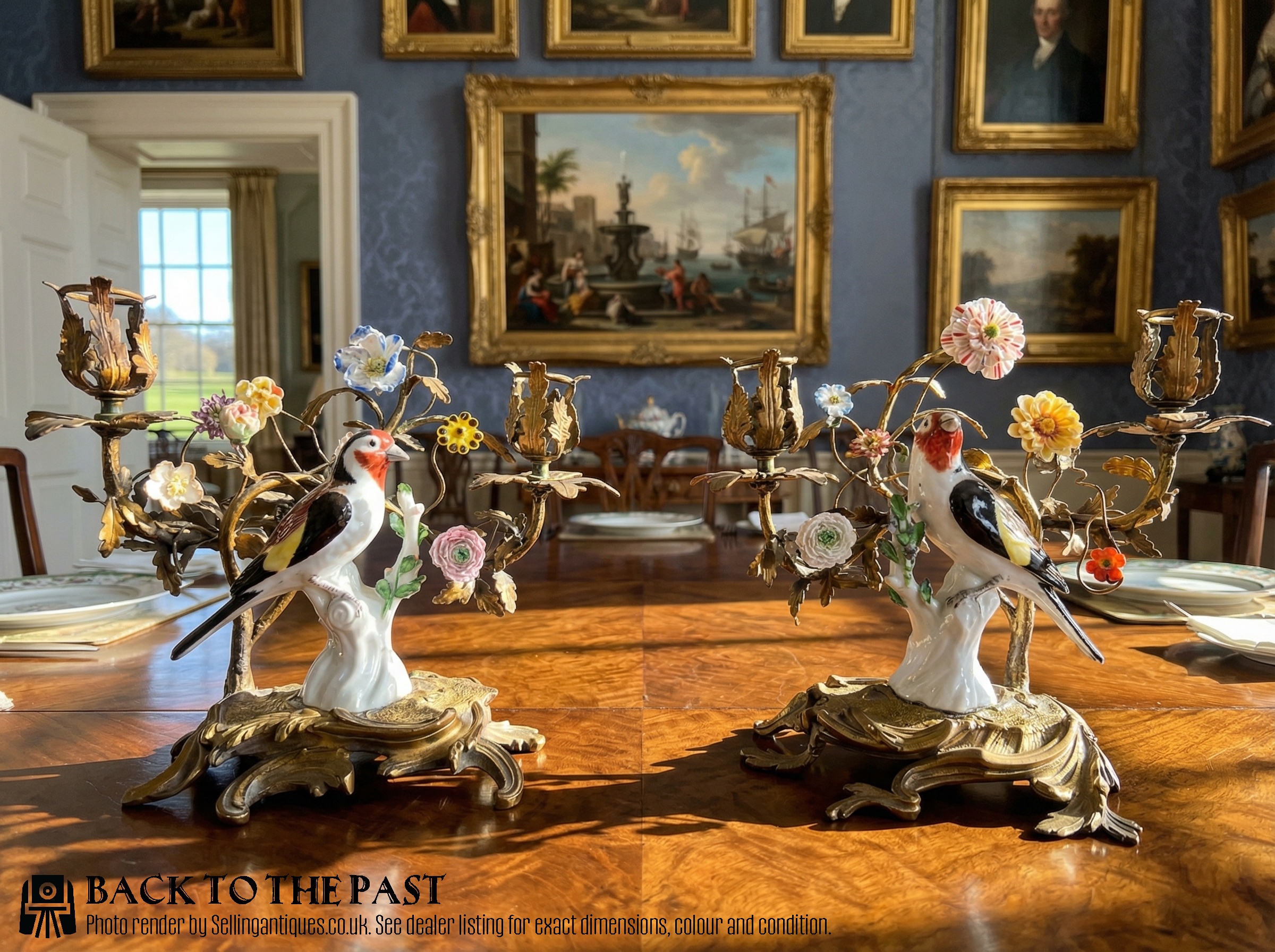
Makers and designers from diverse stylistic backgrounds shaped these objects, incorporating motifs from French Empire, Regency, and Art Nouveau traditions. Pieces vary from simple domestic brass to elaborate gilt bronze and ormolu formations featuring squirrels, human figures, or architectural columns. Buyers select these items for their historical presence and decorative illumination.
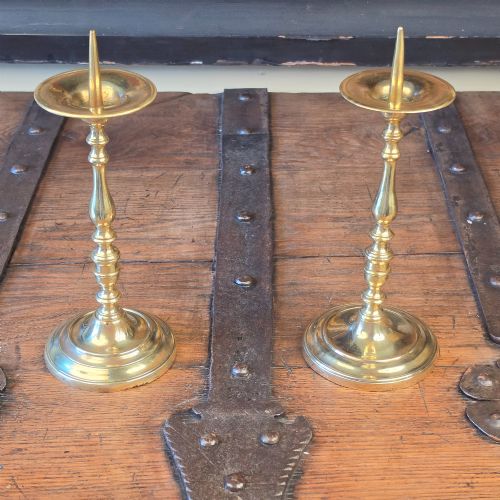
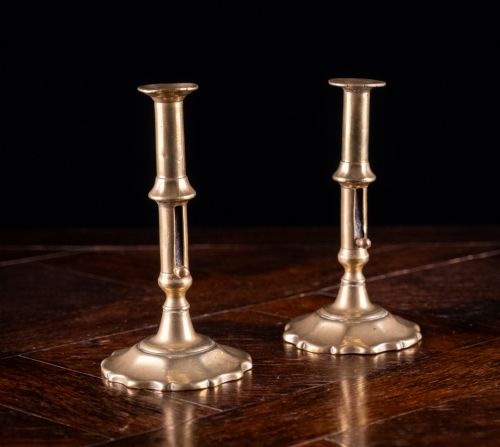
The inventory spans multiple centuries, with significant representation from nineteenth-century Victorian workshops and eighteenth-century Venetian studios. Items often arrive in pairs, serving symmetry on mantlepieces and dining tables. Structural configurations include standard sockets, side ejectors, and pricket spikes designed to secure candles firmly.
Materials and construction methods
Articles in this category rely primarily on brass, bronze, and copper-based alloys, often enhanced with ormolu or gilding to achieve a rich gold surface. Cast brass and seamed bronze techniques allow workshops to produce both hollow tubular columns and solid figural sculptures. Patinated metal and patinated bronze treatments provide contrasting dark surfaces against polished gold highlights.
Manufacturing methods involve casting molten metal in moulds, followed by chasing, turning on a lathe, and hand-finishing details such as campana sconces and square bases. Articulated components and adjustable shades demonstrate advanced mechanical assembly in later nineteenth-century pieces. Marble elements occasionally integrate with bronze and ormolu to add weight and colour contrast to the base.
Gold Brass Candle Stands Retail Price Guide 2026
Typical asking prices for gold brass candle stands among the pieces listed under this phrase on Sellingantiques today, from the lower quarter to the upper quarter. They describe what is for sale here now, not the wider market.
Listings feature items spanning the eighteenth, nineteenth, and early twentieth centuries in brass, bronze, and gilt finishes.
Distinctions in quality and execution
Superior examples exhibit crisp casting detail where sculptural elements like foliage, figures, and architectural fluting remain sharp and defined. Lesser items show softened edges and smoothed ornamentation resulting from worn moulds or hasty finishing work. The weight and gauge of the metal also dictate quality, as heavier castings provide greater stability and durability.
The refinement of the surface treatment separates standard production from high-end items, particularly in the application of mercury gilding or ormolu. Finer pieces demonstrate meticulous hand-chasing after casting to sharpen details that chemical cleaning might otherwise diminish. Original components, matching parts, and cohesive pairing further distinguish superior antiques from assembled or altered pieces.
J.T. & Co·Abel Landry·AFC
The Gold Brass Candle Stands Glossary
- Ormolu
- Finely ground high-carat gold applied to a bronze base using a mercury amalgamation process. This technique creates a durable golden finish seen on decorative pieces from the eighteenth and nineteenth centuries.
- Pricket
- A sharp metal spike located in the centre of a drip pan designed to hold a candle securely in place. This form appears frequently on ecclesiastical and older ecclesiastical-style pieces.
- Ejector
- A mechanical internal slide operated via a side lever to push remaining candle stubs out of the socket. This practical addition appears on domestic Georgian and Victorian brass examples.
- Gilt Bronze
- Bronze alloy treated with a gold leaf or chemical gilding layer to simulate solid gold. The method provides deep lustre while maintaining the structural strength of bronze.
Gold Brass Candle Stands: Frequently Asked Questions
How do I clean antique brass?
Maintenance requires gentle dusting with a soft cloth to preserve existing patination and finish.
Harsh chemical polishes should be avoided because they strip away historical surface layers and reduce the value of the metal.
Were these used for lighting?
These items served as primary light sources in homes and churches before the invention of electric lighting.
Candles provided illumination for dining, reading, and evening gatherings in public and private spaces.
Can modern candles fit antique stands?
Socket sizes vary across historical periods, meaning standard modern candles may require trimming or a fitted adapter.
Checking the inner diameter of the campana or cup ensures proper stability during use.