



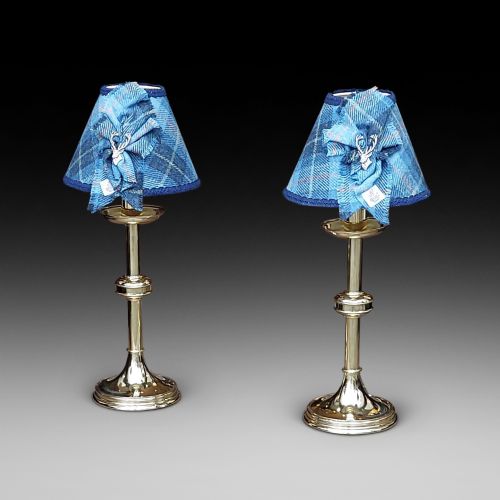


Ecclesiastical Brass Candle Stands
These ecclesiastical brass candle stands bring solemn ritual and monumental weight into domestic interiors.
Ecclesiastical Brass Candle Stands
Ecclesiastical brass candle stands comprise heavy altar candlesticks, pricket stands, and floor-standing church candle holders designed for religious spaces. When you search for ecclesiastical brass candle stands, you encounter robust altar furnishings that transitioned from houses of worship into private collections.
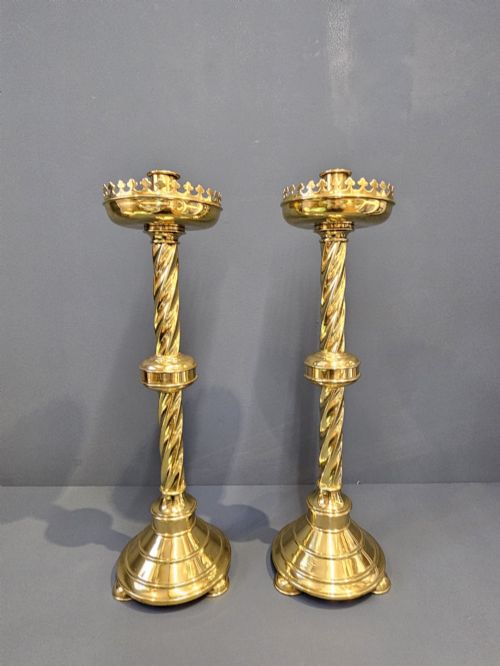
The inventory on this page relies heavily on Victorian and nineteenth-century examples, alongside occasional Georgian and early twentieth-century pieces. Pairs and sets of four dominate the selection, often featuring Gothic Revival ornamentation or French ecclesiastical styling.
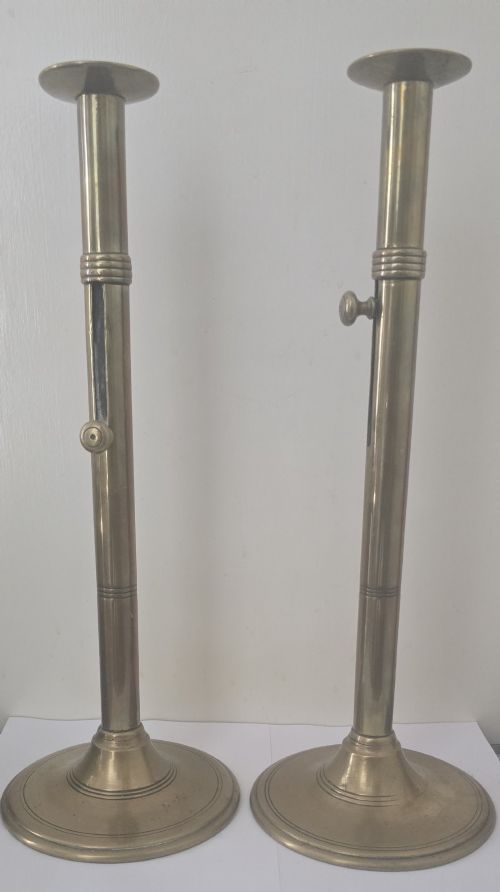
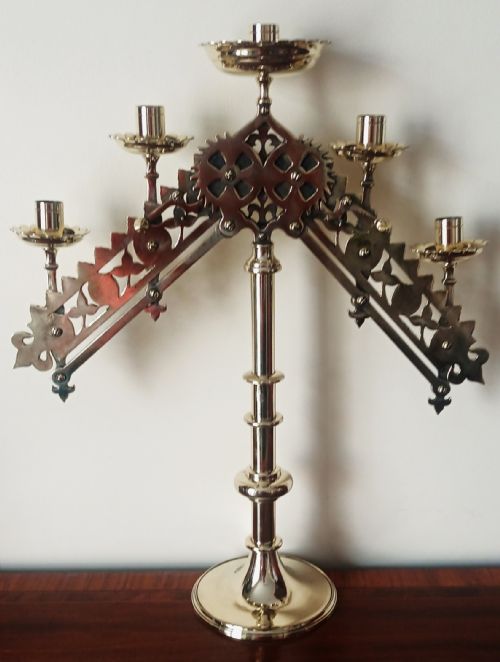
Forms range from standard table-top candlesticks with side ejectors to towering floor-standing candle holders and articulated candelabras. Brass serves as the primary medium, frequently complemented by bronze, iron, wood, and ebonised details.
How They Were Made
Foundry casting formed the foundational technique for these heavy pieces, allowing makers to produce thick brass and bronze stems, drip pans, and wide circular bases. Molten metal poured into sand moulds captured intricate architectural mouldings and floral motifs.
Finishing work involved lathe turning for cylindrical shafts and manual chasing or engraving to sharpen the surface details of Gothic Revival ornamentation. Iron components and wooden elements were integrated structurally to support taller floor-standing designs.
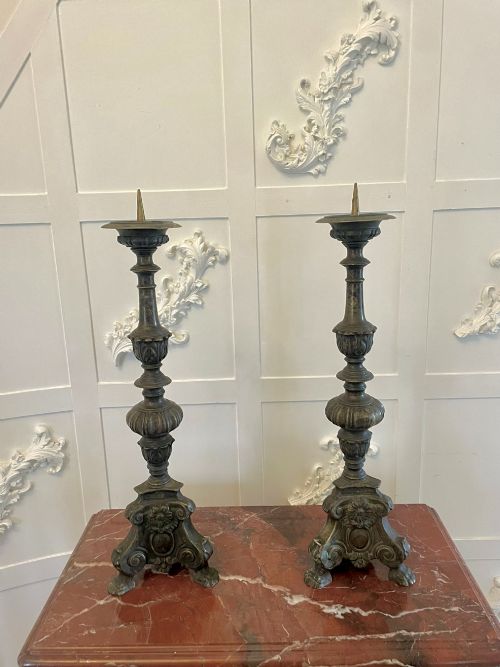
Pricket configurations required a sharp central spike forged to secure large church tapers, whilst standard socket candlesticks often incorporated functional elements such as side ejectors.
What Varies in Quality
Substance and scale dictate the tier of a piece, separating hollow domestic adaptations from monumental church-grade metalwork cast with thick gauge walls. Heavy cast sections ensure structural stability, particularly on tall floor-standing models and large sets of four.
The crispness of chased detailing defines superior execution, where gothic tracery and moulded collars remain sharp rather than softened by excessive polishing. Original patination and the integrity of structural joins preserve the historic character of the metal.
T Thomason & Co
The Ecclesiastical Brass Candle Stands Glossary
- Pricket
- A sharp metal spike on a candlestick designed to impale the base of a candle rather than fit inside a socket. This method was standard for large altar candles.
- Gothic Revival
- An architectural and decorative style popular during the nineteenth century that revived medieval forms, pointed arches, and ecclesiastical motifs. It heavily influences Victorian church metalwork.
- Candelabra
- A branched candlestick holding multiple lights from a single base. Articulated versions allow the arms to move or adjust.
- Side Ejector
- A small lever or mechanism incorporated into the candle socket to push out the remaining stub of wax. This feature appears on certain domestic and ecclesiastical brass pieces.
- Ebonised Wood
- Timber treated with a dark finish to resemble ebony. It frequently provides contrasting structural elements in nineteenth-century metal stands.
Ecclesiastical Brass Candle Stands: Frequently Asked Questions
What is a pricket candlestick?
A pricket candlestick uses a sharp metal spike at the top to hold the candle in place instead of a traditional hollow socket. This design originated in ecclesiastical settings where large wax tapers required secure mounting during services.
Today, these stands accommodate wide pillar candles safely, making them popular focal points for fireplace hearths or dining tables.
How do I date a brass candle stand?
Dating relies on stylistic clues such as Gothic Revival architectural motifs, manufacturing techniques like sand casting marks, and material combinations including ebonised wood or iron components. Nineteenth-century examples often display heavy cast proportions and distinct ecclesiastical styling.
Comparing base construction and patination helps distinguish Victorian church metalwork from twentieth-century reproductions or domestic adaptations.
Were these used in homes?
Most of these pieces originated in churches, chapels, and cathedrals as altar furnishings, standing floor holders, or processional lights. Their robust scale and religious ornamentation reflect their primary liturgical function.
Collectors later brought them into domestic interiors, where their monumental height and architectural presence suit large living spaces and period properties.
How should I clean antique brass?
Antique brass benefits from gentle dusting with a soft cloth to preserve the aged surface and dark patination accumulated over generations. Aggressive metal polishes remove historic character and strip away the warm tones valued by collectors.
Leaving the surface undisturbed maintains the authentic appearance of nineteenth-century church metalwork.