






Polished Brass Altar Candlesticks
Polished brass altar candlesticks are ecclesiastical and domestic lights made in Victorian, 19th Century and 18th Century styles that bring height and metallic warmth to a room.
Polished Brass Altar Candlesticks
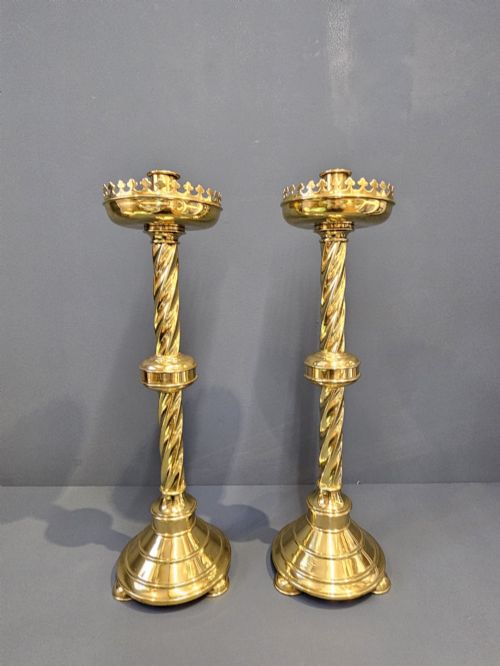
When you search for polished brass altar candlesticks, you encounter tall ecclesiastical lighting designed for churches and chapels alongside domestic pieces inspired by church metalwork. These objects range from pairs of large Victorian church candlesticks to tall pieces from around nineteen hundred and nineteen ten.
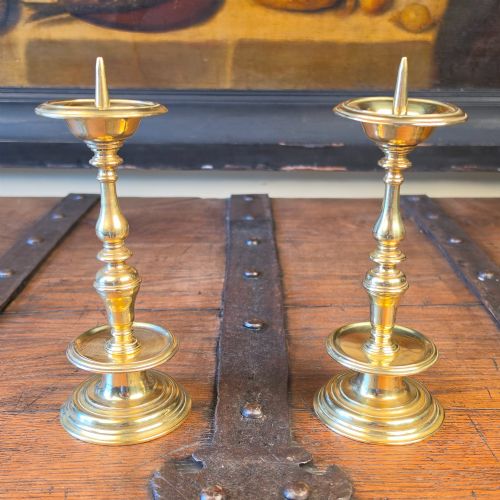
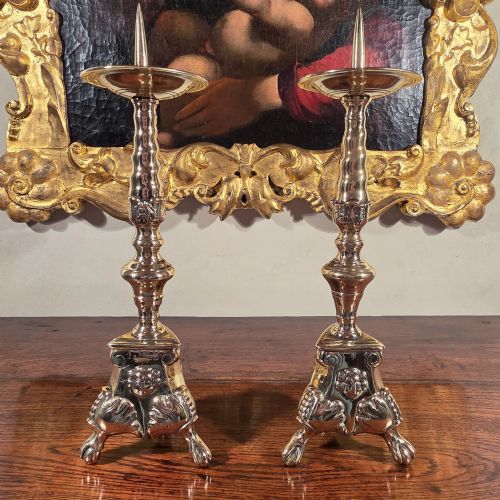
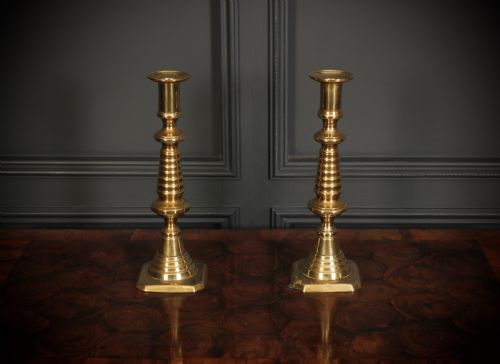
The selection here includes pairs and sets of four, featuring styles such as Gothic Revival, Baroque, Art Deco, and Arts and Crafts. You will find standard socket candlesticks alongside pricket candlesticks designed to hold candles on a spiked spike.
Originating from the eighteenth century, nineteenth century, and early twentieth century, these pieces display the varied proportions and ornamentation typical of Victorian and Edwardian church brassware. Most items presented on this page are substantial pairs designed to command attention on a mantelpiece or sideboard.
How they were made
The primary material recorded across these listings is brass, occasionally complemented by enamel and hardwood components for structural or decorative effect. Brass components were cast in sections and turned on lathes before being polished to a bright finish.
Construction methods involve heavy metal casting to ensure stability for tall stems, often requiring multiple weighted parts joined securely together. Pricket variants incorporate spiked drip pans, while socket versions utilise shaped cups to secure the candle.
Listings span periods from the eighteenth century through to the Art Deco era, with a strong concentration of Victorian and nineteen-hundred church brassware.
What varies in quality
Quality in these candlesticks rests upon the weight of the metal casting and the crispness of the turned mouldings along the stem. Heavy, solid construction distinguishes superior ecclesiastical examples from lighter domestic interpretations.
The integration of decorative elements such as enamel work or secondary materials like hardwood determines the distinction between standard production and more ambitious design styles like Arts and Crafts or Gothic Revival.
T Thomason & Co
The Polished Brass Altar Candlesticks Glossary
- Pricket
- A candlestick featuring a sharp metal spike at the top that pushes directly into the base of the candle. This form is traditional in ecclesiastical settings.
- Gothic Revival
- An architectural and decorative style popular during the nineteenth century that draws upon medieval pointed arches and rich ornamentation. It heavily influences Victorian church brassware.
- Ecclesiastical
- Relating to the Christian Church or its clergy, describing items manufactured specifically for use in places of worship. Many candlesticks on this page share these liturgical origins.
- Baroque
- A flamboyant artistic style originating in the seventeenth century characterised by grand movement and elaborate detail. Later revivals borrow these robust, theatrical contours.
Polished Brass Altar Candlesticks: Frequently Asked Questions
How do I clean polished brass candlesticks?
Maintenance involves gentle dusting and occasional cleaning with a mild brass cleaner to preserve the reflective surface without removing the underlying character of the metal.
Avoid abrasive compounds that can scratch the polished finish and alter the historic appearance of the brass over time.
Were these used in homes?
While many of these tall candlesticks originated in churches and chapels as altar furnishings, large domestic interiors of the Victorian period frequently adopted ecclesiastical designs for decorative effect.
Their substantial height and formal styling make them well-suited for placement on heavy sideboards, altars, or large fireplaces.
What is a pricket candlestick?
A pricket candlestick uses a vertical spike instead of a traditional socket to secure the candle in place during burning. This design is standard in church environments where large wax candles are utilised.
When buying a pricket candlestick, ensure you have matching candles with recessed bases or use appropriate followers to catch melting wax.
How do I date a brass candlestick?
Dating relies on observing stylistic markers such as the proportions of the stem, the profile of the base, and manufacturing techniques like casting marks or hand-turning striations. Victorian and Gothic Revival pieces display distinct decorative vocabularies compared to earlier eighteenth-century or later Art Deco examples.
Comparing the weight, assembly method, and specific period motifs helps clarify the likely decade of production.