




Antique Brass Pricket Stands
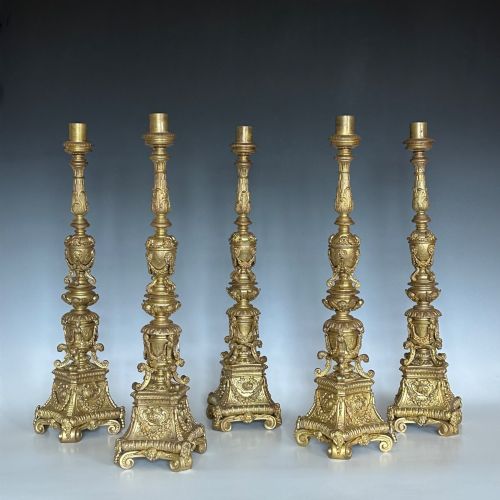
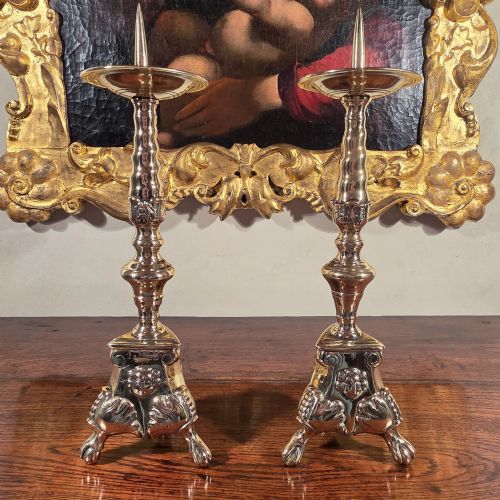
These antique brass pricket stands bring centuries of ecclesiastical and domestic lighting tradition into a room through stout spikes designed to hold large candles.
Antique Brass Pricket Stands
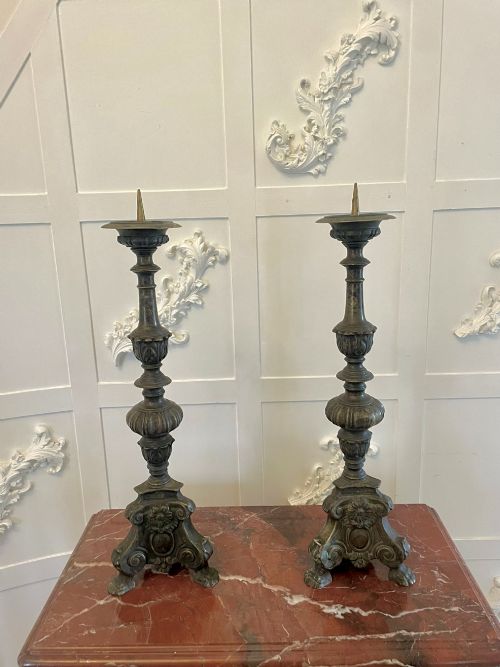
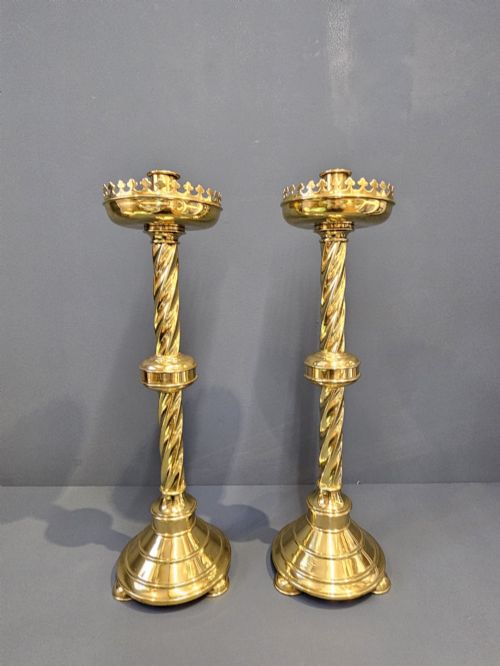
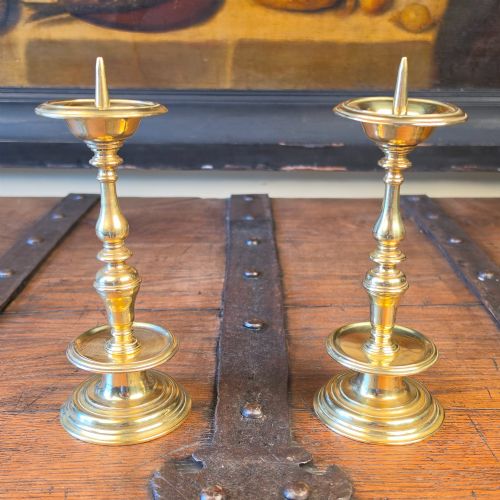
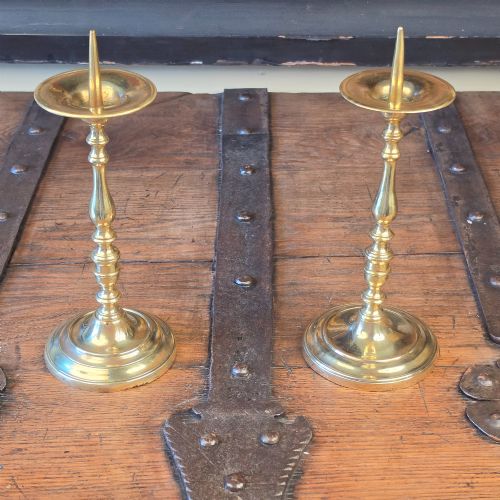
When you search for antique brass pricket stands, you encounter heavy altar furnishings and floor-standing candle holders designed with an upright spike rather than a socket. The selection spans domestic revivals and church pieces, moving from seventeenth-century Flemish origins through eighteenth-century Venetian work to Victorian Gothic interpretations.
You meet pairs and occasional larger sets predominantly cast from brass, bronze, and gilt bronze, often standing alongside wrought iron elements. The forms range from modest tabletop candlesticks to tall floor-standing holders intended for ecclesiastical spaces.
Stylistic influences stretch across Gothic Revival, Baroque revivals, Amsterdam School designs, and Rococo curves. The Victorian period contributes heavily to the current choice, alongside earlier Continental workmanship.
Materials and construction
Makers utilised casting techniques in brass and bronze to achieve the substantial stems and drip pans characteristic of these lighting pieces. Molten metal poured into moulds created the heavy structural components required to support large altar candles safely.
Wrought iron and patinated metal frequently appear alongside brass, particularly in Amsterdam School and transitional Dutch pieces. Hand-forging combined with turned brass elements produced sturdy hybrids designed for heavy daily use.
These stands carry the quiet scars of centuries of altar smoke and melted wax, surviving quiet chapels and grand dining rooms alike.
Assessing quality and proportion
The distinction between ordinary production and superior craftsmanship rests in the weight of the metal and the crispness of the cast ornamentation. Heavier pieces with deep, clean relief in the nodes and bases demonstrate careful foundry work.
Proportion and integrity of the original spike determine the standing of a piece within its type. Intact components and balanced proportions reflect the original maker's intent without later alteration.
The Antique Brass Pricket Stands Glossary
- Pricket
- An upright metal spike on a candlestick designed to impale the base of a candle to hold it secure. This method predates the common socket candlestick.
- Gilt bronze
- Bronze that has been treated with a thin layer of gold or gold leaf to give a rich surface finish. It appears frequently on finer decorative items.
- Ormolu
- Finely ground gold-mercury amalgam applied to a bronze base, providing a brilliant golden sheen. The technique demands immense skill from the metalworker.
- Amsterdam School
- An early twentieth-century architectural and design movement known for expressive forms and traditional materials. Pieces from this school often blend brass and iron.
- Patinated metal
- Metal surface altered by age, oxidation, or chemical treatment to produce a distinct toned finish. This coloration develops naturally through handling and environment over centuries.
Antique Brass Pricket Stands: Frequently Asked Questions
What is a pricket stand?
A pricket stand is a candle holder featuring a sharp vertical spike that secures the base of a thick candle. They were historically used in churches and large domestic settings before socket candlesticks became common.
Today, they serve as striking decorative objects or functional candle holders for substantial pillars, bringing historic weight and presence to an interior.
How do I date an antique brass pricket stand?
Dating relies on examining the casting methods, wear patterns, stylistic markers, and the composition of the metal alloys. Earlier pieces from the seventeenth century often show heavier hand-finishing and distinct patination compared to later Victorian revivals.
Comparing the form against documented ecclesiastical and domestic designs helps narrow the period of manufacture.
Were these stands only used in churches?
While many surviving examples originated in European churches and chapels, similar heavy pricket stands were made for large secular halls and domestic residences. Ecclesiastical pieces generally feature larger proportions and sturdier bases to handle continuous burning.
Both church and domestic versions share the central characteristic of the upright metal spike.
How do I clean an old brass pricket stand?
Maintenance should be minimal to preserve the aged surface and historical character built up over centuries. Gentle dusting with a soft cloth is usually sufficient for regular care.
Avoid aggressive polishing compounds that strip away the natural patination and historical depth of the metal.