




Traditional Brass Candle Sticks
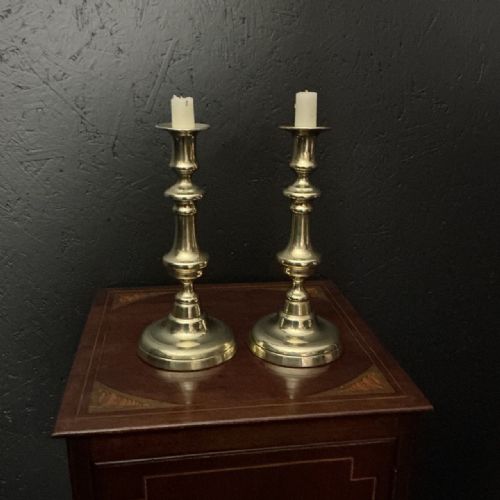
Traditional brass candle sticks offer solid metal weight and bright warm reflections, bringing period character directly to a dining table or desk.
Traditional Brass Candle Sticks
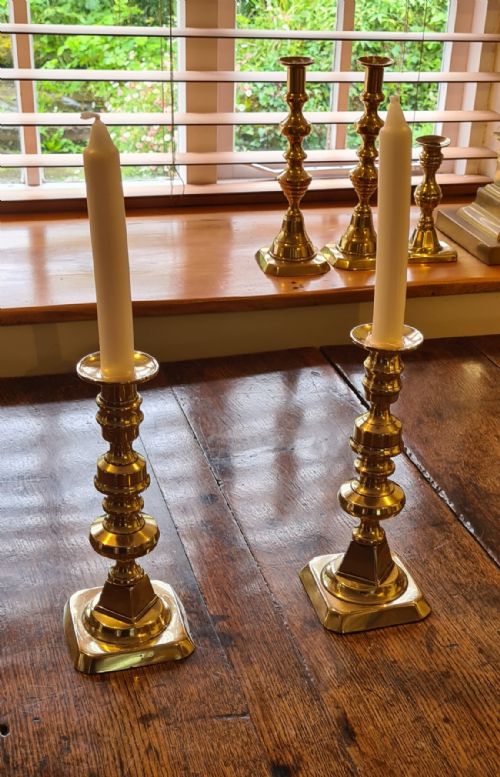
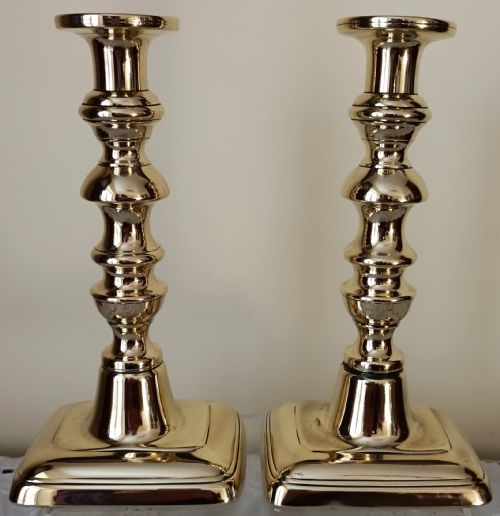
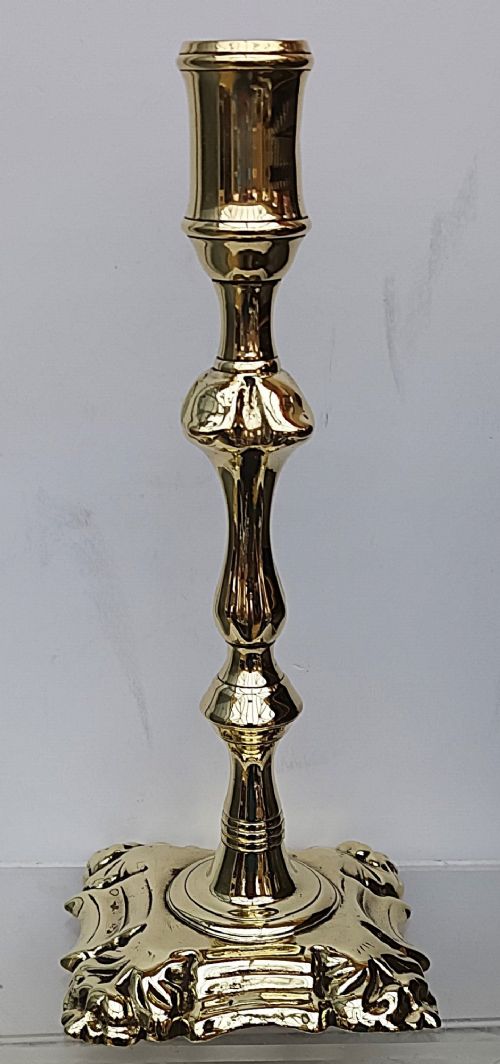
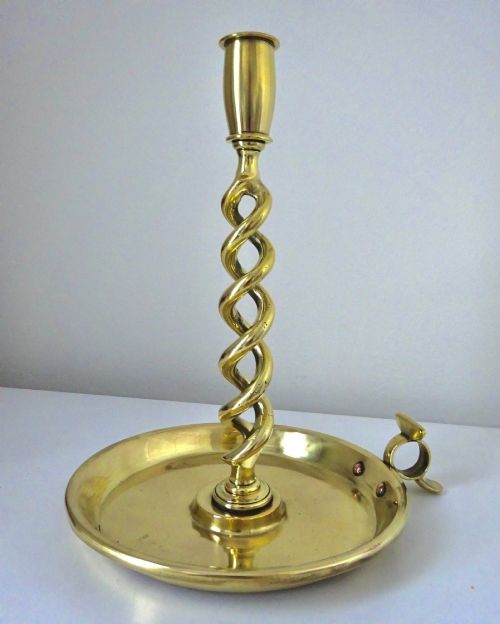
Traditional brass candle sticks are functional lighting accessories designed to support wax tapers securely on surfaces. Buyers seeking traditional brass candle sticks encounter specimens spanning the eighteenth, nineteenth, and early twentieth centuries, including Victorian and Georgian periods. Formats range from standard tapered shafts to specialised desk lamps, student lamps, and tall twisted columns.
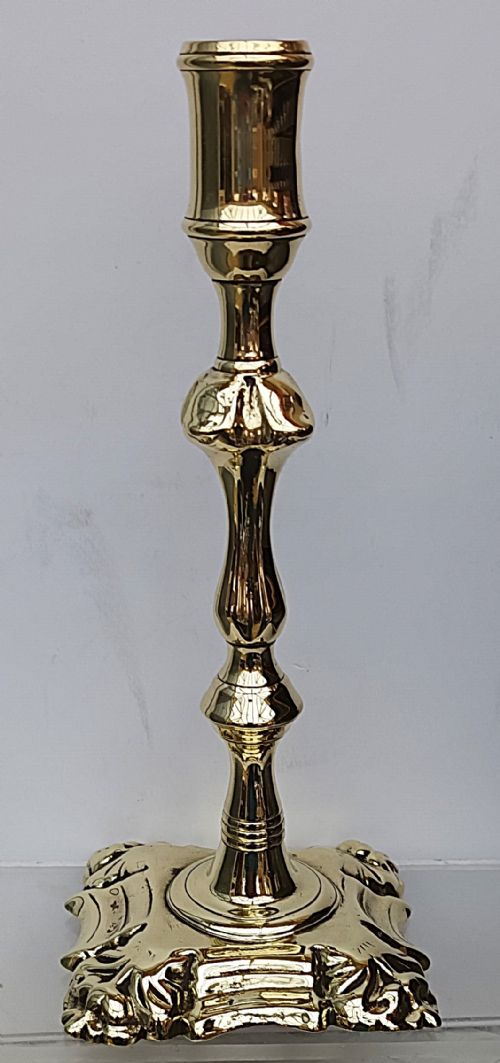
Most examples appear as matched pairs, though individual items also occur. Alongside solid metal construction, variations incorporate turned mahogany, oak, and fitted metal trays with carrying handles. Stylistic references encompass George II, seventeenth-century Baroque, and Jacobean revival designs executed across various British workshops.
Materials and construction methods
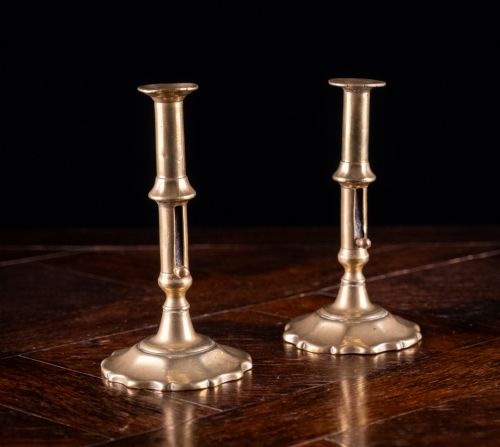
Makers utilised cast brass as the primary metal, forming components through traditional foundry techniques such as sand casting or lost-wax methods. Mid-eighteenth-century examples frequently employ seamed construction methods where cylindrical shafts join bases via internal threading or soldered joints. Ejector mechanisms incorporated internal springs or sliding plates to push out remaining wax stubs cleanly.
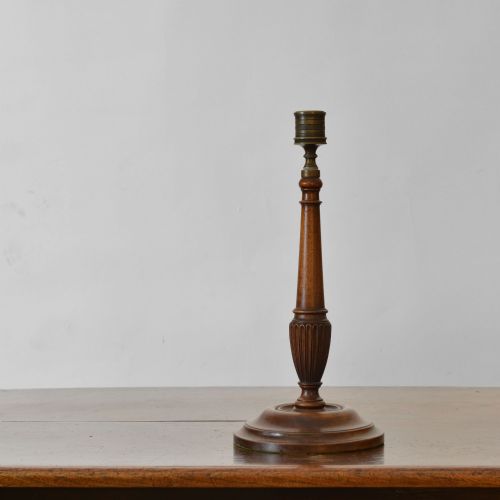
Secondary materials introduce contrasting textures into the designs. Turners shaped solid mahogany and oak blocks into cylindrical or barley-twist stems, often mounting brass sconces at the apex to hold the taper. Individual desk lamps incorporate additional metal implements and fitted trays for operational convenience.
Functional variations include desk lamps with complete implements, tavern forms, and items stamped with Jubilee registry marks.
Distinctions in standard and finish
Quality differences emerge through the precision of the turning and the crispness of cast decorative details like hexagonal bases and baluster profiles. Finer specimens display well-proportioned symmetry and smooth metal surfaces without excessive pitting or heavy casting flaws. Maker stamps and proprietary names pressed into the base metal elevate historical interest.
The integrity of mechanical elements such as functional ejector levers or fitted trays dictates technical merit. Solid timber components paired with brass show superior craftsmanship when joinery remains tight and finishes display balanced ageing. Plain utilitarian items contrast with heavily moulded pairs designed for formal reception rooms.
J.T. & Co·James Clews
The Traditional Brass Candle Sticks Glossary
- Ejector
- A mechanical device fitted inside the stem that pushes out remaining candle wax. This mechanism uses an internal push rod operated via a small side slide.
- Baluster
- A moulded architectural column shape featuring a swollen lower portion tapering upward. This profile appears frequently on seventeenth and eighteenth-century stems.
- Sconce
- The metal cup or nozzle at the top of the shaft designed to catch dripping wax and hold the candle firmly. It protects the main structure from direct heat.
- Barley twist
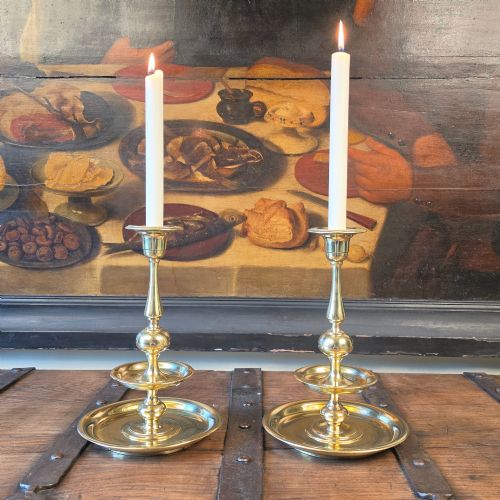
- A helical spiral carved into wooden stems or cast directly into metal shafts. This decorative technique creates dynamic diagonal lines catching ambient light.
- Tavern candlestick
- A heavy, stable lighting form built for commercial public house use. These pieces feature wide bases to prevent accidental tipping on busy tables.
Traditional Brass Candle Sticks: Frequently Asked Questions
How do I clean antique brass?
Clean surfaces gently using a soft cloth to remove dust and accumulated grime. Avoid aggressive chemical polishes that strip away historical patination.
Preserving the dark oxidation accumulated over centuries maintains the visual depth collectors value. Light dusting with a dry brush keeps intricate cast details visible.
What is an ejector candlestick?
An ejector model contains an internal sliding mechanism operated by a thumb lever on the side. Pushing the lever upward expels the remaining wax stump easily.
This practical innovation prevented users from digging out melted wax with knives. The mechanism remains a sought-after feature among nineteenth-century examples.
How can I tell the period?
Examine the base construction, casting seams, and overall weight distribution to gauge the production era. Early eighteenth-century specimens often feature heavy hexagonal bases.
Later Victorian interpretations introduce twisted stems and stamped manufacturer names like James Clews. Comparing profiles against established stylistic periods confirms approximate dates.