


Polished Brass Candleholders
Polished brass candleholders bring warmth and period character to any room, offering a classic illumination style that collectors value.
What polished brass candleholders are
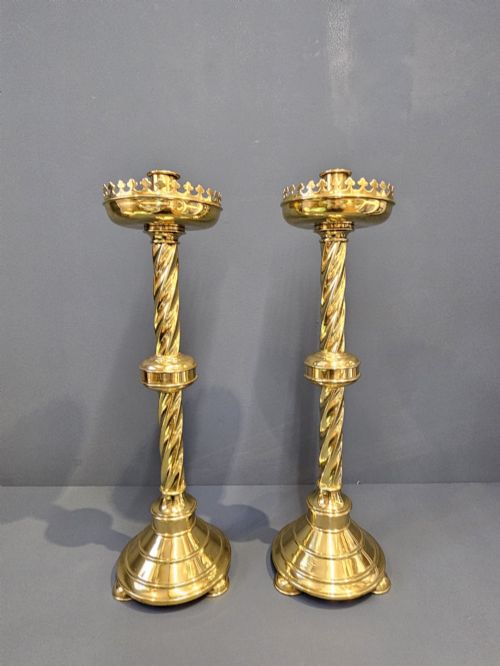
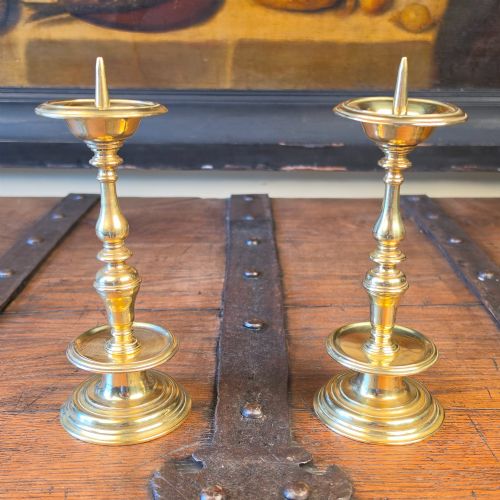
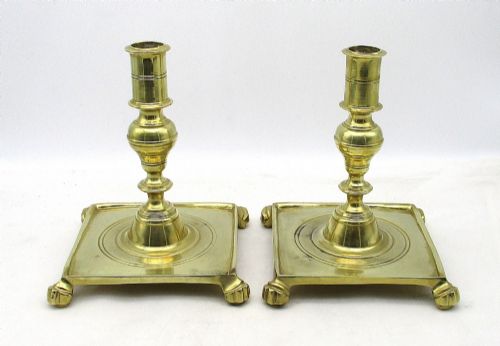
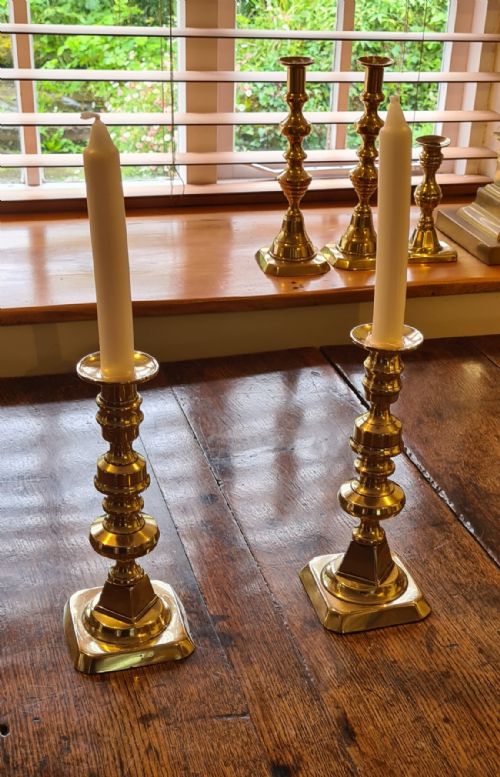
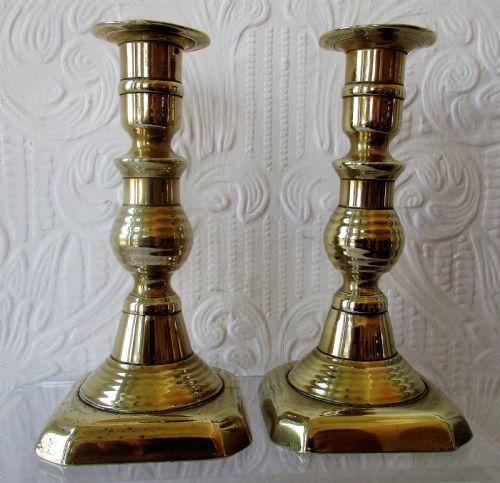
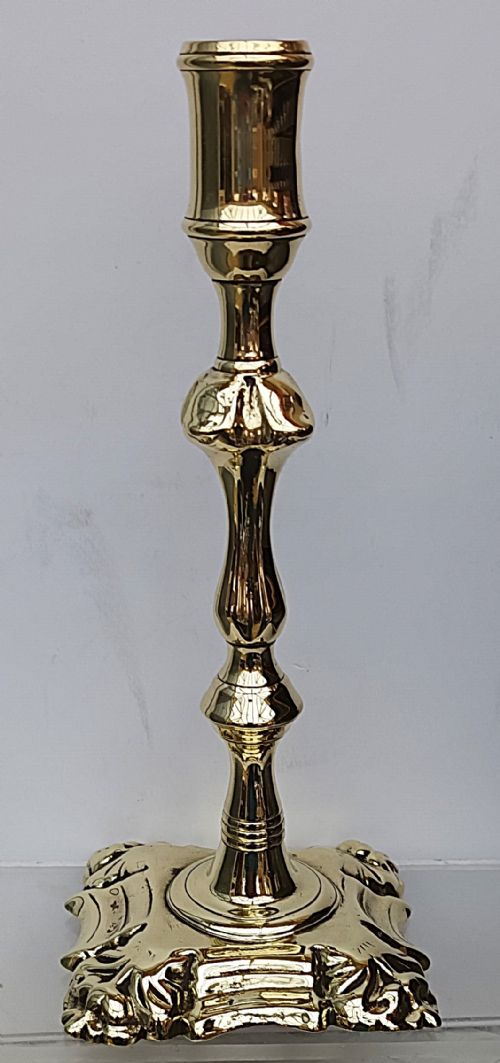
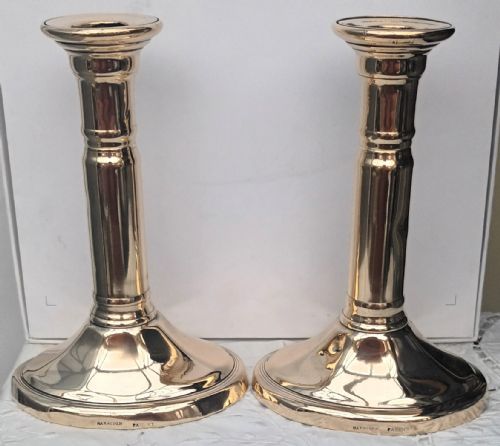
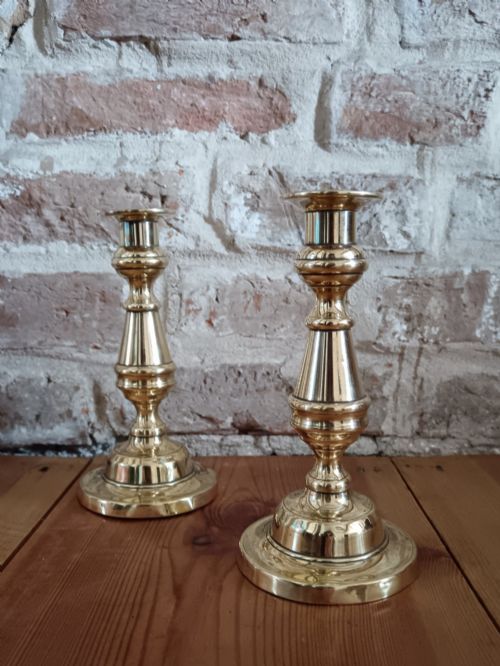
Polished brass candleholders encompass candlesticks originating primarily from the nineteenth century, including Victorian and late Georgian or Regency examples. These pieces range from small pairs executed in a seventeenth century Baroque style up to large Victorian formats.
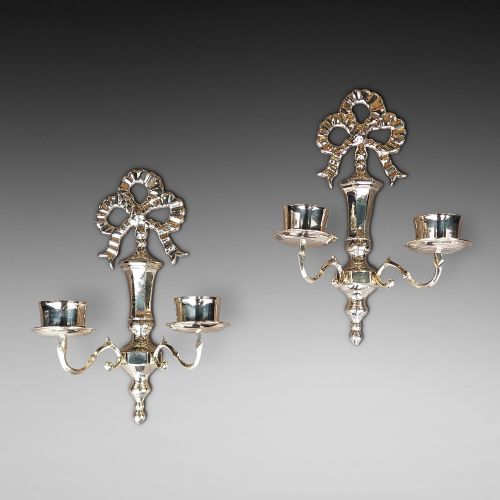
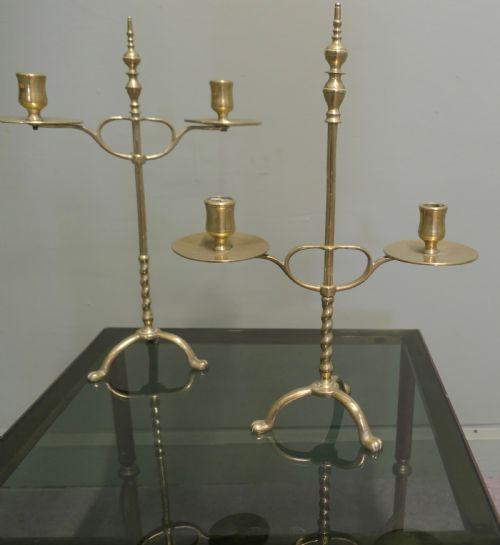
The objects listed on this page are strictly candlesticks rather than multi-branch candelabra. Buyers encounter English provincial and domestic forms designed to hold standard tallow or wax candles securely.
How they were made
Makers utilised solid brass as the sole material for these pieces, shaping them through traditional founding and turning methods. Individual components were cast separately before being joined together to form the complete candlestick.
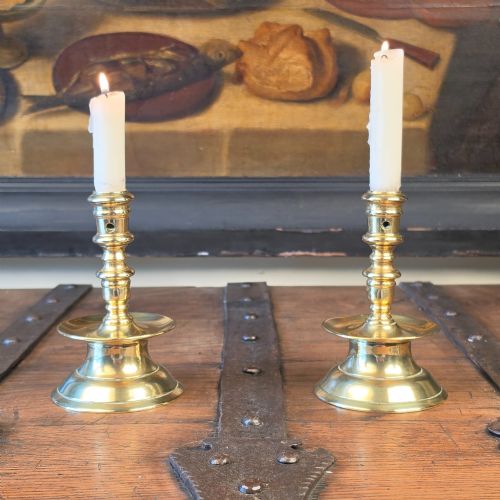
Certain nineteenth century variations incorporate mechanical elements, such as internal ejector mechanisms designed to lift spent candle stubs out of the socket. Final finishing involved polishing the metal surface to a bright, reflective sheen.
Retail Price Guide 2026
Typical UK retail prices for polished brass candleholders, calculated from the Sellingantiques database of over a million retail prices indexed since 2003. This retail price guide relies exclusively on Sellingantiques data; no external sources or auction records are used, so the figures do not describe the wider market.
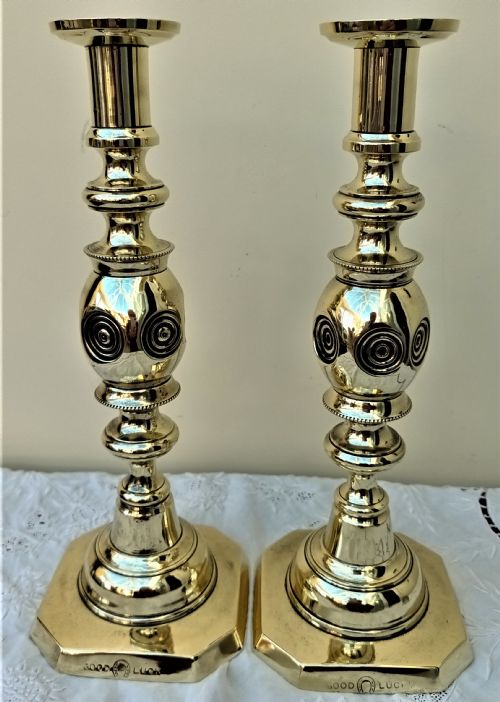
One Victorian pair carries the jaunty stamp Queen of Diamonds, proving that nineteenth century foundry workers appreciated a winning hand.
What varies in quality
Quality in these items rests upon the weight of the metal, the crispness of the turned mouldings, and the presence of maker marks or stamps. Substantial nineteenth century examples demonstrate heavier brass casting and more complex profile shaping than lighter domestic counterparts.
The distinction between standard production and superior work also lies in the proportion of the column and the stability of the base. Pieces featuring functional mechanical components like ejectors require greater precision in manufacturing.
The Polished Brass Candleholders Glossary
- Brass
- An alloy of copper and zinc used extensively for domestic metalwork throughout the nineteenth century. It takes a high polish and provides a durable structure for candlesticks.
- Ejector
- A mechanical device incorporated into the stem or socket to push out the remaining candle wax. This feature appears on late Georgian and Regency designs.
- Victorian
- The period spanning the reign of Queen Victoria, encompassing the majority of the candlesticks seen here. Items from this era reflect diverse historical revival styles.
- Baroque
- A theatrical, ornate design style originating in the seventeenth century. Nineteenth century makers occasionally referenced this aesthetic in smaller pairs of candlesticks.
Frequently Asked Questions
What periods do these candleholders date from?
The available selection dates primarily from the nineteenth century, including Victorian examples alongside late Georgian or Regency pieces. Some items adopt earlier stylistic influences such as seventeenth century Baroque.
Buyers will find that Victorian production dominates the current listings, spanning from the early decades through the late nineteenth century.
How do ejector mechanisms work?
An ejector mechanism uses an internal sliding slide operated by a small side button or lever. Pushing this lever upwards raises the base of the candle socket.
This practical addition allowed users to remove stubborn candle stubs without damaging the metal or burning their fingers.
Are these items sold individually or in pairs?
The pieces listed on this page are offered as pairs rather than single items. This symmetry suits traditional mantelpieces and dining tables.
Matching pairs share identical turning patterns, heights, and base designs from the same period of manufacture.