


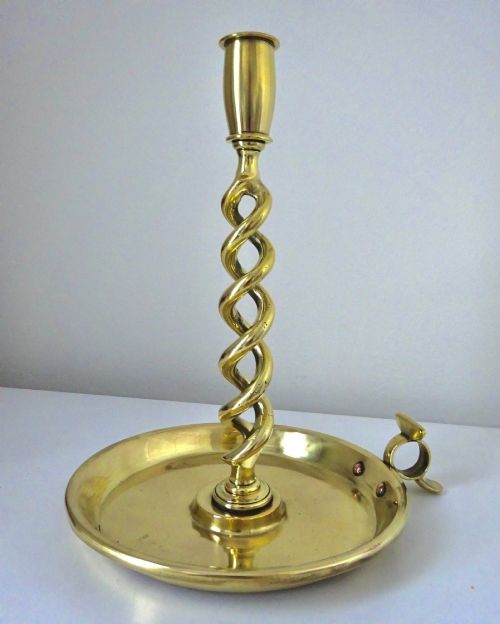

Yellow Brass Candlesticks
Yellow brass candlesticks bring a warm, metallic glow to a room, ranging from simple Georgian forms to ornate Victorian pairs.
Yellow Brass Candlesticks
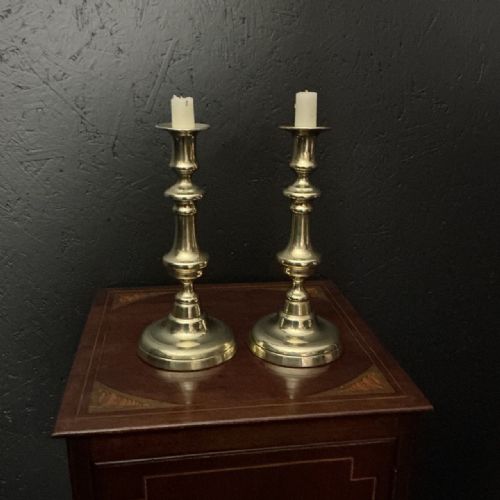
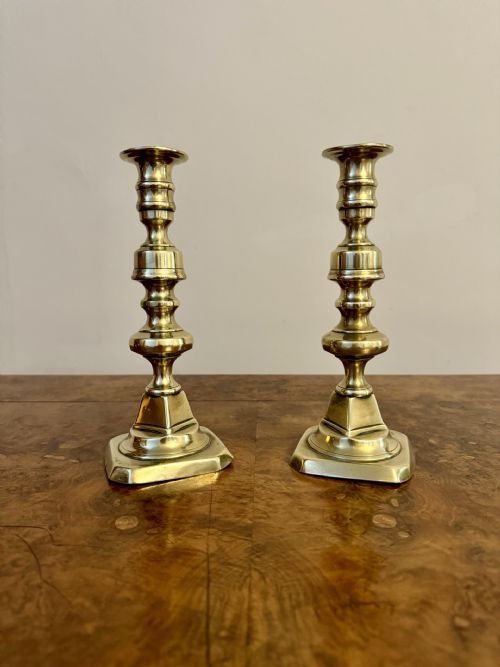
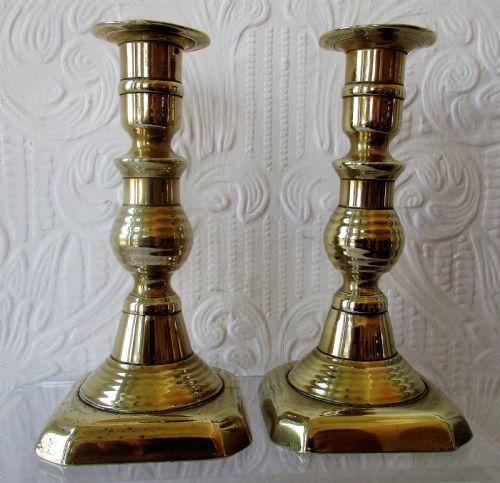
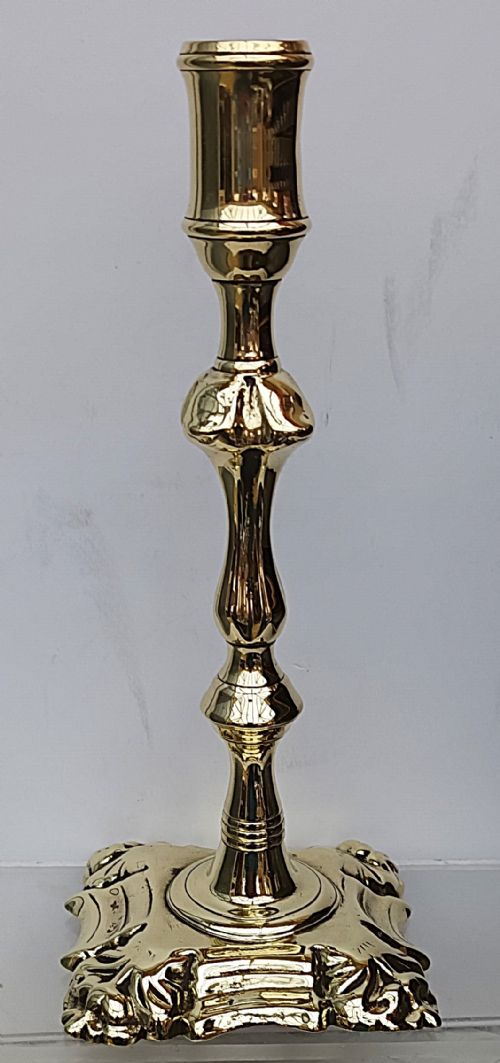
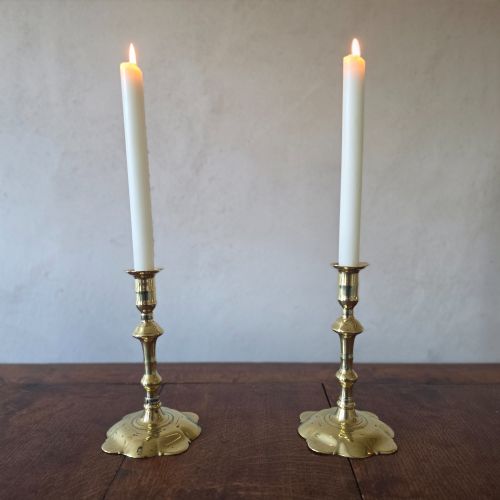
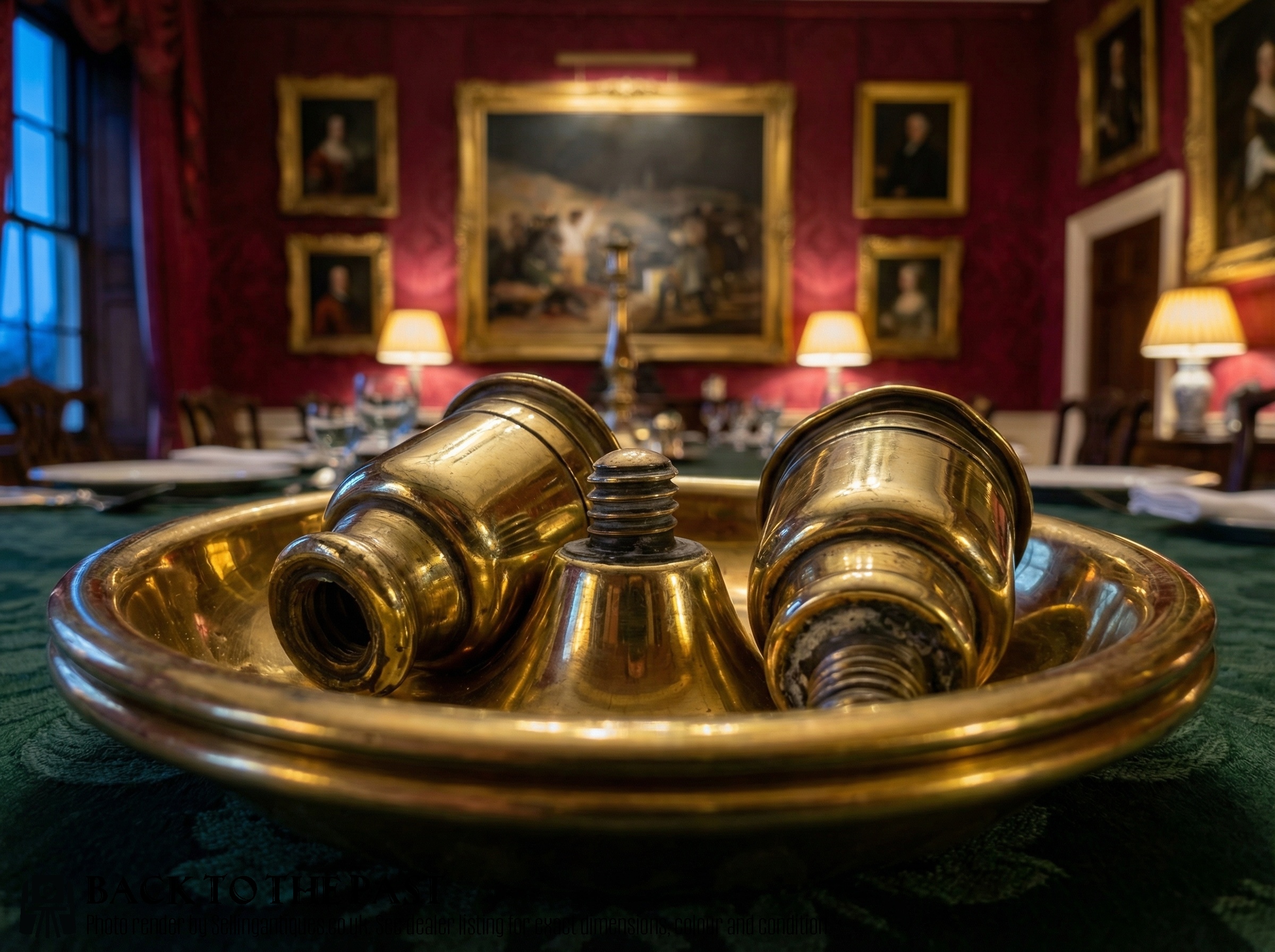
Yellow brass candlesticks encompass a broad range of domestic lighting accessories, from tall Georgian stems to compact chambersticks designed for carrying through a house. The selection here leans heavily toward nineteenth-century Victorian examples, alongside eighteenth-century items and Edwardian designs.
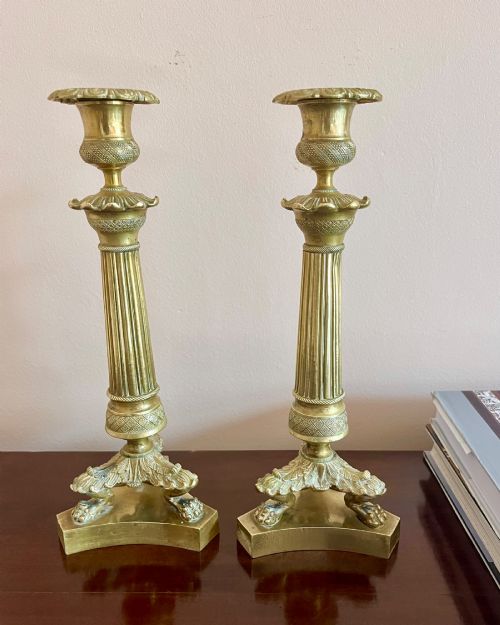
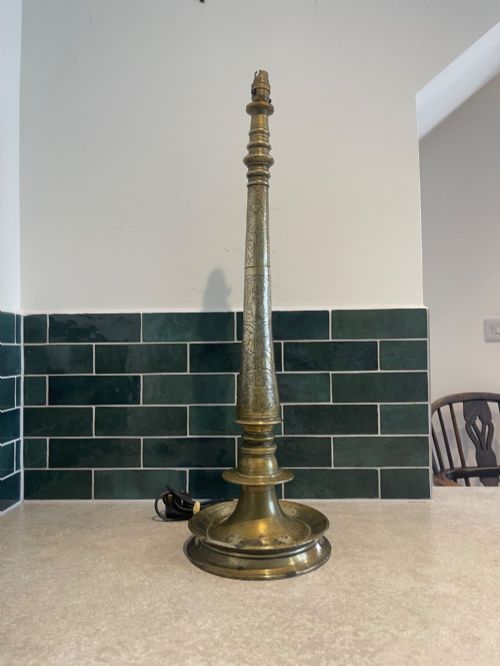
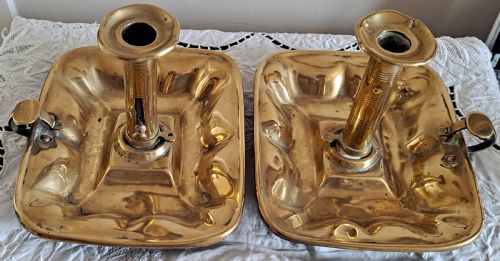
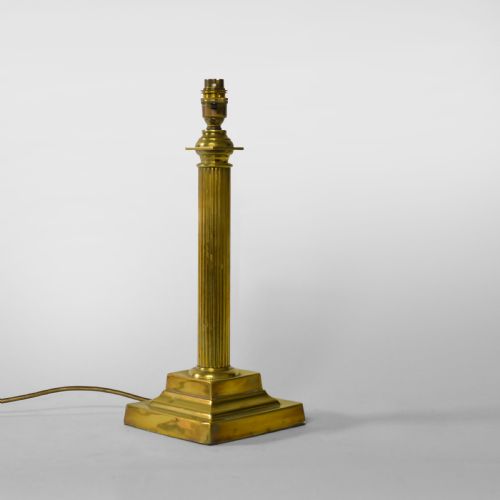
Buyers encounter various functional forms within this group, including ejector candlesticks with internal mechanisms to push out the remnant wax, paired altar candelabra, and occasional table lamps adapted from earlier standards. English and Dutch origins appear alongside Indian and French pieces, reflecting wide historical trade and domestic production.
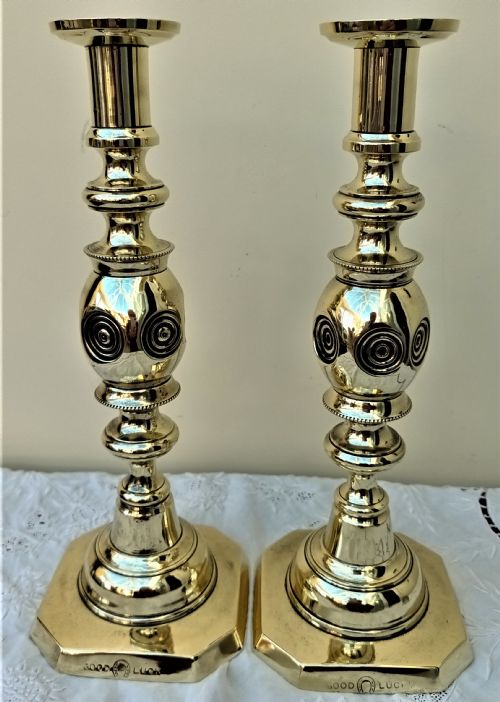
Stylistic influences span from Dutch Baroque and Empire revivals to Arts and Crafts interpretations. While standard pairs dominate, single sticks and specialised chambersticks such as Brighton buns also emerge in the listings.
How they were made
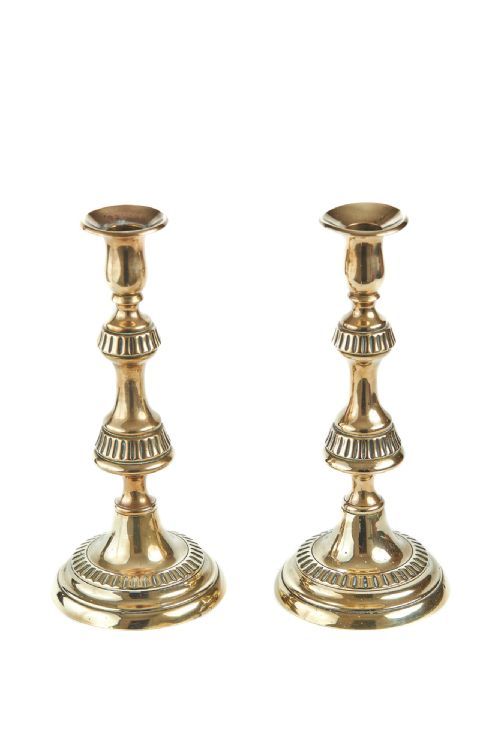
Makers utilised cast brass as the primary medium, often shaping columns in vase-shaped or ionic profiles through sand casting and subsequent lathe turning. The metal yields a distinct yellow tone that patinates richly over decades of handling.
Secondary elements incorporate materials like marble, glass, and fabric, particularly in pieces that bridge the transition toward oil lamps and early electrical lighting. Silver plate occasionally coats base metals on specific Victorian items, modifying the surface finish from raw brass to a reflective metallic sheen.
Yellow Brass Candlesticks Retail Price Guide 2026
Typical asking prices for yellow brass candlesticks among the pieces listed under this phrase on Sellingantiques today, from the lower quarter to the upper quarter. They describe what is for sale here now, not the wider market.
Listings span from the seventeenth-century Heemskerk style through Georgian and Victorian eras into early twentieth-century Edwardian designs.
What varies in quality
Construction heft and casting crispness dictate the distinction between standard utilitarian items and finer parlour pieces. Heavy, solid brass components with sharp relief on twisted columns or classical revival motifs demonstrate superior workshop execution.
Proportion and matching symmetry set pairs apart from assembled counterparts, where minor discrepancies in height or base diameter reveal separate origins. The presence of functional mechanisms, such as working ejector levers or fitted trays, elevates the utilitarian merit of individual chambersticks.
The Yellow Brass Candlesticks Glossary
- Chamberstick
- A low candlestick fitted with a handle and a shallow drip pan, designed for carrying through dark corridors at night.
- Ejector candlestick
- A type containing an internal push-rod mechanism that raises the remaining candle stub for easy removal.
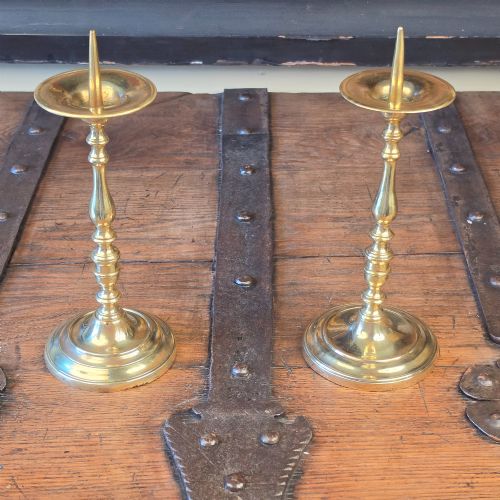
- Pricket candlestick
- A form featuring an upright metal spike upon which a wide candle is impaled, commonly found in ecclesiastical or revival settings.
- Brighton bun
- A compact, round chamberstick resembling a baker's bun, often manufactured in pairs for travel use.
- Ionic column
- A classical architectural column form featuring scroll capitals, frequently adapted for nineteenth-century pillar candlesticks and table lamps.
Yellow Brass Candlesticks: Frequently Asked Questions
What is an ejector candlestick?
An ejector candlestick incorporates an internal sliding mechanism operated by a small side lever. This device pushes the remaining wax candle upward to clear the socket.
Craftsmen introduced this feature in the eighteenth century to prevent burnt fingers and damage when extracting stubborn candle ends.
How do I clean brass candlesticks?
Cleaning historic brass requires a soft cloth and mild soapy water to remove surface dust while preserving the aged patina. Aggressive metal polishes strip the historic surface character that collectors value.
Gentle maintenance keeps the original yellow brass tone intact without erasing decades of handling marks.
Were these always sold in pairs?
Domestic candlesticks were traditionally manufactured and sold in matching pairs to flank mantelpieces or dining tables symmetrically. Single surviving pieces frequently result from accidental separation over centuries of use.
Pair completeness influences desirability among collectors seeking uniform displays.
How do I date an antique candlestick?
Dating relies on base construction, column profiles, and manufacturing seams that evolved from sand casting to machine lathe turning. Georgian examples often feature square or stepped bases, while Victorian pieces explore heavier classical revivals.
Comparing base weight and component assembly provides reliable clues to the period of origin.