





Heavy Brass Candlesticks
Heavy brass candlesticks are solid metal holders designed to anchor light securely, bringing substantial weight and period presence to a room.

What these pieces are
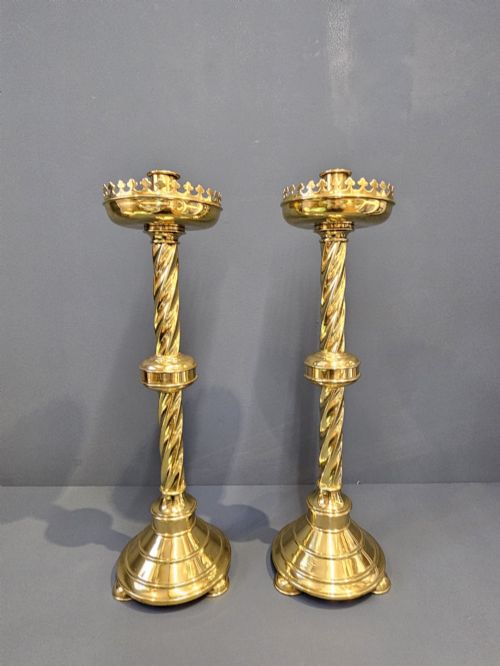
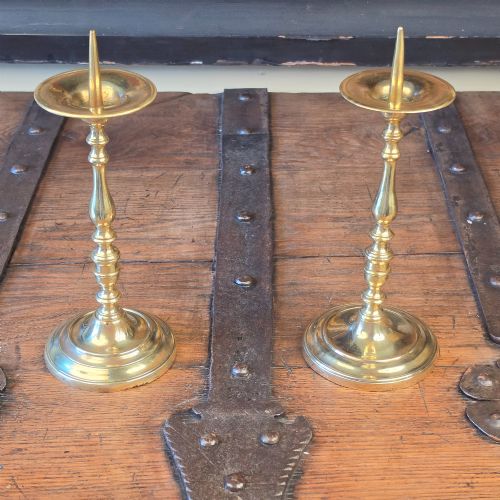
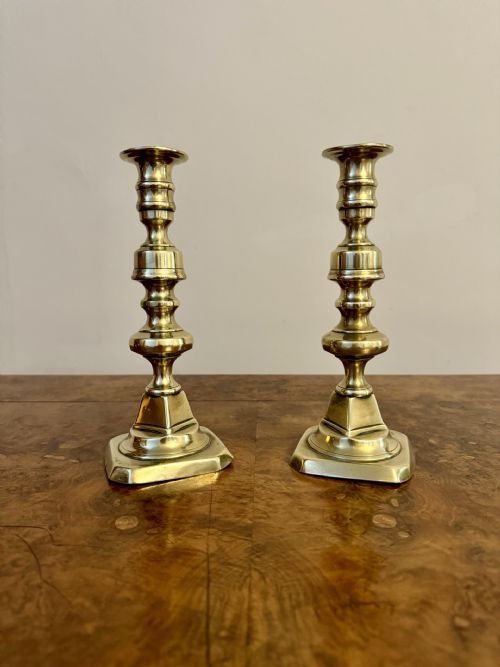
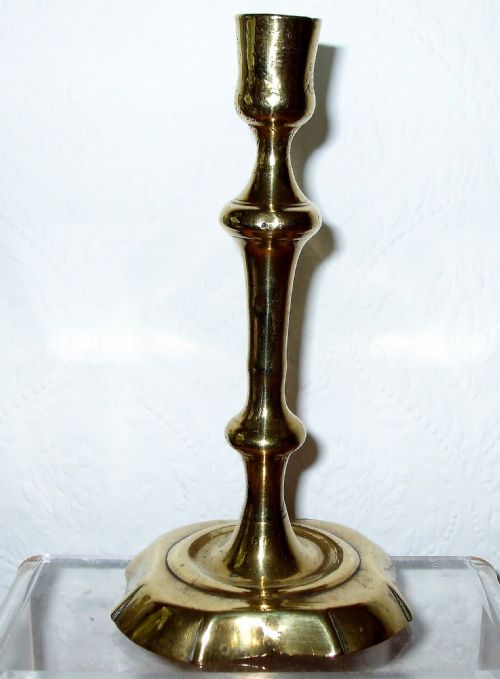
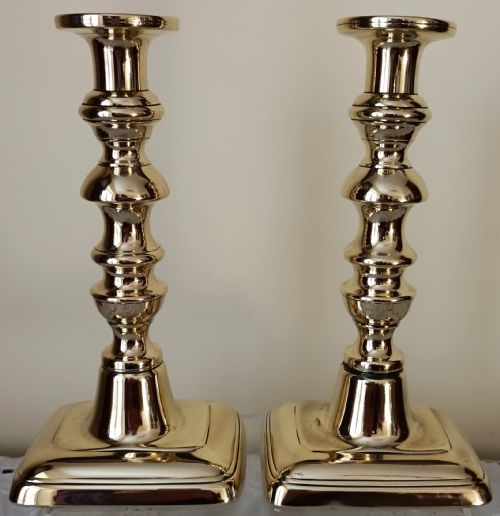
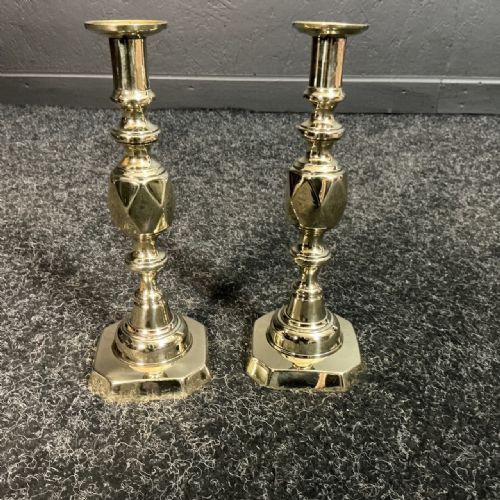
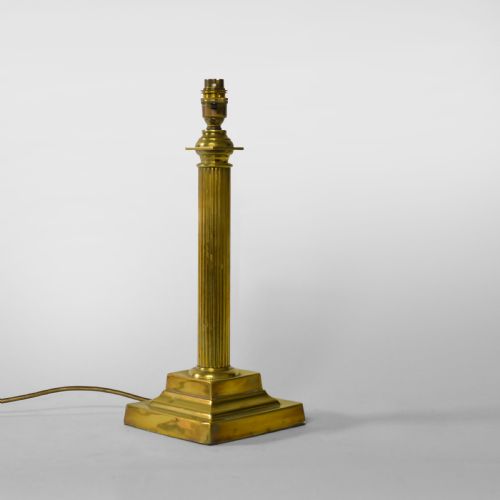
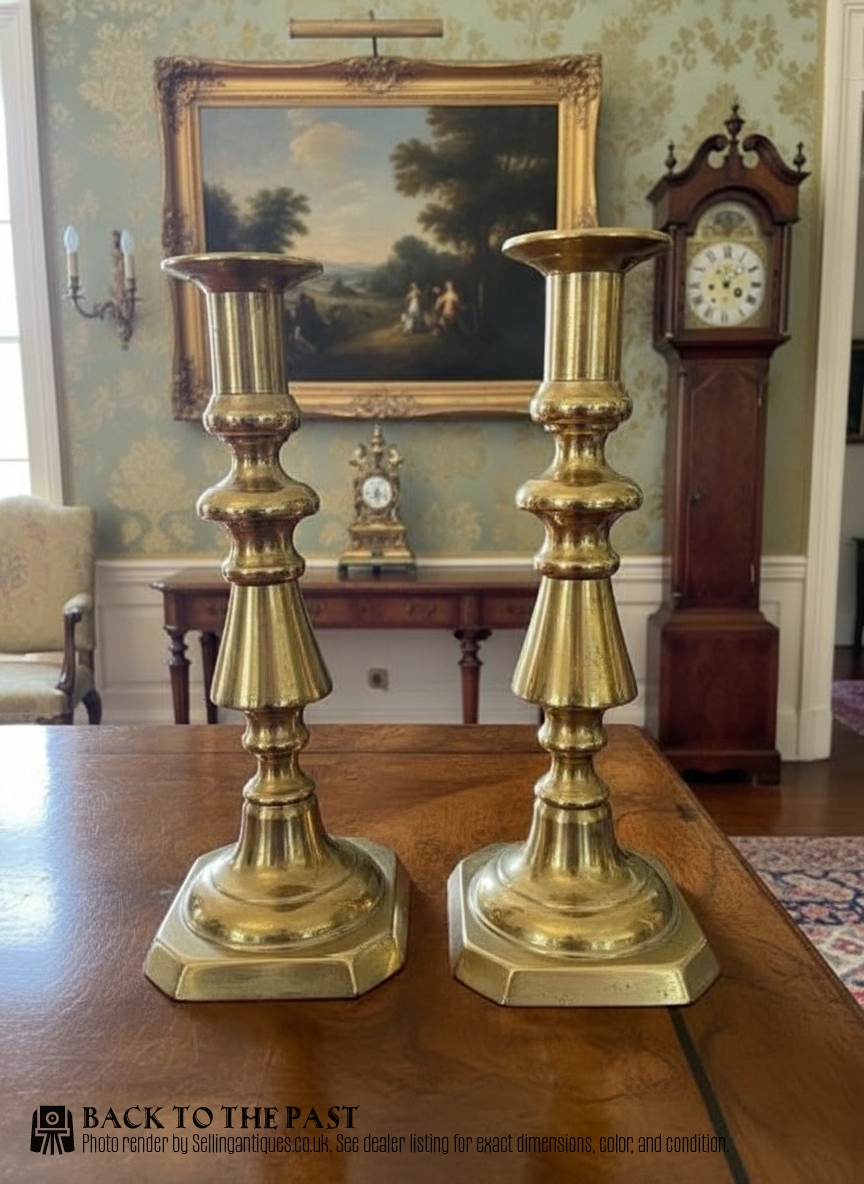
Heavy brass candlesticks encompass robust lighting fixtures originating from the eighteenth, nineteenth, and early twentieth centuries. These pieces appear across distinct stylistic periods including Regency, Victorian, Edwardian, and Victorian Gothic Revival. Examples frequently take the form of matched pairs designed for domestic or religious use.
How they were made
Makers utilised solid brass, employing heavy casting techniques to achieve thick walls and considerable structural weight. Molten metal poured into moulds created the foundational shafts and bases before cooling and subsequent finishing.
Surface detailing involved mechanical processes such as engine turning to apply geometric patterns, alongside hand finishing to refine socket rims and drip pans. Individual components were often cast separately and joined to form the completed candlestick.
Retail Price Guide 2026
Typical UK retail prices for heavy brass candlesticks, calculated from the Sellingantiques database of over a million retail prices indexed since 2003. This retail price guide relies exclusively on Sellingantiques data; no external sources or auction records are used, so the figures do not describe the wider market.
Listings feature solid brass candlesticks spanning the eighteenth, nineteenth, and early twentieth centuries across Regency, Victorian, and Edwardian styles.
What varies in quality
Proportion and casting depth distinguish superior examples from standard production pieces. Strong architectural lines and crisp surface ornament demonstrate greater skill in the foundry.
Integrity of the original metal mass determines the tactile quality of the piece. Heavier gauge casting and minimal wear to structural joints indicate higher original workshop standards.
The Heavy Brass Candlesticks Glossary
- Heemskirk
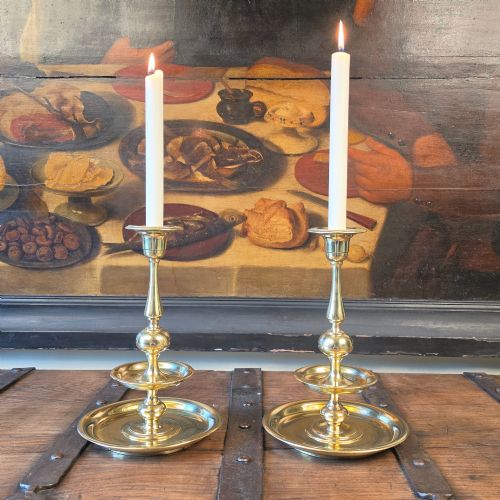
- A traditional Dutch style of candlestick featuring a central drip pan and a flared bell base, frequently replicated in later periods.
- Engine turned
- A method of decorative machining that uses a lathe to cut precise, repetitive geometric patterns into the brass surface.
- Gothic Revival
- A nineteenth century design movement drawing inspiration from medieval architecture, seen here in ecclesiastical motifs and pointed arches.
- Barley twist
- A helical column design resembling a twisted rope, carved or cast into the stem of the candlestick.
Frequently Asked Questions
How do I date heavy brass candlesticks?
Dating relies on examining the casting methods, wear patterns, and stylistic details present in the design. Periods span from the eighteenth century through to the Edwardian era, each carrying distinct architectural cues.
Changes in manufacturing techniques, such as the shift from sand casting to machine finishing, help narrow down the decade of production. Comparing base construction with known examples from specific stylistic eras offers further confirmation.
Were these candlesticks used in churches?
Certain examples served ecclesiastical purposes on altars, distinguished by their monumental scale and specific religious iconography. These church pieces often matched the heavy build of domestic variants but carried distinct proportions for ceremonial spaces.
Religious candlesticks frequently formed part of larger altar sets rather than pairs intended for mantelpieces. Their robust construction ensured stability during frequent handling in liturgical services.
How should I clean antique brass?
Maintaining these pieces involves removing dust with a soft cloth while preserving the aged surface patina built up over decades. Aggressive polishing removes the historic coloration that collectors value.
If cleaning is necessary, mild soap and water applied sparingly will lift surface grime without stripping the underlying metal character. Avoid harsh chemical dips that destroy the natural ageing of the brass.
Why are some candlesticks heavier than others?
Weight depends directly on the thickness of the brass and the casting method employed by the foundry. Solid cast examples contain substantially more metal than hollow spun or pressed variants.
Heavier pieces were engineered to support larger candles safely without tipping. This mass is a primary indicator of manufacturing quality and material generosity.