
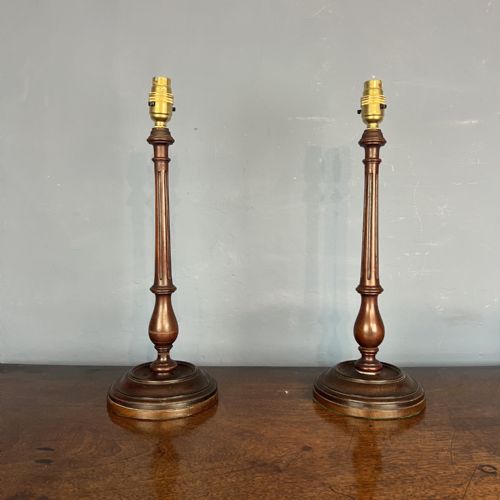
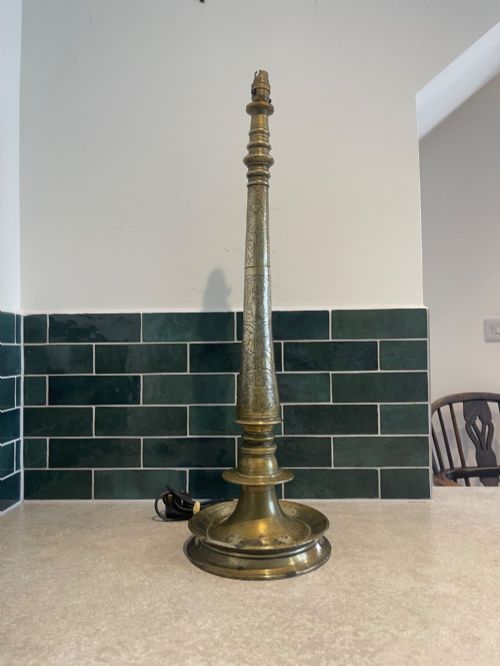
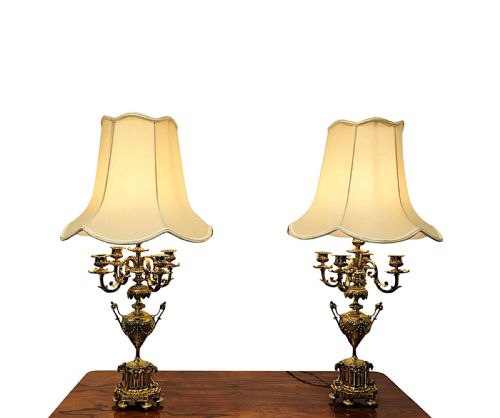
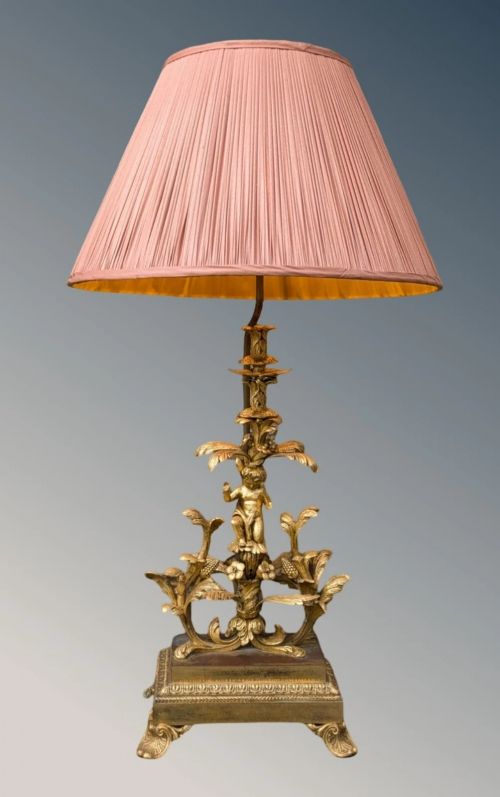
Vintage Brass Table Candlesticks
Vintage brass table candlesticks bring weight and steady proportion to a room, cast in solid metal through nineteenth-century and early twentieth-century workshops.
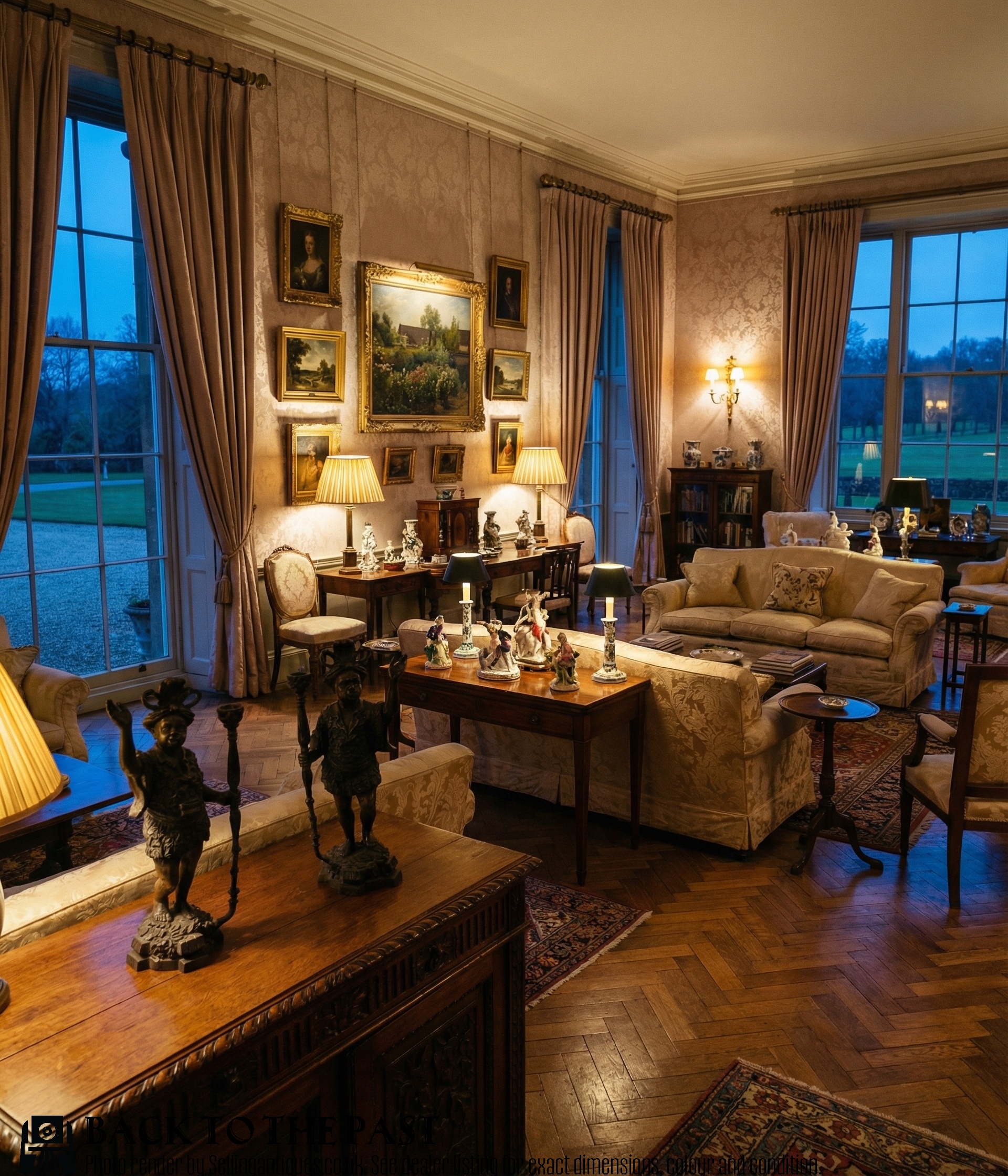
Vintage Brass Table Candlesticks
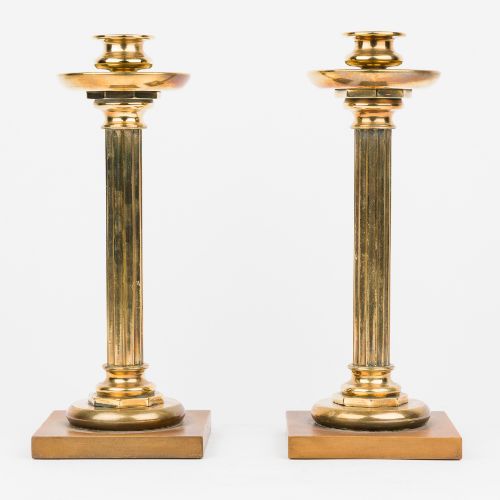
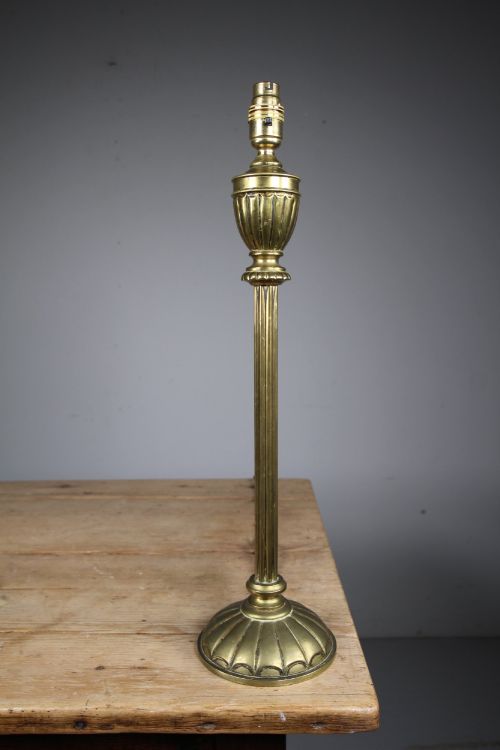
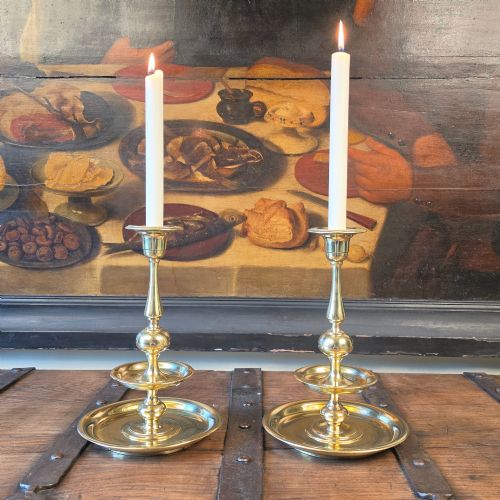
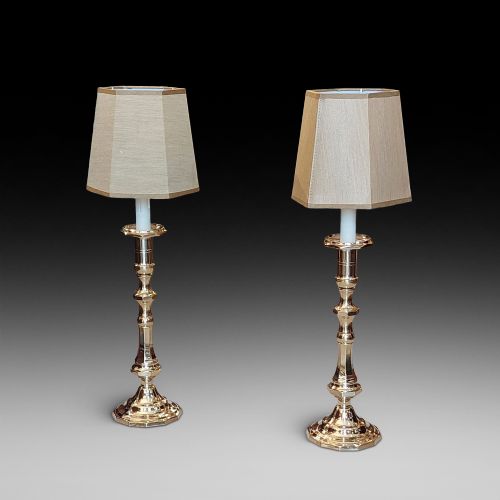
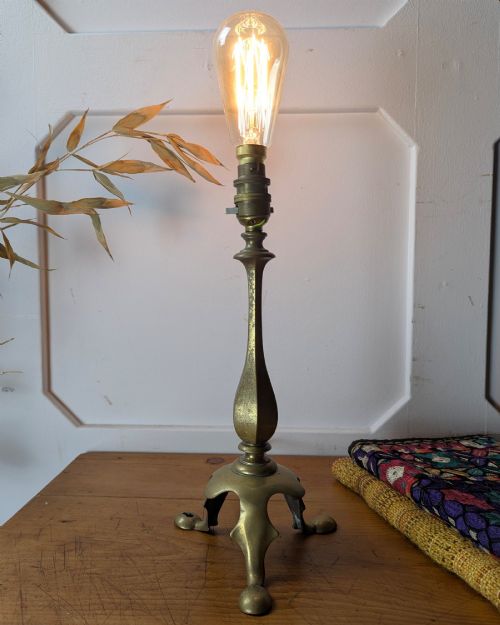
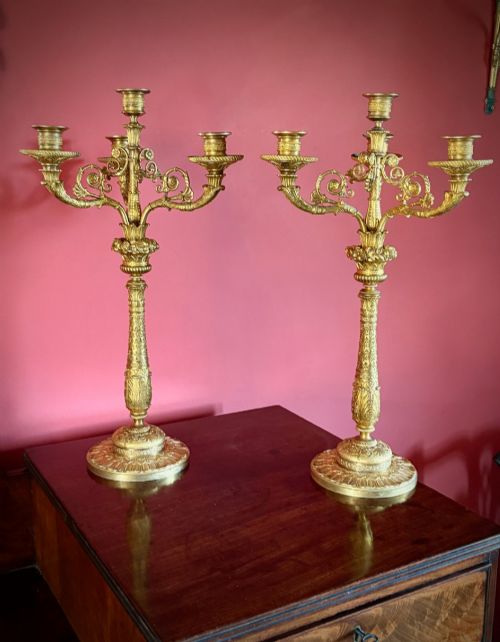
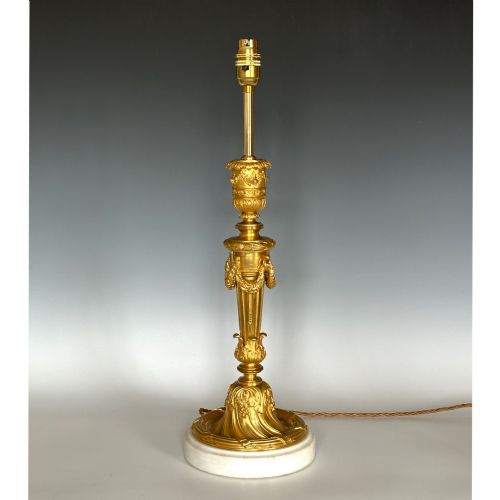
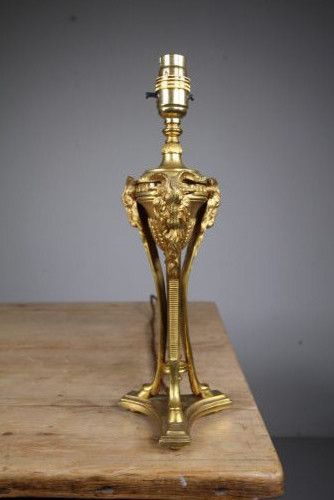
When you search for vintage brass table candlesticks, you encounter portable lighting items designed for rooms, desks and sideboards spanning the Victorian, Edwardian and Georgian periods. These pieces include simple domestic tapers, ejector models with internal slide mechanisms, and heavier pairs adapted into electric lamps.
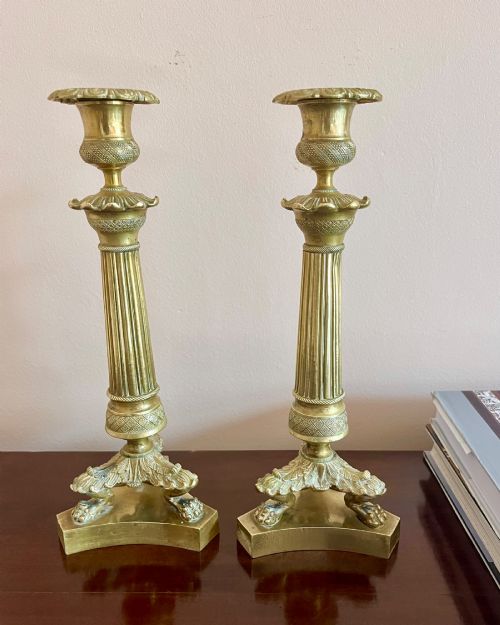
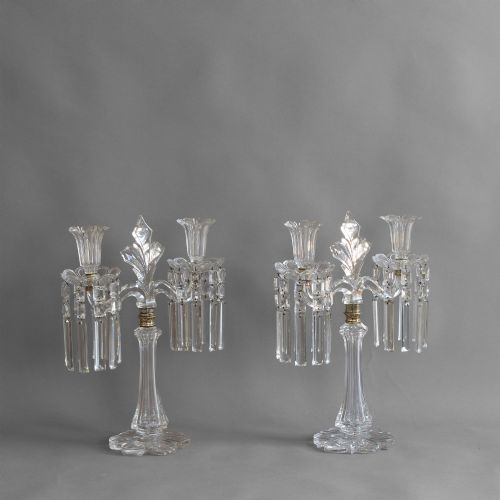
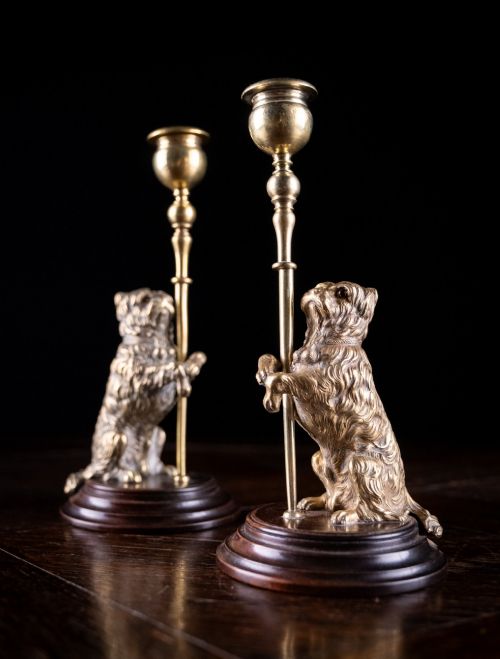
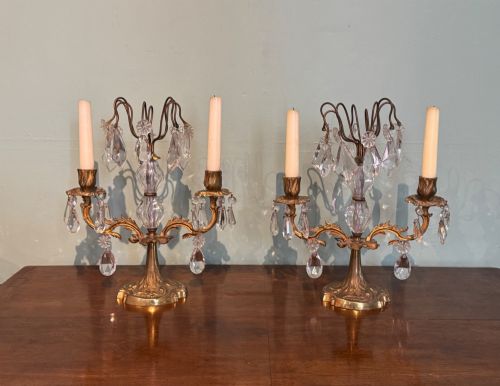
The selection ranges from plain turned stems to ornate French Rococo Revival, Gothic Revival and Neoclassical designs. Many survive as matched pairs, though single examples and multi-arm candelabra also appear alongside variants incorporating marble, mahogany, glass and fabric shades.
How they were made
Maker's methods relied heavily on casting brass, bronze and ormolu into shaped moulds, often using seamed construction where components were joined together. Turned elements on lathes created clean lines on stems and bases.
Detailing was enhanced through chasing, gilt highlights, and occasionally champlevé enamelling or the addition of marble plinths. Later conversions required wiring channels or fitted lamp holders inserted into the original candle sockets.
Listings include brass, gilt bronze, ormolu, bronze, marble and mahogany across Victorian, Edwardian and Georgian periods.
What varies in quality
Quality rests on the thickness of the cast metal and the crispness of the chased or turned details on the stem and base. Heavier, solid brass and well-chased ormolu retain sharp contours and sit firmly without wobble.
Proportion and symmetry separate standard utility items from finer examples. Matched pairs showing uniform casting seams, intact ejector mechanisms, and harmonious patination distinguish the better pieces from later copies or heavily altered items.
J.T. & Co·Frederick J Smith & Co·Wm. Tonks & Sons·AFC
The Vintage Brass Table Candlesticks Glossary
- Ejector
- A brass candlestick featuring an internal push-rod or side lever designed to lift out the remaining candle stub.
- Ormolu
- Gilt bronze, where a finely ground high-carat gold-mercury amalgam is applied to a bronze base and heated to leave a durable golden finish.
- Champlevé
- An enamelling technique where troughs are dug into the metal surface and filled with vitreous enamel before firing and polishing.
- Candelabra
- A branched candlestick or holder designed to support multiple candles or lights from a single central base.
Vintage Brass Table Candlesticks: Frequently Asked Questions
How do I know if they are solid brass?
Solid brass candlesticks feel noticeably heavy for their size and show consistent metal colour beneath any surface wear. A magnet will not stick to genuine brass or bronze.
Inspect the underside and interior edges where casting seams or turned marks confirm solid metal construction rather than plated base metals.
What is an ejector candlestick?
An ejector candlestick contains an internal sliding plate connected to a thumbpiece on the stem. Pushing this mechanism upward forces out the remaining candle base without needing a knife.
This practical feature became common during the nineteenth century on domestic table candlesticks.
How do I date an antique brass candlestick?
Dating relies on manufacturing techniques, base construction, and stylistic clues like Georgian urn stems or Victorian Gothic motifs. Seamed construction and hand-finished turning usually point towards the eighteenth or nineteenth century.
Maker's marks or registration stamps on the base provide more precise chronological markers when present.