


Bronze Figural Candlesticks
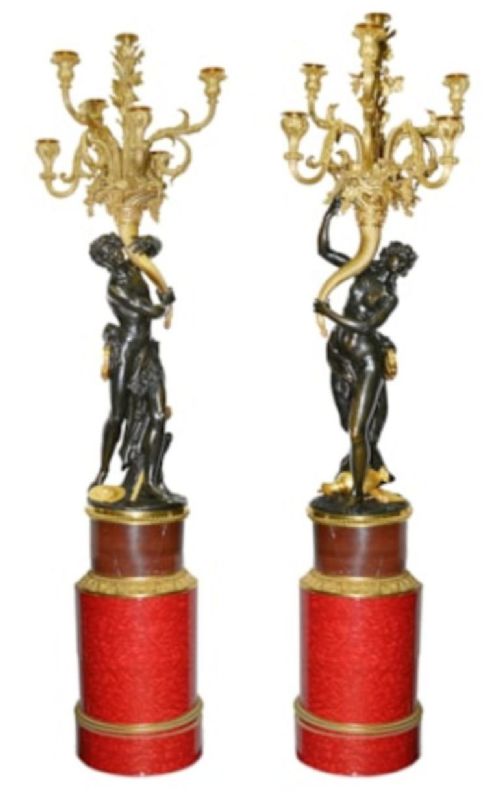
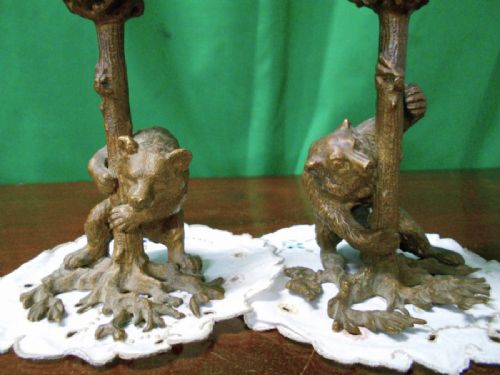
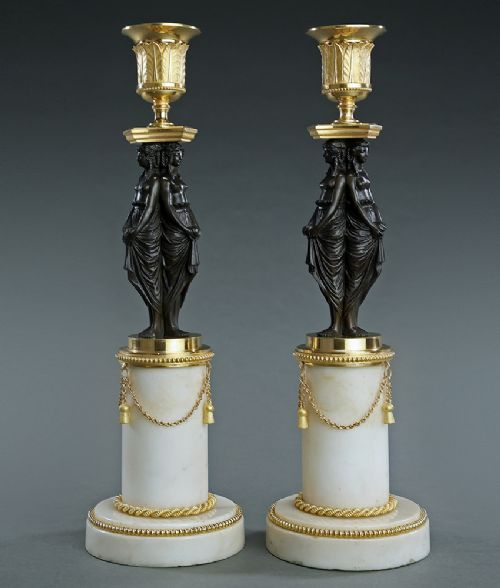
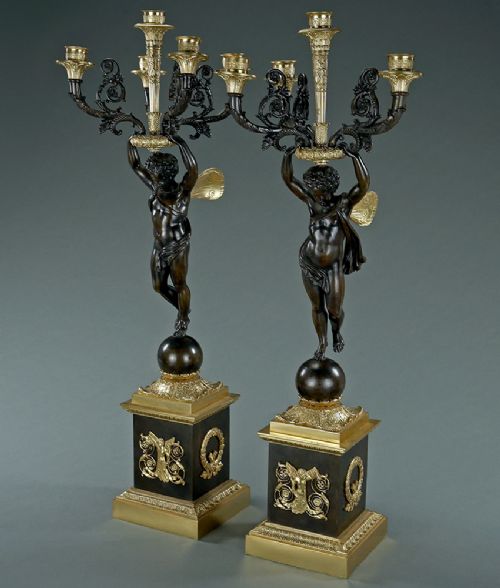
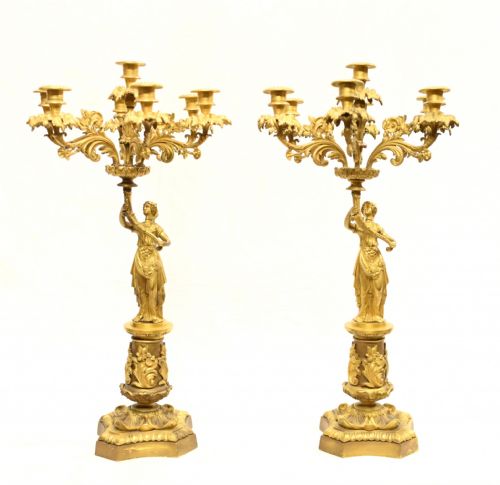
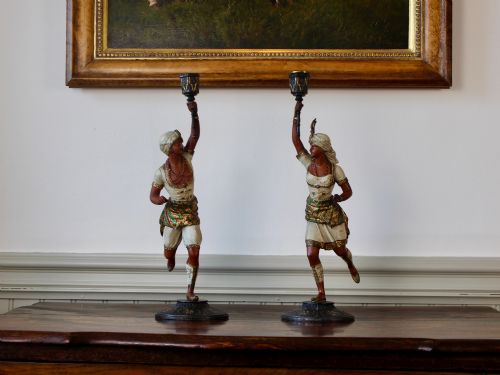
These bronze figural candlesticks combine sculpture and lighting, bringing classical figures, animals, and cherubs into domestic interiors.
How they were made
The creation of these works relies on metal casting, utilising bronze, spelter, or brass combined with applied surface treatments such as ormolu, cold painting, and patination. Foundries employed lost-wax and sand-casting methods to capture intricate details in human figures, animals, and foliate ornament before assembling the components.
Makers frequently enhanced cast bronze with parcel gilt or fire-gilt ormolu highlights to create contrast between patinated dark surfaces and bright metallic details. Bases incorporate stone elements like white marble or onyx, turning the candlestick into a mixed-media sculptural object.
What varies in quality
The standard of a piece is determined by the crispness of the chasing and the depth of the casting in the figures, where sharper anatomical details and refined drapery separate superior studio work from simpler commercial output. Better examples retain original fire-gilt surfaces and sophisticated patination rather than flat, uniform modern paints.
Material choice marks another division, with solid bronze and fire-gilded ormolu commanding greater craftsmanship than softer spelter or cast iron alternatives. The integration of stone bases, such as figured marble or onyx, also reflects the ambition of the original maker.
Bronze Figural Candlesticks Retail Price Guide 2026
Typical asking prices for bronze figural candlesticks among the pieces listed under this phrase on Sellingantiques today, from the lower quarter to the upper quarter. They describe what is for sale here now, not the wider market.
A pair of antique dogs peers out with glass eyes, guarding the mantelpiece from within the nineteenth-century bronze collection.
The Bronze Figural Candlesticks Glossary
- Ormolu
- Gilded bronze produced by applying a mercury and gold amalgam to a bronze base and heating it until the mercury vaporised. This historic technique creates a durable, warm metallic finish found on finer French pieces.
- Caryatid
- A sculpted female figure serving as an architectural support or structural column. In these objects, the figure bears the weight of the candle sockets.
- Spelter
- A zinc alloy used as a less expensive alternative to bronze during the nineteenth century. It is softer than bronze and typically carries a painted or patinated finish.
- Patination
- The surface coloration developed naturally over time or applied chemically by a foundry. Controlled patination emphasises the sculptural contours of the metal.
- Grand Tour
- The nineteenth-century practice where affluent travellers collected classical antiquities and souvenirs across Europe. Pieces from this context often replicate classical statuary.
Bronze Figural Candlesticks: Frequently Asked Questions
How do I date bronze figural candlesticks?
Dating relies on stylistic clues, casting quality, and the materials used for the base. Nineteenth-century examples often display specific revival motifs, such as Louis XVI or Egyptian Revival details.
Examining the fasteners, thread types, and the composition of the metal helps confirm the period. Spelter alternatives typically point towards the later Victorian era.
Were these always used for candles?
These pieces were originally designed to hold wax candles or taper lights for evening illumination in parlours and dining rooms. Many were built as multi-light candelabra to maximise light output.
Some surviving examples have been converted into electric table lamps during the twentieth century, which is common for heavy bronze figures.
How should I clean patinated bronze?
Maintenance requires only gentle dusting with a soft, dry cloth to prevent the accumulation of grit. Aggressive cleaning agents or metal polishes will strip away historical patination and damage the surface.
Preserving the original finish maintains both the visual character and the historical integrity of the metalwork.
What is the difference between spelter and bronze?
Bronze is a robust copper alloy that accepts fine chasing and holds crisp sculptural details. Spelter is a zinc-based metal that is lighter and significantly softer to the touch.
Magnifying the underside or checking for wear points reveals the underlying metal colour, helping distinguish solid bronze from plated spelter.